carrying case
CN → US| HS Code | Tariff Rate | Origin | Destination | Doc |
|---|---|---|---|---|
| 4202929336 | 52.6% | CN | US | Official Doc |
| 3923900080 | 38.0% | CN | US | Official Doc |
| 3923290000 | 38.0% | CN | US | Official Doc |
| 6307909891 | 24.5% | CN | US | Official Doc |
| 4202929100 | 52.6% | CN | US | Official Doc |
Product Images

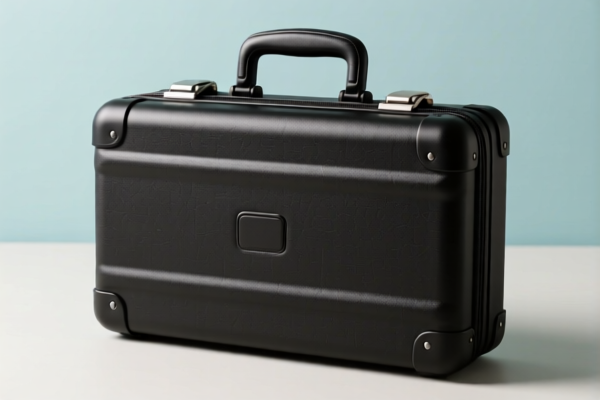

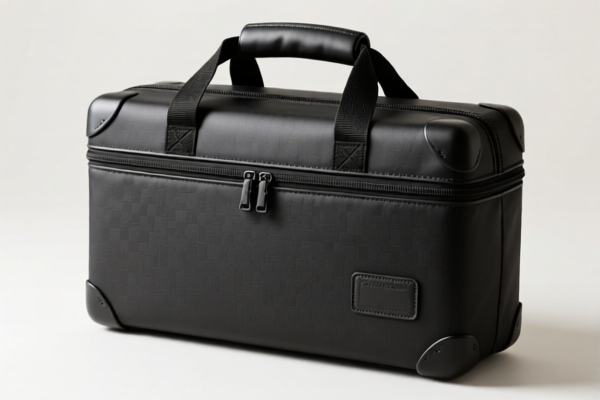
AI Analysis
👜 Carrying Case (收纳包/工具包)
🌐 HS Code Reference & Clearance Guide | 2026 Latest Tariff Analysis | Professional Customs Strategy
📌 I. Product Definition: What Exactly Is a "Carrying Case"?
A "Carrying Case" is a broad term in international trade, referring to containers designed for transporting, storing, or organizing items. In customs classification, the HS Code is not determined by the name, but by: 1. Material Composition (Textile, Plastic, Leather, etc.) 2. Specific Use (Tools, Instruments, Jewelry, General Storage) 3. Structure (Soft, Rigid, Foldable)
⚠️ Critical Classification Logic:
- If it is made of Textiles (Nylon, Polyester, Canvas) → Generally falls under Chapter 42 (Articles of Leather; Travel Goods).
- If it is made of Plastic (PVC, TPU, Hard Shell) → Generally falls under Chapter 39 (Plastics and Articles Thereof).
- If it is a Generic "Catch-All" without specific material specification → Customs may use the Other Made-up Articles category (Chapter 63).
📦 II. HS Code Classification Details (Based on Provided Data)
Below are the 5 possible HS Codes derived from your data, ranked by logical fit and tax impact.
| HS Code | Product Description | Material/Logic | Total Tax Rate |
|---|---|---|---|
6307.90.98.91 |
Other Made-up Articles (Generic/General Use) | Textile/Fabric (Fallback Category for "Other") | 24.5% |
3923.90.00.80 |
Plastic Packaging/Sac | Plastic Sheet (Packaging/Storage Logic) | 38.0% |
3923.29.00.00 |
Other Plastic Sacks/Pouches | Plastic Material (Flexible Bag Form) | 38.0% |
4202.92.93.36 |
Travel Goods/Containers (Textile Surface) | Textile/Plastic (Specific Sub-category) | 52.6% |
4202.92.91.00 |
Travel Goods/Containers (Synthetic Fiber) | Textile (Specific Sub-category) | 52.6% |
🔍 Key Insight:
- Lowest Tax:6307.90.98.91(24.5%) – Best if it’s a generic fabric bag.
- Highest Tax:4202.92.93.36&4202.92.91.00(52.6%) – Avoid unless explicitly defined as specific textile travel goods.
- Middle Ground:3923.xx(38.0%) – Applies if made entirely of plastic/PVC.
💰 III. 2026 Tariff Rate Breakdown (Detailed Explanation)
✅ Applicable Country: United States (US)
✅ Origin: China (CN)
✅ Effective Date: 2025-11-10 onwards
🎯 1. 6307.90.98.91 – Best Case Scenario (Lowest Tax)
| Item | Details |
|---|---|
| Base Tariff | 7.0% |
| Section 301 Surcharge | +7.5% (Lower surcharge tier) |
| 122-Clause Tariff | +10% |
| Total Effective Rate | 24.5% |
| De Minimis Eligibility | ❌ No (Subject to high scrutiny) |
| Logic | Classified as "Other Made-up Articles" because it doesn't fit neatly into specific tool bags or instrument cases. |
📌 Why this works:
- It uses the "Other" fallback clause for textile/fabric goods.
- The Section 301 surcharge (7.5%) is significantly lower than the 25% tier applied to higher-risk categories.
🎯 2. 3923.90.00.80 & 3923.29.00.00 – Plastic-Based Cases
| Item | Details |
|---|---|
| Base Tariff | 3.0% |
| Section 301 Surcharge | +25.0% (High-tier surcharge) |
| 122-Clause Tariff | +10% |
| Total Effective Rate | 38.0% |
| De Minimis Eligibility | ❌ No |
| Logic | Classified as plastic packaging or sacks. If your case is a hard plastic shell or a PVC pouch, this applies. |
⚠️ Warning:
- Although the Base Rate is low (3%), the 25% Surcharge destroys the advantage.
- Only choose this if you can prove it is purely a "plastic bag/sac" and not a durable good.
🎯 3. 4202.92.93.36 & 4202.92.91.00 – High-Risk Textile Categories
| Item | Details |
|---|---|
| Base Tariff | 17.6% |
| Section 301 Surcharge | +25.0% |
| 122-Clause Tariff | +10% |
| Total Effective Rate | 52.6% |
| De Minimis Eligibility | ❌ No |
| Logic | Classified specifically under "Travel Goods" with textile surfaces. |
📌 Why this is bad:
- High base rate (17.6%) + High surcharge (25%) = 52.6% Total.
- Customs may aggressively classify generic bags under this code if they look like "travel accessories."
- Avoid unless necessary (e.g., branded luxury travel cases).
🛠️ IV. Customs Clearance Recommendations (Actionable Tips)
✅ 1. Documentation Strategy
| Document | Requirement | Why It Matters |
|---|---|---|
| Product Description | Be specific: "Fabric Storage Bag, No Specific Brand, For Home Use" | Avoids "Travel Goods" classification if possible. |
| Material Composition | List exact %: e.g., "100% Polyester" | Determines if it goes to Ch 42 (Textile) or Ch 63 (Other). |
| Photos | Show internal structure, lining, and any rigid parts | Proves it’s a "soft bag" (Ch 63) vs. a "hard case" (Ch 42/39). |
| Invoice | Value must be accurate | High values trigger more scrutiny. |
✅ 2. Classification Strategy (How to Lower Tax)
🔥 Rule: "Generic is Better than Specific"
| Scenario | Recommended HS Code | Strategy |
|---|---|---|
| Generic Fabric Bag | 6307.90.98.91 |
Describe as "Storage Organizers" or "Household Textile Goods." Avoid words like "Travel," "Jewelry," or "Tool" if not used for them. |
| Plastic Pouch | 3923.29.00.00 |
Only if it’s thin, flexible, and clearly a "bag." Hard plastic shells may be reclassified. |
| Professional Tool Bag | 4202.92.91.00 |
Unavoidable if it has many compartments for tools. Expect 52.6% tax. |
✅ 3. Red Flags to Avoid
- ❌ Do NOT use the word "Travel" in the product name unless it’s a suitcase/luggage.
- ❌ Do NOT claim it’s for "Jewelry" or "Tools" unless it’s specifically designed for them (triggers higher base rates).
- ❌ Do NOT split a single bag into multiple HS codes (e.g., fabric + plastic buckle) – Customs will aggregate and apply the highest risk code.
🌍 V. Global Market Comparison (2026)
| Country | Recommended HS Code | Total Tax (China Origin) | Notes |
|---|---|---|---|
| 🇺🇸 USA | 6307.90.98.91 |
24.5% | Best option for generic bags. |
| 🇺🇸 USA | 4202.92.91.00 |
52.6% | Avoid unless necessary. |
| 🇨🇳 China | 6307.90.98.91 |
~7% (Import Duty) | No Section 301. Lower total cost. |
| 🇪🇺 EU | 6307.90.98.91 |
~6-8% | No major surcharges for generic bags. |
📌 Conclusion:
- The USA imposes a 10-25% surcharge on most Chinese goods.
- Choosing6307.90.98.91saves you ~15-28% compared to other textile/plastic codes.
📌 VI. Common Mistakes & Pitfalls
❌ Mistake 1: Calling a "Laptop Sleeve" a "Carrying Case"
👉 Risk: May be classified as "Travel Goods" (Ch 42) → 52.6%.
✅ Fix: If it’s just a protective sleeve, consider 6307.90.98.91 as "Textile Article."
❌ Mistake 2: Using "Plastic" for a Fabric Bag with Plastic Zipper
👉 Risk: Customs may classify as Ch 39 (Plastic) → 38.0% if they ignore the textile majority.
✅ Fix: Ensure textile is >50% of the surface area for Ch 42/63.
❌ Mistake 3: Ignoring the 122-Clause Tariff
👉 Risk: Even with a low base rate, the +10% 122-Clause tariff applies to almost all Chinese goods.
✅ Fix: Factor this into all cost calculations.
🎯 VII. Conclusion: Smart Classification Saves Money
🎯 Key Takeaway:
- Goal: Aim for6307.90.98.91(24.5% Total).
- Method: Describe the product as a generic textile storage organizer or household bag, not a specialized tool or travel accessory.
- Warning: If the bag is clearly for tools, instruments, or luxury travel, you may be forced into 52.6% (4202.92.91.00).💬 Pro Tip:
- Provide clear photos showing the bag is empty or used for generic storage.
- Use neutral descriptions like "Textile Storage Bag" instead of "Jewelry Case" or "Tool Roll."
📣 Immediate Action:
- Review Product Photos: Does it look like a specialized case? If yes, prepare for higher tax.
- Check Material: If >50% textile, fight for
6307.90.98.91.- Calculate Cost: 24.5% vs. 52.6% is a 28% difference – massive impact on margin!
✨ Professional Clearance, Precision in Classification!
💼 Your Profit Margin Depends on Your HS Code Choice!
Customer Reviews
About HS Code Classification
The Harmonized System (HS) is an internationally standardized nomenclature developed by the World Customs Organization (WCO) to classify traded products. Over 200 countries use the HS system as the basis for customs tariffs, trade statistics, and import/export regulations.
Each HS code follows a hierarchical structure:
- Chapter (2 digits) — Broad category of goods (e.g., Chapter 84: Machinery and Mechanical Appliances)
- Heading (4 digits) — More specific grouping within the chapter
- Subheading (6 digits) — Internationally standardized breakdown, used by all WCO member countries
- National subdivisions (8-10 digits) — Country-specific extensions for further classification, such as US HTSUS 10-digit codes
Correct HS code classification is essential for smooth customs clearance, accurate duty payment, and compliance with trade regulations. Misclassification can lead to customs delays, overpayment of duties, or penalties.
When importing from CN to US, the applicable tariff rates may include:
- Most-Favored-Nation (MFN) rate — The standard duty rate applied to WTO members
- General rate — Applied to countries without trade agreements
- Trade remedy duties — Additional tariffs such as Section 301 (anti-dumping), Section 232 (national security), or countervailing duties
The information provided on this page is for reference purposes only. For official classification, please consult with your local customs authority or a licensed customs broker.