cat pattern socks
CN → US| HS Code | Tariff Rate | Origin | Destination | Doc |
|---|---|---|---|---|
| 6115959000 | 31.0% | CN | US | Official Doc |
| 6115969020 | 24.6% | CN | US | Official Doc |
| 6117809510 | 32.1% | CN | US | Official Doc |
| 6117809570 | 32.1% | CN | US | Official Doc |
| 6115969020 | 24.6% | CN | US | Official Doc |
Product Images
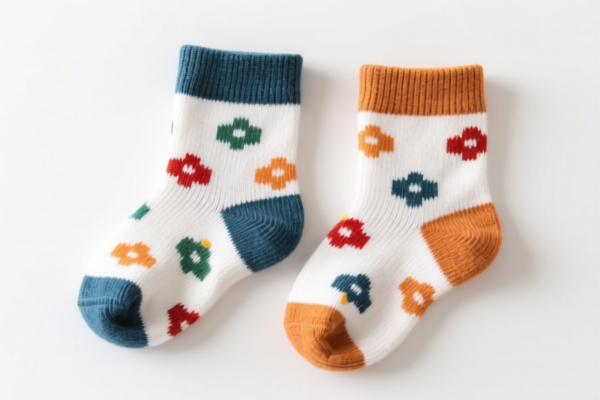
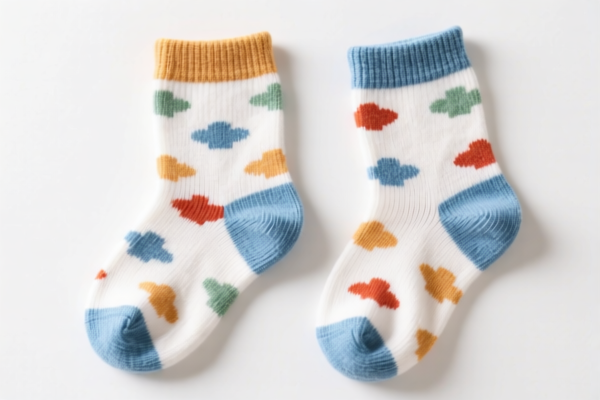
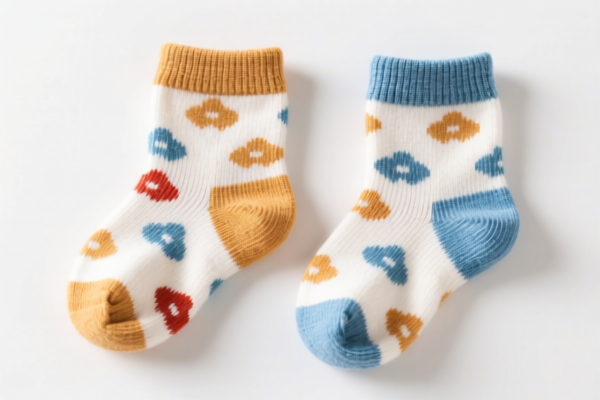
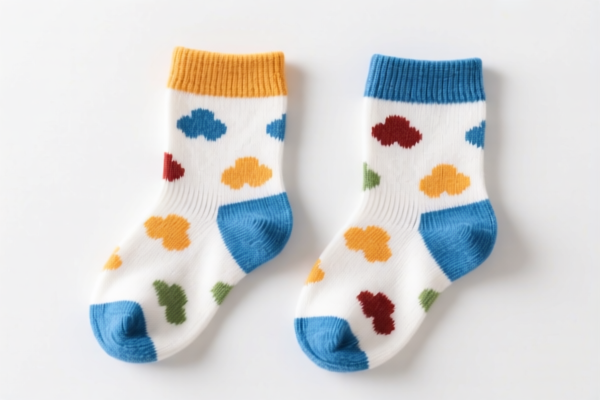
AI Analysis
🐱 Cat Pattern Socks (毛绒猫袜)
🌐 HS Code Reference & Customs Clearance Guide | 2024/2025 Latest Tariff Analysis | Professional Entry Strategy
📌 I. Product Definition & Classification: Do You Really Understand "Cat Socks"?
"Cat Pattern Socks" (often referred to as plush cat socks or novelty socks) are typically classified as knitted or crocheted hosiery or made-up clothing accessories. In international trade, the specific HS Code depends heavily on two factors:
1. Form: Is it strictly a "sock" (footwear) or a "clothing accessory"?
2. Material: Is it primarily Cotton, Synthetic Fibers, or Wool?
⚠️ Key Distinction Point:
- If the item is primarily knitted and designed to cover the foot → Chapter 61 (Knitted).
- If the material is synthetic vs. cotton, the base tariff rate changes significantly.
- 122 Clause (Section 301/Trade War): Most of these items from China are subject to additional tariffs regardless of material, but the base rate varies.
📦 II. HS Code Classification Details (Based on Provided Data)
| HS Code | Product Description | Material Inference | Form Classification |
|---|---|---|---|
6115.95.90.00 |
Plush Cat Socks, Form: Socks | Cotton / Textile Fibers | Socks (Footwear) |
6115.96.90.20 |
Plush Cat Socks, Form: Socks | Synthetic Fibers (No Wool) | Socks (Footwear) |
6117.80.95.10 |
Plush Cat Socks, Form: Clothing Accessory | Cotton / Textile Fibers | Clothing Accessory |
6117.80.95.70 |
Plush Cat Socks, Form: Clothing Accessory | Synthetic/Artificial Fibers (Non-Wool) | Clothing Accessory |
🔍 Critical Note:
-6115refers to Hosiery (Socks, Stockings, etc.). This is the most common classification for wearable socks.
-6117refers to Made-up Clothing Accessories (e.g., scarves, shawls, or if the "socks" are deemed non-standard hosiery like costume pieces).
- Material matters: Synthetic fibers (6115.96or6117.80subheadings for synthetics) often have a 14.6% base tariff, while Cotton (6115.95) may have a slightly different base, but both are heavily impacted by the 122 Clause.
💰 III. 2024/2025 Latest Tariff Rate Breakdown (Including Additional Duties)
✅ Applicable Country: United States (US)
✅ Origin: China (CN)
✅ Effective Time: Current Trade War Tariffs (Section 301 / 122 Clause)
🎯 1. 6115.95.90.00 —— Cotton-based Socks
| Item | Content |
|---|---|
| Base Tariff | 13.5% |
| Section 301 (Add-on) | +7.5% |
| 122 Clause Tariff | +10% |
| Total Effective Rate | 31.0% |
| Calculation Method | CIF Value × 31.0% |
| De Minimis Exemption | ❌ Not Applicable (Section 301 goods are generally excluded from 80.01 de minimis relief for low-value shipments from China) |
| Legal Path | HTS:6115.95.90.00 → Section 301: Footnote 1 → 122 Clause: 10% |
📌 Explanation:
- This classification applies if the socks are primarily Cotton.
- The 31.0% total rate is a significant cost driver.
- The 10% 122 Clause is an additional punitive tariff on top of standard Section 301 rates.
🎯 2. 6115.96.90.20 —— Synthetic Fiber Socks (Most Common for Plush)
| Item | Content |
|---|---|
| Base Tariff | 14.6% |
| Section 301 (Add-on) | 0.0% (Note: Some synthetic hosiery may fall under different 301 footnotes, but data indicates 0.0% add-on here) |
| 122 Clause Tariff | +10% |
| Total Effective Rate | 24.6% |
| Calculation Method | CIF Value × 24.6% |
| De Minimis Exemption | ❌ Not Applicable |
| Legal Path | HTS:6115.96.90.20 → 122 Clause: 10% |
📌 Explanation:
- This is the most likely classification for mass-produced plush cat socks, as they are often made from acrylic, polyester, or rayon (synthetic fibers).
- Total Rate: 24.6%. This is 6.4% lower than the cotton variant.
- Crucial: Ensure the material composition is accurately declared as synthetic to avoid misclassification penalties.
🎯 3. 6117.80.95.10 & 6117.80.95.70 —— Classified as "Clothing Accessories"
| HS Code | Material | Total Tax | Breakdown |
|---|---|---|---|
6117.80.95.10 |
Cotton | 32.1% | Base: 14.6% + 301: 7.5% + 122: 10% |
6117.80.95.70 |
Synthetic | 32.1% | Base: 14.6% + 301: 7.5% + 122: 10% |
📌 Explanation:
- If Customs determines the item is not standard hosiery (e.g., very bulky, costume-like, or not primarily for foot coverage), it may be misclassified under Chapter 61.17.
- Warning: Both variants incur 32.1%. This is the highest rate in the dataset.
- Recommendation: Avoid this classification if the item is clearly a wearable sock. Misclassification can lead to audits and back-dated duties.
🛠️ IV. Customs Clearance Practical Advice (Pitfall Avoidance Guide)
✅ 1. Preparation Checklist (Mandatory)
| Document | Required? | Purpose |
|---|---|---|
| ✅ Product Material Composition | ✔️ | Must specify % of Cotton vs. Synthetic. Critical for distinguishing between 31.0% and 24.6%. |
| ✅ Product Photos | ✔️ | Show the sole, cuff, and pattern. Proves it is a "sock" (6115), not an "accessory" (6117). |
| ✅ Commercial Invoice | ✔️ | Description must be precise: "Plush Knitted Socks, Synthetic, Cat Pattern". Avoid vague terms like "Pet Toy" or "Costume". |
| ✅ Origin Certificate | ✔️ | To confirm Country of Origin (China). |
| ✅ Packaging Label | ✔️ | Must match invoice details. |
✅ 2. Declaration Tips (Golden Rules)
🔥 "Synthetic is Cheaper, Cotton is Riskier, Accessory is Expensive!"
| Scenario | Correct HS Code | Total Tax | Why? |
|---|---|---|---|
| Standard Plush Socks (Poly/Acrylic) | 6115.96.90.20 |
24.6% | ✅ Lowest effective rate. Synthetics often have different 301 footnotes. |
| Standard Plush Socks (Cotton Mix) | 6115.95.90.00 |
31.0% | ⚠️ Higher base rate + 301 add-on. |
| Misclassified as Accessory | 6117.80.95.xx |
32.1% | ❌ Highest rate. Avoid unless it's truly a non-footwear item (e.g., hand puppets). |
📌 Key Strategy:
- If your socks are made of Polyester/Acrylic, emphasize "Synthetic" in the description to target6115.96.90.20.
- If they are Cotton, you must pay the higher rate. Consider blending materials to shift the "principal material" classification if legally permissible.
✅ 3. Special Considerations for "Cat Pattern"
| Issue | Advice |
|---|---|
| Intellectual Property (IP) | Ensure the "Cat" pattern is original or licensed. Disney/Studio Ghibli cat designs are heavily policed. |
| De Minimis (Section 321) | ❌ Do NOT rely on $800 de minimis exemption for China-origin goods under Section 301. The 122 Clause and 301 tariffs still apply. |
| Material Declaration | Incorrectly declaring "Cotton" when it's "Acrylic" can lead to misdeclaration penalties (27.5% of duty evaded + potential criminal charges). |
🌍 V. Global Market Comparison (2024/2025)
| Region | Recommended HS Code | Estimated Total Tax | Notes |
|---|---|---|---|
| 🇺🇸 USA | 6115.96.90.20 |
24.6% | Includes 122 Clause. Highest compliance risk. |
| 🇨🇳 China (Import) | Same HS | ~10-15% | Lower base rates, no Section 301. |
| 🇪🇺 EU | 6115.96 |
~12% | No Section 301, but VAT applies. |
| 🇬🇧 UK | 6115.96 |
~12% | Post-Brexit tariff regime. |
📌 Conclusion:
The USA market is the most expensive due to the 122 Clause (+10%) and Section 301.
For US-bound shipments, Synthetic Fiber Socks (6115.96.90.20) are the optimal classification for cost savings.
📌 VI. Common Mistakes & Pitfalls (Lessons Learned)
❌ Mistake 1: Declaring "Cat Socks" as "Pet Clothing" (HS 9619 or similar)
👉 Consequence: Misclassification. Pet clothing is different from human hosiery. High penalty risk.
❌ Mistake 2: Ignoring the "122 Clause"
👉 Consequence: Underpayment of 10% additional tariff. CBP will assess back-taxes + interest + fines.
❌ Mistake 3: Mixing Cotton and Synthetic without specifying which is "Principal Material"
👉 Consequence: CBP will use the material that constitutes >50% by weight. If unsure, declare both or test.
✅ Correct Practice:
"Plush Knitted Socks, Synthetic Fiber, Acrylic Blend, Cat Pattern, For Human Wear, Model #123"
🎯 VII. Conclusion: Precision is Profit
🎯 Remember the Rules:
🔹 "Synthetic Socks = 24.6% | Cotton Socks = 31.0% | Accessories = 32.1%"
🔹 "Always pay the 122 Clause (+10%)"
🔹 "Never use De Minimis for China-Origin Section 301 Goods"
📌 Pro Tip:
If you are shipping small quantities (under $800), do not assume they will enter duty-free. The 122 Clause often nullifies the de minimis exemption for Chinese goods. Consult a customs broker to verify current CBP enforcement on "low-value" Section 301 goods.
📣 Immediate Action:
📞 Verify Material Composition (Lab Test if necessary)
📝 Select6115.96.90.20if Synthetic
💰 Budget for 24.6% Total Duty
🚀 Clear Customs Smoothly, Avoid Penalties, Maximize Margin!
✨ Professional Customs Clearance Starts with Accurate Classification!
💼 Every 1% of Tariff Saved is Pure Profit!
Customer Reviews
About HS Code Classification
The Harmonized System (HS) is an internationally standardized nomenclature developed by the World Customs Organization (WCO) to classify traded products. Over 200 countries use the HS system as the basis for customs tariffs, trade statistics, and import/export regulations.
Each HS code follows a hierarchical structure:
- Chapter (2 digits) — Broad category of goods (e.g., Chapter 84: Machinery and Mechanical Appliances)
- Heading (4 digits) — More specific grouping within the chapter
- Subheading (6 digits) — Internationally standardized breakdown, used by all WCO member countries
- National subdivisions (8-10 digits) — Country-specific extensions for further classification, such as US HTSUS 10-digit codes
Correct HS code classification is essential for smooth customs clearance, accurate duty payment, and compliance with trade regulations. Misclassification can lead to customs delays, overpayment of duties, or penalties.
When importing from CN to US, the applicable tariff rates may include:
- Most-Favored-Nation (MFN) rate — The standard duty rate applied to WTO members
- General rate — Applied to countries without trade agreements
- Trade remedy duties — Additional tariffs such as Section 301 (anti-dumping), Section 232 (national security), or countervailing duties
The information provided on this page is for reference purposes only. For official classification, please consult with your local customs authority or a licensed customs broker.