cat scratch pole
CN → US| HS Code | Tariff Rate | Origin | Destination | Doc |
|---|---|---|---|---|
| 3926305000 | 22.8% | CN | US | Official Doc |
| 4421999880 | 38.3% | CN | US | Official Doc |
| 5603949090 | 35.0% | CN | US | Official Doc |
| 4421919880 | 38.3% | CN | US | Official Doc |
| 3926909989 | 22.8% | CN | US | Official Doc |
Product Images
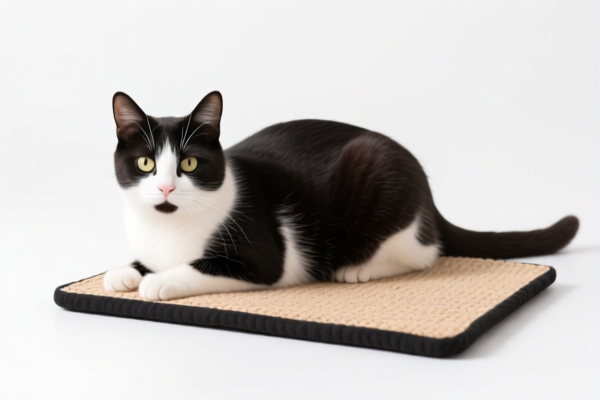
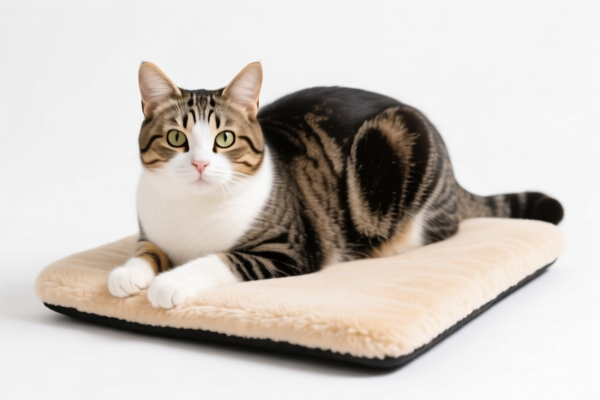
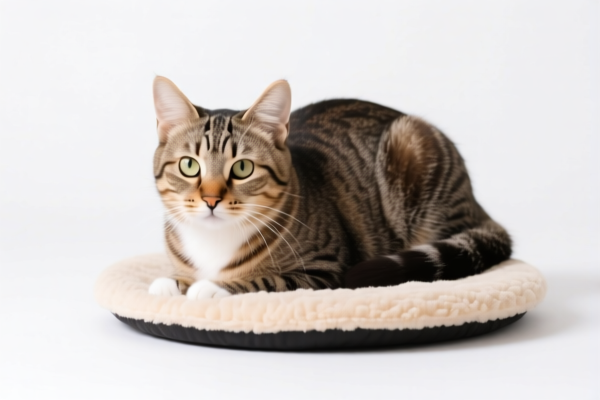
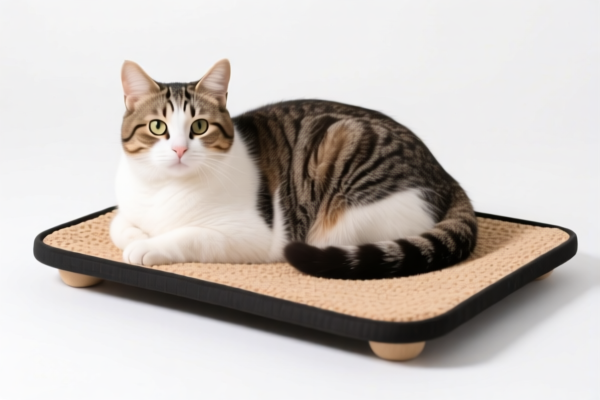
AI Analysis
🐾 Cat Scratch Pole (Cat Tree Posts)
🌐 HS Code Reference & Customs Clearance Guide | 2026 Latest Tariff Analysis | Professional Customs Strategy
📌 I. Product Definition and Classification: Do You Really Understand "Cat Scratch Poles"?
Cat scratch poles, commonly known as cat trees or scratching posts, are essential pet accessories designed for feline health and furniture protection. In international trade, they are typically composed of a core (wood, cardboard, or sisal-wrapped) and an outer wrapping material (sisal rope, carpet, or fabric). Because they are composite goods, their classification depends heavily on the primary material and function.
Key Classification Logic:
- If the core is Wood/Bamboo and the sisal is just a wrap → Classified under Chapter 44 (Wood)
- If the core is Cardboard/Paper → Classified under Chapter 48 (Note: The provided data implies a "non-woven" or fiber interpretation for some variants, likely referring to heavy-duty cardboard/fiber cores treated as non-wovens or generic composites).
- If the base or structural supports are primarily Plastic → Classified under Chapter 39 (Plastics).
⚠️ Critical Distinction:
- "Solid Wood Core": If the structural integrity comes from a wooden base/post, it falls under Wood articles.
- "Plastic Base/Coating": If the item is primarily a plastic stand with a sisal-wrapped wooden insert, it may be classified as a plastic article.
- "Fiber/Cardboard Core": If the post is made of compressed paper fiber or sisal fibers without significant wood, it may fall under non-wovens or other articles.
📦 II. HS Code Classification Details (Based on Provided Data)
| HS Code | Product Description | Material Inference | Tax Rate (Total) | Tax Composition |
|---|---|---|---|---|
4421.91.98.80 |
Bamboo or Wood Articles Inferred material: Bamboo or Wood. Shape: Non-specific wooden articles. Fits the "Bamboo/Other" category in wooden articles. |
🎋 Bamboo / Wood | 38.3% | Base: 3.3% + S1 Tariff: 25.0% + Section 122: 10% |
3926.90.99.89 |
Plastic Articles Inferred material: Plastic or plastic-composite. Shape: Other plastic articles not specified elsewhere. |
🧱 Plastic / Composite | 22.8% | Base: 5.3% + S1 Tariff: 7.5% + Section 122: 10% |
3926.30.50.00 |
Plastic Fittings/Fasteners Inferred material: Plastic base or plastic coating. Category: Connectors/accessories for furniture/vehicles. |
🧩 Plastic Base | 22.8% | Base: 5.3% + S1 Tariff: 7.5% + Section 122: 10% |
4421.99.98.80 |
Other Wooden Articles Inferred material: Wood or wood-based base. Shape: Small wooden articles not specifically restricted. Fits the "Other wooden articles" catch-all. |
🪵 Wood | 38.3% | Base: 3.3% + S1 Tariff: 25.0% + Section 122: 10% |
5603.94.90.90 |
Non-Woven Fabrics Inferred material: Sisal or corrugated paper fiber. Shape: Finished products made of non-wovens or composite materials. Fits the "Other non-wovens" catch-all. |
🧶 Sisal / Fiber | 35.0% | Base: 0.0% + S1 Tariff: 25.0% + Section 122: 10% |
🔍 Key Insight:
The classification hinges on what constitutes the main structure: - If it’s a wooden pole wrapped in sisal, it’s 4421 (38.3% tax). - If it’s a plastic stand, it’s 3926 (22.8% tax). - If it’s a cardboard/fiber core (often used in eco-friendly posts), it might be argued as 5603 (35.0% tax), though this is less common for traditional sisal posts.
💰 III. 2026 Latest Tariff Rate Breakdown (Including Surtaxes)
✅ Applicable Country: United States (US)
✅ Origin: China (CN)
✅ Effective Date: From November 10, 2025 (including subsequent imports)
🎯 1. 4421.91.98.80 & 4421.99.98.80 —— Wooden/Bamboo Cat Scratching Poles
| Item | Details |
|---|---|
| Base Tariff | 3.3% (ad valorem) |
| S1 Surcharge (Section 301) | +25.0% |
| Section 122 Tariff | +10.0% (Specific to China-origin goods in this context) |
| Total Tax Rate | 38.3% |
| Tax Calculation | CIF Value × 38.3% |
| De Minimis Exemption | ❌ Not Applicable (High tariff goods are generally excluded from de minimis benefits) |
| Legal Basis Path | USITC:4421.91.98.80 → FOOTNOTE:S1 → Section 122 |
📌 Explanation:
- The 25% S1 surcharge is the standard Section 301 tariff on Chinese wood products. - The 10% Section 122 tariff is an additional levy applied to specific categories of Chinese imports. - Total Cost Impact: With a base rate of only 3.3%, the 35% additional burden is significant. This makes wooden cat trees expensive to import into the US.
🎯 2. 3926.90.99.89 & 3926.30.50.00 —— Plastic-Based Cat Scratching Poles
| Item | Details |
|---|---|
| Base Tariff | 5.3% (ad valorem) |
| S1 Surcharge (Section 301) | +7.5% (Note: Some plastic items may have lower S1 rates depending on specific HTS subheadings, but data shows 7.5%) |
| Section 122 Tariff | +10.0% |
| Total Tax Rate | 22.8% |
| Tax Calculation | CIF Value × 22.8% |
| De Minimis Exemption | ❌ Not Applicable |
| Legal Basis Path | USITC:3926.90.99.89 → FOOTNOTE:S1 → Section 122 |
📌 Explanation:
- Plastic articles generally face lower S1 surcharges (7.5% vs 25%) compared to wood. - However, the base tariff is higher (5.3% vs 3.3%). - Total Cost Impact: 22.8% is significantly cheaper than the 38.3% for wooden variants. This is a key cost-saving insight for plastic-based cat trees.
🎯 3. 5603.94.90.90 —— Sisal/Fiber-Based (Non-Woven) Poles
| Item | Details |
|---|---|
| Base Tariff | 0.0% (ad valorem) |
| S1 Surcharge (Section 301) | +25.0% |
| Section 122 Tariff | +10.0% |
| Total Tax Rate | 35.0% |
| Tax Calculation | CIF Value × 35.0% |
| De Minimis Exemption | ❌ Not Applicable |
| Legal Basis Path | USITC:5603.94.90.90 → FOOTNOTE:S1 → Section 122 |
📌 Explanation:
- If the product is classified as a "non-woven" material (e.g., compressed sisal fibers or heavy paper fiber cores without wood structure), it enjoys a 0% base tariff. - However, the 25% S1 surcharge still applies, bringing the total to 35.0%. - This is a middle-ground option: cheaper than wood (38.3%) but more expensive than plastic (22.8%).
🛠️ IV. Customs Clearance Practical Advice (Avoiding Pitfalls)
✅ 1. Preparation Checklist (Must-Have Documents)
| Document | Required | Description |
|---|---|---|
| ✅ Product Specification Sheet | ✔️ | Detail the core material (Wood/Cardboard/Sisal), wrapping material, and dimensions. |
| ✅ Material Composition Statement | ✔️ | Explicitly state the percentage of wood, plastic, and sisal. Crucial for HS Code determination. |
| ✅ Product Photos | ✔️ | Show the base, the post, and any connectors. Clear view of the core material if possible. |
| ✅ Commercial Invoice | ✔️ | Clearly state "Cat Scratching Post/Pole" and the HS Code. |
| ✅ Packing List | ✔️ | Itemize parts if shipped disassembled (e.g., "1x Wooden Base, 1x Sisal Wrap, 1x Plastic Connector"). |
✅ 2. Declaration Strategies (Key Tips)
🔥 "Material is King: Wood = 38%, Plastic = 22%, Fiber = 35%"
| Scenario | Recommended HS Code | Strategy |
|---|---|---|
| Traditional Wooden Pole | 4421.91.98.80 or 4421.99.98.80 |
Declare as "Wooden Article." Be prepared for 38.3% tax. |
| Plastic Base with Sisal Core | 3926.90.99.89 |
Emphasize the plastic base as the primary structure. This saves ~15% in taxes! |
| Cardboard/Sisal Only (No Wood) | 5603.94.90.90 |
Declare as "Non-woven fabric article." Avoid mentioning "wood" in the description to prevent misclassification. |
| Mixed Materials | Use Primary Material | If the item is 80% wood, it’s wood. If it’s 80% plastic, it’s plastic. Do not mix declarations. |
✅ 3. Special Cases
| Situation | Advice |
|---|---|
| OEM/Private Label | Provide brand authorization and design specs to avoid "generic" classification issues. |
| Disassembled Parts | If shipped in flat-pack, declare as "Parts of Cat Trees" but ensure the HS code matches the finished product. |
| Anti-Dumping/Countervailing Duties | Check if specific wooden furniture components have additional duties. Cat trees may fall under broader furniture categories. |
🌍 V. Global Market Comparison (2026)
| Country/Region | Recommended HS Code | Tariff (China Origin) | Certification | Notes |
|---|---|---|---|---|
| 🇺🇸 USA | 4421.91.98.80 / 3926.90.99.89 |
22.8% ~ 38.3% | None specific | High S1 & Section 122 tariffs. |
| 🇨🇳 China | 4421.91.98.80 |
~5-10% | None | Low import tariff, high domestic consumption. |
| 🇪🇺 EU | 4421.99.90 |
~0-5% | CE (if applicable) | No Section 301/122 equivalents. |
| 🇬🇧 UK | 4421.99.90 |
~0-5% | UKCA | Post-Brexit tariffs are generally favorable. |
📌 Conclusion:
- The US market is the most costly due to S1 and Section 122 tariffs.
- Plastic-based cat trees offer the best tax efficiency (22.8%) in the US.
- Wooden cat trees face the highest barrier (38.3%).
📌 VI. Common Errors & Pitfalls (Lessons Learned)
❌ Error 1: Declaring a wooden pole as a plastic article
👉 Consequence: Misclassification → Fine + Back Taxes (25% S1 difference).
✅ Fix: Accurately declare the primary structural material.
❌ Error 2: Ignoring Section 122 Tariff
👉 Consequence: Unexpected 10% charge at customs.
✅ Fix: Ensure the invoice explicitly states "Made in China" and prepare for the 10% add-on.
❌ Error 3: Misidentifying Sisal as "Textile"
👉 Consequence: Wrong HS Code (Chapter 57 vs 56/44).
✅ Fix: Sisal-wrapped poles are usually classified by the core material (Wood/Plastic), not the wrap.
✅ Correct Declaration Example:
"Cat Scratching Pole, Plastic Base with Sisal-Wrapped Cardboard Core, Model XYZ, HS Code: 3926.90.99.89"
🎯 VII. Conclusion: Professional Declaration for Cost Savings
🎯 Key Takeaway:
🔹 "Plastic Base = Cheapest (22.8%)"
🔹 "Fiber/Sisal = Mid (35.0%)"
🔹 "Wood = Most Expensive (38.3%)"🔹 "Material determines the HS Code, and the HS Code determines the Tax."
📌 Tip:
If you are importing to the US, consider shifting product design towards plastic-based structures or fibers to reduce tariff burdens by 15-16%. Always request an Advance Ruling from US Customs for high-volume shipments to ensure compliance and avoid delays.
📣 Action Required:
📞 Consult a Customs Broker for HS Code Pre-classification.
📝 Clearly specify material composition in your commercial invoice.
🚀 Optimize your supply chain by choosing the right HS Code to maximize profit margins.
✨ Professional Customs Clearance Starts with Accurate Classification!
💼 Every Percent of Tax Saved is Pure Profit!
Customer Reviews
About HS Code Classification
The Harmonized System (HS) is an internationally standardized nomenclature developed by the World Customs Organization (WCO) to classify traded products. Over 200 countries use the HS system as the basis for customs tariffs, trade statistics, and import/export regulations.
Each HS code follows a hierarchical structure:
- Chapter (2 digits) — Broad category of goods (e.g., Chapter 84: Machinery and Mechanical Appliances)
- Heading (4 digits) — More specific grouping within the chapter
- Subheading (6 digits) — Internationally standardized breakdown, used by all WCO member countries
- National subdivisions (8-10 digits) — Country-specific extensions for further classification, such as US HTSUS 10-digit codes
Correct HS code classification is essential for smooth customs clearance, accurate duty payment, and compliance with trade regulations. Misclassification can lead to customs delays, overpayment of duties, or penalties.
When importing from CN to US, the applicable tariff rates may include:
- Most-Favored-Nation (MFN) rate — The standard duty rate applied to WTO members
- General rate — Applied to countries without trade agreements
- Trade remedy duties — Additional tariffs such as Section 301 (anti-dumping), Section 232 (national security), or countervailing duties
The information provided on this page is for reference purposes only. For official classification, please consult with your local customs authority or a licensed customs broker.