Catalyst Additive
CN → US| HS Code | Tariff Rate | Origin | Destination | Doc |
|---|---|---|---|---|
| 3815190000 | 35.0% | CN | US | Official Doc |
| 2942000300 | 35.0% | CN | US | Official Doc |
| 2942003500 | 41.5% | CN | US | Official Doc |
| 3824405000 | 40.0% | CN | US | Official Doc |
| 3824100000 | 41.0% | CN | US | Official Doc |
Product Images
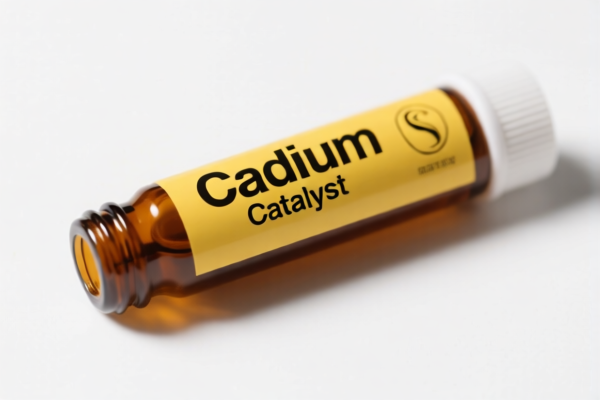
AI Analysis
⚗️ Catalyst Additive & Solvent Classification Guide (Chemical Preparations)
🌐 HS Code Reference & Clearance Strategy | 2026 Latest Tariff Analysis | Professional Customs Compliance
📌 I. Product Definition: What is a "Catalyst Additive"?
In international trade, "Catalyst Additive" (often referred to as catalyst solvents, catalyst formulations, or chemical preparations) refers to mixtures or preparations used to enhance, stabilize, or facilitate chemical reactions. These are not pure chemicals but complex blends, often containing:
1. Catalyst Formulations (Solution/Mixture): Liquid or paste forms where the active catalytic agent is dissolved or suspended in a solvent/carrier.
2. Metallic Complexes: Specific organic compounds containing metals (e.g., Nickel, Platinum) acting as the active catalytic site.
3. Binding Additives: Chemical agents added to the catalyst mixture to improve adhesion, stability, or application properties.
⚠️ Key Classification Distinction:
- If the product is a preparation/mixture of catalysts and solvents → Generally falls under Chapter 38 (Miscellaneous Chemical Products).
- If the product is a pure organic compound (even if it acts as a catalyst) → Falls under Chapter 29 (Organic Chemicals).
- Note: The provided data indicates a mix of both Chapter 29 and Chapter 38 classifications depending on the specific chemical nature.
📦 II. HS Code Classification Details (Based on Provided Data)
The following HS Codes are derived strictly from the <DATA> provided. Each code represents a different chemical nature or formulation status of the "Catalyst Additive."
| HS Code | Product Description (Summary) | Application Scenario | Chemical Nature |
|---|---|---|---|
3815.19.00.00 |
Catalyst Preparations: Catalyst solvents classified as catalyst preparations. | Suitable for catalyst forms containing solvents/carriers. | Mixture/Preparation (Ch. 38) |
2942.00.03.00 |
Aromatic Compounds with Ni: Classified as aromatic compounds containing Nickel II. | Specific metal complexes (e.g., Nickel-based catalysts). | Pure Organic Compound (Ch. 29) |
2942.00.35.00 |
Other Organic Compounds: Classified as other organic compounds, suitable for aromatic hydrocarbons in primary forms. | Primary form aromatic hydrocarbons or similar organic structures. | Pure Organic Compound (Ch. 29) |
3824.40.50.00 |
Binding Additives: Chemical preparation additives suitable for additives with no obvious material conflict. | Additives used to bind or stabilize the catalyst mixture. | Mixture/Preparation (Ch. 38) |
3824.10.00.00 |
Chemical Preparations: Chemical preparations suitable for additives consistent with binding agent uses. | General chemical preparations used as binding or processing aids. | Mixture/Preparation (Ch. 38) |
🔍 Critical Note:
- Chapter 38 (3815, 3824): Used when the product is a preparation/mixture (e.g., catalyst dissolved in solvent, or a blend of additives).
- Chapter 29 (2942): Used when the product is a distinct organic chemical compound (e.g., a pure Nickel-Aromatic complex or specific hydrocarbon).
- Misclassification between Ch. 29 and Ch. 38 is a common customs audit risk.
💰 III. 2026 Latest Tariff Rate Breakdown (Including Surcharges)
✅ Applicable Market: United States (US)
✅ Origin: China (CN)
✅ Effective Date: Rates include Section 301 and IEEPA surcharges as per<DATA>
🎯 1. 3815.19.00.00 – Catalyst Preparations (Solvent-Based)
| Item | Detail |
|---|---|
| Base Tariff | 0.0% (ad valorem) |
| Section 301 Surcharge | +25.0% (USITC Footnote 9903.88.01) |
| IEEPA Surcharge | +10.0% (针对中国/香港产品, effective 2025-11-10) |
| Total Tariff Rate | 35.0% |
| Tax Calculation | CIF Value × 35% |
| De Minimis Exemption | ❌ Not Applicable (High tariff rates deny de minimis benefits) |
| Legal Basis Path | USITC:3815.19.00.00 → Section 301 → IEEPA |
📌 Explanation:
- This code covers catalysts where the active component is mixed with a solvent.
- The 35% total rate is driven entirely by the 25% Section 301 and 10% IEEPA surcharges, as the base duty is 0%.
- Warning: This is a high-cost classification. Ensure the product is indeed a "preparation" and not a pure compound to avoid misclassification penalties.
🎯 2. 2942.00.03.00 – Aromatic Compounds Containing Nickel II
| Item | Detail |
|---|---|
| Base Tariff | 0.0% (ad valorem) |
| Section 301 Surcharge | +25.0% |
| IEEPA Surcharge | +10.0% |
| Total Tariff Rate | 35.0% |
| Tax Calculation | CIF Value × 35% |
| De Minimis Exemption | ❌ Not Applicable |
| Legal Basis Path | USITC:2942.00.03.00 → Section 301 → IEEPA |
📌 Explanation:
- This code is for specific metal-organic complexes (e.g., Nickel-based aromatic catalysts).
- If your product is a pure chemical compound containing Nickel, this is likely the correct code.
- Same high tariff burden (35%) as catalyst preparations.
🎯 3. 2942.00.35.00 – Other Organic Compounds (Aromatic Hydrocarbons)
| Item | Detail |
|---|---|
| Base Tariff | 6.5% (ad valorem) |
| Section 301 Surcharge | +25.0% |
| IEEPA Surcharge | +10.0% |
| Total Tariff Rate | 41.5% |
| Tax Calculation | CIF Value × 41.5% |
| De Minimis Exemption | ❌ Not Applicable |
| Legal Basis Path | USITC:2942.00.35.00 → Section 301 → IEEPA |
📌 Explanation:
- This code applies to primary form aromatic hydrocarbons or other organic compounds not specifically listed elsewhere in Ch. 29.
- Highest Base Duty: Note the 6.5% base duty compared to 0% for other codes.
- Total Rate: 41.5% is the highest in this dataset. Avoid this code unless the product is strictly an aromatic hydrocarbon.
🎯 4. 3824.40.50.00 – Binding Additives (Chemical Preparations)
| Item | Detail |
|---|---|
| Base Tariff | 5.0% (ad valorem) |
| Section 301 Surcharge | +25.0% |
| IEEPA Surcharge | +10.0% |
| Total Tariff Rate | 40.0% |
| Tax Calculation | CIF Value × 40% |
| De Minimis Exemption | ❌ Not Applicable |
| Legal Basis Path | USITC:3824.40.50.00 → Section 301 → IEEPA |
📌 Explanation:
- For additives that do not have material conflicts and serve as binders or stabilizers.
- Total rate is 40%. Slightly lower than catalyst preparations due to the 5% base duty.
🎯 5. 3824.10.00.00 – Chemical Preparations (General)
| Item | Detail |
|---|---|
| Base Tariff | 6.0% (ad valorem) |
| Section 301 Surcharge | +25.0% |
| IEEPA Surcharge | +10.0% |
| Total Tariff Rate | 41.0% |
| Tax Calculation | CIF Value × 41% |
| De Minimis Exemption | ❌ Not Applicable |
| Legal Basis Path | USITC:3824.10.00.00 → Section 301 → IEEPA |
📌 Explanation:
- A general "catch-all" for chemical preparations used as additives.
- Total rate is 41%. Use this only if the product does not fit the more specific3824.40.50.00(binding additives) or3815.19.00.00(catalyst preparations).
🛠️ IV. Customs Clearance Practical Advice
✅ 1. Documentation Checklist (Essential for Chemicals)
| Document | Required? | Description |
|---|---|---|
| ✅ COA (Certificate of Analysis) | ✔️ | Crucial. Must detail chemical composition, purity, and presence of solvents/metals. |
| ✅ MSDS/SDS (Safety Data Sheet) | ✔️ | Must comply with GHS standards. Highlights flammability, toxicity, and handling. |
| ✅ Formula Breakdown | ✔️ | Detailed % composition of all components. Needed to distinguish between "Pure Compound" (Ch. 29) and "Preparation" (Ch. 38). |
| ✅ Commercial Invoice | ✔️ | Must specify "Catalyst Preparation" or "Chemical Compound" accurately. Avoid vague terms like "Additive." |
| ✅ Product Photos | ✔️ | Show container labeling, CAS numbers, and physical state (liquid/paste). |
✅ 2. Classification Strategy (Key Decision Tree)
🔥 "Composition Dictates Code: Pure vs. Mixed, Metal vs. Organic"
| Scenario | Recommended HS Code | Reason |
|---|---|---|
| Catalyst dissolved in solvent | 3815.19.00.00 |
It is a preparation (mixture), not a pure chemical. |
| Pure Nickel-Aromatic Complex | 2942.00.03.00 |
It is a specific organic compound with metal. |
| Pure Aromatic Hydrocarbon | 2942.00.35.00 |
It is a primary form organic compound. |
| Additive for Binding/Stability | 3824.40.50.00 |
It is a chemical preparation with no material conflict. |
| General Chemical Additive | 3824.10.00.00 |
Fallback for general chemical preparations. |
✅ 3. Common Mistakes & Pitfalls
❌ Mistake 1: Classifying a solvent-based catalyst as a pure chemical.
👉 Consequence: If misclassified as 2942 (if base duty is lower) or vice versa, customs may issue a 20% duty gap penalty + interest.
👉 Fix: Provide a COA showing the solvent is an integral part of the preparation.
❌ Mistake 2: Ignoring the Section 301 & IEEPA surcharges.
👉 Consequence: Unexpected 35-41.5% costs. Many importers assume "Chemicals" are low-duty, but Chinese-origin chemicals are heavily taxed.
👉 Fix: Budget for 35-41.5% total duty. No de minimis exemption.
❌ Mistake 3: Vague Product Name ("Catalyst Additive").
👉 Consequence: Customs may reject the declaration or assign the highest possible duty (e.g., 2942.00.35.00 at 41.5%) due to uncertainty.
👉 Fix: Use precise terms: "Nickel-Based Aromatic Catalyst Preparation" or "Solvent-Dispersed Catalyst".
🌍 V. Global Market Comparison (2026 Outlook)
| Market | Typical Duty for Catalysts | Key Certification | Note |
|---|---|---|---|
| 🇺🇸 USA | 35% - 41.5% (China Origin) | EPA, TSCA | High surcharges apply. |
| 🇨🇳 China | 0% - 6% | REACH (if applicable) | No Section 301/IEEPA. |
| 🇪🇺 EU | 0% - 6.5% | REACH Registration | No surcharges. REACH compliance is critical. |
| 🇬🇧 UK | 0% - 6.5% | UK REACH | Similar to EU. |
| 🇯🇵 Japan | 0% - 5% | JIS | Low base duties, no surcharges. |
📌 Conclusion:
- US Market is the most expensive for chemical catalysts due to Section 301 (25%) + IEEPA (10%).
- EU/UK require REACH/UK REACH registration, which is a significant compliance hurdle, not just a cost hurdle.
- China Origin goods face no tariffs in China/EU/Japan (base duty only), but face 35-41.5% in the US.
📌 VI. Final Recommendations
- Verify Chemical Nature: Is it a pure compound (Ch. 29) or a mixture/preparation (Ch. 38)? This is the single biggest determinant of HS Code and duty rate.
- Obtain COA: A detailed Certificate of Analysis is mandatory to prove composition.
- Budget for High Duties: Assume 35-41.5% total duty for US imports from China.
- Consider Pre-Ruling: Apply for an IRS Ruling (Pre-Determination) from US Customs to confirm the HS Code before shipping.
- Compliance: Ensure REACH (for EU) or TSCA (for US) compliance for chemical substances.
🎯 Remember:
🔹 "Pure Chemicals vs. Mixtures: Get it Wrong, Pay More!"
🔹 "Section 301 + IEEPA = 35-41.5% Tariff for Chinese Chemicals."
🔹 "Documentation is King: COA and MSDS are Non-Negotiable."
📣 Immediate Action:
📞 Contact your customs broker with the COA and chemical formula.
🚀 Apply for an HS Code Pre-Ruling to avoid post-entry audits and penalties.
💼 Optimize your supply chain: If duty burden is too high, consider supply chain diversification (e.g., from non-China origins) if feasible.
✨ Professional Classification, Smooth Clearance, Cost Control!
💼 Every percentage point of duty impacts your bottom line.
Customer Reviews
About HS Code Classification
The Harmonized System (HS) is an internationally standardized nomenclature developed by the World Customs Organization (WCO) to classify traded products. Over 200 countries use the HS system as the basis for customs tariffs, trade statistics, and import/export regulations.
Each HS code follows a hierarchical structure:
- Chapter (2 digits) — Broad category of goods (e.g., Chapter 84: Machinery and Mechanical Appliances)
- Heading (4 digits) — More specific grouping within the chapter
- Subheading (6 digits) — Internationally standardized breakdown, used by all WCO member countries
- National subdivisions (8-10 digits) — Country-specific extensions for further classification, such as US HTSUS 10-digit codes
Correct HS code classification is essential for smooth customs clearance, accurate duty payment, and compliance with trade regulations. Misclassification can lead to customs delays, overpayment of duties, or penalties.
When importing from CN to US, the applicable tariff rates may include:
- Most-Favored-Nation (MFN) rate — The standard duty rate applied to WTO members
- General rate — Applied to countries without trade agreements
- Trade remedy duties — Additional tariffs such as Section 301 (anti-dumping), Section 232 (national security), or countervailing duties
The information provided on this page is for reference purposes only. For official classification, please consult with your local customs authority or a licensed customs broker.