cattle leather shoe sole leather
CN → US| HS Code | Tariff Rate | Origin | Destination | Doc |
|---|---|---|---|---|
| 4104493060 | 12.4% | CN | US | Official Doc |
| 4107196050 | 15.0% | CN | US | Official Doc |
| 4104114010 | 15.0% | CN | US | Official Doc |
| 4104111020 | 35.0% | CN | US | Official Doc |
| 4107121020 | 35.0% | CN | US | Official Doc |
Product Images
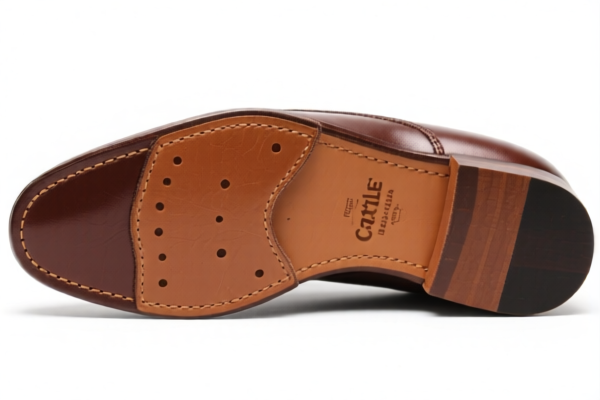
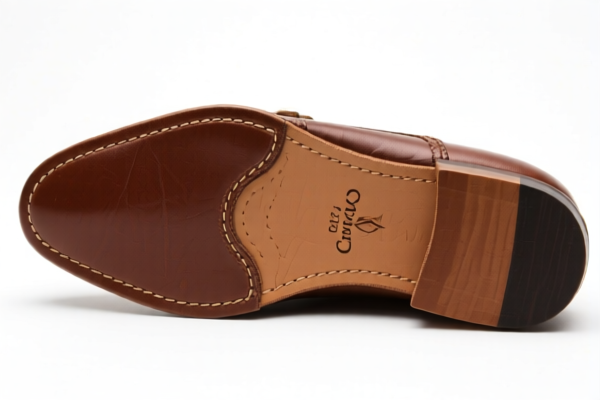
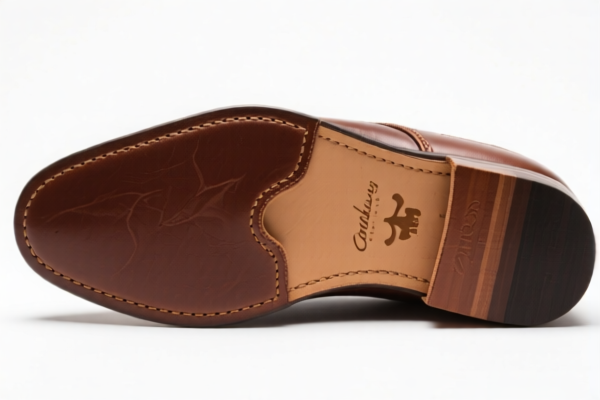

AI Analysis
🥾 Cattle Leather Shoe Sole Leather: HS Code Classification & US Customs Clearance Guide (2026)
🌐 HS Code Reference & Customs Clearance Guide | 2026 Latest Tariff Full Analysis | Professional Transit Strategy
📌 I. Product Definition: Are You Confusing "Sole Leather" with "Upper Leather"?
Cattle leather shoe sole leather is a specialized tanned hide designed specifically to withstand abrasion, water, and bending forces under the foot. In international trade, confusion often arises between sole leather (functional structure) and upper leather (decorative/coveting function).
Key Distinction Criteria: * Sole Leather (Footwear Component): Specifically processed for durability and flexibility as a sole. Often classified under headings 4104 (Crust) or 4107 (Finished). * Upper Leather (Footwear Material): Used for the upper part of the shoe. Classified under specific subheadings based on finish (e.g., vegetable-tanned, chrome-tanned). * Duty Trap: Misdeclaring "Sole Leather" as "Upper Leather" (or vice versa) can lead to significant duty disparities (e.g., 12.4% vs. 35.0% due to Section 301 and IEEPA penalties).
⚠️ Critical Note:
- If the leather is explicitly defined for soles and meets specific physical properties → Look at 4104.49.30.60 or 4107.19.60.50.
- If the leather is generic cattle hide used for shoes (often declared as upper leather even if used for soles in some loose contexts, or correctly classified as upper leather) → Look at 4104.11.40.10, 4104.11.10.20, or 4107.12.10.20.
📦 II. HS Code Classification Details (2026 Latest Tariff Authority Cross-Check)
The following table maps the specific HS Codes from your data to their descriptions and tax implications. Note that all items below are subject to US tariffs (Base + Section 301 + IEEPA).
| HS Code | Product Description | Summary from Data | Applicable Duty Scenario |
|---|---|---|---|
4104.49.30.60 |
Sole Leather (Crust/Unfinished) | Natural buffalo/cattle sole leather; "Other" residual category. | Lower base duty, but subject to high penalties. |
4107.19.60.50 |
Sole Leather (Finished) | Natural buffalo/cattle sole leather; Fits definition of "Sole Leather". | Moderate base duty, high penalties. |
4104.11.40.10 |
Shoe Upper Leather (Crust) | Cattle/Buffalo hide; Use: Upper leather. | Moderate base duty, high penalties. |
4104.11.10.20 |
Shoe Upper Leather (Crust) | Cattle hide; Use: Shoe use. | Zero Base Duty, but High Penalties. |
4107.12.10.20 |
Shoe Upper Leather (Finished) | Cattle hide; Use: Shoe material, classified as Upper Leather. | Zero Base Duty, but High Penalties. |
🔍 Important Observation:
- HS Codes ending in.10(e.g.,4104.11.10.20,4107.12.10.20) have a 0.0% Base Duty but carry a 25% Section 301 Additional Duty.
- HS Codes starting with4104.49or4107.19have 2.4% - 5.0% Base Duties but only a 10% IEEPA Penalty (if applicable under current rules).
- Total Taxation Range: 12.4% to 35.0%.
💰 III. 2026 Latest Tariff Rate Breakdown (Including Surcharges & Policy Add-ons)
✅ Applicable Country: United States (US)
✅ Origin: China (CN)
✅ 生效时间 (Effective Date): Tariffs are currently active. Check for latest IEEPA updates.
🎯 1. 4104.49.30.60 & 4107.19.60.50 – Sole Leather Classifications
These codes apply when the product is strictly identified as sole leather.
| Item | Content |
|---|---|
| Base Duty | 2.4% (4104.49.30.60) or 5.0% (4107.19.60.50) |
| Section 301 (Trade War) | 0.0% |
| IEEPA Penalty (122 Clause) | 10% |
| Total Tax Rate | 12.4% (for 4104.49.30.60) 15.0% (for 4107.19.60.50) |
| Tax Calculation | CIF Value × 12.4% or 15.0% |
| De Minimis Eligibility | ❌ Not Eligible (Textile/Apparel/Leather usually excluded from $800 de minimis for China) |
| Legal Basis | Base HTS → Section 301 (0%) → IEEPA 122 Clause (10%) |
📌 Explanation:
- The 10% IEEPA tariff is a specific penalty clause often applied to certain leather goods or general China-origin goods under emergency powers.
- Crucial: Unlike upper leathers, these sole leather codes do NOT carry the 25% Section 301 tariff in the provided data, making them potentially cheaper (12.4%-15.0% vs. 35.0%).
🎯 2. 4104.11.40.10 – Cattle Hide Upper Leather (Crust)
| Item | Content |
|---|---|
| Base Duty | 5.0% |
| Section 301 | 0.0% |
| IEEPA Penalty | 10% |
| Total Tax Rate | 15.0% |
| Tax Calculation | CIF Value × 15.0% |
📌 Explanation:
- This code is for crust (partially processed) upper leather.
- Similar to sole leather, it benefits from a 0% Section 301 rate but incurs a 10% IEEPA penalty.
🎯 3. 4104.11.10.20 & 4107.12.10.20 – Cattle Hide Upper Leather (Zero Base, High Penalty)
These codes are for specific cattle hides used for shoes, classified as upper leather.
| Item | Content |
|---|---|
| Base Duty | 0.0% |
| Section 301 (Trade War) | 25.0% |
| IEEPA Penalty (122 Clause) | 10% |
| Total Tax Rate | 35.0% |
| Tax Calculation | CIF Value × 35.0% |
| De Minimis Eligibility | ❌ Not Eligible |
| Legal Basis | Base HTS → Section 301 (25%) → IEEPA 122 Clause (10%) |
📌 Crucial Warning:
- Even though the Base Duty is 0%, the 25% Section 301 tariff is massive.
- Total tax is 35.0%, which is more than double the cost of Sole Leather (12.4%-15.0%).
- Why this matters: If you import "Shoe Leather" but declare it incorrectly as Upper Leather (.10.20), you pay 35%. If declared correctly as Sole Leather (.30.60or.60.50), you pay ~12-15%. Proper classification saves 20%+ in duties.
🛠️ IV. Customs Clearance Practical Advice (Pitfall Avoidance Guide)
✅ 1. Preparation Checklist (Missing Items Lead to Delays)
| Document | Required? | Explanation |
|---|---|---|
| ✅ Product Specification Sheet | ✔️ | Must clearly state: "Leather Type: Cattle/Buffalo", "Use: Sole vs. Upper", "Tanning Method". |
| ✅ Photos of Leather | ✔️ | Show grain, finish, and thickness. Soler leather is often thicker and stiffer. |
| ✅ Commercial Invoice | ✔️ | Must specify "Cattle Leather Sole Leather" or "Cattle Hide Upper Leather" accurately. |
| ✅ Material Declaration | ✔️ | Confirm origin (China) to ensure correct 301/IEEPA application. |
| ✅ Test Reports (Optional) | ✔️ | Abrasion resistance tests can prove "Sole" functionality if disputed. |
✅ 2. Declaration Strategy (Key Mantra)
🔥 "Sole is Sole, Upper is Upper! Wrong Code = 35% Tax!"
| Scenario | Correct HS Code | Wrong Code | Consequence |
|---|---|---|---|
| Product is Sole Leather | 4104.49.30.60 or 4107.19.60.50 |
4104.11.10.20 |
Overpay Duty: 12.4% → 35.0% (Loss of profit) |
| Product is Upper Leather | 4104.11.10.20 or 4107.12.10.20 |
4104.49.30.60 |
Undeclared Penalty Risk: Customs may assess additional duties + fines for misclassification. |
| Mixed Shipment | Separate entries | Blended | Audit Risk: Customs will separate and re-rate each item. |
💡 Pro Tip:
If your product is genuinely sole leather, ensure your invoice and packing list explicitly state "FOR SHOE SOLES" and avoid using the word "Upper" or "Shoe Upper" to prevent confusion with the 35% tax bracket.
✅ 3. Special Circumstances
| Situation | Handling Suggestion |
|---|---|
| Buffalo vs. Cattle | Data lists "Water Buffalo" and "Cattle". Ensure your material matches the HS code description. 4104.49.30.60 specifies "Natural Buffalo Leather". If it's regular cowhide, use 4107.19.60.50 or upper codes. |
| Finished vs. Crust | Crust leather (partially tanned) may have different codes (e.g., 4104.11.xxxx). Finished leather (fully tanned/dyed) may fall under 4107. Check your tanning process. |
| Small Samples | Even samples are subject to tariffs if >$800 value aggregated. De minimis usually excludes Chinese leather goods. |
🌍 V. Global Market Comparison (2026 Snapshot)
| Country/Region | Recommended HS Code | Estimated Duty (China Origin) | Notes |
|---|---|---|---|
| 🇺🇸 USA | 4104.49.30.60 (Sole) |
12.4% | Best option for sole leather. Avoid 4104.11.10.20 (35%). |
| 🇺🇸 USA | 4107.12.10.20 (Upper) |
35.0% | Highest burden. Only use if product is definitively upper leather. |
| 🇪🇺 EU | 4104/4107 series | Varies (0-12%) | No Section 301, but different IEEPA rules. Check EU TARIC. |
| 🇨🇳 China | Same HS Codes | 5-10% | Import into China has different duty structures. |
📌 Conclusion:
The USA is the most challenging market for leather imports due to IEEPA and Section 301 tariffs.
- Optimization Strategy: Classify as Sole Leather (4104.49.30.60or4107.19.60.50) whenever possible to pay 12.4%-15.0% instead of 35.0%.
- Verification: Always confirm with a licensed customs broker if the leather meets the technical definition of "Sole Leather" (ASTM standards for abrasion/flex).
📌 VI. Common Errors & Pitfall Guide (Blood & Tears Lessons)
❌ Error 1: Calling Sole Leather "Shoe Leather" or "Upper Leather" generically.
👉 Result: Customs may default to the higher duty code (4104.11.10.20) → 35% Tax.
❌ Error 2: Assuming all leather from China gets 25% Section 301.
👉 Result: The provided data shows Sole Leather codes (4104.49, 4107.19) have 0% Section 301 but 10% IEEPA. Misunderstanding this leads to incorrect cost forecasting.
❌ Error 3: Ignoring the "122 Clause" (IEEPA).
👉 Result: Even with 0% base duty, the 10% or 25% add-on is mandatory. Total cost must include this.
✅ Correct Approach:
"Cattle Hide, Vegetable Tanned, Specifically Cut for Shoe Soles, Thickness 4mm, Abrasion Resistant"
🎯 VII. Conclusion: Precision Classification = Profit Protection
🎯 Remember the Mantra:
🔹 "Sole Leather = 12-15% Tax"
🔹 "Upper Leather = 35% Tax"
🔹 "Don't Pay 35% if it's a Sole!"
🔹 "Check the IEEPA Clause: 10% vs 25% Makes a Huge Difference!"
📌 Tips:
- If your leather is Buffalo, prefer 4104.49.30.60 for the lowest rate (12.4%).
- If your leather is Cattle Cowhide for soles, use 4107.19.60.50 (15.0%).
- If it's Upper Leather, you pay 35%. Can you design the product to be classified as Sole? (e.g., using it in a sandal sole structure).
📣 Immediate Action:
📞 Contact your Customs Broker: Provide physical samples and photos.
📝 Request a Pre-Ruling: Ask specifically if your product qualifies for4104.49.30.60or4107.19.60.50.
🚀 Save 20% in Duties: Don't leave money on the table due to generic naming.
✨ Professional Clearance Starts with Accurate Classification!
💼 Every 1% of duty saved is pure profit!
Customer Reviews
About HS Code Classification
The Harmonized System (HS) is an internationally standardized nomenclature developed by the World Customs Organization (WCO) to classify traded products. Over 200 countries use the HS system as the basis for customs tariffs, trade statistics, and import/export regulations.
Each HS code follows a hierarchical structure:
- Chapter (2 digits) — Broad category of goods (e.g., Chapter 84: Machinery and Mechanical Appliances)
- Heading (4 digits) — More specific grouping within the chapter
- Subheading (6 digits) — Internationally standardized breakdown, used by all WCO member countries
- National subdivisions (8-10 digits) — Country-specific extensions for further classification, such as US HTSUS 10-digit codes
Correct HS code classification is essential for smooth customs clearance, accurate duty payment, and compliance with trade regulations. Misclassification can lead to customs delays, overpayment of duties, or penalties.
When importing from CN to US, the applicable tariff rates may include:
- Most-Favored-Nation (MFN) rate — The standard duty rate applied to WTO members
- General rate — Applied to countries without trade agreements
- Trade remedy duties — Additional tariffs such as Section 301 (anti-dumping), Section 232 (national security), or countervailing duties
The information provided on this page is for reference purposes only. For official classification, please consult with your local customs authority or a licensed customs broker.