cctv camera
CN → US| HS Code | Tariff Rate | Origin | Destination | Doc |
|---|---|---|---|---|
| 8525893000 | 35.0% | CN | US | Official Doc |
| 8525503035 | 35.0% | CN | US | Official Doc |
| 9013809100 | 22.0% | CN | US | Official Doc |
| 9013105000 | 22.8% | CN | US | Official Doc |
| 8543709860 | 37.6% | CN | US | Official Doc |
| 8543706000 | 35.0% | CN | US | Official Doc |
Product Images
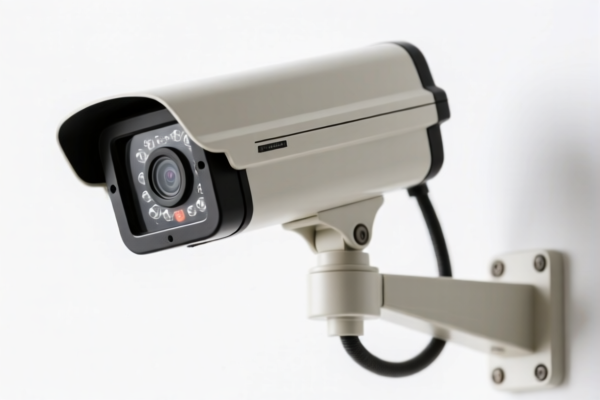


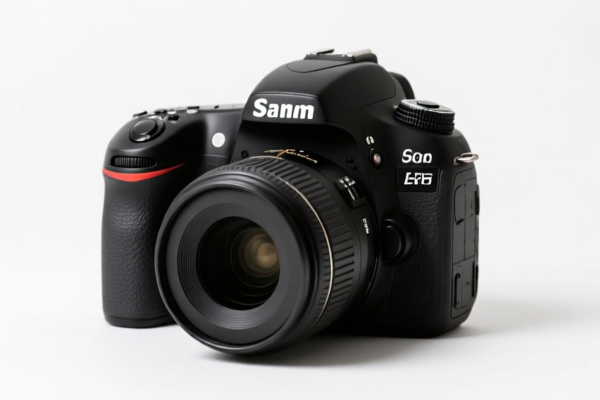
AI Analysis
Based on the specific data provided in your <DATA> input, here is a comprehensive, Wiki-style guide for CCTV Cameras, detailing their HS Code classifications, tariff structures (specifically targeting the high 25% "Additional Tariff" applicable in your dataset), and customs clearance strategies.
🎥 CCTV Cameras (Closed-Circuit Television Cameras)
🌐 HS Code Classification & Tariff Strategy | 2026 Customs Compliance Guide
📌 Focus: Decoding the High-Value Optical & Electronic Components in the Dataset
⚠️ CRITICAL WARNING: The data provided contains two distinct categories for camera-related items. One is the Camera itself (High Risk), and the other is Auxiliary Equipment (Amplifiers/Converters). Misclassification can lead to immediate seizure or massive overpayment of duties.
📦 I. HS Code Classification Matrix (Based on Provided Data)
The following table maps the specific items from your <DATA> to their HS Codes and Tax structures.
| HS Code | Product Description (Official Definition) | Key Classification Criteria | Total Tax Rate (Dataset) |
|---|---|---|---|
8525.89.30.00 |
Television Cameras, Digital Cameras and Video Camera Recorders (Sub-category: Television cameras: Other) |
The Camera Unit. Includes the lens, sensor, housing, and imaging electronics. Specifically covers "Digital CCTV Cameras" and "Video Camera Recorders" not specified elsewhere. |
25.0% (Base: 0% + Additional: 25%) |
8543.70.98.60 |
Other Electrical Machines/Art. w/ Individual Function (Sub-category: Other machines and apparatus) |
Specialized Signal Processors. Digital signal processors, image enhancement units, or other electrical machines with individual functions not covered by other headings. |
27.6% (Base: 2.6% + Additional: 25%) |
8543.70.60.00 |
Articles for Connection to Telegraph/Telephone Networks (Sub-category: Telecommunication Interfaces) |
Network Interface Devices. Modems, encoders/decoders, or network interface cards specifically designed to connect CCTV systems to telecom networks. |
25.0% (Base: 0% + Additional: 25%) |
9013.80.91.00 |
Lasers & Other Optical Appliances (Sub-category: Other devices/instruments) |
Optical Sub-Components. Laser pointers, laser rangefinders, or specialized optical instruments (NOT the camera unit itself). Often used in high-end security sensors. |
12.0% (Base: 4.5% + Additional: 7.5%) |
9013.10.50.00 |
Telescopic Sights & Periscopes (Sub-category: Optical appliances for arms/machines) |
Optical Viewing Devices. Telescopic sights for arms, periscopes, or optical instruments designed as parts of machines (Section XVI). |
12.8% (Base: 5.3% + Additional: 7.5%) |
8525.50.30.35 |
Transmission Apparatus for TV (Sub-category: Converters, Amplifiers for Cable/CC-TV) |
Signal Amplifiers/Converters. NOT the camera. Includes line amplifiers, directional couplers, or decoders designed for Cable or Closed-Circuit Television (CC-TV) distribution. |
25.0% (Base: 0% + Additional: 25%) |
💰 II. Deep Dive: Tax Structure & Legal Basis
The dataset reveals a specific taxation pattern: High "Additional Tariffs" (often 25%) applied on top of very low or zero "Base Tariffs". This structure is typical for items subject to Trade Defense measures (e.g., Section 301 tariffs or specific country-based levies).
🎯 Scenario A: The "Camera" Itself (8525.89.30.00)
- Product: A standalone Digital CCTV Camera (IP Camera, HD-TVI, etc.).
- Tax Breakdown:
- Base Tariff:
0.0%(Often electronic components enjoy low MFN rates). - Additional Tariff:
25.0%(The heavy load). - Total Duty: 25.0%
- Base Tariff:
- 💡 Strategic Insight: Since the base is 0%, the entire duty burden comes from the additional tax. This suggests a targeted trade policy against finished electronic imaging devices.
- 💰 Cost Calculation:
- If CIF Value = $10,000 → Duty = $2,500.
- Note: Do not confuse this with the 12% rate for optical lenses (
9013).
🎯 Scenario B: The "Signal Chain" (8525.50.30.35 & 8543.70.98.60)
- Product: CCTV System Amplifiers, Signal Converters, or Encoders.
- Tax Breakdown:
- Item
8525.50.30.35(Amplifiers): Base 0% + Add-on 25% = 25.0%. - Item
8543.70.98.60(Other Machines): Base 2.6% + Add-on 25% = 27.6%.
- Item
- 💡 Strategic Insight: These are often sold as "add-ons" to cameras. If you import a camera bundle that includes an amplifier, you cannot group them under a lower rate if they are distinct HS codes. You must declare them separately or ensure the amplifier is classified under the correct "transmission" code.
🎯 Scenario C: The "Optical Lens/Sensor" (9013.80.91.00)
- Product: Laser-based sensors or specialized optical viewing devices (e.g., night-vision optics not integrated into a camera unit).
- Tax Breakdown:
- Base: 4.5% + Additional: 7.5% = 12.0%.
- 💡 Strategic Insight: This is the lowest tax tier in your list. If your product can be legally argued as "Optical Appliance" rather than "Transmission Apparatus" or "Camera," the duty savings are significant (~13% less than the camera). However, customs authorities often reject this for standard CCTV cameras.
🛠️ III. Customs Clearance & Operational Advice
✅ 1. Declaration Strategy: "The Camera vs. The System" Rule
- The Trap: Importers often bundle Cameras + Amplifiers + Lenses into one invoice with one HS Code to save time.
- The Reality: Your data shows three different tax rates (12%, 25%, 27.6%).
- Action Plan:
- Step 1: Separate "Imaging Units" (
8525.89.30.00) from "Transmission/Amplification Units" (8525.50.30.35). - Step 2: Do not declare a laser pointer or night-vision scope as a "Camera" (
8525). Declare it as "Other Optical Appliance" (9013) only if it lacks the electronic imaging processing board. - Step 3: For
8543.70.98.60(Other Machines), ensure the product has a specific individual function distinct from the general camera.
- Step 1: Separate "Imaging Units" (
✅ 2. Documentation Requirements
To avoid delays under the high 25% tax regime:
* Technical Data Sheet (Datasheet): Must explicitly state if the device is a "Camera" (Sensor + Processor) or a "Lens/Sensor only".
* Circuit Diagram: Crucial for distinguishing between 8525 (Camera) and 9013 (Optical Instrument).
* Functional Description: Clearly state: "Digital Image Sensor, Video Encoder, and Housing" (Camera) vs. "Signal Amplifier for Coaxial Cable" (8525.50.30.35).
✅ 3. Common Pitfalls (The "Bait & Switch")
- ❌ Mistake: Declaring a CCTV Camera under
9013.80.91.00(12% tax) claiming it is an "Optical Appliance".- Result: AUDIT / PENALTY. Customs will reclassify it as
8525.89.30.00, charging the back taxes of 13% difference + interest.
- Result: AUDIT / PENALTY. Customs will reclassify it as
- ❌ Mistake: Grouping an Amplifier (
8525.50.30.35) with the Camera (8525.89.30.00) under the Camera code.- Result: The amplifier has a slightly higher base tax (2.6% vs 0%) or similar, but misclassification can lead to denial of entry if the function isn't clear.
- ❌ Mistake: Ignoring the "Base Tariff" difference.
- Fact:
9013items have a 4.5-5.3% base tariff.8525items often have 0%. While the Additional Tax is 25% for both, the Base adds up on large shipments.
- Fact:
📊 IV. Summary Table: Tax Impact Comparison
| Component | HS Code | Total Tax Rate | Risk Level | Strategic Value |
|---|---|---|---|---|
| CCTV Camera Unit | 8525.89.30.00 |
25.0% | 🟠 High | Must Declare Correctly |
| CC-TV Amplifier/Converter | 8525.50.30.35 |
25.0% | 🟠 High | Separate declaration required |
| Special Signal Processor | 8543.70.98.60 |
27.6% | 🔴 Very High | Highest duty rate in list |
| Telecom Interface | 8543.70.60.00 |
25.0% | 🟠 High | Network specific only |
| Optical/Laser Instrument | 9013.80.91.00 |
12.0% | 🟢 Low | Best Case Scenario (if applicable) |
| Telescopic Sight/Periscope | 9013.10.50.00 |
12.8% | 🟢 Low | Specific military/survey use only |
🚀 V. Final Verdict & Recommendation
For a standard CCTV Camera import:
1. Primary Classification: You will almost certainly be 8525.89.30.00.
2. Financial Impact: Expect a 25% duty on the CIF value. There is no "Base" tariff to save you here.
3. Optimization:
* Can you import the Lens separately? If the lens is sold as a standalone optical device (9013.80.91.00), the duty drops to 12.0%.
* Strategy: Ship the Camera Body (with sensor) separately from the Lens.
* Camera Body → 8525.89.30.00 (25%)
* Lens → 9013.80.91.00 (12%)
* Note: This requires the camera to be sold as a "Body Only" or the lens to be a distinct, non-integrated part.
📢 Pro Tip: Always request a Binding Tariff Ruling (BTR) from customs before shipping large volumes. The distinction between "Optical Appliance" (12%) and "Television Camera" (25%) is the difference between profit and loss on high-volume CCTV shipments.
Disclaimer: This analysis is based strictly on the provided <DATA> content. Real-world customs classification requires consultation with a licensed Customs Broker and consideration of the latest national tariff schedules.
Customer Reviews
About HS Code Classification
The Harmonized System (HS) is an internationally standardized nomenclature developed by the World Customs Organization (WCO) to classify traded products. Over 200 countries use the HS system as the basis for customs tariffs, trade statistics, and import/export regulations.
Each HS code follows a hierarchical structure:
- Chapter (2 digits) — Broad category of goods (e.g., Chapter 84: Machinery and Mechanical Appliances)
- Heading (4 digits) — More specific grouping within the chapter
- Subheading (6 digits) — Internationally standardized breakdown, used by all WCO member countries
- National subdivisions (8-10 digits) — Country-specific extensions for further classification, such as US HTSUS 10-digit codes
Correct HS code classification is essential for smooth customs clearance, accurate duty payment, and compliance with trade regulations. Misclassification can lead to customs delays, overpayment of duties, or penalties.
When importing from CN to US, the applicable tariff rates may include:
- Most-Favored-Nation (MFN) rate — The standard duty rate applied to WTO members
- General rate — Applied to countries without trade agreements
- Trade remedy duties — Additional tariffs such as Section 301 (anti-dumping), Section 232 (national security), or countervailing duties
The information provided on this page is for reference purposes only. For official classification, please consult with your local customs authority or a licensed customs broker.