cd player combo low power consumption
CN → US| HS Code | Tariff Rate | Origin | Destination | Doc |
|---|---|---|---|---|
| 8519814150 | 10.0% | CN | US | Official Doc |
| 8519813010 | 35.0% | CN | US | Official Doc |
| 8543709860 | 37.6% | CN | US | Official Doc |
| 8527916040 | 17.5% | CN | US | Official Doc |
| 8527136040 | 10.0% | CN | US | Official Doc |
Product Images
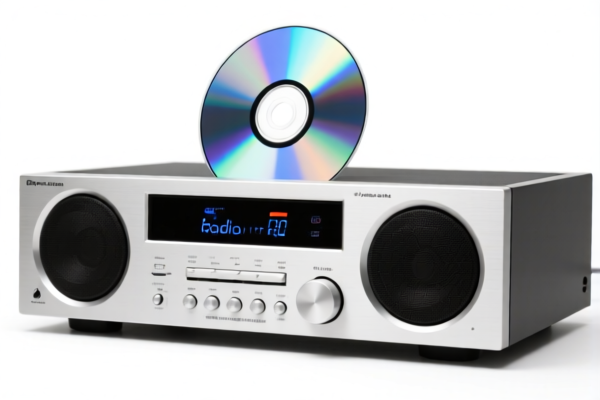


AI Analysis
🎶 CD Player Combo (Low Power Consumption)
🌐 HS Code Reference & Customs Clearance Guide | 2026 Latest Tariff Analysis | Professional-Level Strategy
📌 I. Product Definition & Classification: Do You Really Understand "CD Player Combos"?
A CD Player Combo is a multi-functional audio device that typically integrates a CD optical media player with other audio features such as FM/AM radio, USB playback, Bluetooth, or cassette decks. The key identifier for customs classification is the primary function and the use of optical media.
Optical Media Definition: Any disc read by a laser beam (CD, DVD, Blu-ray). If the device plays CDs, it falls under specific audio/optical categories, not general electrical appliances.
⚠️ Key Distinction Point:
- If the device primarily functions as a sound reproducer using optical discs → It falls under HS 8519 (Sound Recording/Reproducing Apparatus).
- If the device is primarily a radio receiver with minor CD capabilities → It may fall under HS 8527 (Radio Receivers).
- If the device is a specialized industrial or non-consumer audio device → It may fall under HS 8543 (Other Electrical Machines).
📦 II. HS Code Classification Details (2026 Latest Tariff Authority Comparison)
Based on the provided data, here are the 5 possible HS Codes for a "CD Player Combo" imported from China to the US, along with their tax implications.
| HS Code | Product Description | Reason for Classification | Total Tax Rate | Tax Breakdown (China Origin) |
|---|---|---|---|---|
8519.81.41.50 |
Sound Recording/Reproducing Apparatus using optical media | Best Fit: Explicitly defined as a sound reproducer using optical media (CD). | 10.0% | Base: 0%, 301 Tariff: 0%, 122 Clause: 10% |
8519.81.30.10 |
CD Player (Optical Disc Player) | Fits definition of optical disc player; combo form considered sound reproducer. | 35.0% | Base: 0%, 301 Tariff: 25%, 122 Clause: 10% |
8543.70.98.60 |
Other Electrical Machines/Devices (Audio Equipment) | Classified as a finished consumer audio device under "Other Machines." | 37.6% | Base: 2.6%, 301 Tariff: 25%, 122 Clause: 10% |
8527.91.60.40 |
Radio Receiver with integrated CD recording/playback | Includes CD player; combo form fits "broadcast receiver with recording/reproducing function." | 17.5% | Base: 0%, 301 Tariff: 7.5%, 122 Clause: 10% |
8527.13.60.40 |
Radio Receiver combined with other recording/reproducing devices | Contains CD player; combo form fits "combined with other recording/reproducing devices." | 10.0% | Base: 0%, 301 Tariff: 0%, 122 Clause: 10% |
🔍 Important Note:
- HS 8519.81.41.50 is often the most accurate for pure CD players or combos where audio reproduction is the main function.
- HS 8527 codes are used if the radio/tuner function is dominant and the CD is an accessory.
- HS 8543 is a catch-all for specialized audio devices not fitting 8519/8527.
- The 122 Clause Tariff (10%) applies to all Chinese-origin audio/optical devices under these codes as of 2026.
💰 III. 2026 Latest Tariff Rate Details (Including Surtaxes & Policy Additions)
✅ Applicable Country: United States (US)
✅ Origin: China (CN)
✅ Effective Date: 2025/2026 Tariff Schedule
🎯 1. 8519.81.41.50 —— Sound Reproducing Apparatus (Optical Media)
| Item | Content |
|---|---|
| Base Tariff | 0% (ad valorem) |
| Section 301 Tariff | 0% (No additional 25% tariff for this subheading) |
| 122 Clause Tariff | +10% (For Chinese-origin audio/optical devices) |
| Total Tariff | 10.0% |
| Calculation | CIF Value × 10% |
| De Minimis Exemption | ❌ Not Applicable (De Minimis ($800) does not cover 122 Clause items) |
| Legal Basis | HTSUS:8519.81.41.50 → 122 Clause: 10% |
📌 Explanation:
- This is the lowest tariff option if the device is clearly a CD player/combo.
- The 0% 301 tariff makes it significantly cheaper than other optical device codes.
- Low Power Consumption does not change the HS Code but may help in marketing and energy labeling compliance (Energy Star).
🎯 2. 8519.81.30.10 —— Optical Disc Player
| Item | Content |
|---|---|
| Base Tariff | 0% |
| Section 301 Tariff | +25% |
| 122 Clause Tariff | +10% |
| Total Tariff | 35.0% |
| Calculation | CIF Value × 35% |
| De Minimis Exemption | ❌ Not Applicable |
| Legal Basis | HTSUS:8519.81.30.10 → USITC Footnote → 122 Clause: 10% |
📌 Warning:
- If customs classifies your CD player as a general "Optical Disc Player" rather than "Sound Reproducing Apparatus," you pay 35% instead of 10%.
- This is a 25% increase due to Section 301 tariffs.
🎯 3. 8543.70.98.60 —— Other Electrical Machines (Audio Equipment)
| Item | Content |
|---|---|
| Base Tariff | 2.6% |
| Section 301 Tariff | +25% |
| 122 Clause Tariff | +10% |
| Total Tariff | 37.6% |
| Calculation | CIF Value × 37.6% |
| De Minimis Exemption | ❌ Not Applicable |
📌 Note:
- This is the highest tariff option.
- Only use if the device has specialized industrial functions beyond standard audio playback.
🎯 4. 8527.91.60.40 —— Radio Receiver with CD
| Item | Content |
|---|---|
| Base Tariff | 0% |
| Section 301 Tariff | +7.5% |
| 122 Clause Tariff | +10% |
| Total Tariff | 17.5% |
| Calculation | CIF Value × 17.5% |
| De Minimis Exemption | ❌ Not Applicable |
📌 Explanation:
- Use this if the radio/tuner is the primary function and the CD player is secondary.
- Lower than pure CD players (8519.81.30.10) but higher than8519.81.41.50.
🎯 5. 8527.13.60.40 —— Combined Radio/Recording Device
| Item | Content |
|---|---|
| Base Tariff | 0% |
| Section 301 Tariff | 0% |
| 122 Clause Tariff | +10% |
| Total Tariff | 10.0% |
| Calculation | CIF Value × 10% |
| De Minimis Exemption | ❌ Not Applicable |
📌 Explanation:
- Similar to8519.81.41.50in total tax, but classified under Radio Receivers.
- Requires proof that the device is a combined radio and recording/reproducing device.
🛠️ IV. Customs Clearance Practical Advice (Real-World Pitfall Guide)
✅ 1. Document Checklist (Mandatory)
| Document | Required | Notes |
|---|---|---|
| ✅ Product Specification Sheet | ✔️ | Must state: "CD Player Combo," "Optical Media Player," "FM/AM Radio," "Low Power Consumption." |
| ✅ Circuit Diagram/Block Diagram | ✔️ | To prove primary function (Audio Reproduction vs. Radio Reception). |
| ✅ Product Photos | ✔️ | Show all ports (CD slot, USB, Antenna, Power). |
| ✅ Commercial Invoice | ✔️ | Describe as: "CD Player Combo with Optical Media Playback, Model XYZ." |
| ✅ Certificate of Origin (CO) | ✔️ | Essential for confirming China origin and applying 122 Clause. |
| ✅ Energy Efficiency Label | ✔️ | If marketed as "Low Power Consumption," provide energy rating (e.g., Energy Star). |
✅ 2. Classification Strategy (Key Tips)
🔥 "Optical Disc = Audio, Not Radio. Low Power Doesn’t Change HS!"
| Scenario | Correct HS Code | Wrong Practice | Consequence |
|---|---|---|---|
| Pure CD Player or Combo with CD as main feature | 8519.81.41.50 |
Misclassify as 8519.81.30.10 |
25% extra tariff |
| Radio with CD as secondary feature | 8527.91.60.40 |
Misclassify as 8519.81.41.50 |
Potential reclassification audit |
| Industrial Audio Device | 8543.70.98.60 |
Misclassify as consumer audio | Higher tax + legal risk |
✅ 3. Special Cases
| Situation | Handling Advice |
|---|---|
| "Low Power Consumption" Label | Does not affect HS Code. However, ensure compliance with Energy Star or DOE labeling if sold in the US. |
| Combo Device (CD + USB + Bluetooth) | Still classified under 8519 if optical media is key. |
| OEM Custom CD Players | Provide client design docs to prove primary function. |
| Gift Sets (CD Player + Accessories) | Declare as single unit under one HS Code. Do not split. |
🌍 V. Global Market Comparison (2026 Latest)
| Country/Region | Recommended HS Code | Tariff (China Origin) | Certification Required | Notes |
|---|---|---|---|---|
| 🇺🇸 USA | 8519.81.41.50 |
10% | FCC + Energy Star (if applicable) | 122 Clause applies. |
| 🇨🇳 China | 8519.81.41.50 |
0% (Domestic) | CCC | No export tariffs. |
| 🇪🇺 EU | 8509.40.00 |
0% (if under 0% MFN) | CE + RoHS | No 122 Clause equivalent. |
| 🇬🇧 UK | 8509.40.00 |
0% | UKCA + RoHS | Post-Brexit rules apply. |
| 🇯🇵 Japan | 8527.91.00 |
0% | PSE | No additional surcharges. |
📌 Conclusion:
- The US 122 Clause (10%) is a unique surcharge for Chinese audio/optical devices.
- EU and UK do not have equivalent surcharges, making them more cost-effective for Chinese exporters.
- Low Power Consumption is a marketing feature, not a customs classification factor.
📌 VI. Common Mistakes & Pitfalls (Lessons Learned)
❌ Mistake 1: Classifying CD Player as 8519.81.30.10
👉 Result: 35% tariff instead of 10%. Loss of 25% competitiveness.
❌ Mistake 2: Splitting CD Player and Radio into separate shipments
👉 Result: Higher total tax due to multiple 122 Clause applications.
❌ Mistake 3: Ignoring the 122 Clause
👉 Result: Unexpected 10% surcharge at customs, leading to delays and penalties.
❌ Mistake 4: Using "Low Power" as a reason for different HS Code
👉 Result: Rejection by customs. Energy efficiency is separate from product identity.
✅ Correct Practice:
"CD Player Combo, Optical Media, FM/AM Radio, Bluetooth, Low Power Consumption, Model XYZ, FCC Certified, 10% 122 Clause Tariff Applied."
🎯 VII. Conclusion: Accurate Classification Saves Money!
🎯 Remember:
🔹 "Optical Media = Audio, Not Radio."
🔹 "122 Clause = 10%, Always."
🔹 "Low Power = Marketing, Not Customs."
🔹 "HS Code Determines Tariff, Not Wattage."
📌 Tip:
If your CD Player Combo is originally from Vietnam, Mexico, or Thailand, you may avoid the 122 Clause and Section 301 tariffs. Consider supply chain diversification for US market entry.
📣 Take Action Now:
📞 Consult a Professional Customs Broker + Provide Product Diagrams + Apply for Advance Ruling
🚀 Ensure Smooth Customs Clearance, Reduce Costs, and Maximize Profits!
✨ Professional Clearance Starts with Accurate Classification!
💼 Every Cent Counts in International Trade!
Customer Reviews
About HS Code Classification
The Harmonized System (HS) is an internationally standardized nomenclature developed by the World Customs Organization (WCO) to classify traded products. Over 200 countries use the HS system as the basis for customs tariffs, trade statistics, and import/export regulations.
Each HS code follows a hierarchical structure:
- Chapter (2 digits) — Broad category of goods (e.g., Chapter 84: Machinery and Mechanical Appliances)
- Heading (4 digits) — More specific grouping within the chapter
- Subheading (6 digits) — Internationally standardized breakdown, used by all WCO member countries
- National subdivisions (8-10 digits) — Country-specific extensions for further classification, such as US HTSUS 10-digit codes
Correct HS code classification is essential for smooth customs clearance, accurate duty payment, and compliance with trade regulations. Misclassification can lead to customs delays, overpayment of duties, or penalties.
When importing from CN to US, the applicable tariff rates may include:
- Most-Favored-Nation (MFN) rate — The standard duty rate applied to WTO members
- General rate — Applied to countries without trade agreements
- Trade remedy duties — Additional tariffs such as Section 301 (anti-dumping), Section 232 (national security), or countervailing duties
The information provided on this page is for reference purposes only. For official classification, please consult with your local customs authority or a licensed customs broker.