cd player system with aux interface
CN → US| HS Code | Tariff Rate | Origin | Destination | Doc |
|---|---|---|---|---|
| 8543709860 | 37.6% | CN | US | Official Doc |
| 8518500000 | 35.0% | CN | US | Official Doc |
| 8518402000 | 35.0% | CN | US | Official Doc |
| 8519813010 | 35.0% | CN | US | Official Doc |
| 8519814150 | 10.0% | CN | US | Official Doc |
Product Images
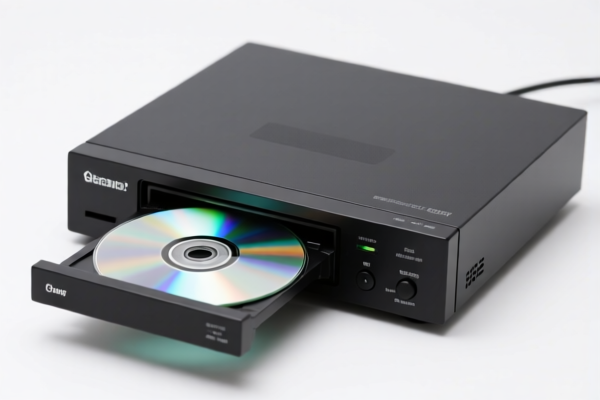
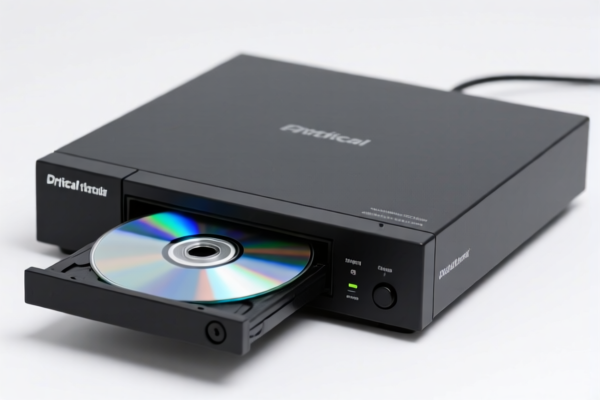


AI Analysis
🎵 CD Player System with AUX Interface
🌐 HS Code Reference & Customs Clearance Guide | 2026 Latest Tariff Analysis | Professional-Level Strategy 📌 I. Product Definition & Classification: Do You Really Understand "CD Player Systems"?
A CD Player System with an AUX interface is a complex electronic device that combines optical disc reading technology with audio signal processing and amplification. In international trade, its classification hinges on whether it is viewed as a standalone disc player or an audio amplifier/system. This distinction dramatically impacts tariff liabilities, especially under US trade policies.
Core Components & Functionality: * CD Mechanism: Optical disc reading (sound reproduction). * AUX Interface: Audio Input/Output for external signal processing. * Amplification: Internal circuits to drive speakers (implied by "System").
⚠️ Critical Distinction:
- If the device is primarily a disc reader with basic output → Consider 8519 (Sound Recording/Reproducing Apparatus).
- If the device is primarily an audio amplifier/system that includes a CD player → Consider 8518 (Loudspeakers/Audio Amplifiers).
- If the device is a general-purpose electronic unit not strictly defined elsewhere → Consider 8543 (Other Electrical Machines).
📦 II. HS Code Classification Details (2026 Latest Tariff Authority Cross-Reference)
| HS Code | Product Description | Application Scenario | Key Feature |
|---|---|---|---|
8543.70.98.60 |
Electrical apparatus with individual functions, not specified elsewhere (e.g., CD Players/Combinations) | General-purpose audio devices, complex electronic combos | Independent function falls under "Other Machines & Apparatus" |
8518.50.00.00 |
Sound amplifiers (Audio Frequency Electric Amplifiers) & Audio Combination Kits | Systems where amplification is the primary function | Includes AUX input/output; "Audio Combination Kit" definition |
8518.40.20.00 |
Sound Amplifiers (Audio Frequency) | Devices with audio signal processing capabilities | AUX function treated as part of audio signal input/output chain |
8519.81.30.10 |
Sound recording/reproducing apparatus using optical discs | Pure CD players or devices where disc playback is primary | "Optical disc" medium is the key identifier |
8519.81.41.50 |
Other sound recording/reproducing apparatus | General sound reproduction devices with AUX | Broad category for sound reproduction equipment |
🔍 Key Reminder:
- 8519 codes focus on the medium (Optical Disc/CD).
- 8518 codes focus on the function (Amplification/Audio Processing).
- 8543 code is a residual category for complex devices that don't fit neatly into 8518/8519.
💰 III. 2026 Latest Tariff Rate Detailed Breakdown (Including Surcharges & Policy Add-ons)
✅ Applicable Country: United States (US)
✅ Origin: China (CN)
✅ Effective Time: Post-2025 (Including subsequent imports)
🎯 1. 8543.70.98.60 —— Electrical Apparatus (Other Machines)
| Item | Content |
|---|---|
| Base Tariff | 2.6% (ad valorem) |
| USITC Additional Tariff | +25.0% (Section 301) |
| IEEPA Additional Tariff | +10.0% (China/HK specific, from Nov 10, 2025) |
| Total Tariff Rate | 37.6% |
| Tax Calculation | CIF Value × 37.6% |
| De Minimis Eligibility | ❌ No (deny_de_minimis) |
| Legal Basis Path | IEEPA:9903.01.25 → USITC:8543.70.98.60 → FOOTNOTE:9903.88.01 |
📌 Explanation:
- This code treats the device as a general "Other Machine."
- The 37.6% rate is very high, driven by the 25% Section 301 tariff and the 10% IEEPA surcharge.
- Use this if the device's primary identity is ambiguous or if it falls outside strict amplifier/disc player definitions.
🎯 2. 8518.50.00.00 & 8518.40.20.00 —— Audio Amplifiers & Combination Kits
| Item | Content |
|---|---|
| Base Tariff | 0.0% |
| USITC Additional Tariff | +25.0% |
| IEEPA Additional Tariff | +10.0% |
| Total Tariff Rate | 35.0% |
| Tax Calculation | CIF Value × 35.0% |
| De Minimis Eligibility | ❌ No |
| Legal Basis Path | IEEPA:9901.25 → USITC:8518.50.00.00 / 8518.40.20.00 |
📌 Explanation:
- If the device is classified as an Audio Amplifier System (where the CD player is just one component of an audio kit), the base tariff is 0%.
- However, the 25% Section 301 + 10% IEEPA still apply, totaling 35.0%.
- This is 2.6% cheaper than the 8543 classification.
- Applies to both8518.50.00.00(Amplifier combos) and8518.40.20.00(Audio Frequency Amplifiers).
🎯 3. 8519.81.30.10 & 8519.81.41.50 —— Sound Recording/Reproducing Apparatus (Optical Disc)
| Item | Content |
|---|---|
| Base Tariff | 0.0% (8519.81.41.50) / 0.0% (8519.81.30.10) |
| USITC Additional Tariff | 0.0% (8519.81.41.50) / +25.0% (8519.81.30.10) |
| IEEPA Additional Tariff | +10.0% |
| Total Tariff Rate | 10.0% (8519.81.41.50) / 35.0% (8519.81.30.10) |
| Tax Calculation | CIF Value × 10.0% or 35.0% |
| De Minimis Eligibility | ❌ No |
| Legal Basis Path | IEEPA:9903.01.24 → USITC:8519.81.41.50 |
📌 CRITICAL INSIGHT:
-8519.81.41.50offers the lowest total tariff at 10.0%.
- Base: 0%
- Section 301: 0% (Note: Some sub-items of 8519 are exempt from 301, check specific footnotes)
- IEEPA: +10%
-8519.81.30.10has a 35.0% rate (Base 0% + 25% 301 + 10% IEEPA).
- Why the difference?
-8519.81.41.50is for "Other sound recording/reproducing apparatus" where specific conditions might exempt it from Section 301, or it is a newer classification with different treatment.
-8519.81.30.10is explicitly for "Optical Disc" devices, which may still attract the full 301 tariff.
- Strategy: If your device can be classified under8519.81.41.50, it saves 25% in tariffs compared to8543or8518codes!
🛠️ IV. Customs Clearance Practical Advice (Avoid Pitfalls)
✅ 1. Documentation Checklist (Essential)
| Document | Must Provide | Notes |
|---|---|---|
| ✅ Product Specification Sheet | ✔️ | Must detail: CD mechanism type, AUX interface purpose, power supply, dimensions. |
| ✅ Circuit Diagram / Block Diagram | ✔️ | Crucial to prove if amplification is primary (8518) or disc reading is primary (8519). |
| ✅ Product Photos | ✔️ | Clear images of front/back panels, labels, and connections. |
| ✅ Commercial Invoice | ✔️ | Must state "CD Player System with AUX Input/Output" clearly. |
| ✅ Packing List | ✔️ | Show if CD player is separate or integrated. |
| ✅ Origin Certificate | ✔️ | For potential preference programs (if applicable). |
✅ 2. Declaration Strategy (Key Mnemonics)
🔥 "Function First, Medium Second, Avoid 8543 if Possible!"
| Scenario | Recommended HS Code | Tax Rate | Risk |
|---|---|---|---|
| Primary Function: Audio Amplification (CD is just an input source) | 8518.50.00.00 / 8518.40.20.00 |
35.0% | Moderate. Must prove amplification is primary. |
| Primary Function: Disc Playback (High-quality optical reader) | 8519.81.30.10 |
35.0% | High. Subject to full 301 + IEEPA. |
| General Electronic Device (Complex/Undefined) | 8543.70.98.60 |
37.6% | Lowest chance. Highest tax. |
| Optical Disc Player with Specific exemptions | 8519.81.41.50 |
10.0% | Best Case! Requires strong justification for "Other" category. |
📌 Note:
- If you declare as8519.81.41.50, ensure you have evidence that it does not fall under the more specific8519.81.30.10(which might be deemed more accurate for standard CD players).
- Some classifiers may argue that any CD player falls under8519.81.30.10, leading to the 35% rate. Consult a customs broker for a Pre-Ruling.
✅ 3. Special Cases & Handling
| Situation | Handling Advice |
|---|---|
| OEM/White Label Products | Provide end-user manual showing "CD Player" functionality prominently. |
| Combined Units (e.g., CD + FM Radio + AUX) | Emphasize the audio processing aspect if trying for 8518, or disc reading for 8519. |
| Portable vs. Home Stereo | Portable might lean towards 8519. Home stereo systems often lean towards 8518 (Amplifiers). |
| Software-Defined Audio | If the device acts more like a DAC (Digital-to-Analog Converter) with CD input, consider 8518/8543. |
🌍 V. Global Market Clearance Comparison (2026 Update)
| Country/Region | Recommended HS Code | Tariff (China Origin) | Certification | Notes |
|---|---|---|---|---|
| 🇺🇸 USA | 8519.81.41.50 |
10.0% | FCC | Best option if eligible. Avoid 8543 (37.6%). |
| 🇨🇳 China | 8519.81.41.50 |
5-10% (varies) | CCC | Low tariff. No Section 301. |
| 🇪🇺 EU | 8519.81.90 |
0-4% | CE | Generally low tariffs. |
| 🇬🇧 UK | 8519.81.90 |
0-4% | UKCA | Post-Brexit rules apply. |
| 🇯🇵 Japan | 8519.81.90 |
0% | PSE | Free trade agreement benefits may apply. |
📌 Conclusion:
- The US market is the most critical for tariff optimization.
-8519.81.41.50at 10% is significantly better than8543(37.6%) or standard8519(35%).
- However, the risk of reclassification to8519.81.30.10(35%) or8543(37.6%) is real.
📌 VI. Common Mistakes & Pitfalls (Blood & Tears Lessons)
❌ Mistake 1: Declaring as 8543.70.98.60 without justification.
👉 Consequence: Paying 37.6% when you could pay 10-35%.
👉 Fix: Justify why it doesn't fit 8518 or 8519.
❌ Mistake 2: Declaring as 8519.81.30.10 when 8519.81.41.50 is more appropriate.
👉 Consequence: Paying 35% instead of 10%.
👉 Fix: Check if your device has features that exclude it from the specific "Optical Disc" sub-heading (e.g., complex digital processing, multi-functionality).
❌ Mistake 3: Ignoring the AUX interface's role.
👉 Consequence: Misclassification as a simple CD player.
👉 Fix: Highlight the AUX input as part of an Audio System (8518) or a Multi-Function Player (8519/8543).
❌ Mistake 4: Not providing circuit diagrams.
👉 Consequence: Customs cannot determine if amplification is primary → Audit & Penalties.
👉 Fix: Always submit technical specs showing signal flow.
✅ Correct Approach:
"CD Player System with AUX Interface, Model XYZ, featuring optical disc reading, audio frequency amplification, and line-level input/output. FCC Certified."
🎯 VII. Conclusion: Precision in Classification Saves Money!
🎯 Remember the Motto:
🔹 "Function is King, Medium is Queen, IEEPA 10% is Always There!"
🔹 "8519.41.50 at 10% is the Goal, 35% is the Baseline, 37.6% is the Trap!"
📌 Pro Tip:
If your CD player system is complex (e.g., includes networking, smart features), you might fall into 8543. However, if it's a standard audio system, fight for 8519.81.41.50 or 8518.
Apply for an Advance Ruling from US CBP if the value is high and the classification is borderline.
📣 Action Required:
📞 Contact a licensed customs broker.
📄 Submit circuit diagrams and product manuals.
🚀 Optimize your HS Code to save up to 27.6% in tariffs!
✨ Professional Clearance Starts with Accurate Classification!
💼 Every percentage point matters in global trade!
Customer Reviews
About HS Code Classification
The Harmonized System (HS) is an internationally standardized nomenclature developed by the World Customs Organization (WCO) to classify traded products. Over 200 countries use the HS system as the basis for customs tariffs, trade statistics, and import/export regulations.
Each HS code follows a hierarchical structure:
- Chapter (2 digits) — Broad category of goods (e.g., Chapter 84: Machinery and Mechanical Appliances)
- Heading (4 digits) — More specific grouping within the chapter
- Subheading (6 digits) — Internationally standardized breakdown, used by all WCO member countries
- National subdivisions (8-10 digits) — Country-specific extensions for further classification, such as US HTSUS 10-digit codes
Correct HS code classification is essential for smooth customs clearance, accurate duty payment, and compliance with trade regulations. Misclassification can lead to customs delays, overpayment of duties, or penalties.
When importing from CN to US, the applicable tariff rates may include:
- Most-Favored-Nation (MFN) rate — The standard duty rate applied to WTO members
- General rate — Applied to countries without trade agreements
- Trade remedy duties — Additional tariffs such as Section 301 (anti-dumping), Section 232 (national security), or countervailing duties
The information provided on this page is for reference purposes only. For official classification, please consult with your local customs authority or a licensed customs broker.