ceiling fan light
CN → US| HS Code | Tariff Rate | Origin | Destination | Doc |
|---|---|---|---|---|
| 9405198020 | 38.9% | CN | US | Official Doc |
| 8414519060 | 14.7% | CN | US | Official Doc |
| 9405198010 | 38.9% | CN | US | Official Doc |
Product Images

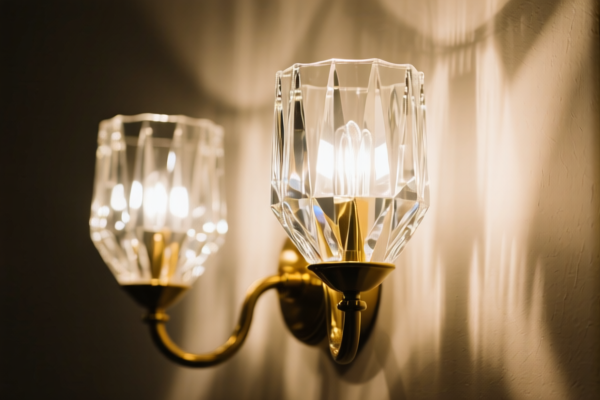


AI Analysis
🌬️💡 Ceiling Fan Light (The Hybrid Hybrid)
🌐 HS Code Reference & Customs Clearance Guide | 2026 Latest Tariff Analysis | Strategic Import Strategy
📌 Section I: Product Definition & Classification: Do You Really Understand "Ceiling Fan Lights"?
A Ceiling Fan Light is a dual-function hybrid device, combining the mechanical rotation of a fan with the illumination of a light fixture. In international trade, the classification depends entirely on the primary function (Fan vs. Light) and how the manufacturer markets and structures the product. This distinction is critical because the tariff rates differ wildly between the two classifications!
⚠️ The Critical Fork in the Road: - If classified as a Light Fixture (Lamp): You face 38.9% total tax due to "Section 301" punitive measures. - If classified as a Fan (Fan): You face 14.7% total tax, a significantly lower burden.
📦 Section II: HS Code Classification Details (2026 Latest Tariff Authority)
Based on the latest tariff data, here are the three specific HS Codes applicable to Ceiling Fan Lights, their logic, and the tax implications.
| HS Code | Product Description | Logic for Classification | Total Tax |
|---|---|---|---|
| 9405.19.80.20 | Ceiling Fan Light as a Chandelier | Classified under "Chandeliers and Other Electric Ceiling Lights". Focuses on the lighting attribute. Material composition shows no conflict with this category. | 38.9% |
| 8414.51.90.60 | Ceiling Fan Light as a Ceiling Fan | Classified under "Fan for ceiling or wall mount". Focuses on the electrical fan attribute (air circulation). This is the preferred classification for functional fans. | 14.7% |
| 9405.19.80.10 | Ceiling Fan Light as Ceiling Light | Classified under "Chandeliers and similar electric floor or ceiling lamps". Focuses on the lighting description without the specific "chandelier" nuance. | 38.9% |
🔍 Key Insight: - Codes 9405.19.80.20 and 9405.19.80.10 are functionally identical in tax (38.9%) as they both treat the device as a Light. - Code 8414.51.90.60 treats the device as a Fan, resulting in a massive 24.2% tax saving.
💰 Section III: 2026 Latest Tariff Rate Breakdown (With Surcharges & Policy Add-ons)
✅ Applicable Country: United States (US) ✅ Country of Origin: China (CN) ✅ Effective Date: Current (2025-2026 Tariff Schedule)
🎯 Scenario A: Classified as a Light (Codes 9405.19.80.20 & 9405.19.80.10)
This classification assumes the light function is dominant or the product is marketed primarily as a fixture.
| Tax Component | Rate | Source / Reason |
|---|---|---|
| Base Tariff | 3.9% | Standard MFN (Most Favored Nation) duty for lighting fixtures. |
| Section 301 (Add-on) | 25.0% | Section 301 Tariffs on Chinese goods (Specifically for lighting products). |
| Section 122 Tariff | 10.0% | Section 122 Tariffs (Section 301 additional duties often layered). |
| Total Tax Rate | 38.9% | (3.9% + 25.0% + 10.0%) |
📌 Explanation: - The 25% is the primary "Section 301" punitive tariff designed to counteract trade imbalances. - The 10% is an additional layer often applied to specific categories under Section 122 or subsequent Section 301 rounds. - Result: This is a high-cost entry. Importers must carefully justify if "Fan" classification is legally defensible.
🎯 Scenario B: Classified as a Fan (Code 8414.51.90.60)
This classification assumes the fan function is dominant.
| Tax Component | Rate | Source / Reason |
|---|---|---|
| Base Tariff | 4.7% | Standard MFN duty for electric fans (8414). |
| Section 301 (Add-on) | 0.0% | NO Section 301 surcharge applied to this specific subheading for fans. |
| Section 122 Tariff | 10.0% | Section 122 Tariffs (Specifically applied to this fan subheading). |
| Total Tax Rate | 14.7% | (4.7% + 0.0% + 10.0%) |
📌 Explanation: - The 0% on Section 301 is the key differentiator. Fans often fall into a different "beneficiary" category or were excluded from the specific 301 list applied to lighting. - The 10% Section 122 tariff remains, but the absence of the 25% penalty makes this the cheaper route.
🛠️ Section IV: Customs Clearance Practical Advice (Avoiding Pitfalls)
✅ 1. Preparation Checklist (Non-Negotiable)
| Document | Requirement | Why it Matters |
|---|---|---|
| Product Specs Sheet | ✔️ Must | Clearly state: "Electric Fan with Light Kit" vs. "Light Fixture with Fan Option." |
| Technical Diagram | ✔️ Must | Show the motor, blades, and light kit separation. Proves the primary function is air movement. |
| Photos (Labeled) | ✔️ Must | Clear shots of the motor housing, blades, and light bulb. |
| User Manual | ✔️ Must | Check the first sentence of the manual. Does it say "High airflow fan..." or "Elegant lighting fixture..."? Customs follows the manual! |
| Commercial Invoice | ✔️ Must | Avoid generic terms like "Light Fan." Use "Ceiling Fan with Integrated Light Kit". |
| Origin Certificate | ✔️ Must | Confirms China origin for the 301/122 calculation. |
✅ 2. Classification Strategy (The "Golden Rule")
🔥 Strategy: "Prove the Fan, Not the Lamp!"
| Situation | Recommended HS Code | Strategy |
|---|---|---|
| Product sold as a "Lighting Solution" (e.g., in a lighting aisle, marketed for decor first) | 9405.19.80.20 or 9405.19.80.10 |
Accept 38.9%. If you claim it's a fan but sell it as a light, you risk a Classified as Light penalty. |
| Product sold as a "Ventilation/Solution" (e.g., in a hardware/fan aisle, marketed for cooling first) | 8414.51.90.60 |
Fight for 14.7%. Emphasize the motor power (watts) and airflow (CFM) over lumen output. |
| Ambiguous Product | 8414.51.90.60 |
Request Advance Ruling. Provide a detailed functional test report showing the fan works independently of the light. |
✅ 3. Special Circumstances Handling
| Scenario | Action Plan |
|---|---|
| OEM Orders | If the client is a lighting retailer, they may force the 9405 classification. Negotiate to use 8414 if the product design allows. |
| Light Kit Separation | If the light kit is sold separately from the fan, the fan goes to 8414.51.90.60 (14.7%) and the light goes to 9405 (38.9%). This is the safest way to split the tax burden! |
| Customs Audit | If audited, prove the motor is the primary component by showing the motor cost is >50% of the BOM (Bill of Materials). |
🌍 Section V: Global Market Comparison (2026)
| Region | Recommended HS Code | Tax Impact | Note |
|---|---|---|---|
| 🇺🇸 USA | 8414.51.90.60 |
14.7% | Critical: Avoid 9405 unless marketing forces it. |
| 🇨🇳 China | 8414.51.90.60 |
~5% (Import duty) | Export from China to China (Domestic) - N/A |
| 🇪🇺 EU | 8414.51.90 |
0-4% | Generally lower tariffs for fans. |
| 🇨🇦 Canada | 8414.51.90 |
0% (CETA) | Fan classification often preferred for lower duty. |
📌 Conclusion: - USA is the only major market where the "Light" vs. "Fan" distinction results in a ~24% tax difference. - Smart Move: Market the product as a "Ceiling Fan with Light Kit" (not a light with a fan) to legally qualify for 14.7%.
📌 Section VI: Common Mistakes & "Blood and Tears" Lessons
❌ Mistake 1: Marketing the product as "Decorative Ceiling Lamp" with a fan attachment.
👉 Consequence: Customs forces 9405.19 classification → 38.9% Tax + Potential fines for misclassification.
❌ Mistake 2: Listing the HS Code as 9405 on the invoice but claiming it's a fan.
👉 Consequence: Mismatch leads to Customs Detention and manual inspection.
❌ Mistake 3: Ignoring the "Light Kit" separation. 👉 Consequence: If the light kit is optional, it should be declared separately to optimize taxes for the base unit.
✅ Correct Way:
"Ceiling Fan with Integrated LED Light Kit" HS Code:
8414.51.90.60Declaration: "Electric Air Circulator with Light Function."
🎯 Section VII: Conclusion: Professional Classification Saves Money!
🎯 Remember the Golden Formula:
🔹 "Fan First, Light Second = 14.7%" 🔹 "Light First, Fan Second = 38.9%" 🔹 "Difference = 24.2% of CIF Value!"
📌 Pro Tip:
If your product design allows, sell the fan and the light kit separately.
- Fan = 8414.51.90.60 (14.7%)
- Light Kit = 9405.19.80.xx (38.9% - but usually lower value)
This strategy can significantly reduce the weighted average tax rate for your overall shipment.
📣 Take Action Now:
📞 Contact your customs broker to review your product's User Manual and Marketing Materials. 🚀 Adjust your invoice description to prioritize the "Fan" function. 📉 Save 24.2% on every unit imported to the US!
✨ Professional Customs Clearance Starts with Accurate Classification!
💼 Your bottom line depends on getting the HS Code right!
Customer Reviews
About HS Code Classification
The Harmonized System (HS) is an internationally standardized nomenclature developed by the World Customs Organization (WCO) to classify traded products. Over 200 countries use the HS system as the basis for customs tariffs, trade statistics, and import/export regulations.
Each HS code follows a hierarchical structure:
- Chapter (2 digits) — Broad category of goods (e.g., Chapter 84: Machinery and Mechanical Appliances)
- Heading (4 digits) — More specific grouping within the chapter
- Subheading (6 digits) — Internationally standardized breakdown, used by all WCO member countries
- National subdivisions (8-10 digits) — Country-specific extensions for further classification, such as US HTSUS 10-digit codes
Correct HS code classification is essential for smooth customs clearance, accurate duty payment, and compliance with trade regulations. Misclassification can lead to customs delays, overpayment of duties, or penalties.
When importing from CN to US, the applicable tariff rates may include:
- Most-Favored-Nation (MFN) rate — The standard duty rate applied to WTO members
- General rate — Applied to countries without trade agreements
- Trade remedy duties — Additional tariffs such as Section 301 (anti-dumping), Section 232 (national security), or countervailing duties
The information provided on this page is for reference purposes only. For official classification, please consult with your local customs authority or a licensed customs broker.