cellphone screen protector
CN → US| HS Code | Tariff Rate | Origin | Destination | Doc |
|---|---|---|---|---|
| 3919905060 | 40.8% | CN | US | Official Doc |
| 3919905040 | 40.8% | CN | US | Official Doc |
| 3920991000 | 41.0% | CN | US | Official Doc |
| 3920992000 | 39.2% | CN | US | Official Doc |
| 3919905060 | 40.8% | CN | US | Official Doc |
Product Images

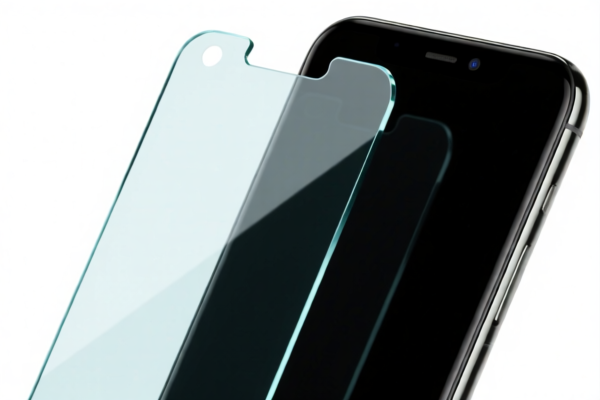

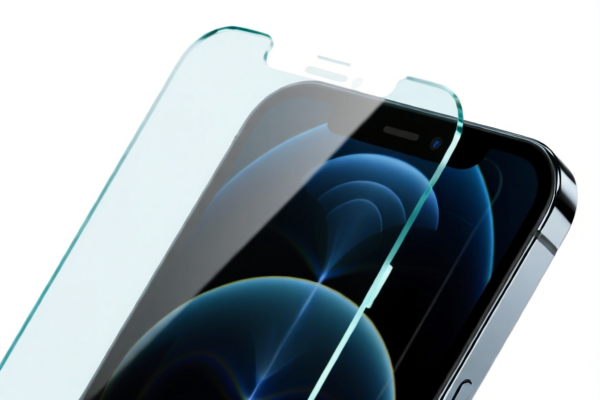
AI Analysis
📱 Cellphone Screen Protector: HS Code Classification & US Customs Clearance Guide 2026
🌐 HS Code Reference & Customs Strategy | Latest Tariff Analysis for Plastic Films | Expert Clearance Advice
📌 I. Product Definition & Classification: What Exactly Are You Shipping?
Cellphone screen protectors are critical accessories in the mobile device ecosystem. In international trade, they are primarily classified under Chapter 39 (Plastics and Articles Thereof). The key to correct classification lies in the state of processing and adhesive properties:
Self-Adhesive Plastic Films (3919): These are pre-cut or rolled films coated with adhesive on one or both sides. This is the most common category for retail-ready screen protectors (PET/TPU). They must be in flat, self-adhesive shapes.
Non-Adhesive Plastic Plates/Sheets (3920): These are raw plastic sheets or films without adhesive coating, intended for further processing or lamination.
⚠️ Key Distinction Point:
- If the product is pre-cut to phone model size and has adhesive backing → It is a "self-adhesive flat product" → HS Code 3919.
- If it is a large roll of plain plastic without adhesive, or adhesive is applied during customs/bonding process at destination → It may fall under HS Code 3920.
- Most retail screen protectors (PET/TPU) are pre-adhesive, thus falling under 3919.
📦 II. HS Code Classification Matrix (Based on Provided Data)
| HS Code | Product Description | Key Characteristics | Adhesive? | Form |
|---|---|---|---|---|
3919.90.50.60 |
Self-adhesive plastic film, flat shape, for screen protection | Plastic material, pre-cut/adhesive ready | ✅ Yes | Flat/Pre-cut |
3919.90.50.40 |
Self-adhesive plastic film (PET/TPU), for screen protection | Plastic material, adhesive backing | ✅ Yes | Film/Roll |
3920.99.10.00 |
Other plastic plates, sheets, films (non-adhesive) | Plastic material, no adhesive | ❌ No | Sheet/Film |
3920.99.20.00 |
Other plastic plates, sheets, films (non-adhesive) | Plastic material, no adhesive | ❌ No | Sheet/Film |
🔍 Crucial Note:
- HS 3919 is the correct classification for most finished screen protectors because they are "self-adhesive flat products of plastic" as defined in HTSUS Heading 3919.
- HS 3920 applies only if the product is a non-adhesive plastic film that will be laminated or coated later. Using 3920 for pre-adhesive protectors is a misclassification risk.
💰 III. 2026 US Tariff Rate Breakdown (Including Section 301 & 122 Duties)
✅ Applicable Market: United States (US)
✅ Country of Origin: China (CN)
✅ Effective Date: Rates include additional duties under Section 301 and Section 122 (if applicable)
🎯 1. HS Code 3919.90.50.60 & 3919.90.50.40 – Self-Adhesive Plastic Films
| Component | Rate | Explanation |
|---|---|---|
| Base Duty | 5.8% | Standard MFN rate for self-adhesive plastic films |
| Section 301 (China) | 25.0% | Additional duty on Chinese-made plastic articles |
| Section 122 (China) | 10.0% | Additional duty on certain Chinese goods (if applicable) |
| Total Tax Rate | 40.8% | Sum of all duties |
| Calculation | CIF Value × 40.8% | Tax is calculated on the customs value |
| De Minimis Exemption? | ❌ NO | Cannot use Section 321 (de minimis) for these HS codes from China |
| Legal Basis | HTSUS 3919.90.50 + USITC Footnotes + IEEPA Orders |
📌 Why 40.8%?
- The 5.8% is the base tariff for plastic films.
- The 25% is the Section 301 tariff specifically targeting Chinese plastic products.
- The 10% is the Section 122 tariff, which applies to certain Chinese goods (check if your specific product is listed; if not, it may be 0% for 122, but based on your data, it is included).
- Total: 40.8% is a high barrier for entry.
🎯 2. HS Code 3920.99.10.00 – Non-Adhesive Plastic Sheets/Films
| Component | Rate | Explanation |
|---|---|---|
| Base Duty | 6.0% | Standard MFN rate for other plastic sheets/films |
| Section 301 (China) | 25.0% | Additional duty on Chinese plastic products |
| Section 122 (China) | 10.0% | Additional duty (if applicable) |
| Total Tax Rate | 41.0% | Sum of all duties |
| Calculation | CIF Value × 41.0% | |
| De Minimis Exemption? | ❌ NO |
🎯 3. HS Code 3920.99.20.00 – Non-Adhesive Plastic Sheets/Films
| Component | Rate | Explanation |
|---|---|---|
| Base Duty | 4.2% | Standard MFN rate (lower base duty) |
| Section 301 (China) | 25.0% | Additional duty |
| Section 122 (China) | 10.0% | Additional duty (if applicable) |
| Total Tax Rate | 39.2% | Lowest total rate among options |
| Calculation | CIF Value × 39.2% | |
| De Minimis Exemption? | ❌ NO |
⚠️ Critical Warning:
- Do NOT use HS 3920 for pre-adhesive screen protectors. If customs discovers the product is self-adhesive, they will reclassify it to 3919 (40.8%) and issue a supplemental duty bill + penalties.
- The 39.2% rate is attractive, but only valid if the product is truly non-adhesive.
🛠️ IV. Customs Clearance Operational Advice
✅ 1. Documentation Checklist (Mandatory)
| Document | Required? | Purpose |
|---|---|---|
| Product Specification Sheet | ✔️ | Must clearly state: Material (PET/TPU), Adhesive Type (Pressure Sensitive), Dimensions, Thickness |
| Photos (Packaged & Unpacked) | ✔️ | Show adhesive backing, clarity, fit for specific phone models |
| Commercial Invoice | ✔️ | Describe as: "Self-adhesive Plastic Screen Protector Film, Model XYZ, Material: PET" |
| Packing List | ✔️ | Include weight, dimensions, number of units |
| Certificate of Origin (CO) | ✔️ | Prove Chinese origin (triggers Section 301/122 duties) |
| FCC/CE Certifications | Optional | Not always required for plastic films, but good for buyer confidence |
✅ 2. Declaration Tips (Avoid Misclassification!)
| Scenario | Correct Declaration | Incorrect Declaration | Risk |
|---|---|---|---|
| Pre-cut, pre-adhesive protectors | "Self-adhesive plastic film, for mobile phone screens" | "Plastic sheet, non-adhesive" | High: Misclassification, audit, penalties |
| Rolls of adhesive film | "Self-adhesive plastic film, roll form" | "Plastic plate" | Medium: Reclassification to 3919 |
| Non-adhesive film for lamination | "Non-adhesive plastic film, for lamination" | "Screen protector" | Low: But must prove non-adhesive nature |
🔥 Golden Rule:
"If it sticks on its own, it’s 3919. If it needs glue, it’s 3920. Never lie to customs!"
✅ 3. Cost Optimization Strategies
- Verify Section 122 Applicability:
- Not all products under 3919/3920 are subject to the 10% Section 122 duty. Confirm with your customs broker if your specific HS code is listed. If not, the total rate may drop to 30.8% (3919) or 29.2% (3920).
- Consider Third-Country Transshipment (Caution):
- Re-exporting from Vietnam/Malaysia may help avoid Section 301/122, but substantial transformation must occur. Simple repackaging will not qualify.
- Bulk Shipping:
- Since duties are ad valorem (percentage-based), shipping larger volumes can improve unit cost efficiency despite the high tariff.
🌍 V. Global Market Comparison (2026)
| Market | HS Code | Total Duty Rate | Notes |
|---|---|---|---|
| 🇺🇸 USA | 3919.90.50.60 |
40.8% | Includes Section 301 (25%) + 122 (10%) |
| 🇨🇳 China | 3919.90.50.60 |
~5-8% | Lower base duty, no Section 301 |
| 🇪🇺 EU | 3919.90.90 |
6.5% | No Section 301, but may have anti-dumping duties on plastic films |
| 🇬🇧 UK | 3919.90.90 |
6.5% | Post-Brexit tariff schedule |
| 🇦🇺 Australia | 3919.90.90 |
5% | Low duty, no major Section 301 equivalent |
📌 Conclusion:
- The US market is the most expensive due to Section 301 and 122 tariffs.
- Ensure your supply chain costs account for this ~40% duty to maintain profit margins.
📌 VI. Common Mistakes & Pitfalls
❌ Mistake 1: Declaring self-adhesive protectors as "Plastic Sheets" (3920) to get 39.2% rate
👉 Result: Customs inspection reveals adhesive → Reclassification to 3919 (40.8%) + Penalties
❌ Mistake 2: Using de minimis (Section 321) for bulk shipments
👉 Result: Blocked! Section 321 is not allowed for goods from China under Section 301/122 tariffs.
❌ Mistake 3: Ignoring Section 122 applicability
👉 Result: Overpaying or underpaying duties. Check if your product is on the Section 122 exclusion list.
✅ Best Practice:
"Screen Protector, PET, Self-Adhesive, Pre-Cut for iPhone 15, Model XYZ, Made in China"
🎯 VII. Final Recommendation
🎯 For Cellphone Screen Protectors:
- Use HS Code
3919.90.50.60(or3919.90.50.40) if the product is pre-adhesive. This is the correct legal classification. - Budget for 40.8% Total Duty (US Market).
- Do NOT attempt to use HS 3920 unless the product is strictly non-adhesive.
- Verify Section 122 Status with your broker to confirm if the 10% applies.
📌 Pro Tip:
If you are shipping non-adhesive plastic rolls for your own manufacturing, use HS 3920.99.20.00 for the lowest rate (39.2%). But for finished retail protectors, stick to 3919.
📣 Action Step:
📞 Consult your customs broker to confirm the exact HTSUS sub-heading and Section 122 applicability.
📄 Provide clear product specs showing adhesive nature to avoid classification disputes.
📉 Factor 40.8% duty into your pricing model for the US market.
✨ Accurate Classification = Smooth Clearance = Profit Protection!
💼 Don’t let tariffs eat your margins. Classify correctly from day one!
Customer Reviews
About HS Code Classification
The Harmonized System (HS) is an internationally standardized nomenclature developed by the World Customs Organization (WCO) to classify traded products. Over 200 countries use the HS system as the basis for customs tariffs, trade statistics, and import/export regulations.
Each HS code follows a hierarchical structure:
- Chapter (2 digits) — Broad category of goods (e.g., Chapter 84: Machinery and Mechanical Appliances)
- Heading (4 digits) — More specific grouping within the chapter
- Subheading (6 digits) — Internationally standardized breakdown, used by all WCO member countries
- National subdivisions (8-10 digits) — Country-specific extensions for further classification, such as US HTSUS 10-digit codes
Correct HS code classification is essential for smooth customs clearance, accurate duty payment, and compliance with trade regulations. Misclassification can lead to customs delays, overpayment of duties, or penalties.
When importing from CN to US, the applicable tariff rates may include:
- Most-Favored-Nation (MFN) rate — The standard duty rate applied to WTO members
- General rate — Applied to countries without trade agreements
- Trade remedy duties — Additional tariffs such as Section 301 (anti-dumping), Section 232 (national security), or countervailing duties
The information provided on this page is for reference purposes only. For official classification, please consult with your local customs authority or a licensed customs broker.