ceramic tile
CN → US| HS Code | Tariff Rate | Origin | Destination | Doc |
|---|---|---|---|---|
| 6810191200 | 39.9% | CN | US | Official Doc |
| 6810191400 | 44.0% | CN | US | Official Doc |
| 6907211011 | 45.0% | CN | US | Official Doc |
| 6907219011 | 43.5% | CN | US | Official Doc |
Product Images
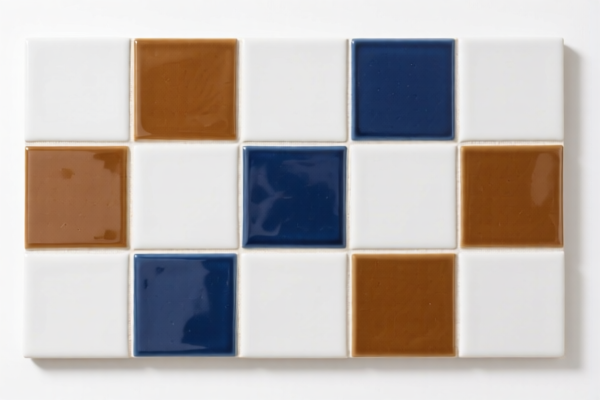


AI Analysis
🚀 Ceramic Tiles: The Ultimate HS Code & Tariff Guide (2026 Update)
🌐 HS Code Reference & Clearance Strategy | Expert-Level Customs Navigation | 2026 Tariff Breakdown
📌 I. Product Definition & Classification: Do You Know Your "Tiles"?
Ceramic Tiles are a cornerstone of global construction, used for flooring, wall cladding, and decorative purposes. In international trade, the classification hinges on Material Composition and Binding Agent.
The data reveals three critical distinctions:
1. Non-Cement Bonded Stone/Ceramic: Products like 6810.19.12.00 (Stone/Ceramic bonded by non-cement adhesives).
2. Cement/Concrete/Man-Made Stone: Products like 6810.19.14.00 (Cementitious binding agents).
3. Pure Ceramic: The most common "Ceramic Flagging/Paving/Wall Tiles" under 6907.21 (True ceramic material).
⚠️ Key Differentiator:
- Binding Agent: Is it Cement/Concrete? If yes, look at6810. If it's ceramic/clay fired, look at6907.
- Material: Is it "Ceramic" specifically? If yes,6907.21applies.
- End Use: Floor vs. Wall? Both generally fall under6907.21.10or.90, but6810covers man-made stone/cement variants.
📦 II. HS Code Breakdown & Tax Analysis (2026 Data)
| HS Code | Product Description (Summary) | Material/Binding Agent | Total Tariff | Tariff Detail Breakdown |
|---|---|---|---|---|
6810.19.12.00 |
Non-Cement Bonded Stone/Ceramic (Matches Tile Shape & Usage: Floor/Wall) |
Stone/Ceramic (Bonded by non-cement adhesive) |
39.9% | Base: 4.9% Additional: 25.0% Sec. 122: 10% |
6810.19.14.00 |
Cement/Concrete/Man-Made Stone Tiles (Floor & Wall Tiles) |
Cement, Concrete, or Man-Made Stone | 44.0% | Base: 9.0% Additional: 25.0% Sec. 122: 10% |
6907.21.10.11 |
True Ceramic Floor/Wall Tiles (Explicitly "Ceramic/Porcelain" Material) |
Ceramic / Porcelain | 45.0% | Base: 10.0% Additional: 25.0% Sec. 122: 10% |
6907.21.90.11 |
Ceramic Decorative/Construction Tiles (Ceramic Flags, Paving, Hearth, Wall Tiles) |
Ceramic (General Construction) | 43.5% | Base: 8.5% Additional: 25.0% Sec. 122: 10% |
🔍 Critical Insight:
-6907.21is the gold standard for true ceramic tiles. Expect the highest total tax rate (45.0%) due to the 10% base tariff. -6810codes apply if the tile contains cement or concrete as a binder. This is common for "porcelain" that isn't fully vitrified or is composite. - Sec. 122 Tariff (10%): This specific 122-section tariff applies to all listed HS codes in the data, adding a significant 10% surcharge on top of the base and Section 301 (25%) duties.
💰 III. Tariff Structure Deep Dive (2026 Policy)
✅ Applicable Jurisdiction: United States (US)
✅ Origin: China (CN)
✅ Effective Date: 2025 onwards (Current Data Context)
🎯 1. The "Section 301" & "Section 122" Combo
Every single ceramic tile entry above shares a common tariff structure that makes them expensive to import:
| Component | Rate | Description |
|---|---|---|
| Base Tariff | 4.9% – 10.0% | Standard Most-Favored-Nation (MFN) rate. Varies by exact material (Cement vs. Ceramic). |
| Additional Duty (Section 301) | 25.0% | Mandatory "Add-on" tariff for Chinese imports (China Trade War measures). |
| Section 122 Tariff | 10.0% | Mandatory specific tariff for these categories (likely related to trade remedy or specific policy sections). |
| TOTAL EFFECTIVE RATE | 39.9% – 45.0% | High Risk Zone! No de minimis exemptions. |
📌 Why the High Rate? - The 25% is the standard US Section 301 duty on Chinese goods. - The 10% (Sec. 122) is an additional layer specific to these construction materials. - Result: You pay the Base + 35% additional duties. A $10,000 shipment could incur $4,500 in taxes alone.
🛠️ IV. Customs Clearance Practical Advice (Survival Guide)
✅ 1. Documentation Checklist (Critical)
- Material Composition Certificate: Must explicitly state "Ceramic/Porcelain" vs. "Cement/Concrete" to justify
6907vs.6810. - Binding Agent Declaration: Proof that no cement is used if claiming
6810.19.12.00. - Detailed Invoice: Must separate "Base Price" from "Shipping/Freight" to avoid tax base inflation.
- Photos: Show the texture and back of the tile (crucial for material verification).
- Country of Origin Proof: Must be China (or you lose the 25% duty, but origin fraud is a major risk).
✅ 2. Declaration Strategy (The "Golden Rule")
🔥 Rule: "Be Specific on Material. Be Specific on Binding."
| Scenario | Correct Declaration | Risk if Wrong |
|---|---|---|
| Pure Ceramic Tile | 6907.21.10.11 |
If miscoded as 6810 (Cement), you might underpay Base Tax (10% vs 4.9%) but still face 35% add-ons. If miscoded as "Stone", risk of penalty. |
| Cement-based Tile | 6810.19.14.00 |
If claimed as "Ceramic" (6907), you risk a Base Tax Audit (10% vs 9%). |
| Man-Made Stone | 6810.19.12.00 |
Must prove non-cement binder. |
| Wall vs. Floor | Both fall under 6907.21.10 or .90 |
Do not split申报 (declare) arbitrarily; use the summary to match usage. |
✅ 3. Cost Saving Tip
- Pre-Ruling: Apply for a Binding Tariff Information (BTI) or Advance Ruling from US Customs (CBP) before shipping. The difference between
6810.19.12.00(39.9%) and6907.21.10.11(45.0%) is $5.10 per $100 of goods. Small but significant. - Avoid "Ceramic" Ambiguity: If your product is a composite, do not call it "Ceramic" unless the clay content is dominant. Misclassification leads to 100% penalties + back taxes.
🌍 V. Market Comparison (US vs. Global)
| Region | Typical Tariff on Ceramic Tiles | Key Constraint |
|---|---|---|
| 🇺🇸 USA (This Data) | 39.9% – 45.0% | Heavy Section 301 + Sec 122 duties. |
| 🇪🇺 EU | ~4.5% - 7.0% | Anti-dumping duties may apply, but no 25% Sec 301 equivalent. |
| 🇨🇳 China (Import) | ~10% - 20% | Lower import duties, but strict quality controls. |
| 🇲🇽 Mexico | 0% - 12% | USMCA opportunities for assembly (if processed). |
📌 Conclusion: The US market is the most expensive for Chinese ceramic tiles due to the double-layered penalty (25% + 10%).
📌 VI. Common Pitfalls & Avoidance
❌ Pitfall 1: Calling "Cement Tiles" simply "Ceramic Tiles".
👉 Consequence: Customs may reclassify to 6907 (Higher Base Tax 10%) or 6810 (Lower Base Tax 9%) incorrectly, leading to audits.
❌ Pitfall 2: Ignoring the Sec. 122 tariff. 👉 Consequence: Assuming only 25% duty exists. You will face unexpected 10% surcharge at the port.
❌ Pitfall 3: Splitting Shipments to "De Minimis".
👉 Consequence: NOT ALLOWED. The data explicitly states deny_de_minimis logic (implied by high structured tariffs). Small packages are not exempt.
✅ Correct Approach:
"Ceramic Wall/Floor Tile, Vitrified, Clay Material, No Cement Binder. HS Code: 6907.21.10.11. Origin: China. Total Duty: 45%."
🎯 Final Verdict: Strategic Recommendation
- Verify Material First: Use XRF or lab tests to confirm if your tile is Pure Ceramic (
6907) or Cement/Stone (6810). - Budget for 45%: Do not price your US product without factoring in 45% total tax (Base + 35% Add-ons).
- Consult a Broker: Given the complexity of Sec. 122 and Section 301, a licensed customs broker is non-negotiable to avoid seizure.
🚀 Pro Tip: If you can source Vietnam or Thailand origin tiles (bypassing China), you MAY avoid the 25% + 10% combo (depending on current 2026 trade policies), potentially saving 35% on landed costs!
✨ Expert Clearance, Smart Classification, Zero Surprises!
💼 Your margins depend on the HS Code you choose!
Customer Reviews
About HS Code Classification
The Harmonized System (HS) is an internationally standardized nomenclature developed by the World Customs Organization (WCO) to classify traded products. Over 200 countries use the HS system as the basis for customs tariffs, trade statistics, and import/export regulations.
Each HS code follows a hierarchical structure:
- Chapter (2 digits) — Broad category of goods (e.g., Chapter 84: Machinery and Mechanical Appliances)
- Heading (4 digits) — More specific grouping within the chapter
- Subheading (6 digits) — Internationally standardized breakdown, used by all WCO member countries
- National subdivisions (8-10 digits) — Country-specific extensions for further classification, such as US HTSUS 10-digit codes
Correct HS code classification is essential for smooth customs clearance, accurate duty payment, and compliance with trade regulations. Misclassification can lead to customs delays, overpayment of duties, or penalties.
When importing from CN to US, the applicable tariff rates may include:
- Most-Favored-Nation (MFN) rate — The standard duty rate applied to WTO members
- General rate — Applied to countries without trade agreements
- Trade remedy duties — Additional tariffs such as Section 301 (anti-dumping), Section 232 (national security), or countervailing duties
The information provided on this page is for reference purposes only. For official classification, please consult with your local customs authority or a licensed customs broker.