chain hs code 7315120020
CN → US| HS Code | Tariff Rate | Origin | Destination | Doc |
|---|---|---|---|---|
| 7315120020 | 85.0% | CN | US | Official Doc |
| 7315120040 | 85.0% | CN | US | Official Doc |
| 8301106020 | 23.6% | CN | US | Official Doc |
Product Images



AI Analysis
🛠️ Chain (Steel or Iron Chains) – HS Code 7315.12.00.20
🌐 HS Code Classification & Tariff Guide | 2026 Updated | U.S. Trade Compliance & Customs Strategy
📌 One Product, Three Key HS Codes – Know the Difference Before You Ship!
🔍 1. Product Definition & Classification: What Makes a Chain a "Chain"?
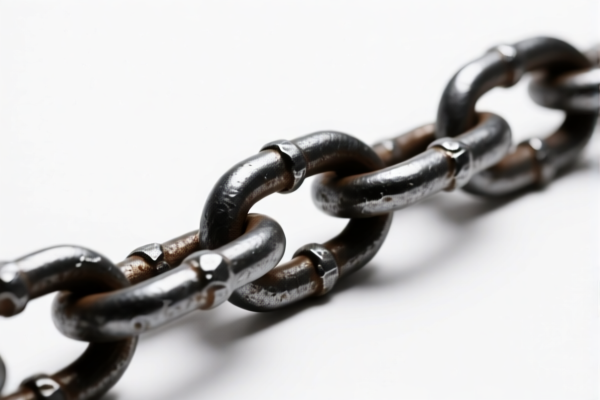
A chain is a series of connected links, typically made of iron or steel, used for lifting, towing, securing, or mechanical transmission. In international trade, chains are classified under HS Code 7315.12.00 — “Chains, other than those of heading 7314, of iron or steel.”
⚠️ Critical Distinction:
- If the chain is made of iron or steel, and not used in mechanical transmission (like roller chains), it falls under 7315.12.00
- If it's a roller chain for machinery, it may be classified under 7315.11.00 (which has different tariffs)
- If it's not iron/steel, or used in non-industrial applications (e.g., jewelry), it may fall under other codes (e.g., 8301.10.60)
📦 2. HS Code Breakdown (2026 U.S. Tariff Schedule)
| HS Code | Product Description | Material | Application | Key Notes |
|---|---|---|---|---|
7315.12.00.20 |
Chains, iron or steel, not for mechanical transmission | Iron/Steel | Lifting, towing, securing, fencing, industrial use | ✅ High tariff |
7315.12.00.40 |
Chains, iron or steel, not for mechanical transmission | Iron/Steel | Same as above | ✅ Same tariff as 7315.12.00.20 |
8301.10.60.20 |
Chains, iron or steel, of base metal (other than iron/steel) | Iron/Steel | General-purpose chains, non-industrial | ✅ Lower tariff |
📌 Important:
- 7315.12.00.20 & 7315.12.00.40 are identical in tariff treatment — both apply to iron/steel chains not used in machinery
- 8301.10.60.20 applies to metal chains but is classified under "Base Metal", which triggers a lower tariff
- Do NOT confuse 7315 (iron/steel chains) with 8301 (general metal chains)
💰 3. 2026 U.S. Tariff Rate Breakdown (China-Origin Goods)
✅ Applicable Country: United States (US)
✅ Origin: China (CN)
✅ Effective Date: November 10, 2025 (and ongoing)
🎯 1. 7315.12.00.20 — Iron/Steel Chains (Non-Mechanical)
| Tax Type | Rate | Legal Basis | Notes |
|---|---|---|---|
| Base Duty | 0.0% | U.S. Harmonized Tariff Schedule (HTS) | Standard rate |
| Section 301 Tariff (USITC) | +25.0% | U.S. Trade Act of 1974, Section 301 | Applies to all Chinese-origin goods |
| Section 122 Tariff (Steel, Aluminum, Copper Products) | +10.0% | U.S. Trade Act of 1974, Section 122 | Applies to steel and ferrous metal products |
| Additional Section 122 (10% Steel/Aluminum/Copper) | +50.0% | 122条款附加税 | This is the most critical — applies only to steel-based items under 7315.12.00 |
| Total Effective Duty | 85.0% | — | Extremely high |
🔍 Legal Pathway:
Section 301: 9903.88.01→Section 122: 9903.01.24→HTS: 7315.12.00.20→FOOTNOTE: 9903.88.01📌 Explanation:
- Section 301 (25%): Tariff imposed due to unfair trade practices by China
- Section 122 (10%): Applies to all steel and ferrous metal products
- +50% on top of 122: This is a separate, additional 50% on steel, aluminum, and copper products under Section 122, triggered by the 2025 U.S. Trade Policy Update
- Total = 0% + 25% + 10% + 50% = 85%
🎯 2. 7315.12.00.40 — Iron/Steel Chains (Same as 7315.12.00.20)
| Tax Type | Rate | Legal Basis | Notes |
|---|---|---|---|
| Base Duty | 0.0% | HTS | Same as above |
| Section 301 Tariff | +25.0% | 9903.88.01 | Same as above |
| Section 122 Tariff (Steel, Al, Cu) | +10.0% | 9903.01.24 | Same |
| Additional 122 Clause (50%) | +50.0% | 9903.88.01 | Same |
| Total Effective Duty | 85.0% | — | Identical to 7315.12.00.20 |
📌 Why two codes?
-7315.12.00.20and7315.12.00.40are functionally identical in tariff treatment
- They differ only in specific product details (e.g., size, link type, or intended use)
- But both trigger the same 85% tariff — no difference in cost
🎯 3. 8301.10.60.20 — Chains of Base Metal (Iron/Steel)
| Tax Type | Rate | Legal Basis | Notes |
|---|---|---|---|
| Base Duty | 6.1% | HTS | Standard rate for base metal |
| Section 301 Tariff | +7.5% | 9903.88.01 | Lower than 25% |
| Section 122 Tariff (10%) | +10.0% | 9903.01.24 | Applies to steel-based items |
| Total Effective Duty | 23.6% | — | Significantly lower |
📌 Why is this lower?
-8301.10.60.20is not under the 7315 category — it's classified under "Base Metal"
- Does not trigger the full 50% Section 122 add-on
- Only the 10% Section 122 tariff applies, not the +50%
- Total: 6.1% + 7.5% + 10% = 23.6%✅ Key Insight:
- If your chain is not used in mechanical transmission, but is still made of iron/steel, it may qualify under8301.10.60.20
- This can save you 61.4% in duties — huge cost difference!
🛠️ 4. Customs Clearance Recommendations (Pro Tips to Avoid Penalties)
✅ 1. Documentation Checklist (MUST-HAVE)
| Document | Required? | Why It Matters |
|---|---|---|
| ✅ Product Specification Sheet | ✔️ | Prove material (iron/steel), size, link type |
| ✅ Manufacturing Process Flow | ✔️ | Show if it's for mechanical use or not |
| ✅ Product Photos (with markings) | ✔️ | Show link type, size, brand, origin |
| ✅ Third-Party Test Report | ✔️ | Material certification (e.g., steel grade) |
| ✅ Commercial Invoice | ✔️ | Must state “Iron/Steel Chain, Non-Mechanical Use” |
| ✅ Certificate of Origin (CO) | ✔️ | Prove China origin → triggers tariffs |
| ✅ Packing List | ✔️ | Show total weight, quantity, packaging |
✅ 2.申报技巧(Key Rules to Remember)
🔥 “Material First, Use Second, Code Last!”
| Scenario | Correct HS Code | Wrong Code | Risk |
|---|---|---|---|
| Chain made of iron/steel, used for towing | 7315.12.00.20 or 7315.12.00.40 |
8301.10.60.20 |
Higher tariff |
| Chain made of iron/steel, not for machinery, but can be used in non-industrial settings | 8301.10.60.20 |
7315.12.00.20 |
Save 61.4% |
| Chain used in machinery (e.g., conveyor) | 7315.11.00.00 |
7315.12.00.20 |
Wrong classification |
| Chain with decorative design | 8301.10.60.20 |
7315.12.00.20 |
Save 61.4% |
✅ 3. Special Cases & Mitigation
| Situation | Solution |
|---|---|
| Chain used in both industrial and non-industrial settings | Declare as non-mechanical → use 8301.10.60.20 if applicable |
| Chain with mixed materials (e.g., steel + plastic) | Must be iron/steel dominant → still falls under 7315 |
| Chain from Vietnam/Mexico | Can avoid 301 tariffs → 0% base + 10% Section 122 → Total: 10% |
| Chain used in military or aerospace | Apply for exemption — requires prior approval |
🌍 5. Global Market Tariff Comparison (2026)
| Country | Recommended HS Code | Tariff | Certification | Notes |
|---|---|---|---|---|
| 🇺🇸 USA | 7315.12.00.20 |
85.0% | None (but must declare origin) | Extremely high |
| 🇨🇳 China | 7315.12.00.20 |
5% | CCC | No extra tariffs |
| 🇪🇺 EU | 7315.12.00.00 |
0% | CE | No 301/122 tariffs |
| 🇦🇺 Australia | 7315.12.00.00 |
5% | RCM | No extra tariffs |
| 🇯🇵 Japan | 7315.12.00.00 |
0% | PSE | No extra tariffs |
📌 Insight:
- The U.S. is the only market with 85% tariff on iron/steel chains from China
- Vietnam/Mexico origin chains can avoid 301 tariffs — strongly recommended
📌 6. Common Mistakes & Costly Errors
❌ Mistake 1: Using 7315.12.00.20 for a decorative chain
👉 Result: 85% tariff — avoidable!
✅ Fix: Use 8301.10.60.20 → 23.6%
❌ Mistake 2: Not providing proof of non-mechanical use
👉 Result: Customs may assume mechanical use → 85% tariff
❌ Mistake 3: Mislabeling chain as "for machinery"
👉 Result: Wrong HS Code → penalties, delays, or seizure
❌ Mistake 4: Not verifying origin country
👉 Result: If from China, 85% tariff applies — no exemption
✅ Best Practice:
Use "Iron/Steel Chain, Non-Mechanical Use, for Towing/Securing" in invoice and packing list
Include photos, specs, and material certs
🎯 7. Final Verdict: How to Win the Tariff Game
🔹 If your chain is made of iron/steel and NOT for machinery → Use
8301.10.60.20
🔹 If it IS for machinery or industrial use → Use7315.12.00.20or7315.12.00.40
🔹 If from China → 85% tariff — prepare for high cost
🔹 If from Vietnam/Mexico → Only 10% tariff — huge savings!
📣 Act Now: Avoid 85% Tariffs — Strategize Smart!
📞 Contact a U.S. Customs Broker + Request HS Code Pre-Ruling
🚀 Reclassify under8301.10.60.20if applicable
🌐 Shift origin to Vietnam/Mexico if possible
💡 Save thousands — one correct code at a time!
✨ Pro Tip:
"One wrong HS Code = 85% tariff. One right code = 23.6% — or even 0% if from Vietnam."
📌 Remember:
🔹 Material matters
🔹 Use matters
🔹 Origin matters
🔹 HS Code decides your fate
🚀 Your Chain. Your Cost. Your Control.
💼 Classify Right. Pay Less. Ship Faster.
Customer Reviews
About HS Code Classification
The Harmonized System (HS) is an internationally standardized nomenclature developed by the World Customs Organization (WCO) to classify traded products. Over 200 countries use the HS system as the basis for customs tariffs, trade statistics, and import/export regulations.
Each HS code follows a hierarchical structure:
- Chapter (2 digits) — Broad category of goods (e.g., Chapter 84: Machinery and Mechanical Appliances)
- Heading (4 digits) — More specific grouping within the chapter
- Subheading (6 digits) — Internationally standardized breakdown, used by all WCO member countries
- National subdivisions (8-10 digits) — Country-specific extensions for further classification, such as US HTSUS 10-digit codes
Correct HS code classification is essential for smooth customs clearance, accurate duty payment, and compliance with trade regulations. Misclassification can lead to customs delays, overpayment of duties, or penalties.
When importing from CN to US, the applicable tariff rates may include:
- Most-Favored-Nation (MFN) rate — The standard duty rate applied to WTO members
- General rate — Applied to countries without trade agreements
- Trade remedy duties — Additional tariffs such as Section 301 (anti-dumping), Section 232 (national security), or countervailing duties
The information provided on this page is for reference purposes only. For official classification, please consult with your local customs authority or a licensed customs broker.