cheese knife
CN → US| HS Code | Tariff Rate | Origin | Destination | Doc |
|---|---|---|---|---|
| 8211922000 | 0.0% | CN | US | Official Doc |
| 8215995000 | 15.3% | CN | US | Official Doc |
| 8215994500 | 17.5% | CN | US | Official Doc |
| 8211915030 | 0.0% | CN | US | Official Doc |
Product Images
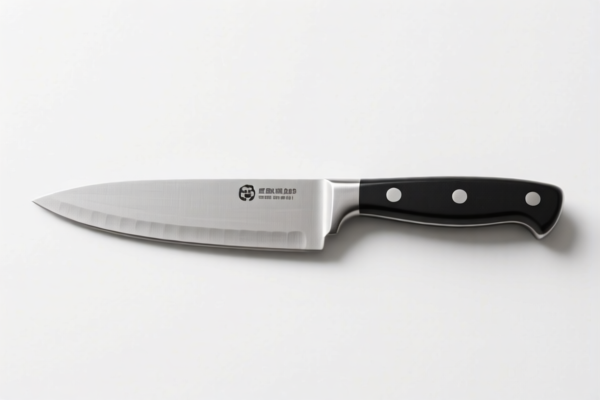
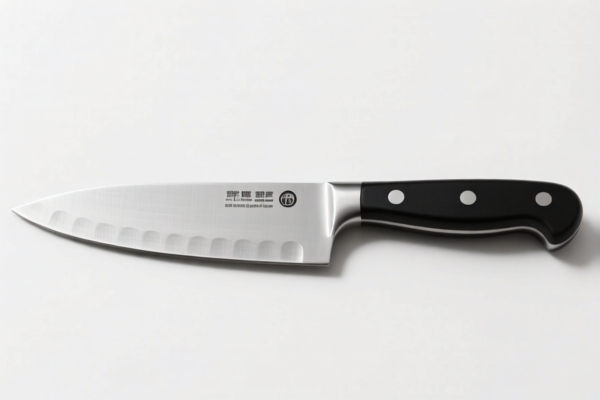
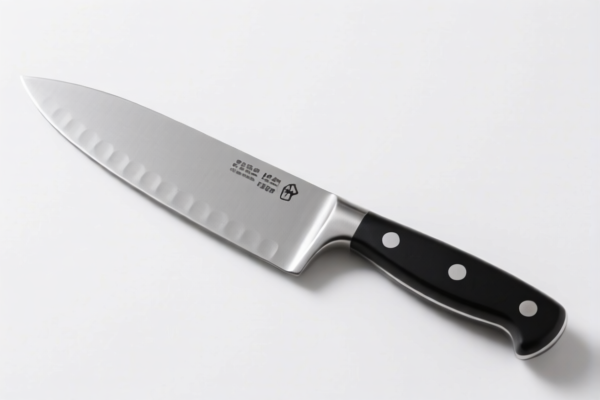
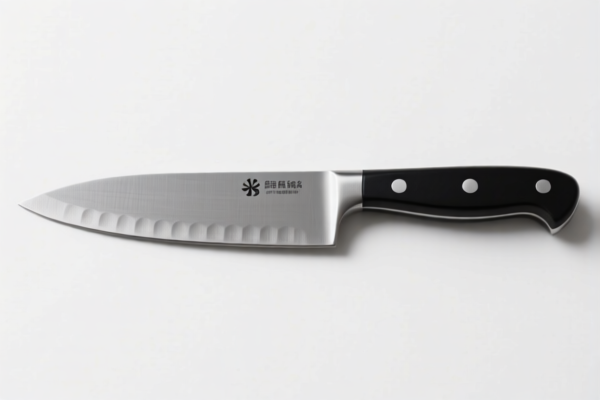
AI Analysis
🧀 Cheese Knife (Kitchen Cutlery)
🌐 HS Code Reference & Customs Clearance Guide | 2026 Tariff Rate Book Analysis | Professional Clearance Strategy
📌 1. Product Definition & Classification: What Exactly is a "Cheese Knife"?
In international trade, "Cheese Knives" are specialized kitchen utensils. Their classification depends heavily on two factors: Material and Structure (specifically whether it has a blade and handle integrated or separate, and if it falls under "cutlery" vs. "tableware").
According to the provided data, there are four distinct HS Code pathways depending on the specific design:
⚠️ Key Classification Distinctions:
- Tableware vs. Cutlery: Is it considered a "part of tableware" (8215.99) or a "knife/cutter with blade" (8211.91/92)?
- Material: Metal, base metal, or plastic/rubber handle?
- Blade Type: Fixed blade? Plastic edge? Rubber edge?
📦 2. HS Code Classification Details (2026 Latest Tariff Reference)
| HS Code | Product Description | Applicable Scenario | Tax Rate Summary |
|---|---|---|---|
8215.99.50.00 |
Parts of tableware; base metal | Cheese knife used as tableware; metal/base metal material | 15.3% |
8215.99.45.00 |
Parts of tableware; base metal | Cheese knife used as tableware; base metal material | 17.5% |
8211.91.50.30 |
Knives with fixed blades; for cutting food | Cheese knife classified as a "knife"; has fixed blade + plastic/rubber handle | 0.7¢/each + 3.7% + 17.5% |
8211.92.20.00 |
Kitchen knives; plastic/rubber handle | Cheese knife classified as kitchen knife; plastic/rubber handle | 0.8¢/each + 4.6% + 17.5% |
🔍 Critical Note:
- If the cheese knife is viewed as a general tableware part (e.g., simple metal blade without complex handle structure), it may fall under 8215.
- If it is viewed as a specific cutting instrument with a handle, it falls under 8211.
- China-origin goods are subject to additional tariffs (122 Clause + Section 301 implications reflected in the 17.5% total).
💰 3. Detailed Tariff Rate Breakdown (Including Additional Taxes)
✅ Applicable Country: United States (US)
✅ Origin: China (CN)
✅ Effective Date: Current rates apply (as per 2026 dataset)
🎯 1. 8215.99.50.00 — Tableware Parts (Base Metal)
| Item | Detail |
|---|---|
| Base Tariff | 5.3% |
| Additional Tariff (Section 301/122) | 0.0% |
| 122 Clause Tariff | 10% |
| Total Effective Rate | 15.3% |
| Tax Calculation | CIF Value × 15.3% |
| De Minimis Exemption | ❌ Not Applicable (High-rate items typically excluded) |
📌 Explanation:
- This is the lowest rate among the options if classified correctly.
- Suitable for simple metal cheese knives that lack complex handles or are treated as tableware accessories.
🎯 2. 8215.99.45.00 — Tableware Parts (Base Metal)
| Item | Detail |
|---|---|
| Base Tariff | 0.0% |
| Additional Tariff | 7.5% |
| 122 Clause Tariff | 10% |
| Total Effective Rate | 17.5% |
| Tax Calculation | CIF Value × 17.5% |
| De Minimis Exemption | ❌ Not Applicable |
📌 Note:
- Despite a 0% base tariff, the high additional taxes push the total to 17.5%.
- This classification is very similar to the previous one but results in a 2.2% higher cost.
🎯 3. 8211.91.50.30 — Knives with Fixed Blades (Food Cutting)
| Item | Detail |
|---|---|
| Specific Duty | $0.7¢ each |
| Ad Valorem Rate | 3.7% |
| Additional Tariff | 7.5% |
| 122 Clause Tariff | 10% |
| Total Effective Rate | 0.7¢/unit + 3.7% + 17.5% combined burden |
| Tax Calculation | (Units × $0.007) + (CIF Value × 3.7%) + Additional 17.5% on CIF |
| De Minimis Exemption | ❌ Not Applicable |
📌 Explanation:
- This code applies if the cheese knife is considered a "knife with fixed blade" and has a plastic or rubber handle.
- Complex calculation: Combines per-unit duty + percentage duty + high additional tariffs.
- Risk: High administrative burden due to mixed duty structure.
🎯 4. 8211.92.20.00 — Kitchen Knives (Plastic/Rubber Handle)
| Item | Detail |
|---|---|
| Specific Duty | $0.8¢ each |
| Ad Valorem Rate | 4.6% |
| Additional Tariff | 7.5% |
| 122 Clause Tariff | 10% |
| Total Effective Rate | 0.8¢/unit + 4.6% + 17.5% combined burden |
| Tax Calculation | (Units × $0.008) + (CIF Value × 4.6%) + Additional 17.5% on CIF |
| De Minimis Exemption | ❌ Not Applicable |
📌 Note:
- Specifically for kitchen knives with plastic/rubber handles.
- Higher ad valorem rate (4.6%) than8211.91(3.7%).
- Higher per-unit duty ($0.8¢ vs $0.7¢).
- This is typically the most expensive classification for high-volume imports.
🛠️ 4. Customs Clearance Practical Advice (Pitfall Avoidance Guide)
✅ 1. Required Documentation Checklist
| Document | Required? | Notes |
|---|---|---|
| ✅ Product Specification Sheet | ✔️ | Must detail material (metal, plastic, rubber) and handle type. |
| ✅ Product Photos | ✔️ | Clear images of blade shape, handle material, and any packaging. |
| ✅ Commercial Invoice | ✔️ | Must accurately describe as "Cheese Knife" and specify HS Code. |
| ✅ Packing List | ✔️ | Include unit count (critical for per-unit duty codes like 8211). |
| ✅ Origin Certificate | ✔️ | Confirm China origin to apply correct additional tariffs. |
✅ 2. Declaration Strategy (Key Tips)
🔥 "Classify as Tableware if Possible: 15.3% is Cheaper!"
| Scenario | Recommended HS Code | Reason |
|---|---|---|
| Simple metal blade, no complex handle | 8215.99.50.00 |
Lowest total tariff (15.3%). |
| Metal blade, different base metal spec | 8215.99.45.00 |
Second lowest (17.5%). |
| Has plastic/rubber handle, fixed blade | 8211.91.50.30 or 8211.92.20.00 |
Only if structure forces this classification. Higher cost. |
⚠️ Warning:
- Do not arbitrarily switch between 8215 and 8211. The physical structure (especially handle material) dictates the code.
- If the knife has a plastic handle, customs may reject 8215 and force 8211, leading to higher duties and potential penalties.
✅ 3. Special Cases
| Situation | Advice |
|---|---|
| OEM Custom Knives | Provide design drawings to prove handle material and blade type. |
| Plastic/Steel Composite | If blade is metal but handle is plastic, likely 8211. Verify with broker. |
| Set of Cheese Knives | If sold as a set, declare the primary function. Often still classified per piece. |
| High-Value Luxury Knives | Ensure accurate valuation to avoid under-declaration flags. |
🌍 5. Global Market Comparison (2026)
| Country/Region | Recommended HS Code | Tariff (China Origin) | Notes |
|---|---|---|---|
| 🇺🇸 USA | 8215.99.50.00 |
15.3% | Best rate. 8211 rates are complex and higher. |
| 🇨🇳 China | 8215.99.50.00 |
~5-10% (Check local) | Import duties may differ. |
| 🇪🇺 EU | 8215.99.50.00 |
0-2.5% | Usually low tariffs, but strict safety standards. |
| 🇬🇧 UK | 8215.99.50.00 |
0-2.5% | Post-Brexit rules apply. |
📌 Conclusion:
- The USA has the most complex and high tariff structure for cheese knives due to additional clauses.
- Minimizing duty: Aim for8215.99.50.00if product design allows (simple metal construction).
- Maximizing cost: Avoid8211codes if possible due to the 17.5% combined additional tariff + per-unit duties.
📌 6. Common Mistakes & Pitfalls
❌ Mistake 1: Classifying a plastic-handled knife as 8215 (Tableware)
👉 Result: Customs rejection, re-classification to 8211, plus 17.5%+ duty instead of 15.3%.
❌ Mistake 2: Ignoring the per-unit duty in 8211 codes
👉 Result: Underpayment of taxes for high-volume, low-value items.
❌ Mistake 3: Vague Description ("Cutlery")
👉 Result: Customs may assign the highest default rate or require additional documentation.
✅ Correct Approach:
"Cheese Knife, Stainless Steel Blade, Plastic Handle, Model XYZ"
→ Check handle material first → If plastic/rubber →8211. If all metal →8215.
🎯 7. Conclusion: Smart Classification Saves Money!
🎯 Remember:
🔹 "Metal Only? Go with 8215.15.3%! Plastic Handle? Prepare for 8211.17.5%+!"
🔹 "Details Matter: Handle material is the key to your tariff rate."
📌 Pro Tip:
If you can modify the design to use a all-metal handle or wooden handle (if allowed), you may qualify for the lower 15.3% rate under 8215.99.50.00. Always consult a customs broker for pre-classification ruling.
📣 Immediate Action:
📞 Verify handle material with manufacturer.
📦 Choose8215.99.50.00if possible.
🚀 Clear your goods faster and cheaper with precise HS Codes!
✨ Professional Customs Clearance Starts with Accurate Classification!
💼 Every percentage point counts in international trade.
Customer Reviews
About HS Code Classification
The Harmonized System (HS) is an internationally standardized nomenclature developed by the World Customs Organization (WCO) to classify traded products. Over 200 countries use the HS system as the basis for customs tariffs, trade statistics, and import/export regulations.
Each HS code follows a hierarchical structure:
- Chapter (2 digits) — Broad category of goods (e.g., Chapter 84: Machinery and Mechanical Appliances)
- Heading (4 digits) — More specific grouping within the chapter
- Subheading (6 digits) — Internationally standardized breakdown, used by all WCO member countries
- National subdivisions (8-10 digits) — Country-specific extensions for further classification, such as US HTSUS 10-digit codes
Correct HS code classification is essential for smooth customs clearance, accurate duty payment, and compliance with trade regulations. Misclassification can lead to customs delays, overpayment of duties, or penalties.
When importing from CN to US, the applicable tariff rates may include:
- Most-Favored-Nation (MFN) rate — The standard duty rate applied to WTO members
- General rate — Applied to countries without trade agreements
- Trade remedy duties — Additional tariffs such as Section 301 (anti-dumping), Section 232 (national security), or countervailing duties
The information provided on this page is for reference purposes only. For official classification, please consult with your local customs authority or a licensed customs broker.