chlorinated elastomer composite
CN → US| HS Code | Tariff Rate | Origin | Destination | Doc |
|---|---|---|---|---|
| 4002490000 | 35.0% | CN | US | Official Doc |
| 4002800000 | 35.0% | CN | US | Official Doc |
Product Images
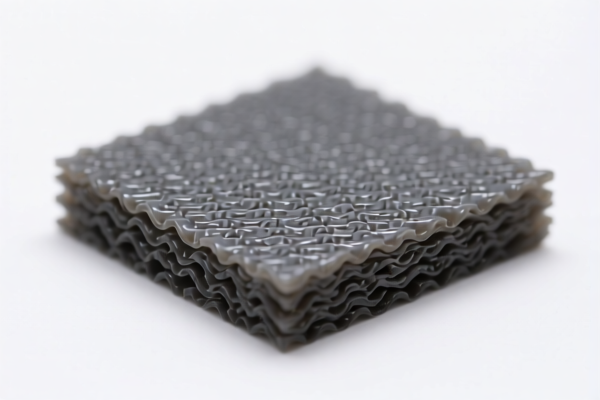
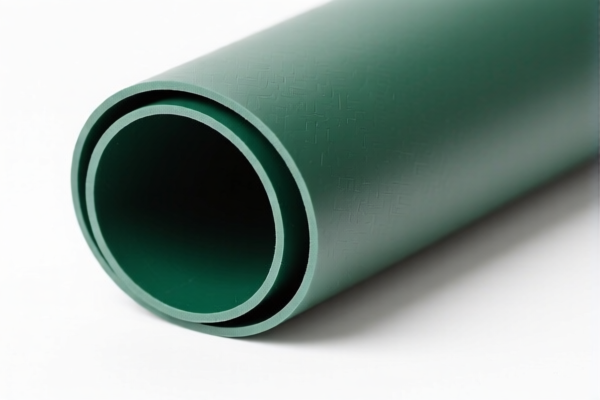


AI Analysis
🧪 Chlorinated Elastomer Composite (Synthetic Rubber)
🌐 HS Code Reference & Customs Clearance Guide | 2026 Latest Tariff Analysis | Professional Clearance Strategy
📌 I. Product Definition & Classification: What is "Chlorinated Elastomer Composite"?
In international trade, this product refers to Synthetic rubber and factice derived from oils, specifically in their primary forms or in plates, sheets, or strip. It is a mixture or composite involving Chloroprene (chlorobutadiene) rubber (CR) and potentially other synthetic rubbers (such as those under heading 4001).
Key Distinction Points: * Chloroprene Rubber (CR/Neoprene): The core component described as "Chlorinated". * Mixture/Composite: The product is not pure CR but a mixture of heading 4001 products with other synthetic rubbers (like CR) or factice derived from oils. * Form Factor: Must be in primary forms (blocks, lumps, granules) OR plates, sheets, or strip. It is NOT finished articles (like gloves, belts, or hoses), which would fall under different headings (e.g., 4008 or 4009).
⚠️ Critical Classification Logic:
- If the product is a mixture of synthetic rubbers (including CR) in primary form/sheet/strip → It falls under 4002.80.00.00.
- If the product is pure or predominantly Chloroprene (CR) rubber in primary form/sheet/strip, and not classified as a specific "other" subtype, it falls under 4002.49.00.00.
- Note: The data provided explicitly lists two codes for this description, covering both specific CR and mixtures.
📦 II. HS Code Classification Details (2026 Latest Tariff Authority)
| HS Code | Product Description | Applicable Scenario | Key Identifier |
|---|---|---|---|
4002.49.00.00 |
Chloroprene (chlorobutadiene) rubber (CR): Other | Pure or predominantly CR rubber in primary form/plates/sheets/strip | 🧪 Pure/Specialized CR |
4002.80.00.00 |
Mixtures of any product of heading 4001 with any product of this heading | Mixtures of CR with other synthetic rubbers or factice in primary form/plates/sheets/strip | 🌪️ Blended/Mixed |
🔍 Key Reminder:
- Both codes apply to Synthetic rubber and factice derived from oils.
- The form must be primary (raw) or plates/sheets/strip. If it is cut into specific shapes or finished goods, it does NOT belong here.
- The distinction between4002.49and4002.80lies in whether it is a specific CR category or a mixture.
💰 III. 2026 Latest Tariff Rate Breakdown (Detailed Tax Clauses)
✅ Applicable Country: United States (US)
✅ Origin: China (CN)
✅ Effective Time: Current rates apply (25% Total Tax)
🎯 1. 4002.49.00.00 —— Chloroprene (CR) Rubber (Other)
| Item | Content |
|---|---|
| Base Tariff | 0.0% (Ad Valorem) |
| Section 301 Additional Duty | +25.0% |
| Total Tax Rate | 25.0% |
| Tax Calculation | CIF Value × 25% |
| De Minimis Eligibility | ❌ Not Eligible (Deny de minimis for Section 301 goods) |
| Legal Basis Path | USITC:4002.49.00.00 → Section 301: Footnote 9903.88.01 (Applicable to synthetic rubber composites) |
📌 Explanation:
- The 0% base tariff reflects the standard MFN rate for synthetic rubber.
- The 25% additional duty is imposed under Section 301 of the Trade Act of 1974 on Chinese-origin goods.
- Total Cost Impact: Importers must budget for a 25% surcharge on top of the FOB/CIF value.
- No Generalized System of Preferences (GSP) relief for China-origin goods under current US trade policy.
🎯 2. 4002.80.00.00 —— Mixtures of Synthetic Rubbers
| Item | Content |
|---|---|
| Base Tariff | 0.0% (Ad Valorem) |
| Section 301 Additional Duty | +25.0% |
| Total Tax Rate | 25.0% |
| Tax Calculation | CIF Value × 25% |
| De Minimis Eligibility | ❌ Not Eligible |
| Legal Basis Path | USITC:4002.80.00.00 → Section 301: Footnote 9903.88.01 |
📌 Note:
- Identical tax treatment to4002.49.00.00.
- Applies to blends of CR with other synthetic rubbers (e.g., SBR, NBR) or factice.
- Critical for Compliance: Ensure the invoice clearly states "Mixture of Synthetic Rubbers" to avoid misclassification penalties.
🛠️ IV. Customs Clearance Practical Advice (Real-World Pitfall Avoidance)
✅ 1. Documentation Checklist (Mandatory)
| Document | Required | Explanation |
|---|---|---|
| ✅ Product Specification Sheet | ✔️ | Must detail chemical composition, % of CR vs. other rubbers, and physical form (sheet/strip/block). |
| ✅ Certificate of Analysis (COA) | ✔️ | To prove the product is "Chlorinated Elastomer" and not a different polymer. |
| ✅ Commercial Invoice | ✔️ | Must explicitly state: "Synthetic Rubber, Chloroprene Type, Primary Form/Sheets" and HS Code. |
| ✅ Packing List | ✔️ | Indicate net/gross weight and dimensions. |
| ✅ Origin Certificate | ✔️ | Confirm CN origin to apply correct 301 duties. |
✅ 2. Classification Strategy (Key Mnemonics)
🔥 "Form Determines Code, Mixture Determines Subheading"
| Scenario | Correct HS Code | Wrong Practice |
|---|---|---|
| Pure CR rubber in sheets | 4002.49.00.00 |
Misclassifying as 4002.80 → Potential audit risk |
| CR blended with SBR in blocks | 4002.80.00.00 |
Misclassifying as 4002.49 → Classification error |
| Finished CR Gloves | NOT 4002 | Incorrectly using 4002 for finished articles → 4016.93 or 4015.19 |
| CR Tubing | NOT 4002 | Incorrectly using 4002 for manufactured tubing → 4009 |
⚠️ Critical Warning:
- Do not declare finished articles (gloves, mats, hoses) under 4002. This is a common reason for customs holds and penalties.
- Ensure the product is unworked or simply worked into sheets/strips. If vulcanized into a final shape, it changes classification.
✅ 3. Special Handling Tips
| Situation | Recommendation |
|---|---|
| Blended Rubber | Provide a detailed Composition Declaration showing % of CR vs. other rubbers. Customs may verify if it truly qualifies as a "mixture." |
| Re-imports | If re-importing goods previously exported, ensure proper proof of prior export to avoid double taxation. |
| Antidumping/Countervailing | While not explicitly listed in the provided data, always check for AD/CVD orders on specific synthetic rubbers from China, as additional duties may apply. |
🌍 V. Global Market Comparison (2026 Overview)
| Country/Region | Recommended HS Code | Tariff Rate | Certification | Note |
|---|---|---|---|---|
| 🇺🇸 USA | 4002.49.00.00 / 4002.80.00.00 |
25% (Total) | None specific | Section 301 applies heavily |
| 🇨🇳 China | 4002.49.00.00 / 4002.80.00.00 |
0% - 5% | N/A | Import duty varies by specific subtype |
| 🇪🇺 EU | 4002.49 / 4002.80 |
0% | REACH Compliance | No additional tariffs, but REACH registration required |
| 🇯🇵 Japan | 4002.49 / 4002.80 |
0% - 3% | JIS Standards | Preferential rates under JPEPA if eligible |
📌 Conclusion:
- USA is the high-cost market due to the 25% Section 301 tariff.
- EU and Japan are more tariff-friendly but have strict chemical regulations (REACH, JIS).
- Compliance Focus: Ensure the product is correctly identified as raw/sheet form to avoid misclassification.
📌 VI. Common Errors & Pitfalls (Lessons Learned)
❌ Error 1: Declaring finished CR gloves under 4002
👉 Consequence: Customs rejection, penalty, and potential 40%+ duty if reclassified to finished goods.
👉 Fix: Use 4015.19 for gloves.
❌ Error 2: Failing to declare the product as a "Mixture"
👉 Consequence: If customs determines it is a mixture but you declared 4002.49 (Pure CR), you may face under-declaration of value or classification disputes.
👉 Fix: Use 4002.80 for mixtures.
❌ Error 3: Ignoring Section 301 applicability
👉 Consequence: Underpayment of 25% tax → Back taxes + Interest + Penalties.
👉 Fix: Always budget for the 25% additional duty for China-origin goods.
✅ Correct Declaration Example:
"Synthetic Rubber, Chloroprene Type, Mixed with SBR, in Primary Form (Sheets), HS Code 4002.80.00.00, Origin: China"
🎯 VII. Conclusion: Precision in Classification, Savings in Cost
🎯 Remember the Mantra:
🔹 "Form is Key: Primary/Sheet = 4002; Finished = 4015/4009"
🔹 "Mixture = 4002.80; Pure CR = 4002.49"
🔹 "China Origin + Synthetic Rubber = 25% Extra Tax"
📌 Pro Tip:
- For high-volume imports, consider applying for a Customs Ruling to confirm the exact HS code and duty treatment.
- Ensure REACH Registration is complete if exporting to the EU, as chlorine-containing compounds may trigger additional scrutiny.
📣 Immediate Action:
📞 Consult with a licensed customs broker
📄 Prepare detailed Composition & Form Specifications
🚀 Optimize your supply chain to mitigate the 25% tariff impact!
✨ Professional Customs Clearance Starts with Accurate Classification!
💼 Every percentage point matters in global trade compliance!
Customer Reviews
About HS Code Classification
The Harmonized System (HS) is an internationally standardized nomenclature developed by the World Customs Organization (WCO) to classify traded products. Over 200 countries use the HS system as the basis for customs tariffs, trade statistics, and import/export regulations.
Each HS code follows a hierarchical structure:
- Chapter (2 digits) — Broad category of goods (e.g., Chapter 84: Machinery and Mechanical Appliances)
- Heading (4 digits) — More specific grouping within the chapter
- Subheading (6 digits) — Internationally standardized breakdown, used by all WCO member countries
- National subdivisions (8-10 digits) — Country-specific extensions for further classification, such as US HTSUS 10-digit codes
Correct HS code classification is essential for smooth customs clearance, accurate duty payment, and compliance with trade regulations. Misclassification can lead to customs delays, overpayment of duties, or penalties.
When importing from CN to US, the applicable tariff rates may include:
- Most-Favored-Nation (MFN) rate — The standard duty rate applied to WTO members
- General rate — Applied to countries without trade agreements
- Trade remedy duties — Additional tariffs such as Section 301 (anti-dumping), Section 232 (national security), or countervailing duties
The information provided on this page is for reference purposes only. For official classification, please consult with your local customs authority or a licensed customs broker.