chlorinated polymer binder
CN → US| HS Code | Tariff Rate | Origin | Destination | Doc |
|---|---|---|---|---|
| 3824995000 | 41.5% | CN | US | Official Doc |
| 3911909150 | 41.5% | CN | US | Official Doc |
| 3911907000 | 35.0% | CN | US | Official Doc |
| 3402499000 | 38.7% | CN | US | Official Doc |
| 3824995500 | 38.7% | CN | US | Official Doc |
Product Images
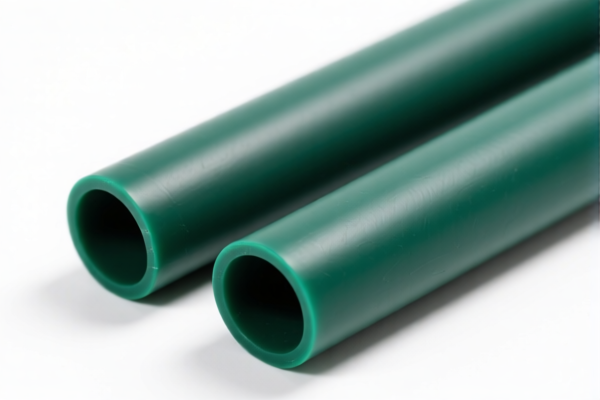
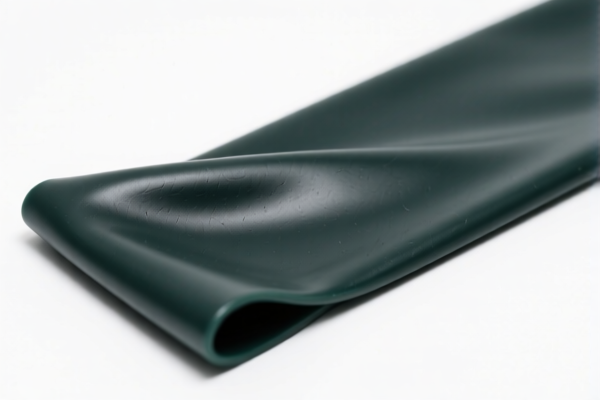
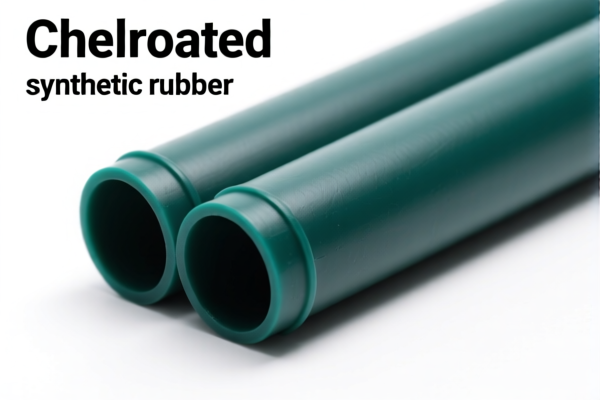
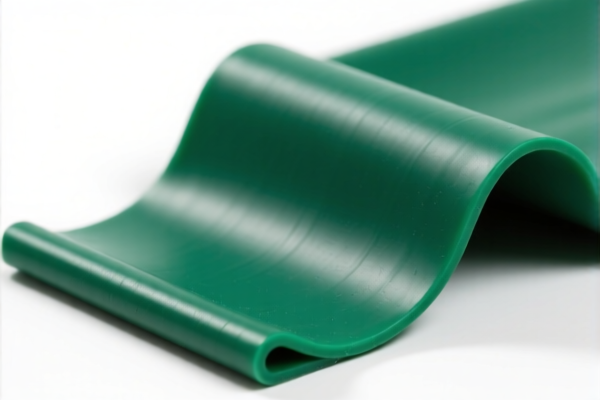
AI Analysis
🧪 Chlorinated Polymer Binder (氯化聚合物粘合剂)
🌐 HS Code Reference & Customs Clearance Guide | 2026 Latest Tariff Analysis | Professional Logistics Strategy
📌 I. Product Definition & Classification: Do You Really Understand "Chlorinated Polymer Binder"?
"Chlorinated Polymer Binder" refers to chemical formulations primarily composed of chlorinated polymers (such as chlorinated rubber, chlorinated polyethylene, or similar derivatives) used as binding agents, adhesives, or dispersing agents in industrial applications. In international trade, this product is complex because it straddles the line between chemical raw materials, polymer resins, and prepared chemical preparations.
The classification depends heavily on the primary function (adhesive vs. resin) and the chemical form (compound mixture vs. primary polymer).
⚠️ Key Classification Distinction:
- If classified as a mixture of halogenated hydrocarbons or chemical preparations → Chapter 38
- If classified as a polymer/resin in primary form → Chapter 39
- If classified as a surface active agent/dispersant → Chapter 34
📦 II. HS Code Classification Details (2026 Latest Tariff Authority Comparison)
Based on the provided data, here are the five potential HS Codes, ranked by classification logic:
| HS Code | Product Description & Logic | Key Attribute | Tax Rate (Total) |
|---|---|---|---|
3824.99.50.00 |
Other prepared binders, dispersants, etc. Matches "Chlorinated" + "Binder/Dispersant". Fits chemical industrial products. (Summary: "Chlorinated" matches halogenated hydrocarbon mixtures; "Binder/Dispersant" fits chemical preparations.) |
Chemical Preparation | 41.5% |
3911.90.91.50 |
Other resins in primary forms Inferred as chemical primary form products due to "Dispersant/Binding" properties. No material conflict. (Summary: Inferred as chemical primary form products under 3911 regarding resins.) |
Primary Resin | 41.5% |
3911.90.70.00 |
Chlorinated synthetic rubber/resins Specifically for Chlorinated Synthetic Rubber derivatives in primary form. (Summary: Chlorinated binder is a derivative of chlorinated synthetic rubber, fits "Other" category.) |
Chlorinated Rubber | 35.0% |
3402.49.90.00 |
Prepared surface active agents "Dispersant" is a type of surfactant. "Chlorinated/Binder" attributes align with organic surfactant properties. (Summary: Dispersant belongs to surfactants; chlorinated/binder attributes align with organic surfactant preparations.) |
Surfactant/Dispersant | 38.7% |
3824.99.55.00 |
Other halogenated hydrocarbon mixtures Matches "Chlorinated" (halogenated) + "Binder/Dispersant" (preparation form). (Summary: "Chlorinated" corresponds to halogenated material; "Binder/Dispersant" fits chemical preparation form.) |
Halogenated Mixture | 38.7% |
🔍 Critical Analysis:
- Highest Tax (41.5%): Codes3824.99.50.00and3911.90.91.50are the most common classifications for generic "chemical binders" and "resins," but they attract the highest total duty.
- Lowest Tax (35.0%): Code3911.90.70.00offers the lowest rate but requires strict proof that the product is a primary form of chlorinated synthetic rubber (not just a generic binder).
- Middle Range (38.7%): Codes3402.49.90.00and3824.99.55.00are alternatives if the product is heavily focused on its surfactant or halogenated mixture nature.
💰 III. 2026 Latest Tariff Rate Breakdown (Including Surcharges & Policy Add-ons)
✅ Applicable Country: United States (US)
✅ Origin: China (CN)
✅ Effective Time: From November 10, 2025 (including subsequent imports)
🎯 1. 3824.99.50.00 & 3911.90.91.50 —— Generic Chemical Preparations/Resins
| Item | Content |
|---|---|
| Base Rate | 6.5% (ad valorem) |
| Section 301 Surcharge | +25.0% (USITC Footnote) |
| IEEPA Surcharge | +10.0% (For Chinese/HK products, effective Nov 10, 2025) |
| Total Rate | 41.5% |
| Tax Calculation | CIF Value × 41.5% |
| De Minimis Exemption? | ❌ NO (deny_de_minimis) |
| Legal Basis Path | Base: 6.5% → 301: 25% → IEEPA: 10% |
📌 Explanation:
- These codes are heavily targeted due to their classification as chemical industrial products or strategic resins. - The 25% Section 301 duty is standard for many chemical categories. - The additional 10% IEEPA duty significantly increases the cost burden.
🎯 2. 3911.90.70.00 —— Chlorinated Synthetic Rubber/Resins (Lowest Rate)
| Item | Content |
|---|---|
| Base Rate | 0.0% |
| Section 301 Surcharge | +25.0% |
| IEEPA Surcharge | +10.0% |
| Total Rate | 35.0% |
| Tax Calculation | CIF Value × 35.0% |
| De Minimis Exemption? | ❌ NO |
| Legal Basis Path | Base: 0.0% → 301: 25% → IEEPA: 10% |
📌 Note:
- This is the most cost-effective classification if the product can be legally defined as a primary form chlorinated polymer. - Risk: If the product is a "preparation" (mixture with solvents/additives) rather than a "primary form," customs may downgrade it to Chapter 38, increasing taxes to 41.5%.
🎯 3. 3402.49.90.00 & 3824.99.55.00 —— Surfactants or Halogenated Mixtures
| Item | Content |
|---|---|
| Base Rate | 3.7% |
| Section 301 Surcharge | +25.0% |
| IEEPA Surcharge | +10.0% |
| Total Rate | 38.7% |
| Tax Calculation | CIF Value × 38.7% |
| De Minimis Exemption? | ❌ NO |
| Legal Basis Path | Base: 3.7% → 301: 25% → IEEPA: 10% |
📌 Note:
- These codes offer a moderate tax burden. -3402.49.90.00is suitable if the product's primary function is dispersing (surfactant action). -3824.99.55.00is suitable if the product is explicitly a halogenated hydrocarbon mixture.
🛠️ IV. Customs Clearance Practical Advice (Field Pitfall Avoidance Guide)
✅ 1. Preparation Checklist (Mandatory)
| Document | Required? | Description |
|---|---|---|
| ✅ Product Specification Sheet | ✔️ | Must detail chemical composition, % of chlorinated polymer, and intended use (binder vs. dispersant). |
| ✅ MSDS (Material Safety Data Sheet) | ✔️ | Essential for chemical goods. Confirm hazard class and primary component. |
| ✅ Certificate of Origin (CO) | ✔️ | To verify China origin and apply appropriate surcharges. |
| ✅ Commercial Invoice | ✔️ | Must clearly state: "Chlorinated Polymer Binder/Dispersant" + HS Code + HTSUS. |
| ✅ Packing List | ✔️ | Detail net/gross weight and packaging type. |
| ✅ Usage Declaration | ✔️ | Explain end-use (e.g., "used in coating industry as binder") to support Chapter 38 or 39 classification. |
✅ 2. Declaration Strategy (Key Mantra)
🔥 "Function Defines Chapter, Composition Determines Code, Precision Saves Tax!"
| Scenario | Correct Declaration | Incorrect Practice |
|---|---|---|
| Primary Form Polymer | 3911.90.70.00 (35.0%)"Chlorinated Polyethylene Resin, Primary Form" |
Declaring as "Binder" → 41.5% |
| Prepared Mixture/Binders | 3824.99.50.00 (41.5%)"Prepared Chemical Binder, Chlorinated" |
Hiding additives → Risk of penalty |
| Surfactant/Dispersant Focus | 3402.49.90.00 (38.7%)"Organic Surface Active Agent (Dispersant)" |
Calling it "Resin" → Wrong classification |
| Halogenated Mixture | 3824.99.55.00 (38.7%)"Halogenated Hydrocarbon Mixture" |
Vague description → Audit delay |
📌 Critical Tip:
- If your product contains solvents, plasticizers, or other additives that change its state from "primary form," you must use Chapter 38 (3824.99.50.00or3824.99.55.00). - Do not force3911.90.70.00(35%) if the product is a ready-to-use paste or solution; customs will likely reclassify it to 41.5%.
✅ 3. Special Case Handling
| Situation | Handling Advice |
|---|---|
| OEM/Private Label | Provide client order + technical data sheet. Avoid generic names like "Glue." |
| Mixed Shipments | Declare each HS Code separately. Do not combine Chapter 39 and 38 goods. |
| Dispersant vs. Binder | If the main function is dispersing particles, lean towards 3402 (38.7%). If binding surfaces, lean towards 3824 (41.5%) or 3911 (35-41.5%). |
| Chlorination Degree | High chlorination content supports 3824.99.55.00 (Halogenated). |
🌍 V. Global Market Clearance Comparison (2026 Latest)
| Country/Region | Recommended HS Code | Total Duty (China Origin) | Certification Requirements | Notes |
|---|---|---|---|---|
| 🇺🇸 USA | 3824.99.50.00 / 3911.90.70.00 |
35.0% ~ 41.5% | None specific, but MSDS mandatory | High tariff due to 301 + IEEPA. |
| 🇨🇳 China | 3824.99.90.00 / 3911.90.00.00 |
~5% - 6.5% | None | Low base duty, no US surcharges. |
| 🇪🇺 EU | 3824.99 / 3911 |
0% - 6.5% | REACH Registration | No Section 301/IEEPA equivalent. |
| 🇦🇺 Australia | 3824.99 / 3911 |
~5% | None | Moderate duty, no major surcharges. |
| 🇯🇵 Japan | 3824.99 / 3911 |
0% - 6% | None | Generally low duty. |
📌 Conclusion:
- USA is the most expensive market for this product due to the 25% Section 301 + 10% IEEPA structure. - EU/Japan/Australia are much more cost-effective for clearance. - Strategy: If importing to the US, optimize the HS Code to3911.90.70.00(35%) if technically feasible, to save 6.5% on the total value.
📌 VI. Common Errors & Pitfall Guide (Blood & Tears Lessons)
❌ Error 1: Classifying a solution/mixture as a primary resin (3911.90.70.00)
👉 Consequence: Customs rejects the 0% base rate. Backdated to 6.5% + Surcharges → 41.5% Total. Penalty for misdeclaration.
❌ Error 2: Ignoring the IEEPA 10% surcharge
👉 Consequence: Underpayment by 10%. Customs audit finds the difference + interest + penalties.
❌ Error 3: Vague Declaration: "Chemical Binder"
👉 Consequence: Customs assigns a random code (e.g., 3824.99.50.00) or delays shipment for chemical review.
❌ Error 4: Forgetting MSDS
👉 Consequence: Immediate hold at US Customs. Chemical products require MSDS for safety clearance.
✅ Correct Approach:
"Chlorinated Rubber Binder, Solution in Solvent, HS Code 3824.99.50.00, MSDS Attached, Value: $X, Origin: China"
🎯 VII. Conclusion: Professional Declaration, Time-Saving, Cost-Reducing!
🎯 Remember the Mantra:
🔹 "Primary Form = 35%, Preparation = 41.5%, Surfactant = 38.7%"
🔹 "Chapter 39 for Resins, Chapter 38 for Mixtures, Chapter 34 for Dispersants"
🔹 "Always add 35% (301+IEEPA) to Base Rate for US Imports from China"
📌 Pro Tip:
If your Chlorinated Polymer Binder is a primary polymer (powder/granules, not a solution), fight for
3911.90.70.00to save 6.5% on the CIF value.
If it is a liquid/paste, accept3824.99.50.00(41.5%) but ensure MSDS and precise technical descriptions are provided to avoid delays.
📣 Immediate Action:
📞 Consult your customs broker with the Technical Data Sheet to confirm if your product qualifies as "Primary Form" (
3911) or "Preparation" (3824).
🚀 Accurate Classification = Maximum Profit Margin!
✨ Professional Customs Clearance Starts with Accurate Classification!
💼 Every Percent of Duty Counts!
Customer Reviews
About HS Code Classification
The Harmonized System (HS) is an internationally standardized nomenclature developed by the World Customs Organization (WCO) to classify traded products. Over 200 countries use the HS system as the basis for customs tariffs, trade statistics, and import/export regulations.
Each HS code follows a hierarchical structure:
- Chapter (2 digits) — Broad category of goods (e.g., Chapter 84: Machinery and Mechanical Appliances)
- Heading (4 digits) — More specific grouping within the chapter
- Subheading (6 digits) — Internationally standardized breakdown, used by all WCO member countries
- National subdivisions (8-10 digits) — Country-specific extensions for further classification, such as US HTSUS 10-digit codes
Correct HS code classification is essential for smooth customs clearance, accurate duty payment, and compliance with trade regulations. Misclassification can lead to customs delays, overpayment of duties, or penalties.
When importing from CN to US, the applicable tariff rates may include:
- Most-Favored-Nation (MFN) rate — The standard duty rate applied to WTO members
- General rate — Applied to countries without trade agreements
- Trade remedy duties — Additional tariffs such as Section 301 (anti-dumping), Section 232 (national security), or countervailing duties
The information provided on this page is for reference purposes only. For official classification, please consult with your local customs authority or a licensed customs broker.