christmas label
CN → US| HS Code | Tariff Rate | Origin | Destination | Doc |
|---|---|---|---|---|
| 4821904000 | 35.0% | CN | US | Official Doc |
| 7117909000 | 28.5% | CN | US | Official Doc |
| 4821102000 | 35.0% | CN | US | Official Doc |
Product Images
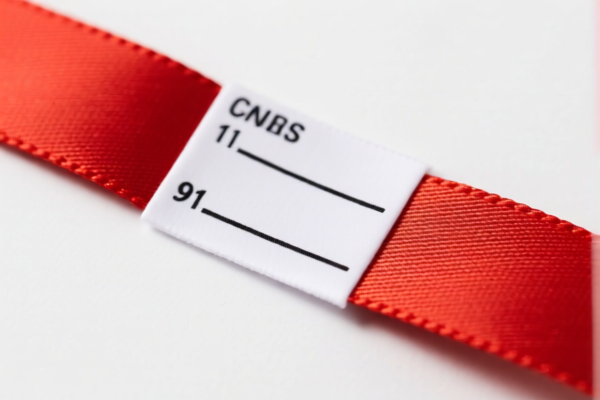

AI Analysis
🎄 Christmas Label (Gift Labels)
🌐 HS Code Reference & Customs Clearance Guide | 2026 Latest Tariff Analysis | Professional Clearance Strategy
📌 I. Product Definition & Classification: Do You Really Understand "Christmas Labels"?
Christmas labels are small adhesive or non-adhesive tags typically attached to gift packages during the holiday season. They serve both decorative and informational purposes. In international trade, their classification depends heavily on material, format, and intended use.
Based on common materials and forms, these products fall primarily into two categories:
- Paper/Cardboard Labels: The most common type, made from paper or paperboard, often featuring festive designs, colors, or text.
- Decorative Accessories: If the label includes non-paper elements (like plastic chains, beads, or non-precious metal ornaments) and is used more as a decorative charm than a simple information tag, it may be classified differently.
⚠️ Key Distinction:
- If the item is primarily a paper/cardboard tag for labeling gifts → Classify under 4821 (Paper labels).
- If the item is a decorative accessory (e.g., plastic/paper charm, non-jewelry ornament) → Classify under 7117 (Imitation jewelry/decorative articles).
📦 II. HS Code Classification Details (2026 Latest Tariff Authority Comparison)
| HS Code | Product Description | Material | Key Characteristics |
|---|---|---|---|
4821.90.40.00 |
Other paper or paperboard labels (not self-adhesive or of specific subheadings) | Paper/Cardboard | Generic gift tags, paper-based labels not covered by more specific subheadings |
7117.90.90.00 |
Other imitation jewelry and personal ornaments | Paper/Plastic/Mixed | Decorative tags that resemble accessories, non-precious, non-jewelry |
4821.10.20.00 |
Paper or paperboard labels (self-adhesive, of a kind used for bottling, etc.) | Paper | Self-adhesive paper labels, often used for product identification |
🔍 Key Reminder:
- Most standard Christmas gift tags are made of paper/cardboard and are classified under 4821.
- If the label is part of a decorative ensemble (e.g., a plastic snowman tag on a ribbon) and not strictly a "label," 7117 may apply.
- Self-adhesive paper labels have a distinct subheading (4821.10), while non-adhesive or other types fall under 4821.90.
💰 III. 2026 Latest Tariff Rate Breakdown (Including Surtaxes, Policy Add-ons)
✅ Applicable Country: United States (US)
✅ Origin: China (CN)
✅ Effective Date: From November 10, 2025 (and subsequent imports)
🎯 1. 4821.90.40.00 —— Paper/Cardboard Labels (Other)
| Item | Content |
|---|---|
| Base Rate | 0% (ad valorem) |
| USITC Surtax | +25% (Under Section 301) |
| IEEPA Surtax | +10% (For products originating in China/Hong Kong, from Nov 10, 2025) |
| Total Rate | 35.0% |
| Tax Calculation | CIF Value × 35% |
| De Minimis Eligibility | ❌ No (deny_de_minimis) |
| Legal Basis Path | IEEPA:9903.01.25 → IEEPA:9903.01.24 → USITC:4821.90.40.00 → FOOTNOTE:9903.88.01 |
📌 Explanation:
- 25% USITC Surtax: Under Section 301 of the Trade Act, applicable to many Chinese goods.
- 10% IEEPA Surtax: Under the International Emergency Economic Powers Act, additional tariff for Chinese-origin goods.
- Total 35%: High tariff rate. Must be factored into cost calculations.
🎯 2. 7117.90.90.00 —— Imitation Jewelry & Decorative Accessories
| Item | Content |
|---|---|
| Base Rate | 11.0% (ad valorem) |
| USITC Surtax | +7.5% (Under Section 301) |
| IEEPA Surtax | +10% (For products originating in China/Hong Kong, from Nov 10, 2025) |
| Total Rate | 28.5% |
| Tax Calculation | CIF Value × 28.5% |
| De Minimis Eligibility | ❌ No (deny_de_minimis) |
| Legal Basis Path | IEEPA:9901.25 → IEEPA:9903.01.24 → USITC:7117.90.90.00 → FOOTNOTE:9903.88.01 |
📌 Note:
- If your Christmas label is considered a decorative accessory (e.g., plastic, mixed material, or charm-like), it may fall under this code.
- Total 28.5% is lower than the 35% for paper labels, but requires justification that it is not a standard paper label.
- Material inference: Often paper or plastic, classified as non-precious, non-jewelry decorative items.
🎯 3. 4821.10.20.00 —— Self-Adhesive Paper Labels
| Item | Content |
|---|---|
| Base Rate | 0% (ad valorem) |
| USITC Surtax | +25% (Under Section 301) |
| IEEPA Surtax | +10% (For products originating in China/Hong Kong, from Nov 10, 2025) |
| Total Rate | 35.0% |
| Tax Calculation | CIF Value × 35% |
| De Minimis Eligibility | ❌ No (deny_de_minimis) |
| Legal Basis Path | IEEPA:9903.01.25 → IEEPA:9903.01.24 → USITC:4821.10.20.00 → FOOTNOTE:9903.88.01 |
📌 Note:
- If the label is self-adhesive (e.g., sticker-style), it falls under this subheading.
- Total 35%: Same as non-adhesive paper labels.
- Key differentiator: Self-adhesive nature.
🛠️ IV. Customs Clearance Practical Advice (Real-World Pitfall Avoidance Guide)
✅ 1. Document Checklist (Missing any will cause delays)
| Document | Required | Description |
|---|---|---|
| ✅ Product Specification Sheet | ✔️ | Material composition, dimensions, adhesive type (if any) |
| ✅ Product Photos (with tags) | ✔️ | Clear images showing the label, packaging, and any decorative elements |
| ✅ Commercial Invoice | ✔️ | Must clearly state "Christmas Gift Labels" or "Paper Labels" |
| ✅ Packing List | ✔️ | Detail quantity, weight, and packaging structure |
| ✅ Material Declaration | ✔️ | Specify if paper, cardboard, plastic, or mixed |
| ✅ Origin Certificate | ✔️ | Required for determining tariff rates |
✅ 2. Declaration Tips (Key Mantra)
🔥 "Material First, Adhesive Second, Name Precise, Tax Clear!"
| Scenario | Correct Declaration | Wrong Practice |
|---|---|---|
| Standard paper gift tag (non-adhesive) | 4821.90.40.00 - "Paper Gift Label" |
Misdeclare as "Plastic Ornament" → Wrong classification |
| Self-adhesive sticker label | 4821.10.20.00 - "Self-Adhesive Paper Label" |
Misdeclare as "Paper Label" → Potential audit |
| Decorative charm/tag (plastic/paper mix) | 7117.90.90.00 - "Decorative Accessory" |
Misdeclare as "Paper Label" → 28.5% vs 35% difference |
| Plastic snowman tag on ribbon | 7117.90.90.00 |
Misdeclare as "Paper Label" → Higher tax |
✅ 3. Special Circumstances Handling
| Situation | Handling Advice |
|---|---|
| Custom-designed labels | Provide design files or samples to prove material and form |
| Labels with metal parts | May be classified as imitation jewelry (7117), not paper |
| Bulk vs. Retail Packaging | Ensure invoice reflects the correct unit and value |
| Mixed shipments | Declare each HS Code separately to avoid misclassification |
🌍 V. Global Market Comparison (2026 Latest)
| Country/Region | Recommended HS Code | Tariff | Certification | Note |
|---|---|---|---|---|
| 🇺🇸 USA | 4821.90.40.00 or 7117.90.90.00 |
35% / 28.5% | None specific | High tariffs due to Section 301 + IEEPA |
| 🇨🇳 China | 4821.90.40.00 |
5-10% | None | No additional surtaxes |
| 🇪🇺 EU | 4821.90.40.00 |
0-5% | None | Lower tariffs, no major surtaxes |
| 🇬🇧 UK | 4821.90.40.00 |
0-5% | None | Post-Brexit rules may vary |
📌 Conclusion:
- USA is the most challenging market due to high tariffs.
- EU and UK offer more favorable rates.
- Cost optimization: Consider sourcing from non-China origins for US market if possible.
📌 VI. Common Errors & Pitfall Guide (Lessons Learned)
❌ Error 1: Misdeclaring paper labels as "Plastic Ornaments"
👉 Consequence: If not proven to be decorative accessories, customs may reclassify and apply higher tax.
❌ Error 2: Declaring self-adhesive labels as non-adhesive
👉 Consequence: Classification error → 4821.10 vs 4821.90 → Potential delays or audits.
❌ Error 3: Not disclosing material composition
👉 Consequence: Customs cannot determine correct HS code → Delay in clearance.
❌ Error 4: Ignoring IEEPA surtaxes
👉 Consequence: Underpayment of taxes → Penalties and back taxes.
✅ Correct Practice:
"Paper Gift Labels, Non-Adhesive, Christmas Design, 100% Paper, Model XMAS-01"
or
"Self-Adhesive Paper Labels, Round, Christmas Theme, Model STKR-02"
🎯 VII. Conclusion: Professional Declaration, Save Time, Reduce Costs!
🎯 Remember the Mantra:
🔹 "Paper Labels: 35%, Decorative: 28.5%, Be Precise!"
🔹 "HS Code Determines Tax, 10% IEEPA Adds Up, Declare Correctly, Save Thousands!"
📌 Tips:
- If your labels are originating from Vietnam, Thailand, or Malaysia, you may qualify for IEEPA exemptions, reducing tariffs significantly.
- Consider applying for an Advance Ruling to confirm the correct HS code before shipment.
📣 Act Now:
📞 Contact a professional customs broker + Provide product images + Apply for HS Code Advance Ruling
🚀 Let your Christmas labels clear customs smoothly, boost efficiency, and maximize profits!
✨ Professional Clearance Starts with Accurate Classification!
💼 Every Cent of Cost Deserves Precise Calculation!
Customer Reviews
About HS Code Classification
The Harmonized System (HS) is an internationally standardized nomenclature developed by the World Customs Organization (WCO) to classify traded products. Over 200 countries use the HS system as the basis for customs tariffs, trade statistics, and import/export regulations.
Each HS code follows a hierarchical structure:
- Chapter (2 digits) — Broad category of goods (e.g., Chapter 84: Machinery and Mechanical Appliances)
- Heading (4 digits) — More specific grouping within the chapter
- Subheading (6 digits) — Internationally standardized breakdown, used by all WCO member countries
- National subdivisions (8-10 digits) — Country-specific extensions for further classification, such as US HTSUS 10-digit codes
Correct HS code classification is essential for smooth customs clearance, accurate duty payment, and compliance with trade regulations. Misclassification can lead to customs delays, overpayment of duties, or penalties.
When importing from CN to US, the applicable tariff rates may include:
- Most-Favored-Nation (MFN) rate — The standard duty rate applied to WTO members
- General rate — Applied to countries without trade agreements
- Trade remedy duties — Additional tariffs such as Section 301 (anti-dumping), Section 232 (national security), or countervailing duties
The information provided on this page is for reference purposes only. For official classification, please consult with your local customs authority or a licensed customs broker.