chrome tanned buffalo hide
CN → US| HS Code | Tariff Rate | Origin | Destination | Doc |
|---|---|---|---|---|
| 4107111020 | 35.0% | CN | US | Official Doc |
| 4107111040 | 35.0% | CN | US | Official Doc |
| 4205008000 | 35.0% | CN | US | Official Doc |
| 4205006000 | 39.9% | CN | US | Official Doc |
Product Images
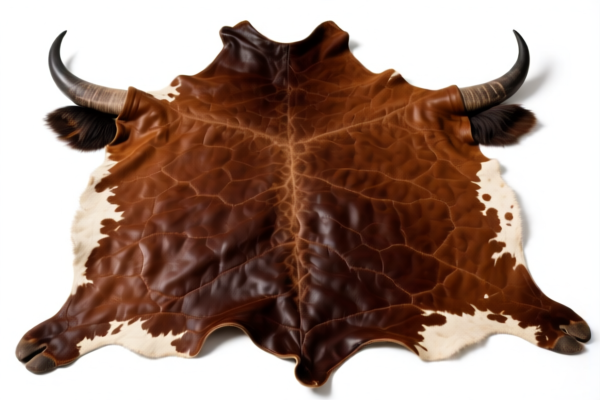
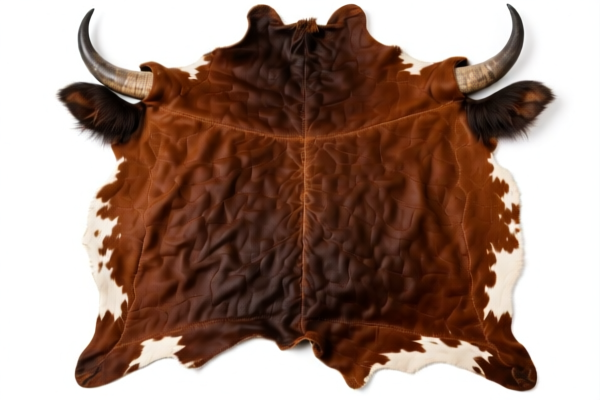
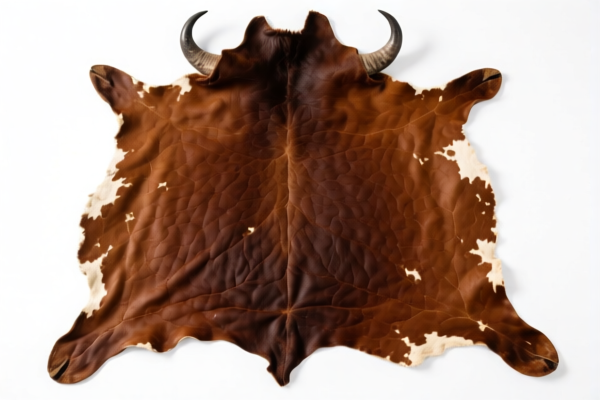
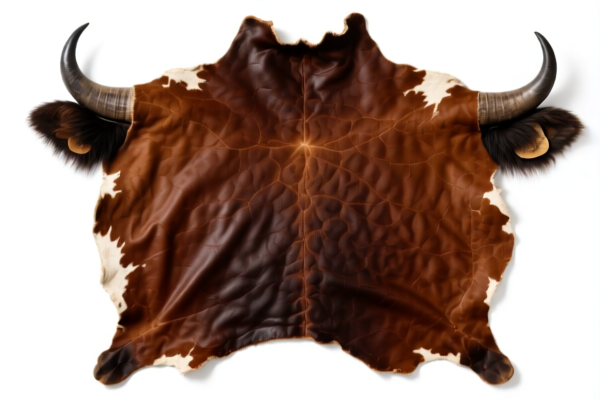
AI Analysis
🐂 Chrome Tanned Buffalo Hide (牛皮/水牛皮)
🌐 HS Code Reference & Customs Clearance Guide | 2026 Latest Tariff Analysis | Professional Entry Strategy
📌 I. Product Definition & Classification: Do You Really Understand "Chrome Tanned Buffalo Hide"?
Chrome Tanned Buffalo Hide is a semi-finished leather product derived from buffalo hides. It undergoes a specific tanning process using chrome salts, which gives it excellent softness, flexibility, and heat resistance. In international trade, classification depends strictly on the state of the hide (whole vs. split) and the exact animal source (though often grouped under "Cattle" in general contexts, specific subheadings matter).
⚠️ Key Distinction Point:
- If the hide is whole (unsplit, retaining the natural grain layer intact) and chrome-tanned → Classified under 4107.11.10.x
- If the item is a finished leather good (e.g., gloves, belts, bags) made from sheepskin → Classified under 4205.x
- Note on "Buffalo" vs. "Cow": While biologically distinct, US HTS often groups cattle/buffalo hides under Chapter 41 unless specific split or processing differences apply. The provided data highlights matches for "Cattle Hide" (牛皮) and "Sheepskin" (绵羊皮).
📦 II. HS Code Classification Details (2026 Latest Tariff Authority对照)
Based on the provided , here are the matched HS Codes with their specific summaries and tax implications.
| HS Code | Product Description & Match Logic | Material State | Summary Logic |
|---|---|---|---|
4107.11.10.20 |
Cattle Hide, Whole, Chrome Tanned (Match: ✅) | Whole/Crude | "Match Successful." Material fits "Cattle Hide" (牛皮) & "Chrome Tanned" (铬鞣); Shape fits "Whole Hide/Surface Leather" (整张皮/面皮) primary processing state. |
4107.11.10.40 |
Cattle Hide, Whole, Chrome Tanned (Match: ✅) | Whole/Crude | "Match Successful." Product name explicitly contains material (Cattle Hide) and process (Chrome Tanned), fully complying with classification interpretation material and processing requirements. |
4205.00.80.00 |
Other Leather Articles (Match: ⚠️ Conditional) | Finished Good | "Match Basis." "Sheepskin" (绵羊皮) is a leather material fitting the "Leather Articles" core requirement. Since it's a "Other" catch-all category, no material conflict exists. Note: This implies the input might be interpreted as a finished sheepskin good in some contexts. |
4205.00.60.00 |
Other Leather Articles (Match: ✅) | Finished Good | "Match Successful." Material is "Sheepskin" (绵羊皮), belonging to leather articles; although form is not explicit, it aligns with "Other Leather Articles" material scope with no conflict. |
🔍 Critical Reminder:
- Chapter 41 (Raw/Semi-finished Leather) vs. Chapter 42 (Finished Leather Goods) is the critical pivot.
- Buffalo Hide is typically treated under Cattle Hide (4107) if whole and tanned.
- If the input "Chrome Tanned Buffalo Hide" is actually a finished product (like a wallet or bag made of sheepskin, as hinted by some summaries), it falls under 4205.
- Always verify the physical state: Is it a raw hide (4107) or a manufactured item (4205)?
💰 III. 2026 Latest Tariff Rate Details (Including Surtaxes & Policy Add-ons)
✅ Applicable Country: United States (US)
✅ Country of Origin: China (CN)
✅ Effective Date: November 10, 2025 (and subsequent imports)
🎯 1. 4107.11.10.20 & 4107.11.10.40 —— Whole, Chrome-Tanned Cattle/Buffalo Hides
| Item | Detail |
|---|---|
| Basic Tariff | 0.0% (Ad Valorem) |
| Section 301 Surtax (USITC) | +25.0% |
| Section 122 Tariff (IEEPA) | +10.0% |
| Total Tariff Rate | 35.0% |
| Tax Calculation | CIF Value × 35% |
| De Minimis Eligibility | ❌ Not Eligible (High value raw material) |
| Legal Basis Path | USITC:4107.11.10.x → Footnote:301-Surtax-25 → IEEPA:122-Surtax-10 |
📌 Explanation:
- The 0% base rate reflects the duty-free status for raw/semi-finished leather imports under normal conditions.
- The 25% surtax is imposed under Section 301 of the Trade Act for Chinese-origin goods.
- The 10% surtax is imposed under IEEPA Section 122 (often linked to specific national security or economic emergency provisions).
- Total Cost Impact: 35% is a significant cost driver for leather imports. Must be factored into FOB/CIF pricing strategies.
🎯 2. 4205.00.80.00 —— Other Leather Articles (e.g., Sheepskin Goods)
| Item | Detail |
|---|---|
| Basic Tariff | 0.0% (Ad Valorem) |
| Section 301 Surtax (USITC) | +25.0% |
| Section 122 Tariff (IEEPA) | +10.0% |
| Total Tariff Rate | 35.0% |
| Tax Calculation | CIF Value × 35% |
| De Minimis Eligibility | ❌ Not Eligible |
| Legal Basis Path | USITC:4205.00.80.00 → Footnote:301-Surtax-25 → IEEPA:122-Surtax-10 |
📌 Note:
- Even though the basic tariff is 0%, the same 35% surtax applies.
- This category is a "catch-all" for other leather goods not specified elsewhere.
- Conflict Check: The summary mentions "Sheepskin" (绵羊皮). If your product is Buffalo, ensure it doesn't get misclassified as a sheepskin good. If it's Buffalo, stick to 4107.
🎯 3. 4205.00.60.00 —— Other Leather Articles
| Item | Detail |
|---|---|
| Basic Tariff | 4.9% |
| Section 301 Surtax (USITC) | +25.0% |
| Section 122 Tariff (IEEPA) | +10.0% |
| Total Tariff Rate | 39.9% |
| Tax Calculation | CIF Value × 39.9% |
| De Minimis Eligibility | ❌ Not Eligible |
| Legal Basis Path | USITC:4205.00.60.00 → Footnote:301-Surtax-25 → IEEPA:122-Surtax-10 |
📌 Critical Difference:
- This subheading carries a 4.9% base tariff, making the total 39.9%, which is higher than the 35% for whole hides (4107) and other leather articles (4205.00.80).
- Strategy: Avoid4205.00.60.00if possible. Prefer4205.00.80.00(35%) or4107(35%) to save 4.9% on the base duty.
🛠️ IV. Customs Clearance Practical Advice (Combat Pitfall Guide)
✅ 1. Documentation Checklist (No Exceptions)
| Document | Required | Description |
|---|---|---|
| ✅ Product Specification Sheet | ✔️ | Must specify: Animal source (Buffalo/Cattle), Tanning method (Chrome), State (Whole/Split), Weight, Dimensions. |
| ✅ Commercial Invoice | ✔️ | Clearly state: "Chrome Tanned Buffalo Hide" or "Cattle Hide, Chrome Tanned, Whole". Avoid vague terms like "Leather Material". |
| ✅ Packing List | ✔️ | Detail packaging type (bales, rolls, etc.) and net/gross weight. |
| ✅ Certificate of Origin | ✔️ | Essential for proving Chinese origin to apply (or avoid) surtaxes. |
| ✅ Photos of Goods | ✔️ | Show the grain side, flesh side, and any markings/labels. |
| ✅ Tanning Process Certificate | ✔️ | If disputed, prove "Chrome Tanned" vs. "Vegetable Tanned" (different HS codes). |
✅ 2. Declaration Tips (Key Mnemonic)
🔥 “Whole Hide is 4107, Finished is 4205, Chrome Tanned is Key, Split vs. Whole is the Enemy!”
| Scenario | Correct Declaration | Wrong Practice |
|---|---|---|
| Whole Buffalo Hide, Chrome Tanned | 4107.11.10.20 / 4107.11.10.40 |
Misclassifying as finished leather → 39.9% vs 35% |
| Split Buffalo Hide | 4107.11.10.xx (Split specific) |
Declaring as "Whole" → Customs rejection/fines |
| Buffalo Leather Goods (Belt/Bag) | 4205.00.80.00 (35%) |
Declaring as 4205.00.60.00 (39.9%) → Higher tax |
| Buffalo Hide with Grease/Preservative | Still 4107 |
Declaring as "Chemicals" → Wrong classification |
✅ 3. Special Circumstances Handling
| Situation | Handling Advice |
|---|---|
| OEM Custom Buffalo Hides | Provide customer PO and design specs. Proving "Whole" state avoids higher finished goods rates. |
| Mixed Shipment (Buffalo + Sheep) | Separate HS Codes! Buffalo → 4107, Sheep (finished) → 4205. Do not mix. |
| Buffalo vs. Cattle Dispute | If the hide is large and thick, customs may inspect. Provide zoological proof if needed, but generally, 4107 covers cattle/buffalo. |
| Section 122 Eligibility | Verify if the product is exempt. Most Chinese leather goods are not exempt. |
🌍 V. Global Market Clearance Comparison (2026 Latest)
| Country/Region | Recommended HS Code | Tariff (China Origin) | Certification | Notes |
|---|---|---|---|---|
| 🇺🇸 United States | 4107.11.10.20/40 |
35% (25% + 10%) | None | High surtax on raw/semi-finished leather. |
| 🇨🇳 China | 4107.11.10.20 |
0% - 2% | CCC (if finished) | Low duty for raw materials. |
| 🇪🇺 European Union | 4107.21 |
0% - 10% | REACH | Varies by exact tanning type. |
| 🇬🇧 United Kingdom | 4107.21 |
0% - 10% | UKCA | Post-Brexit rules may apply. |
| 🇦🇺 Australia | 4107.21 |
5% | No specific | Moderate duty. |
📌 Conclusion:
- USA is the most expensive market for Chinese leather due to Section 301 + Section 122 surtaxes.
- Duty Optimization: Ensure correct classification to stay at 35% (4107 or 4205.80) rather than 39.9% (4205.60).
- Buffer Stock: Consider importing to non-US markets (EU, Asia) and re-exporting if possible, though trade barriers may limit this.
📌 VI. Common Errors & Pitfalls (Blood & Tears Lessons)
❌ Error 1: Misclassifying Whole Buffalo Hide as Split Leather
👉 Consequence: Different HS subheadings, potential duty differences, and customs delays.
Fix: Clearly state "Whole" or "Unsplit" in the description.
❌ Error 2: Using "Leather" generically without specifying "Chrome Tanned"
👉 Consequence: Customs may classify under Vegetable Tanned (different duty rates).
Fix: Explicitly state "Chrome Tanned" in the commercial invoice.
❌ Error 3: Confusing Buffalo with Sheepskin for finished goods
👉 Consequence: If declared as Sheepskin (4205) but is Buffalo, it may be flagged for material mismatch.
Fix: Accurate material description is crucial.
❌ Error 4: Ignoring Section 122 surtax
👉 Consequence: Unexpected 10% charge at customs.
Fix: Factor 35% total duty into your landed cost calculation.
✅ Correct Declaration Example:
"Buffalo Hide, Chrome Tanned, Whole, Unsplit, Grade A, For Further Processing"
HS Code:4107.11.10.20
🎯 VII. Conclusion: Professional Declaration Saves Money!
🎯 Remember the Mnemonic:
🔹 "Whole Hide is 4107, 35% Total Cost, Split or Finished needs Care, Don't let 4.9% Surprise you!"
🔹 "Chrome Tanned is Key, Material must be Clear, Section 301 + 122 = 35%, Plan Ahead!"
📌 Pro Tip:
If your buffalo hide is not from China (e.g., Brazil, India), the 301 + 122 surtaxes do not apply. Tariff would be 0% (4107) or 4.9% (4205.60) or 0% (4205.80).
Strategy: Optimize supply chain to source from non-China origins if possible to save 35% in duty.
📣 Immediate Action:
📞 Consult with a licensed customs broker + Provide Product Photos + Apply for HS Code Advance Ruling
🚀 Let your Buffalo Hide clear smoothly, efficiently, and profitably!
✨ Professional Clearance Starts with Precise Classification!
💼 Every Cent of Cost Deserves Precise Calculation!
Customer Reviews
About HS Code Classification
The Harmonized System (HS) is an internationally standardized nomenclature developed by the World Customs Organization (WCO) to classify traded products. Over 200 countries use the HS system as the basis for customs tariffs, trade statistics, and import/export regulations.
Each HS code follows a hierarchical structure:
- Chapter (2 digits) — Broad category of goods (e.g., Chapter 84: Machinery and Mechanical Appliances)
- Heading (4 digits) — More specific grouping within the chapter
- Subheading (6 digits) — Internationally standardized breakdown, used by all WCO member countries
- National subdivisions (8-10 digits) — Country-specific extensions for further classification, such as US HTSUS 10-digit codes
Correct HS code classification is essential for smooth customs clearance, accurate duty payment, and compliance with trade regulations. Misclassification can lead to customs delays, overpayment of duties, or penalties.
When importing from CN to US, the applicable tariff rates may include:
- Most-Favored-Nation (MFN) rate — The standard duty rate applied to WTO members
- General rate — Applied to countries without trade agreements
- Trade remedy duties — Additional tariffs such as Section 301 (anti-dumping), Section 232 (national security), or countervailing duties
The information provided on this page is for reference purposes only. For official classification, please consult with your local customs authority or a licensed customs broker.