clean sponge
CN → US| HS Code | Tariff Rate | Origin | Destination | Doc |
|---|---|---|---|---|
| 3926204050 | 16.5% | CN | US | Official Doc |
| 4823908620 | 35.0% | CN | US | Official Doc |
| 6307909875 | 24.5% | CN | US | Official Doc |
| 6307909891 | 24.5% | CN | US | Official Doc |
| 9605000000 | 18.1% | CN | US | Official Doc |
Product Images
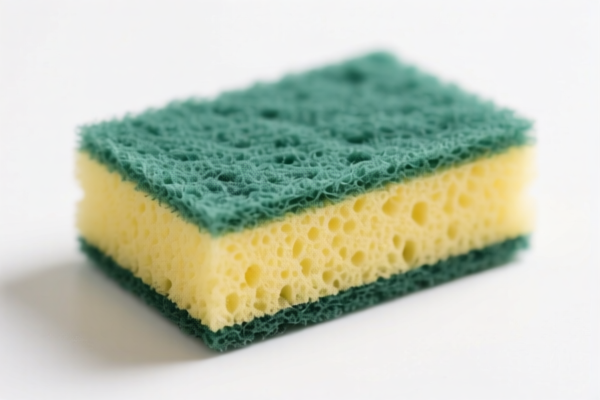
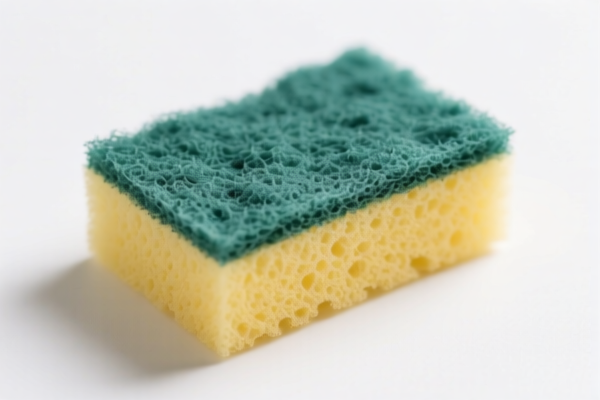
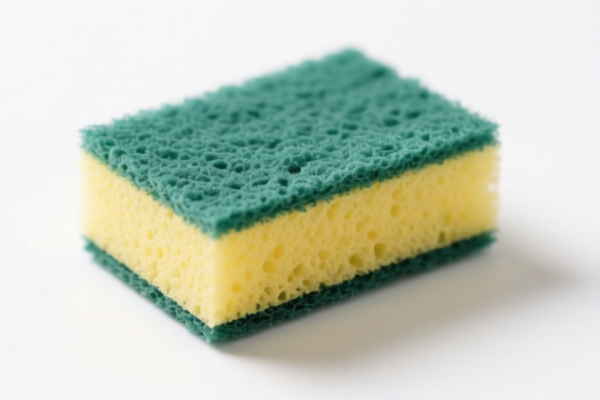

AI Analysis
🧽 Clean Sponge (Cleaning Tools & Personal Care Items)
🌐 HS Code Reference & Customs Clearance Guide | 2026 Latest Tariff Analysis | Professional Clearance Strategy
📌 I. Product Definition & Classification: What Exactly is a "Clean Sponge"?
The term "Clean Sponge" is ambiguous in international trade. Customs authorities classify goods based on material composition, intended use, and structure. A "sponge" can be a plastic accessory, a paper-based consumable, a personal hygiene item, or a general cleaning tool. Misclassification leads to severe tariff penalties (up to 35% vs 16.5%).
Key Distinctions: * Plastic Cleaning Accessories: Plastic sponges attached to handles (e.g., bottle brushes, window squeegees). → Category: Plastic Articles * Paper/Sponge Consumables: Loose sponges used for general cleaning, made of paper or non-medical sponge material. → Category: Paper/Other Manufactures * Personal Hygiene: Sponges used specifically for face washing/bathing. → Category: Personal Care/Bath Accessories
⚠️ Critical Determination Point:
- Is it attached to a plastic handle? → 9605 or 3926 (Accessories).
- Is it a standalone "洗脸" (Face Washing) item? → 9605 (Best Rate).
- Is it a generic cleaning tool made of paper? → 4823 (Highest Penalty).
📦 II. HS Code Classification Details (2026 Latest Tariff Authority Comparison)
Based on the provided data, here are the 5 possible classifications for "Clean Sponge" products:
| HS Code | Product Description (Summary) | Material/Structure | Tax Rate (Total) |
|---|---|---|---|
3926.20.40.50 |
Cleaning sponge stick, plastic material, form: cleaning tool accessory | Plastic | 16.5% |
4823.90.86.20 |
Cleaning sponge stick, paper/sponge consumable, form: cleaning tool | Paper/Sponge | 35.0% |
6307.90.98.75 |
Sponge face wash, sponge material, form: face washing utensil (Other masks/protection) | Sponge | 24.5% |
6307.90.98.91 |
Sponge face wash, sponge material, form: other finished products | Sponge | 24.5% |
9605.00.00.00 |
Sponge face wash, use: personal toiletry, no material conflict | General/Toiletry | 18.1% |
🔍 Key Insight:
- Best Rate:9605.00.00.00(18.1%) for personal face wash sponges.
- Worst Rate:4823.90.86.20(35.0%) if misclassified as generic paper cleaning tools.
- Middle Ground:3926(16.5%) for plastic handle attachments;6307(24.5%) for generic sponge finished goods.
💰 III. 2026 Latest Tariff Rate Breakdown (Including Surtaxes & Policy Add-ons)
✅ Applicable Country: United States (US)
✅ Origin: China (CN)
✅ Effective Date: Includes subsequent imports under current trade policies (Section 301 & IEEPA)
🎯 1. 3926.20.40.50 – Plastic Cleaning Tool Accessories
| Item | Content |
|---|---|
| Base Tariff | 6.5% |
| Surtax (Section 301) | 0.0% |
| IEEPA Surtax | 10.0% (Targeting China/HK products) |
| Total Tax Rate | 16.5% |
| Calculation | CIF Value × 16.5% |
| De Minimis Exemption? | ❌ No (Deny de_minimis for these specific goods) |
| Legal Path | IEEPA:9903.01.25 → USITC:3926.20.40.50 |
📌 Explanation:
- This classification treats the item as a plastic article accessory.
- While the base rate is low (6.5%), the 10% IEEPA surtax applies, bringing the total to 16.5%.
- Advantage: Lower risk of high penalties compared to paper classifications.
🎯 2. 4823.90.86.20 – Paper/Sponge Cleaning Consumables
| Item | Content |
|---|---|
| Base Tariff | 0.0% |
| Surtax (Section 301) | 25.0% |
| IEEPA Surtax | 10.0% |
| Total Tax Rate | 35.0% |
| Calculation | CIF Value × 35.0% |
| De Minimis Exemption? | ❌ No |
| Legal Path | IEEPA:9903.01.24 → USITC:4823.90.86.20 → FOOTNOTE:9903.88.01 |
📌 Warning:
- Highest Risk: This classification incurs the maximum penalty.
- Why so high? If declared as "paper cleaning tools," it triggers the full 25% Section 301 surtax + 10% IEEPA.
- Avoid this if possible unless the product is explicitly paper-based and not suitable for other categories.
🎯 3. 6307.90.98.75 / 6307.90.98.91 – Sponge Face Wash (Other Finished Goods)
| Item | Content |
|---|---|
| Base Tariff | 7.0% |
| Surtax (Section 301) | 7.5% |
| IEEPA Surtax | 10.0% |
| Total Tax Rate | 24.5% |
| Calculation | CIF Value × 24.5% |
| De Minimis Exemption? | ❌ No |
| Legal Path | IEEPA:9903.01.24 → USITC:6307.90.98.xx |
📌 Explanation:
- These codes fall under "Other Made-Up Articles" (Textiles/Non-wovens).
- The surtax is lower (7.5%) than for paper/plastic, but still significant.
- Used for generic sponge products that don't fit strict "toiletry" definitions.
🎯 4. 9605.00.00.00 – Personal Toiletry Sets (Sponge Face Wash)
| Item | Content |
|---|---|
| Base Tariff | 8.1% |
| Surtax (Section 301) | 0.0% |
| IEEPA Surtax | 10.0% |
| Total Tax Rate | 18.1% |
| Calculation | CIF Value × 18.1% |
| De Minimis Exemption? | ❌ No |
| Legal Path | IEEPA:9903.01.25 → USITC:9605.00.00.00 |
📌 Advantage:
- Optimal for Personal Care: If the sponge is sold as a "face wash sponge" or part of a toiletry kit, this is often the most efficient classification.
- Lower surtax burden (0% Section 301) compared to paper or generic tools.
- Condition: Must be clearly marketed and used for personal hygiene, not industrial or household cleaning.
🛠️ IV. Customs Clearance Practical Advice (Avoiding Pitfalls)
✅ 1. Documentation Checklist (Mandatory)
| Document | Required? | Notes |
|---|---|---|
| ✅ Product Specification Sheet | ✔️ | Must state material (Plastic vs. Paper vs. Sponge) and usage (Face Wash vs. Window Cleaning). |
| ✅ Product Photos | ✔️ | Clear images of the sponge, handle, and packaging labeling. |
| ✅ Commercial Invoice | ✔️ | Description must match HS Code (e.g., "Personal Toiletry Sponge" vs. "Plastic Cleaning Brush"). |
| ✅ Material Declaration | ✔️ | Explicitly state if it contains PVC, PE, Paper, or Natural Sponge. |
| ✅ Origin Certificate | ✔️ | For IEEPA surtax determination. |
✅ 2. Declaration Strategy (Key Tips)
🔥 "Define Usage, Declare Material, Avoid Generic Terms!"
| Scenario | Correct Declaration | Incorrect Declaration | Consequence |
|---|---|---|---|
| Face Wash Sponge | "Personal Use Facial Cleaning Sponge, Sponge Material" → 9605.00.00.00 |
"Cleaning Sponge" | High risk of being reclassified to 4823 (35%) or 6307 (24.5%). |
| Plastic Handle Brush | "Plastic Cleaning Tool Accessory, Model XYZ" → 3926.20.40.50 |
"Cleaning Tool" | Risk of penalty if material is not declared as plastic. |
| Paper Sponge | "Disposable Paper Cleaning Sponge" → 4823.90.86.20 |
"Sponge" | Acceptable if no better fit, but expect 35% tax. |
| Mixed Kit | "Toiletry Kit containing Sponge and Towel" → 9605.00.00.00 |
"Cleaning Supplies" | Better tax rate for personal care items. |
✅ 3. Special Circumstances
| Situation | Recommendation |
|---|---|
| OEM Custom Sponges | Provide design specs showing intended use (e.g., bathroom vs. kitchen). |
| Sponge with Plastic Handle | Declare as Plastic Accessory (3926) if handle is integral; otherwise, split declaration may be requested. |
| Natural vs. Synthetic | "Sponge" usually implies synthetic in modern trade. Natural sea sponges may have different codes. Confirm material. |
| Bundled with Other Toiletries | If sold as a set, the whole kit may qualify for 9605 if personal care is the primary function. |
🌍 V. Global Market Clearance Comparison (2026 Latest)
| Country/Region | Recommended HS Code | Tariff (China Origin) | Certification | Notes |
|---|---|---|---|---|
| 🇺🇸 USA | 9605.00.00.00 |
18.1% | No special certs required | Best for personal sponges. Avoid 4823. |
| 🇨🇳 China | 9605.00.00.00 |
5-8% | N/A | Lower rates domestically. |
| 🇪🇺 EU | 9603.90.95 |
~6.5% | CE (if applicable) | EU classifies sponges under brushing/scrubbing tools. |
| 🇬🇧 UK | 9603.90.95 |
~6.5% | UKCA | Similar to EU post-Brexit. |
| 🇯🇵 Japan | 9603.90.90 |
~5% | No special certs | Favorable rate for general cleaning tools. |
📌 Conclusion:
- USA is the most critical market due to high IEEPA/301 surtaxes.
- Personal Care Classification (9605) is the safest bet for face sponges to avoid the 35% penalty.
- Plastic Accessories (3926) are viable for hard-to-clean tool attachments.
📌 VI. Common Mistakes & Pitfalls (Lessons Learned)
❌ Mistake 1: Declaring "Face Sponges" as "Cleaning Tools"
👉 Result: Customs may reclassify to 4823 (35%) or 6307 (24.5%) instead of 9605 (18.1%).
👉 Action: Always specify "Personal Use" or "Facial Cleansing."
❌ Mistake 2: Ignoring Material Composition
👉 Result: If you say "Sponge" but it's paper-based, you get hit with 35%. If it's plastic, you might get 16.5% or 35% depending on structure.
👉 Action: Be precise: "Polyurethane Foam Sponge" vs. "Cellulose Paper Sponge."
❌ Mistake 3: Using Generic Terms like "Household Cleaning Item"
👉 Result: Ambiguity leads to manual review, delays, and potential misclassification.
👉 Action: Use specific descriptions: "Disposable Facial Exfoliating Sponge."
✅ Correct Practice:
"Personal Facial Cleaning Sponge, Synthetic Sponge Material, for Bathroom Use, Model ABC" →
9605.00.00.00
🎯 VII. Conclusion: Precision Classification Saves Money!
🎯 Remember the Golden Rules:
🔹 "For Face Wash → Use
9605(18.1%). It’s the Sweet Spot."
🔹 "For Plastic Handles → Use3926(16.5%). Low Base + 10% IEEPA."
🔹 "Avoid4823(35%) Unless It’s Purely Paper-Based Cleaning Tools."
🔹 "Always Declare Personal Use to Avoid 'General Tool' Penalties."
📌 Pro Tip:
If your sponges are part of a luxury toiletry kit, ensure the packaging clearly states "Personal Care" or "Toiletry Set" to justify 9605.
For bulk industrial cleaning sponges, ensure you are not accidentally classifying them as personal care items, which could lead to fraud accusations.
📣 Immediate Action:
📞 Verify Material Composition
📝 Draft Precise Product Descriptions
🚀 Clear Customs Smoothly, Minimize Tariffs, Maximize Profit!
✨ Professional Clearance Starts with Accurate Classification!
💼 Every Percentage Point of Tariff Matters!
Customer Reviews
About HS Code Classification
The Harmonized System (HS) is an internationally standardized nomenclature developed by the World Customs Organization (WCO) to classify traded products. Over 200 countries use the HS system as the basis for customs tariffs, trade statistics, and import/export regulations.
Each HS code follows a hierarchical structure:
- Chapter (2 digits) — Broad category of goods (e.g., Chapter 84: Machinery and Mechanical Appliances)
- Heading (4 digits) — More specific grouping within the chapter
- Subheading (6 digits) — Internationally standardized breakdown, used by all WCO member countries
- National subdivisions (8-10 digits) — Country-specific extensions for further classification, such as US HTSUS 10-digit codes
Correct HS code classification is essential for smooth customs clearance, accurate duty payment, and compliance with trade regulations. Misclassification can lead to customs delays, overpayment of duties, or penalties.
When importing from CN to US, the applicable tariff rates may include:
- Most-Favored-Nation (MFN) rate — The standard duty rate applied to WTO members
- General rate — Applied to countries without trade agreements
- Trade remedy duties — Additional tariffs such as Section 301 (anti-dumping), Section 232 (national security), or countervailing duties
The information provided on this page is for reference purposes only. For official classification, please consult with your local customs authority or a licensed customs broker.