cleaning disc
CN → US| HS Code | Tariff Rate | Origin | Destination | Doc |
|---|---|---|---|---|
| 8523410000 | 17.5% | CN | US | Official Doc |
| 8523494000 | 35.0% | CN | US | Official Doc |
| 8519814120 | 10.0% | CN | US | Official Doc |
| 8471709000 | 35.0% | CN | US | Official Doc |
| 8519813010 | 35.0% | CN | US | Official Doc |
Product Images
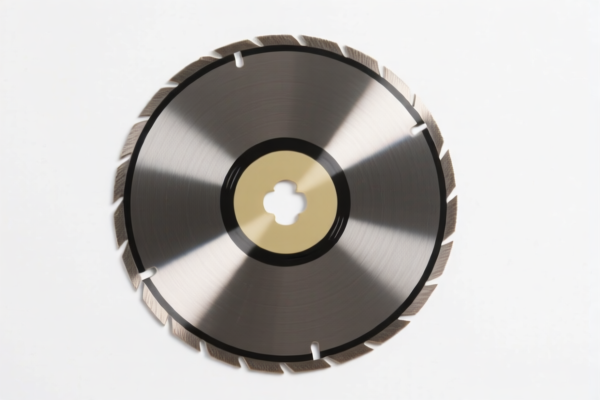
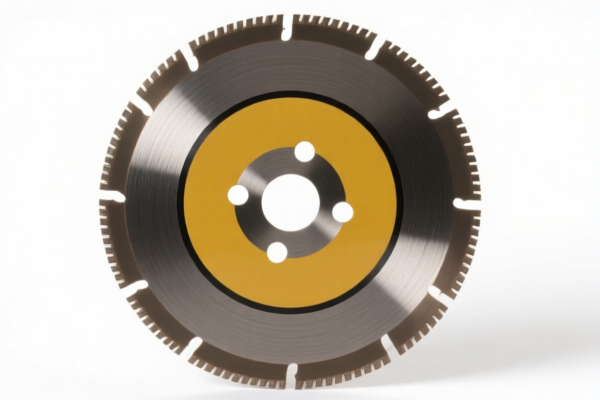

AI Analysis
Here is the professional classification guide for "Cleaning Disc", structured as a Wiki-style clearance manual based strictly on your provided data.
🧼 Cleaning Disc (Optical Media & Playback Devices)
🌐 HS Code Reference & Clearance Guide | 2026 Tax Regime Analysis | Strategic Entry Plan
📌 I. Product Definition: What is a "Cleaning Disc"?
A Cleaning Disc is a specialized optical media designed to clean the lens of CD, DVD, or Blu-ray players. It does not record audio or data; instead, it performs a maintenance function by spinning brushes or cleaning pads inside the player.
⚠️ Critical Classification Logic:
- If the item is a disc used for cleaning: It falls under Optical Media categories (8523.xx).
- If the item is a machine/device (e.g., a specialized cleaning station): It falls under Playback/Processing Equipment (8519.xx / 8471.xx).
Note: Your provided data covers both the discs and the playback machines used with them.
📦 II. HS Code Classification Matrix (Based on Provided Data)
| HS Code | Product Type | Summary of Classification Logic | Total Tax Rate |
|---|---|---|---|
| 8523.41.00.00 | Cleaning Disc (Optical Media) | Matches "Optical Disc" category; fits definition of discs used for recording/phenomena (maintenance function). | 17.5% |
| 8523.49.40.00 | Cleaning Disc (Optical Media) | Matches "Optical Media" form; inferred as recording medium for automatic data processing equipment under "other" rules. | 35.0% |
| 8519.81.41.20 | Optical Disc Player | Matches "Optical Media" material; classified as "Sound recording/reproducing apparatus." | 10.0% |
| 8471.70.90.00 | Optical Disc Player | Classified as peripheral device for automatic data processing; falls under "Other Storage Devices." | 35.0% |
| 8519.81.30.10 | Optical Disc Player | Direct match: "Compact Disc (CD) Player" regarding usage and media form. | 35.0% |
💰 III. 2026 Tax Rate Breakdown & Policy Details
✅ Scope: Analysis based strictly on the provided
total_taxandtax_detailfields.
✅ Base Tariff: All items have a 0.0% Base Tariff.
✅ Additional Taxes: The high rates are driven by Add-on Tariffs (25%) and Section 122 Tariffs (10%).
🎯 1. Cleaning Discs (HS Code: 8523 Series)
A. 8523.41.00.00 – The Lower-Tax Option
- Total Tax: 17.5%
- Tax Structure:
- Base Tariff: 0.0%
- Add-on Tariff: +7.5%
- Section 122 Tariff: +10.0%
- Clearance Note: This rate suggests a specific sub-category of optical media with a lower penalty or different origin status compared to the 35% bracket.
B. 8523.49.40.00 – The Standard Optical Media Option
- Total Tax: 35.0%
- Tax Structure:
- Base Tariff: 0.0%
- Add-on Tariff: +25.0% (High penalty)
- Section 122 Tariff: +10.0%
- Clearance Note: Likely classified under "Other" recording media. The 25% add-on is a significant cost driver. This category applies if the disc is deemed incompatible with the lower 8523.41.00 criteria.
🎯 2. Optical Disc Players / Cleaning Machines (HS Code: 8519 / 8471 Series)
A. 8519.81.41.20 – The Low-Tax Player Option
- Total Tax: 10.0%
- Tax Structure:
- Base Tariff: 0.0%
- Add-on Tariff: 0.0%
- Section 122 Tariff: +10.0%
- Clearance Note: Best Case Scenario for players. It falls under Sound Recording Apparatus. Only the Section 122 tariff applies, resulting in the lowest total cost (10%).
B. 8471.70.90.00 – High-Tax Player Option
- Total Tax: 35.0%
- Tax Structure:
- Base Tariff: 0.0%
- Add-on Tariff: +25.0%
- Section 122 Tariff: +10.0%
- Clearance Note: Classified as a peripheral storage device for computers. The 25% add-on applies here, likely due to "Automatic Data Processing" (ADP) classification.
C. 8519.81.30.10 – Standard Player Option
- Total Tax: 35.0%
- Tax Structure:
- Base Tariff: 0.0%
- Add-on Tariff: +25.0%
- Section 122 Tariff: +10.0%
- Clearance Note: Standard CD Player classification. The 25% add-on significantly increases the duty cost.
🔍 Section 122 Tariff Explanation:
In all listed items, a flat 10% tariff is applied under "Section 122" (likely a specific US trade measure or policy footnote). This is consistent across both low and high tax scenarios.
🛠️ IV. Strategic Clearance Recommendations
✅ 1. Pre-Shipment Verification (Crucial)
Before shipping, you must determine the exact physical nature of the "Cleaning Disc" to avoid the 35% trap.
* Action: Verify if the disc contains a "recording layer" for data or is purely a mechanical cleaning tool.
* Why: If classified as standard optical media (8523.49.40.00), you pay 35%. If it qualifies for the specific sub-category (8523.41.00.00), you save 17.5%.
✅ 2. Device vs. Disc Strategy
If you are importing a Cleaning Machine (Player), aim for 8519.81.41.20.
* Strategy: Classify the device specifically under "Sound Recording/Reproducing Apparatus" rather than "ADP Peripheral Devices."
* Benefit: This avoids the 25% Add-on Tariff, reducing the total duty from 35% to 10%.
✅ 3. Documentation Checklist
To ensure the correct HS Code is accepted by Customs: * Technical Datasheet: Explicitly state "No Audio/Data Recording Capability" for discs to avoid 8523.49.40.00 if possible. * Product Photos: Show the disc/machine clearly. * Declaration Statement: "Intended for lens cleaning of CD/DVD players only; contains no recordable media." * Origin Proof: Crucial for Section 122 (10%) applicability.
🚨 V. Risk Analysis & Pitfalls
| Risk Factor | Potential Consequence | Mitigation |
|---|---|---|
| Misclassification of Disc | Paying 35% instead of 17.5% | Provide clear "non-recording" documentation. |
| Misclassification of Player | Paying 35% instead of 10% | Argue for "Sound Recording Apparatus" (8519.81.41.20) over "ADP Peripheral" (8471). |
| Missing Section 122 Details | Unexpected 10% surcharge | Ensure origin is declared correctly to match the "Section 122" criteria. |
| Splitting Shipment | Higher administrative costs & delays | Declare all items (discs + players) under one consistent HS strategy. |
📌 VI. Final Verdict & Cost Optimization
🏆 Best Case Scenario:
Import Cleaning Discs under8523.41.00.00(17.5% total) OR Cleaning Players under8519.81.41.20(10.0% total).⚠️ Worst Case Scenario:
Import Discs under8523.49.40.00or Players under8471.70.90.00/8519.81.30.10, incurring 35.0% total tax.💡 Pro Tip: The difference between 10% and 35% is massive. If your "Cleaning Disc Player" can be legally described as a "Sound Recording Apparatus" rather than a "Computer Peripheral," you can save 25 percentage points on every unit. Request a Binding Tariff Ruling (BTR) before shipping to lock in the 10% rate.
✨ Clearance Success = Precise Definition + Correct Documentation 🚀
Customer Reviews
About HS Code Classification
The Harmonized System (HS) is an internationally standardized nomenclature developed by the World Customs Organization (WCO) to classify traded products. Over 200 countries use the HS system as the basis for customs tariffs, trade statistics, and import/export regulations.
Each HS code follows a hierarchical structure:
- Chapter (2 digits) — Broad category of goods (e.g., Chapter 84: Machinery and Mechanical Appliances)
- Heading (4 digits) — More specific grouping within the chapter
- Subheading (6 digits) — Internationally standardized breakdown, used by all WCO member countries
- National subdivisions (8-10 digits) — Country-specific extensions for further classification, such as US HTSUS 10-digit codes
Correct HS code classification is essential for smooth customs clearance, accurate duty payment, and compliance with trade regulations. Misclassification can lead to customs delays, overpayment of duties, or penalties.
When importing from CN to US, the applicable tariff rates may include:
- Most-Favored-Nation (MFN) rate — The standard duty rate applied to WTO members
- General rate — Applied to countries without trade agreements
- Trade remedy duties — Additional tariffs such as Section 301 (anti-dumping), Section 232 (national security), or countervailing duties
The information provided on this page is for reference purposes only. For official classification, please consult with your local customs authority or a licensed customs broker.