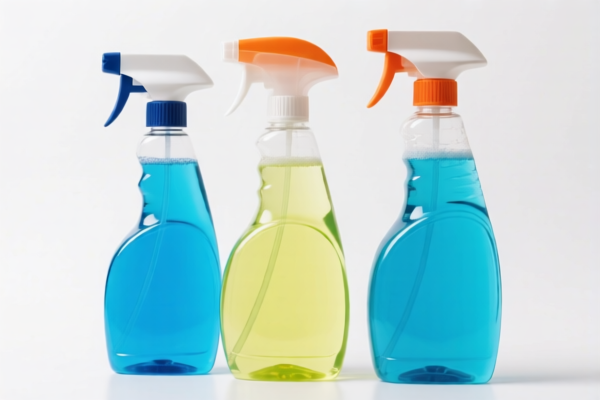
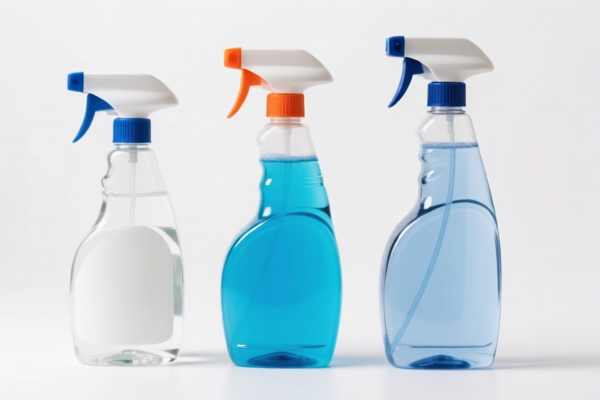
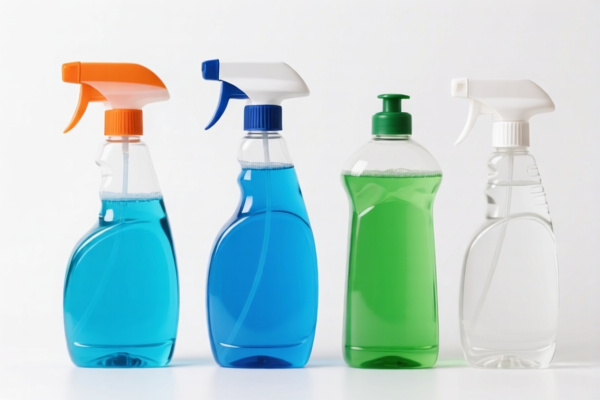
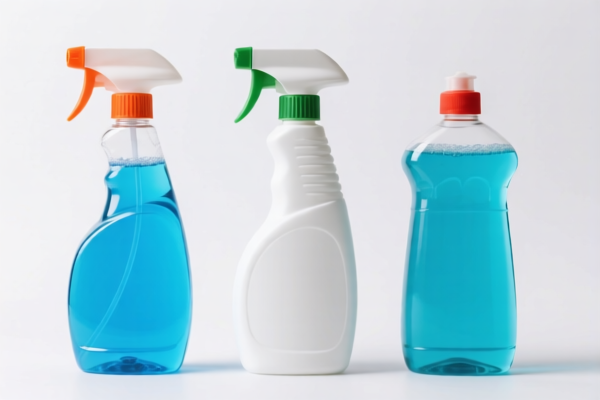
cleaning solution bottle assortment
CN → US| HS Code | Tariff Rate | Origin | Destination | Doc |
|---|---|---|---|---|
| 3924905650 | 20.9% | CN | US | Official Doc |
| 3402905030 | 38.7% | CN | US | Official Doc |
| 3924104000 | 13.4% | CN | US | Official Doc |
| 3402505100 | 10.0% | CN | US | Official Doc |
Product Images
AI Analysis
🧼 Cleaning Solution Bottle Assortment (Cleaning Sets)
🌐 HS Code Reference & Customs Clearance Guide | 2026 Latest Tariff Analysis | Professional Clearance Strategy
📌 I. Product Definition & Classification: Do You Really Understand "Cleaning Sets"?
A "Cleaning Solution Bottle Assortment" typically refers to a kit containing plastic bottles, spray triggers, or brushes designed for household or industrial cleaning. In international trade, the classification depends heavily on whether the item is defined as plastic household articles or chemical cleaning preparations.
Key Distinction: * Plastic Accessories Only (Bottles/Brushes): If the set contains only empty plastic bottles, sprayers, or scrubbing tools without significant chemical residue or active cleaning agents as the primary value, it often falls under Chapter 39 (Plastics). * Chemical Focus (Cleaners/Solutions): If the set’s primary purpose and value derive from the cleaning liquids or surfactants contained within, it falls under Chapter 34 (Soap, Organic Surface-Active Agents, Washing Preparations).
⚠️ Critical Classification Point:
- If the plastic containers are just accessories to the chemical product → HS Code 3402 series.
- If the plastic containers are the main article, and any liquid is minimal/incidental → HS Code 3924 series.
📦 II. HS Code Classification Details (2026 Latest Tariff Authority Comparison)
Based on the provided data, here are the four most relevant HS Codes for this product, with their specific tax implications:
| HS Code | Product Description (from Data) | Applicable Scenario | Tax Rate (Total) |
|---|---|---|---|
3924.90.56.50 |
Plastic Household Items (General) | Cleaning sets containing plastic brushes or bottles; "catch-all" category for plastic sanitary/household goods. | 20.9% |
3402.90.50.30 |
Cleaning Preparations | Sets primarily containing cleaning liquids/solutions where the chemical content defines the product. | 38.7% |
3924.10.40.00 |
Plastic Toilet/Hygiene Articles | Sets inferred to include cleaning supplies fitting the description of plastic sanitary or toilet ware. | 13.4% |
3402.50.51.00 |
Surface Active Agents (Cleaners) | Cleaning sets classified specifically under surfactants and cleaning preparations. | 10.0% |
🔍 Key Insight:
The tax difference is massive: from 10.0% to 38.7%. The classification hinges on whether Customs views your product as a plastic container (3924) or a chemical preparation (3402).
💰 III. 2026 Latest Tariff Rate Details (Including Surcharges & Policy Add-ons)
✅ Applicable Country: United States (US)
✅ Country of Origin: China (CN)
✅ Effective Date: 2025/2026 Current Rates
🎯 1. 3924.90.56.50 – Plastic Household Articles (General Catch-All)
| Item | Content |
|---|---|
| Base Tariff | 3.4% |
| Section 301 Surcharge | 7.5% |
| Section 122 Tariff | 10% |
| Total Tax Rate | 20.9% |
| Calculation Basis | CIF Value × 20.9% |
| De Minimis Exemption | ❌ Not Applicable (Subject to full duty) |
| Legal Path | Base → Sec 301 → Sec 122 |
📌 Explanation:
- This code is often used when the plastic components (bottles/brushes) are the dominant feature.
- The 10% Section 122 tariff is a specific addition for certain Chinese-origin plastic goods.
🎯 2. 3402.90.50.30 – Cleaning Preparations (High Tax Risk)
| Item | Content |
|---|---|
| Base Tariff | 3.7% |
| Section 301 Surcharge | 25.0% |
| Section 122 Tariff | 10% |
| Total Tax Rate | 38.7% |
| Calculation Basis | CIF Value × 38.7% |
| De Minimis Exemption | ❌ Not Applicable |
| Legal Path | Base → Sec 301 (High Tier) → Sec 122 |
📌 Warning:
- This is the highest tax bracket in the provided data.
- It applies if the product is deemed a "cleaning preparation" with active surfactants. The 25% Section 301 tariff is the highest tier for many chemical-related imports from China.
- Do NOT use this code unless the chemical content is significant and cannot be excluded.
🎯 3. 3924.10.40.00 – Plastic Sanitary/Toilet Articles (Lowest Plastic Option)
| Item | Content |
|---|---|
| Base Tariff | 3.4% |
| Section 301 Surcharge | 0.0% |
| Section 122 Tariff | 10% |
| Total Tax Rate | 13.4% |
| Calculation Basis | CIF Value × 13.4% |
| De Minimis Exemption | ❌ Not Applicable |
| Legal Path | Base → Sec 122 Only |
📌 Advantage:
- No Section 301 tariff! This is a critical advantage.
- If your "Cleaning Set" can be argued as "plastic sanitary articles" (e.g., bathroom cleaning kits with plastic tools), this code saves you 7.5% compared to the general plastic code (3924.90.56.50).
- Condition: Must fit the description of "plastic sanitary or toilet ware."
🎯 4. 3402.50.51.00 – Surfactants & Cleaning Agents (Lowest Chemical Option)
| Item | Content |
|---|---|
| Base Tariff | 0.0% |
| Section 301 Surcharge | 0.0% |
| Section 122 Tariff | 10% |
| Total Tax Rate | 10.0% |
| Calculation Basis | CIF Value × 10.0% |
| De Minimis Exemption | ❌ Not Applicable |
| Legal Path | Sec 122 Only |
📌 Best Case for Chemicals:
- If the product MUST be classified as a cleaning preparation, this is the most tax-efficient code.
- 0% Base + 0% Section 301. Only the 10% Section 122 applies.
- Condition: Must be clearly identifiable as "surface active agents" or specific cleaning preparations.
🛠️ IV. Customs Clearance Practical Advice (Pitfall Avoidance Guide)
✅ 1. Document Checklist (Must-Haves)
| Document | Required | Notes |
|---|---|---|
| ✅ Product Specification Sheet | ✔️ | Detail ingredients (if any) and material composition (e.g., "PET Bottle, PP Brush"). |
| ✅ Product Photos (Labeled) | ✔️ | Show the set as packaged. If liquids are present, show labels indicating "Surfactant," "Detergent," etc. |
| ✅ Commercial Invoice | ✔️ | Clearly state "Cleaning Set" or "Cleaning Accessories." Avoid vague terms like "Household Goods." |
| ✅ Packing List | ✔️ | List quantities of bottles vs. chemical volumes. |
| ✅ Certificate of Origin | ✔️ | Proof of China origin is crucial for Section 301/122 application. |
✅ 2. Declaration Strategy (Key Formulas)
🔥 "Content Determines Code, Code Determines Tax!"
| Scenario | Recommended HS Code | Reasoning |
|---|---|---|
| Empty Plastic Bottles + Spray Triggers + Brushes (No chemical or negligible) | 3924.10.40.00 or 3924.90.56.50 |
Classified as plastic articles. Prefer 3924.10 for 0% Sec 301 if possible. |
| Bottles filled with Cleaning Liquid (Liquid is main value) | 3402.50.51.00 |
Classified as cleaning preparations. Avoid 3402.90 (38.7%) if 3402.50 (10%) is accurate. |
| Mixed Set (Bottles + Small Sample of Cleaner) | Consult Customs Broker | Risk of being classified as "Set" under GRI 3. Usually, the essential character determines the code. |
📌 Critical Warning:
- Do NOT misdeclare chemical products as "plastic bottles" to avoid taxes. Customs may test the liquid. If found, you face fraud penalties + back duties + interest.
- Do NOT over-classify empty bottles as "cleaning preparations" if there is no significant chemical content. It may lead to rejection or unnecessary scrutiny.
✅ 3. Special Handling Tips
| Situation | Recommendation |
|---|---|
| New Product Launch | Apply for Advance Ruling from US Customs (CBP). It provides legal certainty on whether your set is 3924 or 3402. |
| High-Volume Imports | Consider separating the supply chain: Ship bottles and cleaners separately if tax savings are significant (e.g., bottles at 13.4% vs. cleaners at 10% or 38.7%). |
| Section 122 Tariff | Note that all four codes include a 10% Section 122 tariff. This is non-negotiable for Chinese-origin goods in this category. Focus on minimizing Base and Section 301 rates. |
🌍 V. Global Market Comparison (2026 Outlook)
| Region | Likely HS Code | Est. Duty (China Origin) | Key Requirement |
|---|---|---|---|
| 🇺🇸 USA | 3924.10 or 3402.50 |
10.0% – 13.4% (Optimized) | Section 301 & 122 Apply |
| 🇪🇺 EU | 3924 or 3402 |
0% – 6.5% (Usually) | CE Marking, REACH Compliance |
| 🇨🇦 Canada | 3924 or 3402 |
0% – 6.5% | MSDS for chemicals |
| 🇦🇺 Australia | 3924 or 3402 |
5% – 10% | AICIS Registration for chemicals |
📌 Conclusion:
- The US market is the most complex due to Section 301 and Section 122 tariffs.
- Optimizing for3924.10.40.00(13.4%) or3402.50.51.00(10.0%) is the most strategic approach for Chinese-origin cleaning sets entering the US.
📌 VI. Common Errors & Pitfalls (Lessons Learned)
❌ Error 1: Declaring a bottle full of detergent as "Plastic Container" (3924)
👉 Consequence: Customs tests the product, finds active ingredients, reclassifies to 3402.90.50.30 (38.7%), and imposes penalties for misdeclaration.
❌ Error 2: Declaring empty bottles as "Cleaning Preparation" (3402)
👉 Consequence: Unnecessary scrutiny, potential rejection if no chemical content is proven. Misses opportunity for simpler plastic classification.
❌ Error 3: Ignoring Section 122 Tariff
👉 Consequence: Underestimating total landed cost by 10%. All four provided codes include this 10% surcharge.
✅ Correct Approach:
"Cleaning Set: Includes [Number] Plastic Spray Bottles and [Amount] mL of Surfactant-Based Cleaning Solution. Model XYZ. Compliant with US EPA guidelines."
🎯 VII. Conclusion: Professional Declaration, Cost Optimization!
🎯 Remember the Formula:
🔹 "If Plastic Dominant: Aim for
3924.10(13.4%). If Chemical Dominant: Aim for3402.50(10.0%). Avoid3402.90(38.7%) at all costs unless mandatory."
🔹 "Section 122 is inevitable (10%). Focus on beating the 301 Tariff (0% vs. 7.5% vs. 25%)."
📌 Pro Tip:
If your product is primarily plastic bottles with only trace amounts of cleaning solution for demonstration, argue for 3924. If the cleaning solution is the primary function and value, argue for 3402.50.
📣 Immediate Action:
📞 Contact your customs broker with product photos and ingredient lists.
🚀 Request an Advance Ruling if this is a high-volume new product line.
💼 Your profit margin depends on this 1% vs. 38% difference!
✨ Professional Customs Clearance Starts with Accurate Classification!
💼 Every cent of duty saved is pure profit!
Customer Reviews
About HS Code Classification
The Harmonized System (HS) is an internationally standardized nomenclature developed by the World Customs Organization (WCO) to classify traded products. Over 200 countries use the HS system as the basis for customs tariffs, trade statistics, and import/export regulations.
Each HS code follows a hierarchical structure:
- Chapter (2 digits) — Broad category of goods (e.g., Chapter 84: Machinery and Mechanical Appliances)
- Heading (4 digits) — More specific grouping within the chapter
- Subheading (6 digits) — Internationally standardized breakdown, used by all WCO member countries
- National subdivisions (8-10 digits) — Country-specific extensions for further classification, such as US HTSUS 10-digit codes
Correct HS code classification is essential for smooth customs clearance, accurate duty payment, and compliance with trade regulations. Misclassification can lead to customs delays, overpayment of duties, or penalties.
When importing from CN to US, the applicable tariff rates may include:
- Most-Favored-Nation (MFN) rate — The standard duty rate applied to WTO members
- General rate — Applied to countries without trade agreements
- Trade remedy duties — Additional tariffs such as Section 301 (anti-dumping), Section 232 (national security), or countervailing duties
The information provided on this page is for reference purposes only. For official classification, please consult with your local customs authority or a licensed customs broker.