clips
CN → US| HS Code | Tariff Rate | Origin | Destination | Doc |
|---|---|---|---|---|
| 8203202000 | 39.0% | CN | US | Official Doc |
| 8203206030 | 0.0% | CN | US | Official Doc |
| 3926906520 | 14.2% | CN | US | Official Doc |
| 3926906550 | 14.2% | CN | US | Official Doc |
| 8543707100 | 37.0% | CN | US | Official Doc |
Product Images
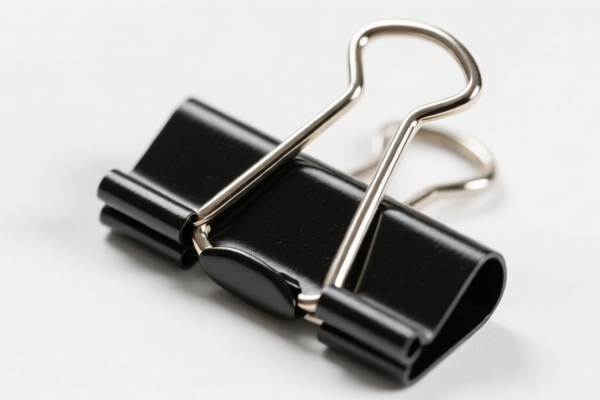
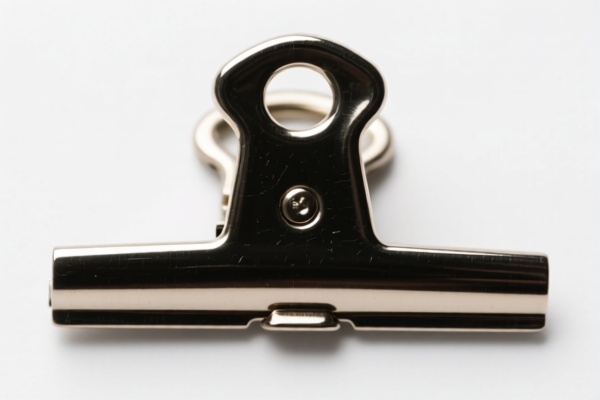
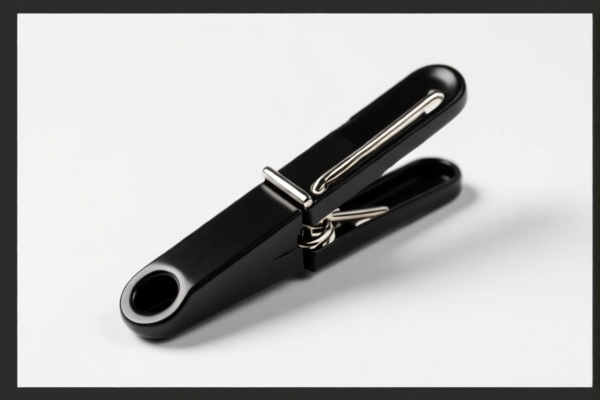
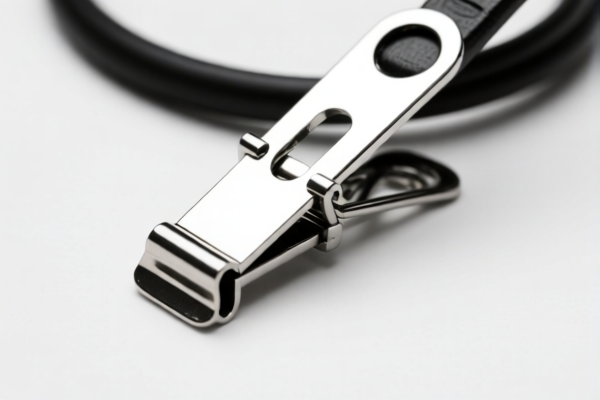
AI Analysis
📎 Clips (夹子/夹钳) — The Unsung Heroes of Organization & Industry
🌐 HS Code Reference & Customs Clearance Guide | 2026 Latest Tariff Breakdown | Professional Clearance Strategy
📌 Part 1: Product Definition & Classification: Are You Misidentifying Your "Clip"?
The term "Clips" is a generic catch-all in international trade. In customs classification (HS Code), the specific function, material, and industry use dictate the tariff rate. A plastic clothespin and a metal surgical clip fall under completely different chapters, with vastly different tax implications for shipments to the US.
Clips are generally categorized into three main buckets: 1. Hand Tools (Metal): Pliers, tweezers, and gripping tools. 2. Plastic Articles (Household/Office): Clothespins, binder clips, and packaging clips. 3. Specialized Devices: Such as lighting fixtures (clip-on lamps) or electronic components.
⚠️ Critical Distinction:
- If it’s a metal tool used for gripping/holding → Usually Chapter 82 (Tools).
- If it’s a plastic item like a clothespin or binder clip → Usually Chapter 39 (Plastics).
- If it’s a lamp that clips on → Usually Chapter 85 (Electrical Machinery).
📦 Part 2: HS Code Classification Details (2026 Latest Tariff Data)
Based on the provided dataset, here are the specific HS Codes applicable to different types of "Clips," along with their material and usage logic.
| HS Code | Product Description | Key Identification Criteria | Material Assumption |
|---|---|---|---|
| 8203.20.20.00 | Tweezers & Similar Tools Categorized as "Clips" when used as tweezers or similar gripping tools. |
Used for precision gripping (e.g., in labs, cosmetics, electronics). | Metal (Inferred) |
| 8203.20.60.30 | Pliers & Clamps Categorized as "Clips" when falling under pliers/clamping tools. |
Used for heavy-duty holding, bending, or cutting. | Metal (Inferred) |
| 3926.90.65.20 | Clothespins / Plastic Clips Specifically for laundry or household plastic clips. |
Non-metallic, household use (e.g., hanging laundry). | Plastic (Inferred) |
| 3926.90.65.50 | Other Plastic Clips Alternative subheading for similar plastic household/office clips. |
General plastic clips not covered elsewhere (e.g., binder clips, packaging seals). | Plastic (Inferred) |
| 8543.70.71.00 | Clip-On Lamps Lighting devices attached via a clip mechanism. |
Electric lighting apparatus with a clip base (e.g., desk lamp, reading light). | Other/Mixed (Electrical Device) |
🔍 Key Reminder:
- Do not group all "clips" together. A $0.05 plastic binder clip and a $5.00 metal tweezers set have different HS codes and tax rates. - Material is King: If the clip is primarily metal, look at 8203. If it is primarily plastic, look at 3926. If it has an electrical function, look at 8543.
💰 Part 3: 2026 Tariff Rate Breakdown (Including Surtaxes & Policies)
✅ Applicable Country: United States (US)
✅ Origin: China (CN)
✅ Effective Date: 2025-11-10 onwards (Including subsequent imports)
🎯 1. 8203.20.20.00 — Tweezers & Similar Metal Tools
| Item | Detail |
|---|---|
| Base Tariff | 4.0% |
| Section 301 Surcharge | +25.0% (Standard USITC 301 tariff on Chinese goods) |
| Section 122 Tariff | +10.0% (Specific surcharge for certain categories) |
| Total Tariff Rate | 39.0% |
| Tax Calculation | CIF Value × 39% |
| De Minimis Exemption | ❌ Not Eligible |
| Legal Basis | Base Rate (4%) + 301 (25%) + Section 122 (10%) |
📌 Analysis:
Metal hand tools face a 39% total tariff. This is a significant cost addition. Ensure your product is clearly defined as "Tweezers" and not a "Tool Part" to avoid misclassification penalties.
🎯 2. 8203.20.60.30 — Metal Pliers & Clamping Tools
| Item | Detail |
|---|---|
| Base Tariff | 12¢/doz. + 5.5% (Ad Valorem) |
| Section 301 Surcharge | +25.0% (Standard USITC 301 tariff on Chinese goods) |
| Section 122 Tariff | +10.0% (Specific surcharge for certain categories) |
| Total Tariff Structure | Specific Duty (12¢/doz.) + 40.5% Ad Valorem (5.5% Base + 25% 301 + 10% 122) |
| De Minimis Exemption | ❌ Not Eligible |
| Legal Basis | Base Rate + 301 (25%) + Section 122 (10%) |
📌 Analysis:
This category has a compound tax: a fixed fee per dozen PLUS a high percentage rate.
- Low-value, high-volume items (like small pliers) will hit the 12¢/doz. heavily.
- High-value items will suffer from the 40.5% total ad valorem rate.
- Warning: Do not confuse this with "plastic pliers," which fall under plastic tariffs.
🎯 3. 3926.90.65.20 & 3926.90.65.50 — Plastic Clips (e.g., Clothespins)
| Item | Detail |
|---|---|
| Base Tariff | 4.2% |
| Section 301 Surcharge | 0.0% (Exempt from standard 301 surcharge in this dataset) |
| Section 122 Tariff | +10.0% |
| Total Tariff Rate | 14.2% |
| Tax Calculation | CIF Value × 14.2% |
| De Minimis Exemption | ❌ Not Eligible (Note: De Minimis usually applies to low-value shipments, but HS classification determines the base rate) |
| Legal Basis | Base Rate (4.2%) + Section 122 (10%) |
📌 Analysis:
Plastic clips are significantly cheaper to import than metal tools.
- The 301 tariff (25%) is applied at 0% for this specific classification in the provided data, which is a massive advantage.
- Total tax is only 14.2%, making this a highly competitive classification for plastic-based clips.
🎯 4. 8543.70.71.00 — Clip-On Lamps (Lighting Devices)
| Item | Detail |
|---|---|
| Base Tariff | 2.0% |
| Section 301 Surcharge | +25.0% |
| Section 122 Tariff | +10.0% |
| Total Tariff Rate | 37.0% |
| Tax Calculation | CIF Value × 37% |
| De Minimis Exemption | ❌ Not Eligible |
| Legal Basis | Base Rate (2%) + 301 (25%) + Section 122 (10%) |
📌 Analysis:
Although classified as an electrical device, the base rate is low (2%), but the surcharges bring it to 37%.
- Misclassification Risk: Do not classify a "Clip Lamp" as a "Plastic Clip" (14.2%) to save money. If it has a light bulb and electrical wiring, it must be classified under 8543. Customs will scrutinize this heavily.
🛠️ Part 4: Customs Clearance Practical Advice (Avoiding Pitfalls)
✅ 1. Preparation Checklist (Non-Negotiable)
| Document | Required? | Description |
|---|---|---|
| ✅ Product Specifications | ✔️ | Material composition (Metal/Plastic), dimensions, weight. |
| ✅ Product Photos | ✔️ | Clear images showing the clip mechanism, branding, and any electrical components (for lamps). |
| ✅ Commercial Invoice | ✔️ | Must clearly state: "Plastic Clothespin," "Metal Tweezers," or "Clip-On LED Lamp." Avoid generic "Clip." |
| ✅ Material Declaration | ✔️ | Explicitly state "100% Plastic" or "Stainless Steel" to justify HS Code selection. |
| ✅ Usage Description | ✔️ | E.g., "For hanging laundry," "For surgical use," "For holding documents." |
✅ 2. Declaration Tips (Key Mantra)
🔥 "Material Determines Chapter, Function Determines Subheading!"
| Scenario | Correct Classification | Incorrect Classification | Consequence |
|---|---|---|---|
| Metal Tweezers | 8203.20.20.00 (39%) |
3926.90.65.20 (14.2%) |
Under-declaration Penalty! Customs will re-classify and charge back taxes + fines. |
| Plastic Clothespin | 3926.90.65.20 (14.2%) |
8203.20.20.00 (39%) |
Over-payment (but safer). Ensure material is declared as Plastic. |
| Clip-On Lamp | 8543.70.71.00 (37%) |
3926.90.65.50 (14.2%) |
Major Risk. If it lights up, it’s electrical. Misclassification leads to seizure. |
| Metal Pliers | 8203.20.60.30 (40.5%) |
8203.20.20.00 (39%) |
Minor difference, but "Pliers" vs "Tweezers" is a functional distinction. Be precise. |
✅ 3. Special Considerations
| Situation | Recommendation |
|---|---|
| Mixed Shipments | If you ship both plastic clips and metal tools in one container, separate them in the packing list and invoice. Do not lump them under one HS Code. |
| OEM Products | Provide the customer’s design spec to prove the intended use (e.g., "Industrial" vs "Household"). |
| Packaging | If clips are packaged in boxes, the packaging material does not change the HS Code of the product inside. |
| De Minimis (Section 321) | Note that none of these HS Codes are eligible for the $800 De Minimis exemption in the provided data. All imports are subject to full duty assessment. |
🌍 Part 5: Global Market Comparison (2026)
| Market | Recommended HS Code (Example: Plastic Clip) | Tariff Rate | Key Certification |
|---|---|---|---|
| 🇺🇸 USA | 3926.90.65.20 |
14.2% | None (General) |
| 🇨🇳 China | 3926.90.65.20 |
4.2% | None |
| 🇪🇺 EU | 3926.90.65 |
4.5% | CE Mark (if electrical) |
| 🇬🇧 UK | 3926.90.65 |
4.5% | UKCA Mark (if electrical) |
| 🇯🇵 Japan | 3926.90.65 |
6.0% | PSE (if electrical) |
📌 Conclusion:
- Plastic clips have a significant tariff advantage in the US (14.2%) compared to metal tools (39%+) due to the 0% 301 surcharge in this dataset. - Metal tools are heavily taxed. Consider sourcing from non-China countries if possible to mitigate Section 301 risks. - Electrical clips (Lamps) are mid-range taxed (37%) but require strict electrical safety compliance (FCC, UL).
📌 Part 6: Common Mistakes & Pitfalls (Blood & Tears Lessons)
❌ Mistake 1: Labeling everything as "Clip"
👉 Result: Customs holds the shipment for further classification. Delays of 2-4 weeks.
❌ Mistake 2: Classifying a Metal Tweezer as a Plastic Clip
👉 Result: Severe Penalty. The duty difference is ~25%. Customs will assess the correct rate + fraud penalties.
❌ Mistake 3: Ignoring the "Section 122" Tariff
👉 Result: Even if you avoid the 301 tariff (for plastics), you still pay 10%. Many exporters forget this line item, leading to unexpected bills.
❌ Mistake 4: Assuming "De Minimis" Applies
👉 Result: These HS Codes are not eligible for the $800 exemption. Do not use courier services expecting tax-free entry.
✅ Correct Approach:
"Plastic Clothespin, 100% PP Plastic, for Laundry Use" →
3926.90.65.20
"Stainless Steel Tweezers, Precision, for Medical Use" →8203.20.20.00
"LED Clip-On Desk Lamp, USB Powered, 12V" →8543.70.71.00
🎯 Part 7: Conclusion: Professional Classification Saves Money!
🎯 Key Takeaway:
🔹 "Plastic Clips are Cheap (14.2%), Metal Tools are Expensive (39%+)."
🔹 "Electrical Clips are Mid-Range (37%), but Require Compliance."
🔹 "Never Mix Materials or Functions in One Line Item."
📌 Pro Tip:
If you are importing large volumes of metal clips, consider:
1. Pre-ruling: Request an Advance Ruling from CBP to confirm your HS Code.
2. Supply Chain Diversification: If possible, source metal tools from Vietnam or Thailand to avoid Section 301 tariffs.
3. Value Engineering: Can the clip be redesigned with more plastic content to shift it to Chapter 39?
📣 Immediate Action:
📞 Contact your Customs Broker: Provide photos and material specs.
📄 Prepare Your Invoice: Use the exact descriptions from this guide.
🚀 Calculate Your Landed Cost: Include the 301 + 122 surcharges in your profit margin analysis.
✨ Precise Classification is the First Step to Profitability!
💼 Don’t Let "Clips" Cost You 39% of Your Value!
Customer Reviews
About HS Code Classification
The Harmonized System (HS) is an internationally standardized nomenclature developed by the World Customs Organization (WCO) to classify traded products. Over 200 countries use the HS system as the basis for customs tariffs, trade statistics, and import/export regulations.
Each HS code follows a hierarchical structure:
- Chapter (2 digits) — Broad category of goods (e.g., Chapter 84: Machinery and Mechanical Appliances)
- Heading (4 digits) — More specific grouping within the chapter
- Subheading (6 digits) — Internationally standardized breakdown, used by all WCO member countries
- National subdivisions (8-10 digits) — Country-specific extensions for further classification, such as US HTSUS 10-digit codes
Correct HS code classification is essential for smooth customs clearance, accurate duty payment, and compliance with trade regulations. Misclassification can lead to customs delays, overpayment of duties, or penalties.
When importing from CN to US, the applicable tariff rates may include:
- Most-Favored-Nation (MFN) rate — The standard duty rate applied to WTO members
- General rate — Applied to countries without trade agreements
- Trade remedy duties — Additional tariffs such as Section 301 (anti-dumping), Section 232 (national security), or countervailing duties
The information provided on this page is for reference purposes only. For official classification, please consult with your local customs authority or a licensed customs broker.