clock
CN → US| HS Code | Tariff Rate | Origin | Destination | Doc |
|---|---|---|---|---|
| 9106908500 | 0.0% | CN | US | Official Doc |
| 9105295000 | 0.0% | CN | US | Official Doc |
| 9105294000 | 0.0% | CN | US | Official Doc |
| 9105195000 | 0.0% | CN | US | Official Doc |
| 9105194000 | 0.0% | CN | US | Official Doc |
| 9104002000 | 0.0% | CN | US | Official Doc |
Product Images
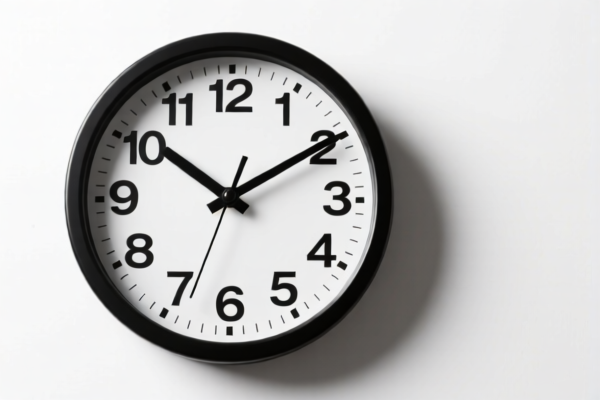
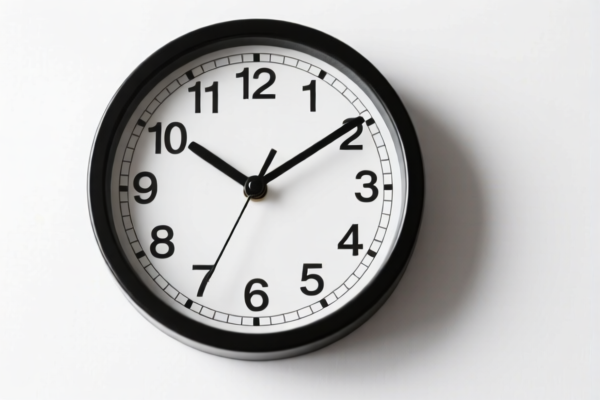
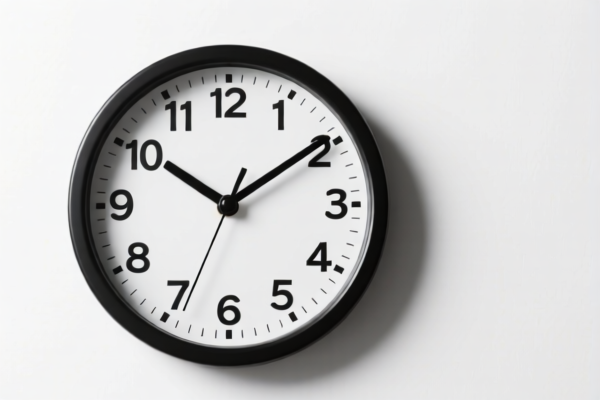
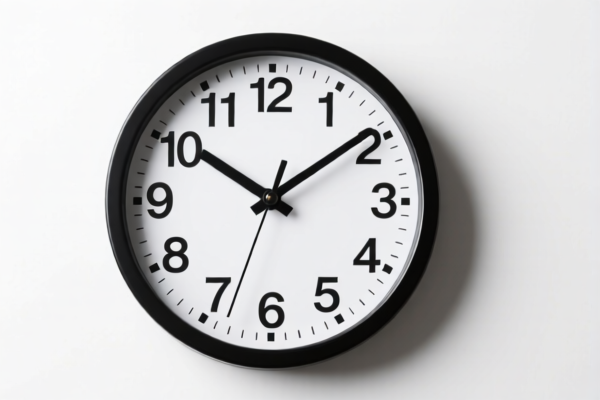
AI Analysis
⏰ Clocks: The Ultimate Guide to HS Codes, Tariffs, and Customs Clearance for US Imports
🌐 HS Code Reference & Customs Strategy | 2026 Tariff Breakdown | Professional Clearance Guide
📌 I. Product Definition: What Kind of "Clock" Are You Importing?
"Clocks" is a broad category in international trade. In customs terminology, they are generally divided into Portable/Personal Timepieces (like wristwatches or handheld clocks) and Non-Portable Timepieces (like wall clocks, desk clocks, or automotive clocks). The classification depends heavily on form factor, intended use, and mechanism.
⚠️ Key Distinction for Classification:
- Desk/Wall Clocks (9105): Generally larger, non-portable, or designed for fixed placement.
- Automotive Clocks (9104): Specifically designed for vehicle instrumentation.
- Recording/Indicator Instruments (9106): Complex devices that record or signal time/events, not just display them.
📦 II. HS Code Classification Details (2026 Latest Tariff Schedule)
Based on the provided data, here are the specific HS Codes applicable to various types of clocks, along with their rationale and tax implications.
| HS Code | Product Description | Rationale for Classification | Total Tax Burden (Approx.) |
|---|---|---|---|
9106.90.85.00 |
Office/Recording Clocks | Classified as instruments for recording/indicating time with built-in mechanisms. Fits the "other" category for time-recording devices. | High Risk: 35% Base + Surcharges |
9105.29.50.00 |
Wall/Desk Clocks (Standard) | Non-portable clocks (wall/desk). Falls under "Other" clocks not elsewhere specified. | Medium: 7.5% + Surcharges |
9105.29.40.00 |
Wall/Desk Clocks (Low Duty) | Finished clocks, generic "Other" category. No material/shape conflict. Best for standard office clocks. | Low: 0% Surcharge (10% IEEPA) |
9105.19.50.00 |
Alarm Clocks (Standard) | Alarm clocks not specified elsewhere. Matches form/function for desktop/bedside alarms. | Medium: 7.5% + Surcharges |
9105.19.40.00 |
Alarm Clocks (Low Duty) | Alarm clocks falling under "Other" generic category. No specific value or material conflict. | Low: 0% Surcharge (10% IEEPA) |
9104.00.20.00 |
Automotive Instrument Clocks | Specifically for automobile instrument panels. Matches automotive use and clock form. | High Risk: 35% Base + Surcharges |
🔍 Critical Note:
-9105.29.40.00and9105.19.40.00offer the lowest additional surcharges (0%) compared to the 7.5% or 25% surcharges on other codes.
-9106and9104carry significantly higher base rates (30¢-35% vs 15¢-30¢) and higher surcharges (25% for 9104).
💰 III. 2026 Tariff Rate Breakdown (Including Additional Taxes)
✅ Applicable Country: United States (US)
✅ Origin: China (CN) (Note: Tax details imply US-China trade context)
✅ Effective Date: Current regulations apply (Includes Section 301 and IEEPA tariffs)
🎯 1. 9106.90.85.00 – Recording/Indicator Clocks
| Item | Detail |
|---|---|
| Base Tariff | 15¢ each + 2.3% + 0.8¢/jewel |
| Section 301 Surcharge | +25.0% (25% additional tariff on Chinese goods) |
| Section 122 Tariff | +10% (Specific provision tariff) |
| Total Estimated Rate | ~35.0% + Specific Duties |
| Legal Basis | High-risk classification due to "recording" nature triggering higher base and surcharges. |
📌 Analysis:
- This code is expensive. The 25% Section 301 tariff is added to a high base rate.
- Only use this if the clock records time (e.g., punch-clock systems, event loggers), not just displays it.
🎯 2. 9105.29.50.00 – Wall/Desk Clocks (Standard)
| Item | Detail |
|---|---|
| Base Tariff | 30¢ each + 4.3% |
| Section 301 Surcharge | +7.5% |
| Section 122 Tariff | +10% |
| Total Estimated Rate | 17.5% + Specific Duties |
| Legal Basis | Standard wall clocks fall here if not classified under the lower-duty "40" subheading. |
📌 Analysis:
- A common code for office wall clocks.
- Check for9105.29.40.00first, as it has 0% Section 301 surcharge.
🎯 3. 9105.29.40.00 – Wall/Desk Clocks (Optimized)
| Item | Detail |
|---|---|
| Base Tariff | 15¢ each + 6.4% |
| Section 301 Surcharge | 0.0% |
| Section 122 Tariff | +10% |
| Total Estimated Rate | 10.0% + Specific Duties |
| Legal Basis | "Other" clocks. No specific material/shape conflict. Best for generic office clocks. |
📌 Analysis:
- Highly Recommended for standard wall/desk clocks.
- Savings: Avoids the 7.5% or 25% surcharge, reducing total liability significantly.
🎯 4. 9105.19.50.00 – Alarm Clocks (Standard)
| Item | Detail |
|---|---|
| Base Tariff | 23¢ each + 3.2% |
| Section 301 Surcharge | +7.5% |
| Section 122 Tariff | +10% |
| Total Estimated Rate | 17.5% + Specific Duties |
| Legal Basis | Standard alarm clocks. |
📌 Analysis:
- Similar to wall clocks. Verify if9105.19.40.00applies for lower duties.
🎯 5. 9105.19.40.00 – Alarm Clocks (Optimized)
| Item | Detail |
|---|---|
| Base Tariff | 15¢ each + 6.4% |
| Section 301 Surcharge | 0.0% |
| Section 122 Tariff | +10% |
| Total Estimated Rate | 10.0% + Specific Duties |
| Legal Basis | "Other" alarm clocks. No specific value conflict. |
📌 Analysis:
- Highly Recommended for standard alarm clocks.
- Savings: Same logic as9105.29.40.00.
🎯 6. 9104.00.20.00 – Automotive Clocks
| Item | Detail |
|---|---|
| Base Tariff | 30¢ each + 6.4% |
| Section 301 Surcharge | +25.0% |
| Section 122 Tariff | +10% |
| Total Estimated Rate | 35.0% + Specific Duties |
| Legal Basis | Automotive instrument clocks. High base + high surcharge. |
📌 Analysis:
- Avoid if possible. The 25% surcharge makes this very expensive.
- Only use for clocks embedded in car dashboards/instrument clusters.
🛠️ IV. Customs Clearance Practical Advice (Risk Avoidance Guide)
✅ 1. Documentation Checklist (Mandatory)
| Document | Required | Description |
|---|---|---|
| ✅ Product Specification Sheet | ✔️ | Must detail: Type (Wall/Desk/Alarm/Auto), Mechanism (Quartz/Mechanical), Dimensions, Power Source. |
| ✅ Product Photos | ✔️ | Clear images of the front, back, internal mechanism (if possible), and brand/model label. |
| ✅ Commercial Invoice | ✔️ | Must explicitly state: "Clock, [Type], for [Office/Alarm/Automotive] Use." Avoid vague terms like "Timepiece." |
| ✅ Packing List | ✔️ | Itemized list of quantities, weights, and packaging details. |
| ✅ Certificate of Origin (CO) | ✔️ | If applicable, to verify Chinese origin (triggering tariffs) or other origins (for exemptions). |
✅ 2. Classification Strategy (Key Tips)
🔥 "Match Form to Function, Choose '40' When Possible"
| Scenario | Recommended HS Code | Reason |
|---|---|---|
| Standard Wall Clock | 9105.29.40.00 |
Lowest surcharge (0%). Generic "Other" category. |
| Standard Alarm Clock | 9105.19.40.00 |
Lowest surcharge (0%). Generic "Other" category. |
| Car Dashboard Clock | 9104.00.20.00 |
Mandatory for automotive use, but high tax. |
| Time-Recording Device | 9106.90.85.00 |
Only if it records time/events (e.g., industrial timers). |
| Luxury/Mechanical Watch | ❌ Not Listed | These often fall under 9101/9102, not covered in this data. |
📌 Critical Warning:
- Do NOT misdeclare an Alarm Clock as a "Wall Clock" or vice versa if their internal mechanisms differ significantly, but note that9105.19.40and9105.29.40both offer 0% Section 301 surcharge.
- If you can classify your product under9105.xx.40instead of.50, you save 7.5% in tariffs.
✅ 3. Special Circumstances
| Situation | Handling Advice |
|---|---|
| OEM Custom Clocks | Provide design specs to prove it's a standard clock, not a "recording instrument" (9106). |
| Smart Clocks (with Wi-Fi) | Ensure it's not classified as a "data processing machine" component (which would be 8528 or 8471). Keep focus on "Timekeeping." |
| Automotive Aftermarket Clocks | Must clearly state "For Automotive Instrument Panel Use." If it's a standalone GPS clock, it might be 9105. |
| De Minimis (Section 321) | ❌ Not Applicable: Clocks from China are excluded from the $800 de minimis exemption due to Section 301/IEEPA tariffs. |
🌍 V. Global Market Comparison (2026 Overview)
| Market | Recommended HS Code | Base Tariff | Additional Surcharge | Total Effective Rate |
|---|---|---|---|---|
| 🇺🇸 USA | 9105.29.40.00 |
15¢/ea + 6.4% | 10% (IEEPA) | ~10% + Specific |
| 🇺🇸 USA | 9105.29.50.00 |
30¢/ea + 4.3% | 17.5% (301+122) | ~17.5% + Specific |
| 🇪🇺 EU | 9105.29.50.00 |
0-2.5% | 0% (Generally) | Low |
| 🇨🇳 China | 9105.29.50.00 |
5-10% | 0% | Low |
📌 Conclusion for US Imports:
- Focus on9105.xx.40codes to minimize tariffs.
- Avoid9106and9104unless structurally necessary, as they carry 25% surcharges.
- No De Minimis: All shipments from China are subject to full tariff declaration.
📌 VI. Common Mistakes & Pitfalls (Lessons Learned)
❌ Mistake 1: Misclassifying a Wall Clock as 9106 (Recording Instrument)
👉 Result: 35% tariff instead of 10%. Avoid!
❌ Mistake 2: Using 9105.29.50 when 9105.29.40 applies
👉 Result: Pay 7.5% extra in Section 301 tariffs unnecessarily. Optimize your code!
❌ Mistake 3: Declaring an Alarm Clock as "Part of a Watch"
👉 Result: Customs may reject the classification. Clocks and Wristwatches are separate chapters.
❌ Mistake 4: Assuming De Minimis Applies
👉 Result: Package held by customs, back taxes, and penalties. Section 301 goods from China are excluded.
✅ Correct Approach:
"Office Wall Clock, Quartz Movement, 12-inch Diameter, Model XYZ, Made in China" →
9105.29.40.00
🎯 VII. Conclusion: Professional Classification for Cost Savings
🎯 Key Takeaway:
🔹 "Choose '.40' over '.50' for Wall/Alarm Clocks to Save 7.5%."
🔹 "Avoid '9106' and '9104' unless absolutely required; they are tax traps."
🔹 "No De Minimis for China. Plan for full tariff payment."
📌 Pro Tip:
If you are importing large volumes, consider pre-classification rulings with CBP for 9105.29.40.00 to ensure your product qualifies for the 0% Section 301 surcharge.
📣 Next Steps:
📞 Consult a Customs Broker: Provide product photos and specs.
📋 Verify Code: Confirm9105.29.40.00or9105.19.40.00is appropriate.
🚀 Optimize Supply Chain: Factor in the 10% IEEPA tariff in your pricing model.
✨ Precision in Classification = Profit in Your Pocket!
💼 Don't let tariff complexity slow down your clearance!
Customer Reviews
About HS Code Classification
The Harmonized System (HS) is an internationally standardized nomenclature developed by the World Customs Organization (WCO) to classify traded products. Over 200 countries use the HS system as the basis for customs tariffs, trade statistics, and import/export regulations.
Each HS code follows a hierarchical structure:
- Chapter (2 digits) — Broad category of goods (e.g., Chapter 84: Machinery and Mechanical Appliances)
- Heading (4 digits) — More specific grouping within the chapter
- Subheading (6 digits) — Internationally standardized breakdown, used by all WCO member countries
- National subdivisions (8-10 digits) — Country-specific extensions for further classification, such as US HTSUS 10-digit codes
Correct HS code classification is essential for smooth customs clearance, accurate duty payment, and compliance with trade regulations. Misclassification can lead to customs delays, overpayment of duties, or penalties.
When importing from CN to US, the applicable tariff rates may include:
- Most-Favored-Nation (MFN) rate — The standard duty rate applied to WTO members
- General rate — Applied to countries without trade agreements
- Trade remedy duties — Additional tariffs such as Section 301 (anti-dumping), Section 232 (national security), or countervailing duties
The information provided on this page is for reference purposes only. For official classification, please consult with your local customs authority or a licensed customs broker.