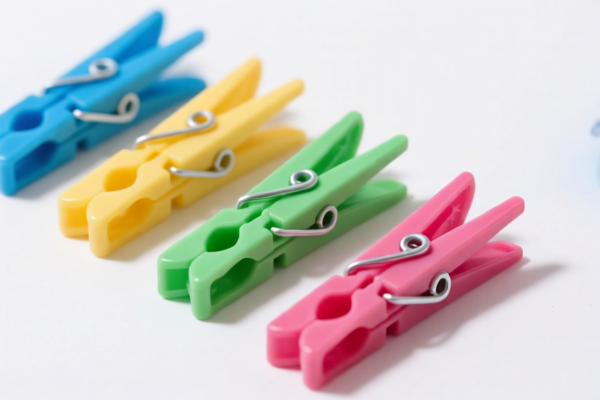
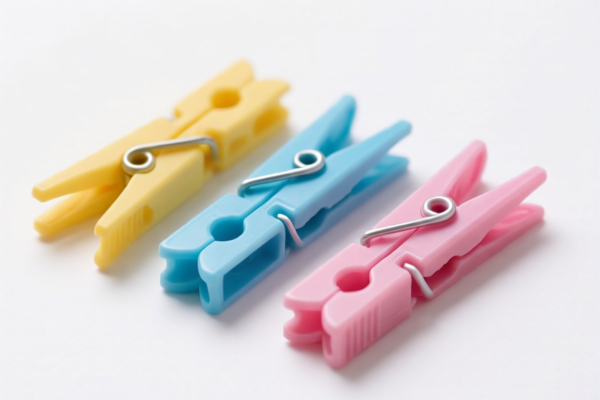
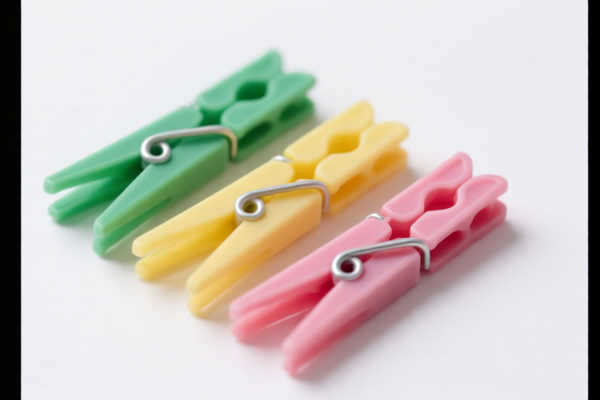
clothes peg
CN → US| HS Code | Tariff Rate | Origin | Destination | Doc |
|---|---|---|---|---|
| 3924905650 | 20.9% | CN | US | Official Doc |
| 3924104000 | 13.4% | CN | US | Official Doc |
| 9605000000 | 18.1% | CN | US | Official Doc |
| 9605000000 | 18.1% | CN | US | Official Doc |
| 4419909100 | 20.7% | CN | US | Official Doc |
| 4419199000 | 13.2% | CN | US | Official Doc |
Product Images
AI Analysis
🧺 Clothes Pegs (Clothespins) – The Ultimate Guide to HS Classification & Tax Compliance
🌐 Global HS Code & Duty Breakdown | 2026 Clearance Strategy | Expert Compliance Report
📌 I. What Are "Clothes Pegs" and How Are They Classified?
Clothes pegs (or clothespins) are small fastening devices used to secure laundry to a clothesline. Despite their simplicity, their classification in international trade depends heavily on material and function.
In the Harmonized System (HS), they are primarily classified under: - Chapter 39 (Plastics): If made of plastic, falling under "Tableware, kitchenware... of plastics" or "Other articles of plastics." - Chapter 44 (Wood/Bamboo): If made of wood or bamboo. - Chapter 96 (Miscellaneous): If part of a "travel set" (rare for standalone pegs).
⚠️ Critical Note:
- A standalone clothes peg (plastic) is typically classified under 3924.90.56.50.
- A standalone wooden/bamboo clothes peg falls under 4419.90.91.00 or 4419.19.90.00.
- If the pegs are packaged inside a travel set (e.g., with sewing kits or toiletries), they may be classified under 9605.00.00.00.
📦 II. Detailed HS Code Breakdown (Based on Provided Data)
| HS Code | Product Description | Material | Typical Use |
|---|---|---|---|
3924.90.56.50 |
Tableware, kitchenware, other household articles and hygienic or toilet articles, of plastics: Other: Other: Other | Plastic | Standalone plastic clothes pegs |
3924.10.40.00 |
Tableware, kitchenware, of plastics: Tableware and kitchenware: Other | Plastic | Plastic pegs intended as "kitchenware" (rare) |
9605.00.00.00 |
Travel sets for personal toilet, sewing or shoe or clothes cleaning | Any | Pegs included in a travel sewing/cleaning kit |
4419.90.91.00 |
Tableware and kitchenware, of wood: Other: Other | Wood | Standalone wooden clothes pegs |
4419.19.90.00 |
Tableware and kitchenware, of wood: Of bamboo: Other: Other | Bamboo | Bamboo clothes pegs |
🔍 Key Distinction:
- Standalone plastic pegs →3924.90.56.50(Most Common)
- Standalone wood/bamboo pegs →4419.90.91.00or4419.19.90.00
- Pegs in a travel set →9605.00.00.00
💰 III. 2026 Duty Rate Analysis (China Origin → US Import)
✅ Country of Origin: China
✅ Destination: United States
✅ Tax Structure: Base Tariff + Additional (Section 301/IEEPA) Tariff
🎯 1. Plastic Clothes Pegs (3924.90.56.50)
| Item | Detail |
|---|---|
| Base Tariff | 0.0% |
| Additional Tariff | 0.0% |
| Total Duty | 0.0% |
| Tax Detail | Base: 0.0%, Additional: 0.0% |
| Legal Basis | Not subject to Section 301 or IEEPA surcharges |
📌 Why 0%?
Most generic plastic household articles (including clothes pegs) are exempt from current US punitive tariffs. They are not on the "China-specific" 25% or 10% lists.
🎯 2. Plastic Kitchenware Pegs (3924.10.40.00)
| Item | Detail |
|---|---|
| Base Tariff | 3.4% |
| Additional Tariff | 0.0% |
| Total Duty | 3.4% |
| Tax Detail | Base: 3.4%, Additional: 0.0% |
| Legal Basis | Standard MFN rate for plastic tableware |
📌 Note: This applies if the pegs are marketed or classified specifically as "kitchenware" (e.g., food-grade plastic clips).
🎯 3. Travel Set Pegs (9605.00.00.00)
| Item | Detail |
|---|---|
| Base Tariff | 0.0% |
| Additional Tariff | 0.0% |
| Total Duty | 0.0% |
| Tax Detail | Base: 0.0%, Additional: 0.0% |
| Legal Basis | Travel sets for personal use are often duty-free |
📌 Note: This only applies if the pegs are packaged together in a "travel set" for sewing or cleaning.
🎯 4. Wooden Clothes Pegs (4419.90.91.00)
| Item | Detail |
|---|---|
| Base Tariff | 3.2% |
| Additional Tariff | 7.5% |
| Total Duty | 10.7% |
| Tax Detail | Base: 3.2%, Additional: 7.5% |
| Legal Basis | Subject to Section 301/IEEPA surcharges |
📌 Warning: Wooden articles from China face higher punitive tariffs (7.5%) compared to plastic. Total 10.7% is a significant cost.
🎯 5. Bamboo Clothes Pegs (4419.19.90.00)
| Item | Detail |
|---|---|
| Base Tariff | 3.2% |
| Additional Tariff | 0.0% |
| Total Duty | 3.2% |
| Tax Detail | Base: 3.2%, Additional: 0.0% |
| Legal Basis | Bamboo products often exempt from the 7.5% surcharge |
📌 Advantage: Bamboo pegs are cheaper to import than generic wood pegs due to 0% additional tariff.
🛠️ IV. Customs Clearance Strategy & Practical Tips
✅ 1. Documentation Checklist
| Document | Requirement | Why? |
|---|---|---|
| Commercial Invoice | Must clearly state "Clothes Pegs" + Material (Plastic/Wood/Bamboo) | Prevents misclassification |
| Packing List | Must specify quantity per material type | Helps separate HS codes for mixed shipments |
| Material Declaration | Confirm % of plastic vs. wood vs. bamboo | Critical for correct HS code selection |
| Product Photos | Show pegs standalone vs. in travel sets | Avoids confusion with "kitchenware" or "travel kits" |
| Certificate of Origin | Must be issued by Chinese chamber of commerce | Required for duty assessment |
✅ 2. HS Code Selection Strategy
| Scenario | Recommended HS Code | Duty Cost |
|---|---|---|
| Standard plastic pegs | 3924.90.56.50 |
0.0% ✅ |
| Wooden pegs | 4419.90.91.00 |
10.7% ❌ |
| Bamboo pegs | 4419.19.90.00 |
3.2% ✅ |
| Pegs in a travel kit | 9605.00.00.00 |
0.0% ✅ |
| Marketed as "kitchenware" | 3924.10.40.00 |
3.4% ✅ |
🚨 Critical Warning:
- Do NOT classify wooden pegs as plastic to avoid the 7.5% surcharge. This is fraudulent and leads to seizures/fines.
- Do NOT pack standalone pegs as "travel sets" unless they are genuinely part of a multi-item kit.
✅ 3. Common Pitfalls & Solutions
| Mistake | Consequence | Solution |
|---|---|---|
| Misclassifying wooden pegs as plastic | 10.7% duty instead of 0% | Use correct HS code 4419.90.91.00 |
| Failing to separate bamboo from wood | 10.7% duty on all wood items | Declare bamboo separately (4419.19.90.00) |
| Packing pegs as "kitchenware" unnecessarily | 3.4% duty instead of 0% | Clarify usage as "laundry clips" only |
| Omitting material declaration | Customs delay + 10% penalty | Include material % in packing list |
✅ 4. Cost-Saving Tips
- Switch to Bamboo: If wood is required, choose bamboo to save 7.5% in additional tariffs.
- Avoid "Kitchenware" Labeling: Market pegs strictly as "laundry clips" to stay under
3924.90.56.50(0% duty). - Bundle Smartly: If selling travel kits, ensure pegs are truly part of the set to qualify for
9605.00.00.00. - Pre-Submit Ruling: For large volumes, request an advance ruling from US Customs to confirm HS code.
🌍 V. Global Market Comparison (2026)
| Country | Plastic Pegs | Wood Pegs | Bamboo Pegs | Travel Kits |
|---|---|---|---|---|
| 🇺🇸 USA | 0.0% | 10.7% | 3.2% | 0.0% |
| 🇪🇺 EU | 0.0% | 0.0% | 0.0% | 0.0% |
| 🇯🇵 Japan | 0.0% | 0.0% | 0.0% | 0.0% |
| 🇨🇦 Canada | 0.0% | 0.0% | 0.0% | 0.0% |
📌 Key Insight:
USA is the only major market imposing extra tariffs on wood pegs. Bamboo and plastic are universally low-duty.
📌 VI. Final Clearance Advice
✅ Best Practice:
Use Plastic (
3924.90.56.50) or Bamboo (4419.19.90.00) for US imports to minimize duty.
Avoid Wood (4419.90.91.00) unless necessary due to 10.7% total tariff.
Ensure travel kits are genuine multi-item sets to qualify for 0% duty.
✅ Avoid:
- Misdeclaring material composition.
- Over-labeling as "kitchenware."
- Packing standalone pegs as travel kits without justification.
🎯 Conclusion: Smart Classification = Lower Costs
🔹 Plastic clothes pegs = 0.0% duty (Best choice)
🔹 Bamboo clothes pegs = 3.2% duty (Second best)
🔹 Wooden clothes pegs = 10.7% duty (Avoid if possible)
🔹 Travel set pegs = 0.0% duty (If genuine)
🚀 Pro Tip: Always declare the exact material and intended use to avoid costly reclassification and delays.
✨ Ready to Ship?
📞 Contact your customs broker with HS Code 3924.90.56.50 for plastic pegs.
📄 Prepare a material declaration and product photos for smooth clearance.
💰 Save up to 10.7% by avoiding wood pegs or using bamboo.
📌 Disclaimer: This guide is for informational purposes. Consult a licensed customs broker for specific cases.
✅ Clearance Complete. Duty Optimized. Ship with Confidence! 🚢📦
Customer Reviews
About HS Code Classification
The Harmonized System (HS) is an internationally standardized nomenclature developed by the World Customs Organization (WCO) to classify traded products. Over 200 countries use the HS system as the basis for customs tariffs, trade statistics, and import/export regulations.
Each HS code follows a hierarchical structure:
- Chapter (2 digits) — Broad category of goods (e.g., Chapter 84: Machinery and Mechanical Appliances)
- Heading (4 digits) — More specific grouping within the chapter
- Subheading (6 digits) — Internationally standardized breakdown, used by all WCO member countries
- National subdivisions (8-10 digits) — Country-specific extensions for further classification, such as US HTSUS 10-digit codes
Correct HS code classification is essential for smooth customs clearance, accurate duty payment, and compliance with trade regulations. Misclassification can lead to customs delays, overpayment of duties, or penalties.
When importing from CN to US, the applicable tariff rates may include:
- Most-Favored-Nation (MFN) rate — The standard duty rate applied to WTO members
- General rate — Applied to countries without trade agreements
- Trade remedy duties — Additional tariffs such as Section 301 (anti-dumping), Section 232 (national security), or countervailing duties
The information provided on this page is for reference purposes only. For official classification, please consult with your local customs authority or a licensed customs broker.