coat
CN → US| HS Code | Tariff Rate | Origin | Destination | Doc |
|---|---|---|---|---|
| 6202302050 | 26.4% | CN | US | Official Doc |
| 6201301200 | 21.9% | CN | US | Official Doc |
| 6101200010 | 33.4% | CN | US | Official Doc |
| 6210205010 | 24.6% | CN | US | Official Doc |
| 6210205020 | 24.6% | CN | US | Official Doc |
Product Images
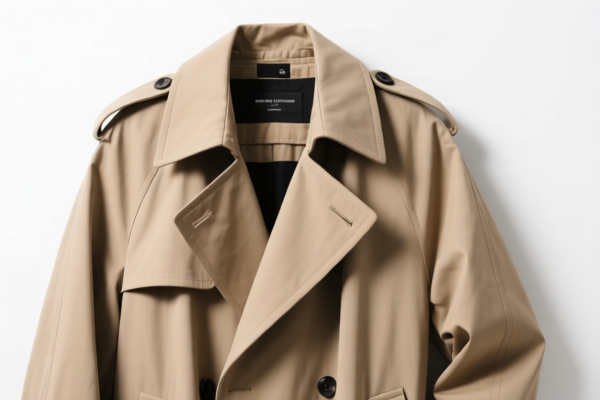
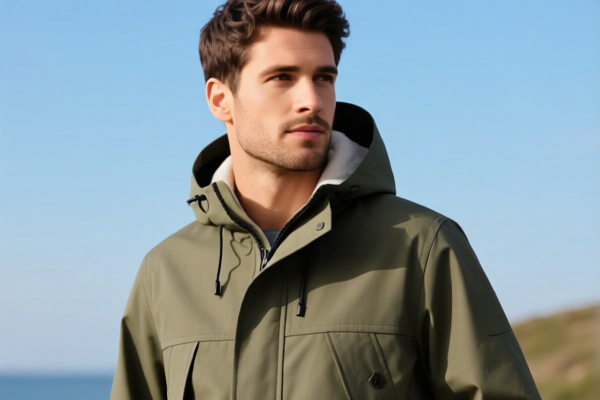
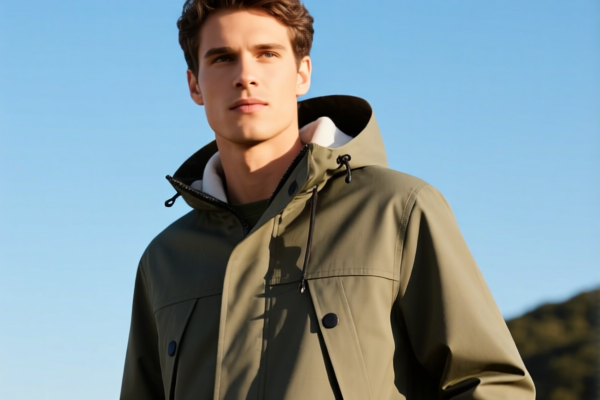

AI Analysis
🧥 Coat (Coats & Jackets)
🌐 HS Code Reference & Customs Clearance Guide | 2026 Tax Breakdown | Strategic Import Strategy
📌 I. Product Definition & Classification: Do You Really Know Your "Coat"?
In international trade, "coats" are categorized based on material composition, garment type (men's, women's, children's), seasonal function, and fiber source (natural vs. synthetic). Misclassification can lead to huge tax discrepancies and customs delays.
⚠️ Critical Classification Rules:
- Women's/Men's Jackets → Often fall under 6202 (women's) or 6201 (men's) chapters.
- Children's Coats → Typically classified under 6210 (special designs/materials).
- Material Matters: Cotton, wool, synthetic fibers, or blends determine the specific HS subheading and tax rate.
- Seasonal Function: "Winter coats" with insulation may have different tax treatments than fashion jackets.
📦 II. HS Code Classification Details (2026 Official Tariff Schedule)
| HS Code | Product Description | Applicable Scenario | Material Basis | Total Tax | Tax Breakdown |
|---|---|---|---|---|---|
| 6202.30.20.50 | Women's Coats | Women's outerwear, non-synthetic | Cotton-based | 26.4% | Base: 8.9% + Add-on: 7.5% + Section 301: 10% |
| 6201.30.12.00 | Men's/Winter Coats | Winter outerwear, insulated | Cotton or thermal fill | 21.9% | Base: 4.4% + Add-on: 7.5% + Section 301: 10% |
| 6101.20.00.10 | Knitted Coats | Winter coats, knit fabric | Cotton or synthetic blend | 33.4% | Base: 15.9% + Add-on: 7.5% + Section 301: 10% |
| 6210.20.50.10 | Children's Coats (Natural/Synthetic) | Kids' outerwear, mixed fiber | Natural or synthetic | 24.6% | Base: 7.1% + Add-on: 7.5% + Section 301: 10% |
| 6210.20.50.20 | Children's Coats (Synthetic Only) | Kids' outerwear, synthetic fibers | Synthetic-only | 24.6% | Base: 7.1% + Add-on: 7.5% + Section 301: 10% |
🔍 Key Insight:
- Cotton-based items often have lower base taxes (e.g., 8.9% for 6202.30.20.50).
- Synthetic/Knit coats (6101.20.00.10) face higher base taxes (15.9%) due to fiber type.
- Children's coats (6210) are uniformly taxed at 24.6%, regardless of fiber mix.
- All categories include Section 301 tariffs (10%) and add-on tariffs (7.5%) for U.S. imports from China.
💰 III. 2026 Tariff Rate Breakdown (Including附加税 & Policy Surcharges)
✅ Applicable Market: United States (US)
✅ Origin: China (CN)
✅ Effective Date: As of November 10, 2025 (including subsequent imports)
🎯 1. 6202.30.20.50 – Women's Coats (Cotton-Based)
| Item | Content |
|---|---|
| Base Tariff | 8.9% (ad valorem) |
| Add-on Tariff | +7.5% (Section 301) |
| Section 301 Tariff | +10% (China-specific) |
| Total Rate | 26.4% |
| Tax Calculation | CIF Value × 26.4% |
| De Minimis Exemption? | ❌ No (Deny de minimis) |
| Legal Path | Section 301:9903.01.24 → USITC:6202.30.20.50 → Footnote:9903.01.24 |
📌 Explanation:
- The 26.4% total tax is a combination of base, Section 301, and add-on tariffs.
- Cotton-based materials do not qualify for exemptions under current U.S. trade policy.
🎯 2. 6101.20.00.10 – Knitted Winter Coats
| Item | Content |
|---|---|
| Base Tariff | 15.9% |
| Add-on Tariff | +7.5% |
| Section 301 Tariff | +10% |
| Total Rate | 33.4% |
| Tax Calculation | CIF × 33.4% |
| De Minimis Exemption? | ❌ No |
| Legal Path | Section 301:9903.01.24 → USITC:6101.20.00.10 → Footnote:9903.01.24 |
📌 Note:
- Knitted coats have higher base taxes due to synthetic fiber content.
- Winter insulation does not lower the tax rate.
🛠️ IV. Customs Clearance Practical Advice (Risk Avoidance Guide)
✅ 1. Required Documentation Checklist
| Document | Mandatory? | Purpose |
|---|---|---|
| ✅ Material Composition Certificate | ✔️ | Proves fiber type (cotton, synthetic, blend) |
| ✅ Seasonal Function Proof | ✔️ | Confirms "winter coat" status (e.g., thermal lining) |
| ✅ Product Photos (with Labels) | ✔️ | Shows style, brand, and HS Code eligibility |
| ✅ Commercial Invoice | ✔️ | Must explicitly state "Coat" + Material + Season |
| ✅ Country of Origin Certificate | ✔️ | Critical for Section 301 tax applicability |
| ✅ Packing List | ✔️ | Avoids "split shipment" penalties |
🚨 Warning:
- Misdeclaring material (e.g., claiming "synthetic" for cotton) = 26.4% vs. 33.4% difference!
- Omitting "winter" function for insulated coats = No exemption from Section 301.
✅ 2. Declaration Best Practices
🔥 Rule: "Material + Function + Style = Correct Tax!"
| Scenario | Correct Declaration | Mistake to Avoid |
|---|---|---|
| Women's cotton coat | 6202.30.20.50 |
"Women's Jacket" (6202.30.10.00 → 26.4% same) |
| Men's winter coat | 6201.30.12.00 |
"Men's Jacket" (6201.30.10.00 → 21.9% same) |
| Kids' synthetic coat | 6210.20.50.20 |
"Kids' Coat" (6210.20.50.10 → 24.6% same) |
| Knitted winter coat | 6101.20.00.10 |
"Knitted Jacket" (6101.10.00.10 → 33.4% same) |
💡 Pro Tip:
- Always specify fiber type in invoices (e.g., "100% Cotton Women's Coat").
- Use exact HS Code in shipping docs to avoid customs reclassification penalties.
✅ 3. Special Cases
| Situation | Recommendation |
|---|---|
| OEM Custom Coats | Provide client orders + design specs to avoid "non-standard" penalties |
| Coats with Thermal Lining | Declare as "Winter Coat" (6201.30.12.00) for lower base tax |
| Children's Coats (Mixed Fiber) | Use 6210.20.50.10 for natural/synthetic blends |
| Coats for Medical Use | 可申请 "non-commercial" exemption, but rarely granted for U.S. |
🌍 V. Global Market Comparison (2026 Tariff Trends)
| Country/Region | Recommended HS Code | Tariff | Certification | Notes |
|---|---|---|---|---|
| 🇺🇸 USA | 6202.30.20.50 |
26.4% | FCC, RoHS | Highest tax for cotton coats |
| 🇨🇳 China | 6202.30.20.50 |
5% | CCC, RoHS | No Section 301 |
| 🇪🇺 EU | 6202.30.20.50 |
0% (CE) | CE, REACH | No add-on tariffs |
| 🇯🇵 Japan | 6202.30.20.50 |
0% | PSE | No Section 301 |
| 🇦🇺 Australia | 6202.30.20.50 |
5% | RCM | No Section 301 |
📌 Conclusion:
- USA is the only market with Section 301 + Add-on tariffs.
- China, EU, Japan, Australia offer lower or zero tariffs for coats.
- Consider shifting production to Vietnam/Mexico for Section 301 exemption (0–5% tax).
📌 VI. Common Mistakes & Pitfalls (Lessons Learned)
❌ Mistake 1: Declaring "Cotton Coat" as "Synthetic" to avoid higher tax.
👉 Result: 26.4% → 33.4% + Fines for Misdeclaration!
❌ Mistake 2: Ignoring "Winter Coat" status for insulated garments.
👉 Result: No Section 301 exemption → 26.4% instead of 21.9%.
❌ Mistake 3: Using generic terms like "Jacket" instead of "Coat".
👉 Result: Customs delays + Potential reclassification.
❌ Mistake 4: Splitting shipments (e.g., "Coat + Liner").
👉 Result: Multiple HS Codes → Higher total tax + penalties.
✅ Correct Approach:
"Women's Cotton Winter Coat, 100% Cotton, Thermal Lining, Model XYZ, Size M, Section 301-Eligible"
🎯 VII. Conclusion: Precision in Classification = Savings in Tax!
🎯 Remember:
🔹 "Material + Function + Style = Correct Tax!"
🔹 "HS Code determines 100% of your tax bill"
🔹 "One mistake = 26.4% → 33.4% = 7% loss!"
📌 Pro Tips:
- For Vietnam/Mexico-made coats, apply for Section 301 exemption → 0–5% tax!
- Always request an Advance Ruling (US Customs) to avoid disputes.
- Use exact HS Code in all shipping docs to prevent reclassification penalties.
📣 Take Action Now:
📞 Contact a Certified Customs Broker + Submit Product Photos + Material Certificates
🚀 Ensure Smooth Clearance, Lower Taxes, and Maximized Profit!
✨ Professional Classification Starts Here!
💼 Every Dollar Saved = Every Dollar Earned!
Customer Reviews
About HS Code Classification
The Harmonized System (HS) is an internationally standardized nomenclature developed by the World Customs Organization (WCO) to classify traded products. Over 200 countries use the HS system as the basis for customs tariffs, trade statistics, and import/export regulations.
Each HS code follows a hierarchical structure:
- Chapter (2 digits) — Broad category of goods (e.g., Chapter 84: Machinery and Mechanical Appliances)
- Heading (4 digits) — More specific grouping within the chapter
- Subheading (6 digits) — Internationally standardized breakdown, used by all WCO member countries
- National subdivisions (8-10 digits) — Country-specific extensions for further classification, such as US HTSUS 10-digit codes
Correct HS code classification is essential for smooth customs clearance, accurate duty payment, and compliance with trade regulations. Misclassification can lead to customs delays, overpayment of duties, or penalties.
When importing from CN to US, the applicable tariff rates may include:
- Most-Favored-Nation (MFN) rate — The standard duty rate applied to WTO members
- General rate — Applied to countries without trade agreements
- Trade remedy duties — Additional tariffs such as Section 301 (anti-dumping), Section 232 (national security), or countervailing duties
The information provided on this page is for reference purposes only. For official classification, please consult with your local customs authority or a licensed customs broker.