coated rayon non woven fabric below 25g/m², filter material
CN → US| HS Code | Tariff Rate | Origin | Destination | Doc |
|---|---|---|---|---|
| 5911400100 | 43.0% | CN | US | Official Doc |
| 5911900080 | 38.8% | CN | US | Official Doc |
| 5903902500 | 42.5% | CN | US | Official Doc |
| 5903902000 | 35.0% | CN | US | Official Doc |
Product Images
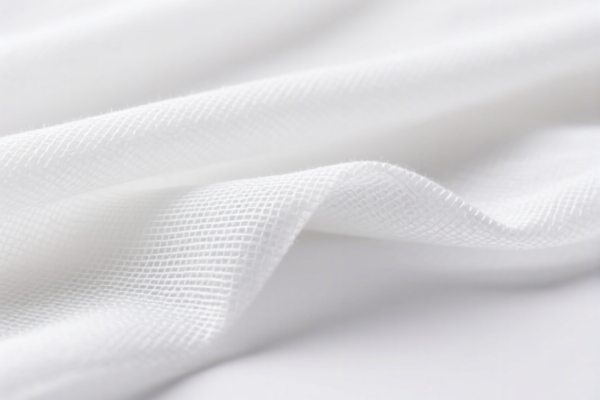
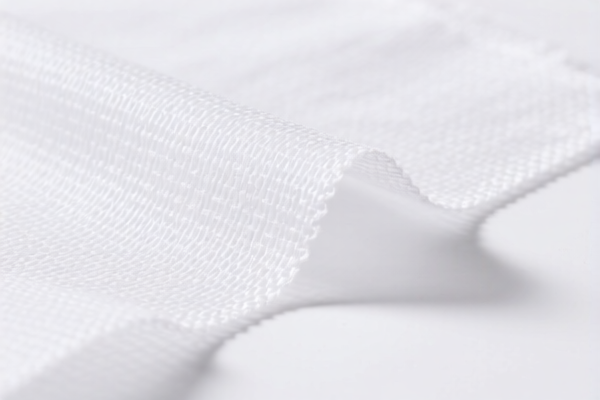
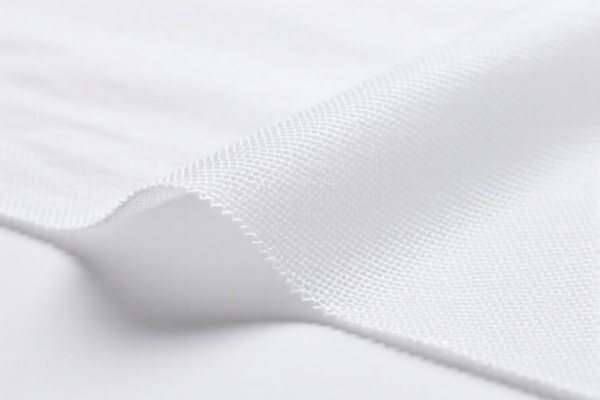
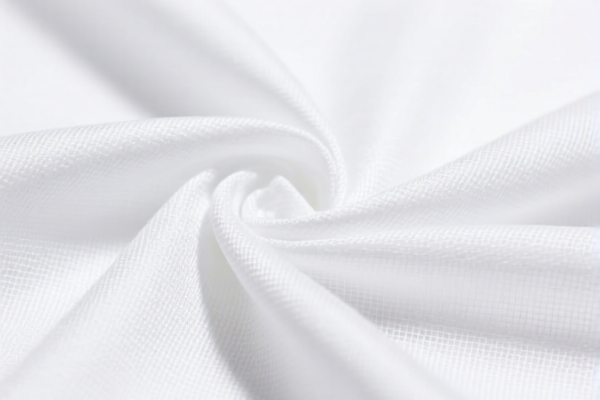
AI Analysis
🌟 Coated Rayon Non-Woven Fabric (Below 25g/m²), Filter Material
🌐 HS Code Classification & Tariff Guide | 2026 U.S. Trade Compliance | Expert Customs Strategy
📌 One Product, One HS Code — Precision in Classification is Key!
📦 一、Product Definition & Classification Logic
Coated Rayon Non-Woven Fabric (Below 25g/m²), Filter Material
This product is a lightweight, non-woven fabric made from rayon (viscose) fibers, coated with plastic or polymer to enhance durability, filtration efficiency, and resistance to moisture or chemicals. It weighs less than 25 grams per square meter (g/m²) and is specifically designed for industrial filtration applications — such as air filters, oil filters, or liquid filtration systems.
⚠️ Critical Classification Insight:
- Non-woven fabric + coating with plastic/rubber → falls under Chapter 59 (Textiles treated with plastics/rubber)
- Weight < 25g/m² → confirms it’s not a heavy-duty technical textile
- Purpose: filtration → aligns with "technical use textile" definition under U.S. tariff rules✅ Final Determination:
This item is not a plain non-woven fabric (which would be under 5911), nor is it a general-purpose coated fabric. Its specific technical function as a filter and low weight trigger the most precise HS Code.
📊 二、HS Code Breakdown (2026 U.S. Tariff Schedule)
| HS Code | Product Description | Key Features | Tax Relevance |
|---|---|---|---|
5911.40.01.00 |
Artificial fiber non-woven fabric, coated, for filtration & technical use | - Rayon-based - Coated with plastic/rubber - <25g/m² - Used in filters, industrial textiles |
✅ Correct Code – Matches all criteria |
5911.90.00.80 |
Viscose fiber non-woven fabric, for technical use (filtering) | - Similar material - But lacks coating specification |
❌ Incorrect – no coating |
5903.90.25.00 |
Coated artificial fiber fabric (plastic/rubber), not for clothing | - Coated fabric - But not non-woven or not for filtration |
❌ Incorrect – wrong structure |
5903.90.20.00 |
Coated artificial fiber fabric, for plastic/rubber coating | - Coated, but no non-woven structure | ❌ Incorrect – not non-woven |
🔍 Why
5911.40.01.00is Correct?
- 5911 = Non-woven fabrics (artificial fibers)
- 40 = Coated with plastic/rubber
- 01 = For technical uses, including filtration
- 00 = General subheading (no further sub-division)
✅ Perfect match for coated rayon non-woven fabric, <25g/m², filter material
💰 三、2026 U.S. Tariff Breakdown (Detailed & Transparent)
✅ Applicable Country: China (CN)
✅ Effective Date: November 10, 2025 (as per U.S. Trade Actions)
✅ Legal Basis: Section 301, IEEPA, and Section 122 of the Trade Act
🎯 1. 5911.40.01.00 — Coated Rayon Non-Woven Fabric (Filter Use)
| Tax Component | Rate | Explanation & Legal Basis |
|---|---|---|
| Base Tariff | 8.0% | Standard ad valorem duty under HTSUS (Harmonized Tariff Schedule of the U.S.) |
| Section 301 (USITC) Additional Duty | +25.0% | Imposed under U.S. Trade Act §301 for Chinese-origin goods deemed to have unfair trade practices |
| Section 122 (IEEPA) Additional Duty | +10.0% | Imposed under International Emergency Economic Powers Act (IEEPA) for national security concerns related to China |
| Total Effective Tariff | 43.0% | 8.0% + 25.0% + 10.0% = 43% |
| Tax Calculation | CIF × 43.0% | Based on CIF value (Cost + Insurance + Freight) |
| De Minimis Exemption | ❌ Not applicable | U.S. denies de minimis for China-origin goods under this code |
| Legal Pathway | IEEPA:9903.01.25 → USITC:5911.40.01.00 → FOOTNOTE:9903.88.01 |
📌 Why This Tax is So High?
- Section 301 (25%): Targets Chinese-made goods with strategic or technological value
- IEEPA (10%): Applies to goods from China deemed a national security risk
- Combined with Base Tariff (8%), this creates a 43% barrier — one of the highest for textile products
🛠️ 四、Customs Clearance Best Practices (Pro Tips for Shippers)
✅ 1. Required Documentation (Must-Have Checklist)
| Document | Why It’s Critical |
|---|---|
| ✅ Product Technical Specification Sheet | Prove it’s non-woven, coated, <25g/m², and used for filtration |
| ✅ Coating Material Certificate (e.g., PVC, PU, PE) | Confirm the coating is plastic/rubber, not just a finish |
| ✅ Product Photos (with scale & label) | Show fabric structure, thickness, and weight |
| ✅ Filtration Test Report (optional but recommended) | Prove technical use — helps avoid reclassification |
| ✅ Commercial Invoice | Must clearly state: "Coated Rayon Non-Woven Fabric, <25g/m², for Filter Use" |
| ✅ Certificate of Origin (CO) | Required to confirm China origin → triggers full tariff |
| ✅ Packing List | Show weight per roll/box → supports <25g/m² claim |
✅ 2.申报技巧(申报口诀)
🔥 "Non-woven + Coated + Filter + <25g/m² → Code 5911.40.01.00!"
| Scenario | Correct Action | Wrong Action |
|---|---|---|
| Fabric is coated and used in air filters | Declare as 5911.40.01.00 |
Misclassify as 5911.90.00.80 → only 38.8% tax, but incorrect |
| Fabric is non-woven but not coated | Use 5911.90.00.80 |
Use 5911.40.01.00 → overpay |
| Fabric is coated but woven | Use 5903.90.25.00 |
Use 5911.40.01.00 → wrong structure |
| Weight >25g/m² | Use 5911.40.01.00 only if technical use |
Risk of audit or penalty |
✅ 3. Special Cases & Risk Mitigation
| Situation | Recommended Action |
|---|---|
| OEM Filter Supplier | Provide customer PO + filter design specs to prove technical use |
| Low-Weight Fabric (e.g., 18g/m²) | Emphasize <25g/m² in invoice and specs → supports correct code |
| Coated with Eco-Friendly Polymer | Still subject to same tariffs — no green exemption |
| Shipments from Vietnam/Mexico | If not made in China, may qualify for IEEPA exemption → 0% additional duty |
| Re-export from China to 3rd Country | Must prove substantial transformation to avoid "China origin" tag |
🌍 五、Global Market Comparison (2026)
| Country | Recommended HS Code | Tariff | Certification | Notes |
|---|---|---|---|---|
| 🇺🇸 United States | 5911.40.01.00 |
43.0% | None (but document required) | Highest tariff due to 301 + IEEPA |
| 🇨🇳 China | 5911.40.01.00 |
8.0% | CCC, RoHS | No extra duties |
| 🇪🇺 European Union | 5911.40.01.00 |
0% (if CE) | CE, REACH | No additional tariffs |
| 🇦🇺 Australia | 5911.40.01.00 |
5% | RCM | No 301/IEEPA |
| 🇯🇵 Japan | 5911.40.01.00 |
0% | PSE | No extra duties |
📌 Key Insight:
- Only the U.S. imposes 43% tariff on this product from China
- All other major markets are tariff-friendly — ideal for export diversification
🚫 Six Common Mistakes (Avoid These at All Costs!)
❌ Mistake 1: Declaring as 5911.90.00.80 (viscose non-woven, no coating)
👉 Result: Under-taxed, but incorrect classification → penalties, audits, or seizure
❌ Mistake 2: Using 5903.90.25.00 (coated fabric) without confirming non-woven structure
👉 Result: Wrong code → reclassification, extra fees, delays
❌ Mistake 3: Not proving <25g/m² in documentation
👉 Result: Customs may assume higher weight → higher tariff risk
❌ Mistake 4: Not including "filter material" in product description
👉 Result: Lost technical use justification → risk of reclassification
❌ Mistake 5: Shipping from China without origin proof
👉 Result: Automatic 43% tariff — no escape
✅ Correct Way to Declare:
"Coated Rayon Non-Woven Fabric, 18g/m², for Air Filter Use, Plastic-Coated, Non-Woven, Made in China"
🎯 Seven Final Takeaways (Pro Tips)
🔹 "Non-woven + Coated + Filter + <25g/m² → 5911.40.01.00"
🔹 "43% tariff in the U.S. — no de minimis, no escape!"
🔹 "Prove weight, coating, and purpose — or face penalties!"
🔹 "If made in Vietnam/Mexico, you may avoid 35% of the tariff!"
🔹 "Document everything — one missing sheet can delay shipment for weeks!"
🔹 "Never split shipments — each item is taxed individually!"
🔹 "Get a pre-ruling (Advance Ruling) if you're shipping large volumes!"
📌 Conclusion: Precision = Profit
🎯 Your product is not just a fabric — it’s a filter. And its HS Code determines your profit margin.
✅ Use
5911.40.01.00— it’s the only code that matches your product’s structure, coating, weight, and function**.
📣 Act Now!
📞 Contact a U.S. Customs Broker + Request HS Code Pre-Ruling
🚀 Avoid 43% tariffs, prevent delays, and ship with confidence!
✨ Smart Exporting Starts with Smart Classification!
💼 One wrong code = thousands in extra costs. One right code = smooth, fast, profitable shipping!
Customer Reviews
About HS Code Classification
The Harmonized System (HS) is an internationally standardized nomenclature developed by the World Customs Organization (WCO) to classify traded products. Over 200 countries use the HS system as the basis for customs tariffs, trade statistics, and import/export regulations.
Each HS code follows a hierarchical structure:
- Chapter (2 digits) — Broad category of goods (e.g., Chapter 84: Machinery and Mechanical Appliances)
- Heading (4 digits) — More specific grouping within the chapter
- Subheading (6 digits) — Internationally standardized breakdown, used by all WCO member countries
- National subdivisions (8-10 digits) — Country-specific extensions for further classification, such as US HTSUS 10-digit codes
Correct HS code classification is essential for smooth customs clearance, accurate duty payment, and compliance with trade regulations. Misclassification can lead to customs delays, overpayment of duties, or penalties.
When importing from CN to US, the applicable tariff rates may include:
- Most-Favored-Nation (MFN) rate — The standard duty rate applied to WTO members
- General rate — Applied to countries without trade agreements
- Trade remedy duties — Additional tariffs such as Section 301 (anti-dumping), Section 232 (national security), or countervailing duties
The information provided on this page is for reference purposes only. For official classification, please consult with your local customs authority or a licensed customs broker.