code lock for luggage bag case
CN → US| HS Code | Tariff Rate | Origin | Destination | Doc |
|---|---|---|---|---|
| 8301403000 | 13.1% | CN | US | Official Doc |
| 7326908688 | 87.9% | CN | US | Official Doc |
| 7326903500 | 92.8% | CN | US | Official Doc |
| 8301106080 | 23.6% | CN | US | Official Doc |
| 8301403000 | 13.1% | CN | US | Official Doc |
Product Images
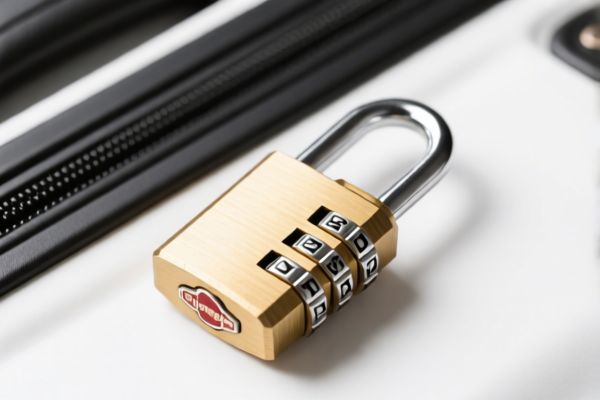
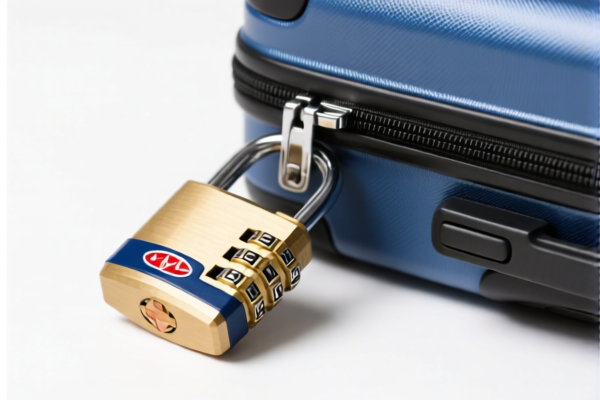


AI Analysis
🔐 Luggage Code Locks (Travel Bag Cases)
🌐 HS Code Reference & Customs Clearance Guide | 2026 Latest Tariff Analysis | Professional Transit Strategy
📌 I. Product Definition & Classification: Do You Really Know "Luggage Locks"?
Luggage code locks are essential security components for travel bags, suitcases, and hard-shell cases. In international trade, they are strictly classified based on material composition (base metal vs. other) and functionality (with key vs. combination only).
1. Standalone Luggage Locks (Base Metal):
- Complete locking mechanisms made primarily of base metals (iron, steel, zinc alloy), often including keys or combination dials.
- HS Code Path: Chapter 83 (Miscellaneous Manufactured Articles of Base Metal).
2. Lock Accessories/Parts:
- Components such as latches, shackle hooks, or internal mechanisms intended for installation into luggage.
- HS Code Path: Chapter 73 (Articles of Iron or Steel) or Chapter 83 (Parts of Locks).
⚠️ Key Distinction Point:
- If the item is a complete, functional lock unit (e.g., a TSA-approved combo lock with a casing and internal mechanism), it generally falls under Chapter 83.
- If the item is merely an accessory (e.g., a steel latch or hook) or a non-metallic component, it may fall under Chapter 73 or other chapters.
- Misclassification Risk: Declaring a steel latch as a "lock" or a complete lock as a "part" leads to significant tariff discrepancies.
📦 II. HS Code Classification Details (2026 Latest Tariff Authority Comparison)
| HS Code | Product Description | Applicable Scenario | Material | Tax Complexity |
|---|---|---|---|---|
8301.40.30.00 |
Luggage Locks, Base Metal, with Key | Standard combination locks or keyed locks for suitcases/bags | Base Metal (Zinc/Steel) | 🟢 Moderate |
7326.90.86.88 |
Other Articles of Iron/Steel, Lock Accessories | Non-complete lock parts, e.g., steel latches, hooks for travel cases | Steel/Iron | 🔴 High |
7326.90.35.00 |
Iron/Steel Containers Accessories, Locks for Handbags/Cases | Specific steel fittings for bags/cases | Steel/Iron | 🔴 Highest |
8301.10.60.80 |
Padlocks, Base Metal, Luggage Locks Belong Here | Padlock-style luggage locks (with chain/shackle) | Base Metal | 🟡 Medium-High |
🔍 Key Reminder:
-8301Category: Applies to complete locks. If your product is a finished lock (even if made of steel), it may qualify here, avoiding the punitive "Section 301" tariffs applied to generic steel articles.
-7326Category: Applies to "other articles." Customs often interprets "lock accessories" broadly. If the lock is deemed a "steel article" rather than a "lock," it triggers massive additional tariffs.
💰 III. 2026 Latest Tariff Rate Breakdown (Including Surcharges, Policy Add-ons)
✅ Applicable Country: United States (US)
✅ Origin: China (CN)
✅ Effective Date: 2025/2026 Period (Subject to ongoing trade policies)
🎯 1. 8301.40.30.00 —— Luggage Locks (Base Metal, with Key)
| Item | Content |
|---|---|
| Basic Tariff | 3.1% (ad valorem) |
| Surtax (Section 301) | 0.0% (Note: Some base metal locks may be exempt or lower depending on specific HTS subheadings, but verify current list) |
| Section 122 Tariff | +10% (If applicable under specific emergency provisions) |
| Total Tax Rate | 13.1% |
| Tax Calculation | CIF Value × 13.1% |
| De Minimis Eligibility | ❌ No (High value risk) |
| Legal Basis Path | HS:8301.40.30.00 → Basic:3.1% → Surtax:0.0% → Section 122:10% |
📌 Explanation:
- This is the most favorable classification for complete luggage locks.
- The "Section 122" tariff adds 10%, but avoids the heavy 25%-50% penalties associated with steel accessories.
- Tip: Ensure the lock is marketed and described as a "Lock" (not "Steel Part") to justify this code.
🎯 2. 7326.90.86.88 —— Other Iron/Steel Articles, Travel Case Lock Accessories
| Item | Content |
|---|---|
| Basic Tariff | 2.9% |
| Surtax (Section 301) | +25.0% |
| Section 122 Tariff | +10% |
| Steel/Aluminum/Copper Surcharge | +50% (Specific to steel products under additional trade measures) |
| Total Tax Rate | 87.9% |
| Tax Calculation | CIF Value × 87.9% |
| De Minimis Eligibility | ❌ No |
| Legal Basis Path | HS:7326.90.86.88 → Basic:2.9% → Surtax:25.0% → Sec122:10% → SteelSurcharge:50% |
📌 Warning:
- This classification is disastrous for costs.
- It applies if the lock is deemed a "steel article" rather than a "lock," or if it is classified as a generic accessory.
- Avoid: Do not declare complete locks as "steel accessories" unless necessary (e.g., if the lock is purely a steel latch without locking mechanism).
🎯 3. 7326.90.35.00 —— Iron/Steel Container Accessories, Locks for Handbags/Cases
| Item | Content |
|---|---|
| Basic Tariff | 7.8% |
| Surtax (Section 301) | +25.0% |
| Section 122 Tariff | +10% |
| Steel/Aluminum/Copper Surcharge | +50% |
| Total Tax Rate | 92.8% |
| Tax Calculation | CIF Value × 92.8% |
| De Minimis Eligibility | ❌ No |
| Legal Basis Path | HS:7326.90.35.00 → Basic:7.8% → Surtax:25.0% → Sec122:10% → SteelSurcharge:50% |
📌 Warning:
- This is the highest tax rate in the dataset.
- Applies specifically to iron/steel accessories for containers/bags.
- Strategy: If your product is a complete lock, fight to keep it in8301. Only use this if it is a part (e.g., a metal clasp).
🎯 4. 8301.10.60.80 —— Padlocks, Base Metal, Luggage Locks
| Item | Content |
|---|---|
| Basic Tariff | 6.1% |
| Surtax | +7.5% |
| Section 122 Tariff | +10% |
| Total Tax Rate | 23.6% |
| Tax Calculation | CIF Value × 23.6% |
| De Minimis Eligibility | ❌ No |
| Legal Basis Path | HS:8301.10.60.80 → Basic:6.1% → Surtax:7.5% → Sec122:10% |
📌 Explanation:
- Applies to padlock-style luggage locks (those with a shackle).
- Tax rate is significantly lower than steel accessory codes but higher than standard luggage locks (8301.40).
- Tip: Use this if your product is a padlock format. If it's a zipper-integrated lock, use8301.40.30.00.
🛠️ IV. Customs Clearance Practical Advice (Battle-Tested Pitfall Guide)
✅ 1. Document Checklist (Mandatory)
| Document | Must Provide | Description |
|---|---|---|
| ✅ Product Specifications | ✔️ | Detail: Material (Zinc/Steel/Plastic), Type (Combo/Keyed/Padlock), TSA Approval Status |
| ✅ Photos (Clear & Detailed) | ✔️ | Show the lock mechanism, keyhole, combination dial, and any branding |
| ✅ Commercial Invoice | ✔️ | Describe as "Luggage Lock, Base Metal" or "Padlock, Base Metal" – Avoid "Steel Accessory" |
| ✅ Packing List | ✔️ | Confirm quantity and weight |
| ✅ Certifications | ✔️ | TSA Approval Certificate (if claimed), Material Safety Data Sheet (MSDS) |
✅ 2. Declaration Strategy (Key Mnemonics)
🔥 “Complete Lock, Code 8301. Steel Part, Code 7326. Tax Differs 80%!”
| Scenario | Correct Declaration | Incorrect Declaration |
|---|---|---|
| Standard Zipper Lock (Combo) | 8301.40.30.00 (Luggage Lock) |
7326.90.86.88 (Steel Accessory) → Tax: 87.9% |
| Padlock Luggage Lock | 8301.10.60.80 (Padlock) |
7326.90.35.00 (Container Accessory) → Tax: 92.8% |
| Steel Latch Only (No Mechanism) | 7326.90.35.00 or 86.88 |
8301.40.30.00 (Misclassification Risk) |
| Plastic Lock with Metal Insert | 8301.40.30.00 (If metal dominates function) |
7326 (If deemed "Other Material") |
✅ 3. Special Case Handling
| Situation | Handling Advice |
|---|---|
| TSA-Approved Locks | Explicitly state "TSA Approved" on invoice. May help with customs scrutiny but does not change HS Code. |
| Mixed Materials (Plastic + Metal) | If metal parts constitute the essential character, classify under 8301. If plastic dominates, review Chapter 39 (Plastics). |
| OEM/Custom Locks | Provide design drawings to prove it is a "Lock" mechanism, not just a "Steel Piece." |
| Small Accessories (Hooks) | Ensure description matches 7326. Do not mislabel as "Locks" to save tax if they are not functional locks. |
🌍 V. Global Market Clearance Comparison (2026 Latest)
| Country/Region | Recommended HS Code | Tariff (China Origin) | Certification | Notes |
|---|---|---|---|---|
| 🇺🇸 USA | 8301.40.30.00 |
13.1% | TSA (Optional) | Best rate for complete locks. Avoid 7326. |
| 🇨🇳 China | 8301.40.30.00 |
5-13.1% | N/A | Standard import duty. |
| 🇪🇺 EU | 8301.40.30.00 |
0-3.9% | CE (if electronic) | Generally low tariffs for base metal locks. |
| 🇬🇧 UK | 8301.40.30.00 |
0-5% | UKCA | Post-Brexit rules apply; verify current duty. |
| 🇯🇵 Japan | 8301.40.30.00 |
0-3.8% | PSE (if electrical) | Low tariffs for locks. |
📌 Conclusion:
- USA is the most complex market due to Section 301 and Section 122 tariffs.
- Correct HS Code (8301.40.30.00) can save you ~75% in taxes compared to incorrect classification (7326).
- EU/UK/Japan are more favorable, but correct classification is still vital for compliance.
📌 VI. Common Mistakes & Pitfall Guide (Blood & Tears Lessons)
❌ Mistake 1: Declaring a complete luggage lock as "Steel Accessory" (7326)
👉 Consequence: Tax jumps from 13.1% to 87.9%. Loss of 74.8% in value!
❌ Mistake 2: Using "Lock Parts" for a complete lock
👉 Consequence: Customs may reclassify and apply Section 301 tariffs. Delay + Fine.
❌ Mistake 3: Ignoring Section 122 Tariffs
👉 Consequence: Underpaying tax. If Section 122 applies, you owe an additional 10%.
✅ Correct Practice:
"Luggage Lock, Combination, Base Metal, TSA Approved, Model XYZ"
HS Code:8301.40.30.00
Tax: 13.1%
🎯 VII. Conclusion: Professional Declaration, Save Costs, Ensure Compliance!
🎯 Remember the Mnemonic:
🔹 "Complete Lock = 8301 (13.1%). Steel Part = 7326 (87.9%). Don't Mix Them!"
🔹 "HS Code Determines Tax, 1% Difference, Thousands of Dollars Saved!"
📌 Pro Tip:
If your luggage locks are originating from Vietnam, Mexico, or Thailand, you may be eligible for IEEPA Exemptions or lower tariffs.
Recommendation: Apply for an Advance Ruling from US Customs and Border Protection (CBP) to confirm the HS Code and avoid unexpected duties.
📣 Action Required:
📞 Contact a Professional Customs Broker + Provide Product Photos + Apply for HS Code Advance Ruling
🚀 Let your luggage locks Clear Customs Smoothly, Export Efficiently, and Maximize Profits!
✨ Professional Clearance Starts with Accurate Classification!
💼 Every Dollar of Your Cost Deserves Precise Calculation!
Customer Reviews
About HS Code Classification
The Harmonized System (HS) is an internationally standardized nomenclature developed by the World Customs Organization (WCO) to classify traded products. Over 200 countries use the HS system as the basis for customs tariffs, trade statistics, and import/export regulations.
Each HS code follows a hierarchical structure:
- Chapter (2 digits) — Broad category of goods (e.g., Chapter 84: Machinery and Mechanical Appliances)
- Heading (4 digits) — More specific grouping within the chapter
- Subheading (6 digits) — Internationally standardized breakdown, used by all WCO member countries
- National subdivisions (8-10 digits) — Country-specific extensions for further classification, such as US HTSUS 10-digit codes
Correct HS code classification is essential for smooth customs clearance, accurate duty payment, and compliance with trade regulations. Misclassification can lead to customs delays, overpayment of duties, or penalties.
When importing from CN to US, the applicable tariff rates may include:
- Most-Favored-Nation (MFN) rate — The standard duty rate applied to WTO members
- General rate — Applied to countries without trade agreements
- Trade remedy duties — Additional tariffs such as Section 301 (anti-dumping), Section 232 (national security), or countervailing duties
The information provided on this page is for reference purposes only. For official classification, please consult with your local customs authority or a licensed customs broker.