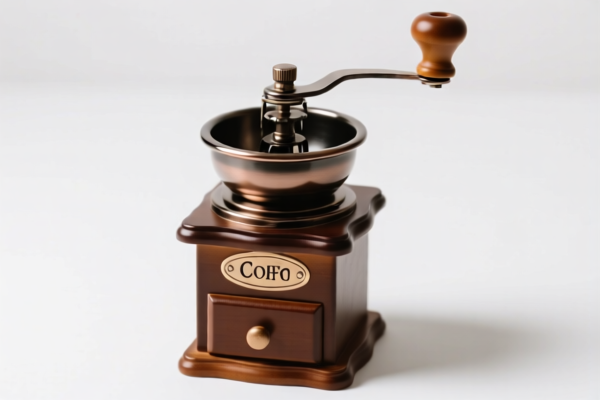
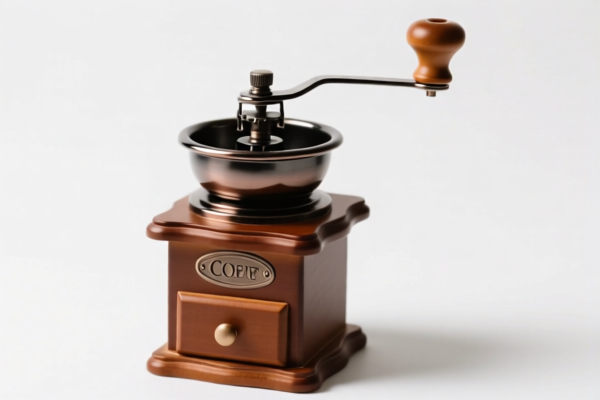
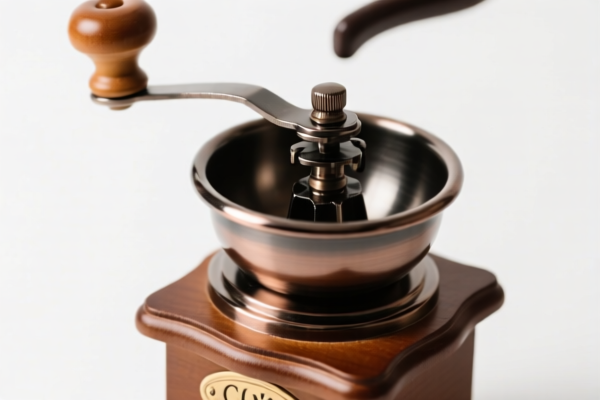
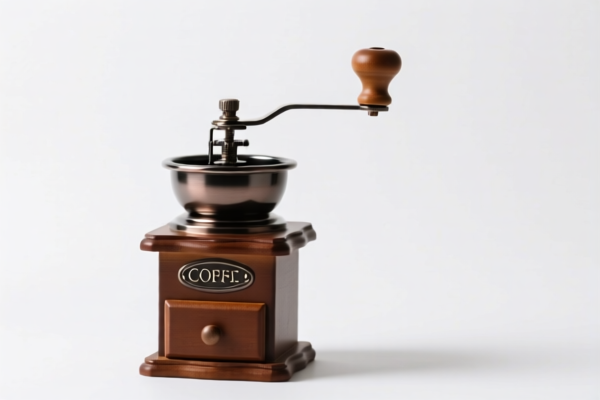
coffee grinder
CN → US| HS Code | Tariff Rate | Origin | Destination | Doc |
|---|---|---|---|---|
| 8438800000 | 35.0% | CN | US | Official Doc |
| 8438909090 | 37.8% | CN | US | Official Doc |
| 8479820080 | 35.0% | CN | US | Official Doc |
| 8479820040 | 35.0% | CN | US | Official Doc |
| 8509400040 | 14.2% | CN | US | Official Doc |
Product Images
AI Analysis
☕ Coffee Grinder (Commercial & Household)
🌐 HS Code Reference & Customs Clearance Guide | 2026 Latest Tariff Analysis | Professional Clearance Strategy
📌 I. Product Definition & Classification: Do You Really Understand "Coffee Grinders"?
A coffee grinder is an essential appliance for preparing coffee, whether for home use or industrial processing. In international trade, it is primarily classified under machinery for the preparation of food or beverages. However, because specific sub-categories exist for "electrical household appliances" vs. "industrial machinery," the classification depends heavily on the intended use, power source, and specific mechanical function.
⚠️ Key Distinction Points:
- If the device is a self-contained electric motor-driven unit primarily for food processing in a household or light commercial setting → It fits 8509 (Electrical machinery with self-contained motor).
- If the device is considered general-purpose industrial food preparation machinery or lacks specific "household appliance" features → It may fall under 8438 (Machinery for industrial preparation of food/beverages).
- If the device is viewed strictly as a general grinding/milling machine without specific food-prep exclusivity → It may fall under 8479 (Machines for mixing, kneading, crushing, grinding, screening, sifting, homogenizing, emulsifying, or stirring).
📦 II. HS Code Classification Details (2026 Latest Tariff Authoritative Comparison)
| HS Code | Product Description | Applicable Scenario | Key Classification Logic |
|---|---|---|---|
8509.40.00.40 |
Electrical machines and appliances with self-contained electric motor, for sorting, sifting, crushing, grinding, mixing or kneading, other than food or drink cutting machines of heading 84.38: Food grinder and processor | Home/Household Coffee Grinders: Small, electric, self-contained units for grinding coffee beans. | ✅ Most Likely for Retail/Home Use. "Self-contained motor" + "Food processor/grinder". |
8438.80.00.00 |
Other machinery, plant and laboratory equipment suitable for the continuous operation of the machinery described in subheadings 84.38.10 to 84.38.70: Other | Commercial/Industrial Coffee Grinders: Larger, non-electric (or electric but classified as industrial food machinery) units. | ⚠️ Industrial Use. "Machinery for industrial preparation of food or beverages." No material conflict. |
8438.90.90.90 |
Parts suitable for use solely or principally with the machinery of heading 84.38: Other | Parts/Accessories for coffee grinders not explicitly listed elsewhere. | ⚠️ Parts Only. If the item is a component (e.g., burrs, motor housing) rather than the complete unit. |
8479.82.00.80 |
Machines and mechanical appliances having individual functions, not specified or included elsewhere in this Chapter: Mixing, kneading, crushing, grinding, screening, sifting, homogenizing, emulsifying or stirring machines | General Purpose Grinders: If classified as a general "grinding machine" rather than specific food prep. | ⚠️ Functional Classification. "Grinding" function matches, but less specific than 8509 for electric food units. |
8479.82.00.40 |
Machines and mechanical appliances having individual functions, not specified or included elsewhere in this Chapter: Other | General Purpose Electric Grinders: "Grinding" function matches; electric device with separate function. | ⚠️ Functional Classification. Similar to above, but different sub-code for "other." |
🔍 Critical Reminder:
- Domestic/Home Use: Best归类 (Classified) under 8509.40.00.40 because it is an electrical appliance with a self-contained motor for food processing.
- Industrial/Commercial Use: Often classified under 8438 as machinery for the preparation of food/beverages.
- Parts: If importing only replacement burrs or motors, use 8438.90.90.90 or relevant parts codes, not the finished good code.
💰 III. 2026 Latest Tariff Rate Details (Including Surcharges & Policy Add-ons)
✅ Applicable Country: United States (US)
✅ Origin: China (CN)
✅ Effective Date: From November 10, 2025 (for subsequent imports)
🎯 1. 8509.40.00.40 —— Food Grinder & Processor (Electric, Self-Contained)
| Item | Content |
|---|---|
| Base Tariff | 4.2% (ad valorem) |
| USITC Additional Duty | 0.0% (No Section 301 additional duty for this specific subheading under the provided data) |
| IEEPA Additional Duty | +10% (Targeting China/HK products, effective Nov 10, 2025) |
| Total Rate | 14.2% |
| Tax Calculation | CIF Value × 14.2% |
| De Minimis Exemption | ❌ Not Eligible (deny_de_minimis) |
| Legal Basis Path | IEEPA:9903.01.24 → USITC:8509.40.00.40 |
📌 Explanation:
- This is the most favorable rate among the options.
- While the base tariff is 4.2%, there is no additional 25% Section 301 duty for this specific code in the provided data.
- Only the 10% IEEPA duty applies, bringing the total to 14.2%.
- Advantage: Significantly lower than the 35% rates for other codes.
🎯 2. 8438.80.00.00 —— Machinery for Industrial Food/Bev Preparation
| Item | Content |
|---|---|
| Base Tariff | 0.0% |
| USITC Additional Duty | +25% (Section 301 Additional Duty) |
| IEEPA Additional Duty | +10% (Targeting China/HK products) |
| Total Rate | 35.0% |
| Tax Calculation | CIF Value × 35.0% |
| De Minimis Exemption | ❌ Not Eligible |
| Legal Basis Path | IEEPA:9903.01.25 → IEEPA:9903.01.24 → USITC:8438.80.00.00 |
📌 Explanation:
- Classified as industrial food machinery.
- Attracts the full 25% Section 301 surcharge.
- Total cost impact is more than double the 8509 classification.
🎯 3. 8438.90.90.90 —— Parts for Food/Bev Machinery
| Item | Content |
|---|---|
| Base Tariff | 2.8% |
| USITC Additional Duty | +25% (Section 301 Additional Duty) |
| IEEPA Additional Duty | +10% (Targeting China/HK products) |
| Total Rate | 37.8% |
| Tax Calculation | CIF Value × 37.8% |
| De Minimis Exemption | ❌ Not Eligible |
| Legal Basis Path | IEEPA:9903.01.25 → IEEPA:9903.01.24 → USITC:8438.90.90.90 → FOOTNOTE:9903.88.01 |
📌 Note:
- If you are importing parts (e.g., grinding burrs, motors), this code may apply.
- Highest total rate among the options (37.8%).
- Ensure the item is indeed a "part" and not the finished product to avoid misclassification penalties.
🎯 4. 8479.82.00.80 & 8479.82.00.40 —— General Purpose Grinding Machines
| Item | Content |
|---|---|
| Base Tariff | 0.0% |
| USITC Additional Duty | +25% (Section 301 Additional Duty) |
| IEEPA Additional Duty | +10% (Targeting China/HK products) |
| Total Rate | 35.0% |
| Tax Calculation | CIF Value × 35.0% |
| De Minimis Exemption | ❌ Not Eligible |
| Legal Basis Path | IEEPA:9903.01.25 → IEEPA:9903.01.24 → USITC:8479.82.00.80 / 8479.82.00.40 |
📌 Explanation:
- These codes cover "machines having individual functions" like grinding.
- They attract the full 25% Section 301 surcharge.
- Disadvantage: Less specific than 8509 for electric food processors, leading to higher taxes.
🛠️ IV. Customs Clearance Practical Advice (Battle-Tested Pitfall Guide)
✅ 1. Document Preparation Checklist (No Missing Items)
| Document | Mandatory? | Description |
|---|---|---|
| ✅ Product Specification Sheet | ✔️ | Must clearly state: "Electric Coffee Grinder," "Self-contained motor," "For food processing." |
| ✅ Product Photos (including Nameplate) | ✔️ | Show model, brand, voltage, wattage, and any "Food Grade" labeling. |
| ✅ Commercial Invoice | ✔️ | Explicitly describe as: "Electric Coffee Grinder for Household/Commercial Use, Model XYZ" |
| ✅ Organizational Chart/Structure | ✔️ | To prove it's a complete unit, not assembled from parts. |
| ✅ Third-Party Test Reports | ✔️ | FCC (if electric), UL/ETL (safety), FDA (food contact materials if applicable). |
✅ 2. Declaration Strategy (Key Mnemonic)
🔥 "Domestic Use = 8509 (14.2%); Industrial = 8438 (35%); Parts = 8438.90 (37.8%)"
| Scenario | Correct Declaration | Wrong Action |
|---|---|---|
| Small Electric Coffee Grinder (Home/Semi-Commercial) | 8509.40.00.40 |
Misdeclare as 8438 → Extra 20.8% tax! |
| Large Industrial Coffee Grinder | 8438.80.00.00 |
Misdeclare as 8509 → Misclassification penalty + back taxes. |
| Replacement Burrs/Motors | 8438.90.90.90 |
Declare as finished good → Overpayment of tax. |
| Non-Electric Manual Grinder | Different Code (e.g., 82.05 or 73.23) | Declare as 8509 → Reject/Correction. |
✅ 3. Special Case Handling
| Case | Handling Advice |
|---|---|
| "Food Processor" Claim | Emphasize "Food Processing" function to support 8509.40.00.40 classification. |
| Industrial vs. Household | If the grinder is large, stainless steel, and high-volume, it may be considered industrial (8438). Provide usage evidence. |
| Mixed Containers | If mixing coffee grinders with other items, ensure separate HS codes are declared to avoid cross-contamination of tax rates. |
| Origin Marking | Ensure "Made in China" is permanently marked on the product and packaging to avoid customs delays. |
🌍 V. Global Market Comparison (2026 Latest)
| Country/Region | Recommended HS Code | Tariff | Certification Requirements | Notes |
|---|---|---|---|---|
| 🇺🇸 USA | 8509.40.00.40 |
14.2% (China) | FCC + UL/ETL | Lowest tariff for electric grinders. Avoid 8438 if possible. |
| 🇨🇳 China | 8509.40.00.40 |
~10-15% | CCC + RoHS | Standard import duty. |
| 🇪🇺 EU | 8509.40 |
0% (if CE) | CE + RoHS | No additional duties like US Section 301. |
| 🇦🇺 Australia | 8509.40 |
5% | RCM | Low tariff environment. |
| 🇯🇵 Japan | 8509.40 |
0-8% | PSE | Varies by specific type. |
📌 Conclusion:
- USA is the most sensitive market due to Section 301 and IEEPA duties.
- Classification as 8509 is critical to save ~20.8% compared to 8438 codes.
- For exports to non-US markets, 8509 remains the most logical fit for electric coffee grinders.
📌 VI. Common Errors & Pitfall Guide (Lessons from Blood and Tears)
❌ Error 1: Declaring a complete electric coffee grinder as 8438.80.00.00
👉 Consequence: Pay 35% tax instead of 14.2%. Overpayment of 20.8%!
❌ Error 2: Declaring parts (like burrs) as 8509.40.00.40
👉 Consequence: Customs rejection or penalty for misdeclaration. Parts should be 8438.90.90.90 (37.8%) or other parts codes.
❌ Error 3: Using vague descriptions like "Kitchen Appliance"
👉 Consequence: Customs may assign their own code, potentially leading to higher duties or delays.
❌ Error 4: Ignoring IEEPA 10% duty
👉 Consequence: Even if base tax is 0%, you still pay 10% (and 25% if applicable). Always calculate total landed cost.
✅ Correct Practice:
"Electric Coffee Grinder, Household Use, Stainless Steel Burrs, 120V, Model XYZ, FCC Certified"
🎯 VII. Conclusion: Professional Declaration, Save Money, Ensure Smooth Customs!
🎯 Remember the Mnemonic:
🔹 "Electric Food Grinder = 8509 (14.2%); Industrial Grinder = 8438 (35%); Parts = 8438.90 (37.8%)"
🔹 "HS Code determines tax; 20% difference is huge; declare precisely, save thousands!"
📌 Tips:
- If your coffee grinder is original from Vietnam, Mexico, Thailand, Malaysia, you may apply for IEEPA Exemption or lower tariffs.
- It is highly recommended to apply for an Advance Ruling from US Customs if the classification is ambiguous.
📣 Immediate Action:
📞 Contact a professional customs broker + Provide Product Photos + Apply for HS Code Advance Ruling
🚀 Let your coffee grinders clear customs smoothly, expand profits efficiently!
✨ Professional Customs Clearance Starts with Accurate Classification!
💼 Every cent of your cost deserves precise calculation!
Customer Reviews
About HS Code Classification
The Harmonized System (HS) is an internationally standardized nomenclature developed by the World Customs Organization (WCO) to classify traded products. Over 200 countries use the HS system as the basis for customs tariffs, trade statistics, and import/export regulations.
Each HS code follows a hierarchical structure:
- Chapter (2 digits) — Broad category of goods (e.g., Chapter 84: Machinery and Mechanical Appliances)
- Heading (4 digits) — More specific grouping within the chapter
- Subheading (6 digits) — Internationally standardized breakdown, used by all WCO member countries
- National subdivisions (8-10 digits) — Country-specific extensions for further classification, such as US HTSUS 10-digit codes
Correct HS code classification is essential for smooth customs clearance, accurate duty payment, and compliance with trade regulations. Misclassification can lead to customs delays, overpayment of duties, or penalties.
When importing from CN to US, the applicable tariff rates may include:
- Most-Favored-Nation (MFN) rate — The standard duty rate applied to WTO members
- General rate — Applied to countries without trade agreements
- Trade remedy duties — Additional tariffs such as Section 301 (anti-dumping), Section 232 (national security), or countervailing duties
The information provided on this page is for reference purposes only. For official classification, please consult with your local customs authority or a licensed customs broker.