cold pressed safflower oil
CN → US| HS Code | Tariff Rate | Origin | Destination | Doc |
|---|---|---|---|---|
| 1507904040 | 36.6% | CN | US | Official Doc |
| 1507100000 | 36.6% | CN | US | Official Doc |
| 1512110040 | 0.0% | CN | US | Official Doc |
| 1512190040 | 0.0% | CN | US | Official Doc |
Product Images
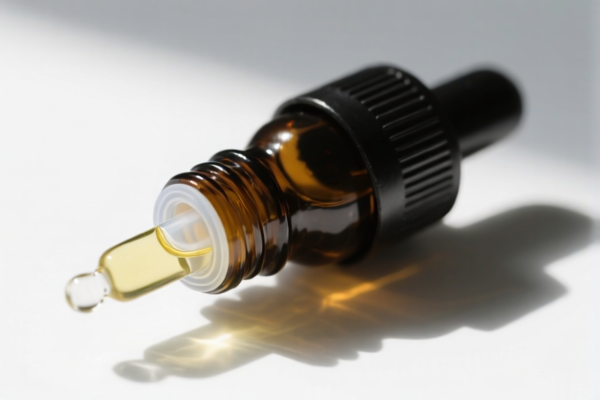

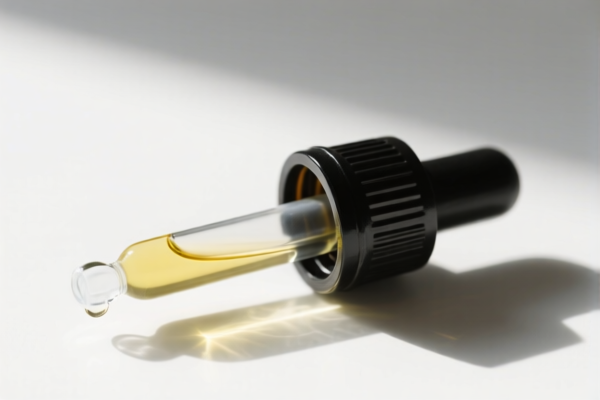
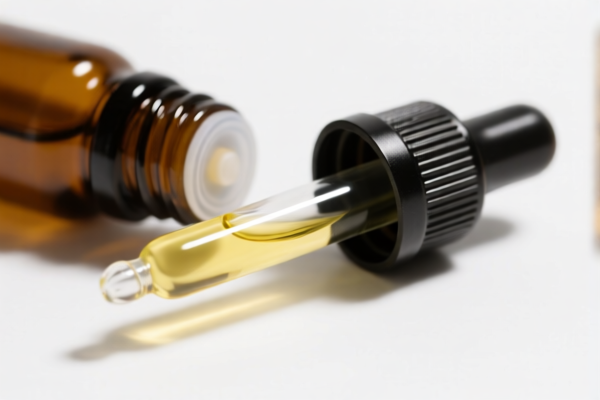
AI Analysis
🌻 Cold-Pressed Safflower Oil (Unrefined)
🌐 HS Code Reference & Customs Clearance Guide | 2026 Latest Tariff Analysis | Professional Entry Strategy
📌 I. Product Definition & Classification: Do You Truly Understand "Cold-Pressed Safflower Oil"?
Cold-pressed Safflower Oil is a vegetable oil extracted from the seeds of Carthamus tinctorius through mechanical pressing at low temperatures, without chemical solvents or high-heat refining. It retains natural nutrients, antioxidants, and a distinct flavor.
In international trade, the classification depends heavily on its processing state (Crude vs. Refined) and origin (Safflower vs. Sunflower/Cottonseed). Since the input specifies "Safflower Oil", we focus strictly on HS Code 1512.
⚠️ Critical Distinction:
- "Crude Oil": Unrefined, possibly degummed but not bleached, deodorized, or fully refined. This includes "Cold-Pressed" oils unless they undergo significant chemical modification.
- "Other": Oils that are refined but not chemically modified, or specific fractions not classified as crude.
- Key Trigger: If the oil is "Crude" (unrefined), it falls under1512.11. If it is "Other" (e.g., refined but not chemically modified, or a specific fraction), it may fall under1512.19.
- Note: "Cold-pressed" usually implies crude or minimally processed oil. If it is merely "refined" (bleached/deodorized) but not chemically modified, it still belongs to Chapter 15, but the specific subheading depends on whether it is "Crude" or "Other".
📦 II. HS Code Classification Details (2026 Latest Tariff Authority Comparison)
| HS Code | Product Description | Application Scenario | Processing State |
|---|---|---|---|
1512.11.00.40 |
Sunflower-seed or Safflower oil, Crude oil, whether or not degummed | Cold-pressed, unrefined safflower oil, unbleached, undeodorized | ✅ Crude (Unrefined) |
1512.19.00.40 |
Sunflower-seed or Safflower oil, Other | Refined safflower oil (bleached/deodorized) but not chemically modified | ✅ Other (Refined) |
1507.90.40.40 |
Soybean oil, Other (Fully refined, washed, bleached, deodorized) | Incorrect for Safflower. Only for Soybean Oil. | ❌ N/A |
1507.10.00.00 |
Soybean oil, Crude | Incorrect for Safflower. Only for Soybean Oil. | ❌ N/A |
🔍 Key Reminder:
- Since your product is Safflower Oil, it cannot be classified under1507(Soybean Oil).
- Cold-pressed typically means Crude (1512.11.00.40). If it is refined (e.g., for cooking) but not chemically modified, it falls under1512.19.00.40.
- Do NOT use Soybean codes (1507.xxxx) for Safflower Oil. This is a common and costly error.
💰 III. 2026 Latest Tariff Rate Details (Including Additional Duties & Policy Add-ons)
✅ Applicable Country: United States (US)
✅ Origin: China (CN) [Assumed based on typical 7.5% additional duty context]
✅ Effective Date: 2025/2026 Period
🎯 1. 1512.11.00.40 —— Safflower Oil, Crude (Cold-Pressed/Unrefined)
| Item | Content |
|---|---|
| Base Tariff | 1.7¢/kg + 3.4% (Ad Valorem) |
| Section 301 Additional Duty | +7.5% (China-specific) |
| Total Tariff Rate | 1.7¢/kg + 10.9% (3.4% + 7.5%) |
| Tax Calculation | (CIF Value × 10.9%) + ($0.017 × Weight in kg) |
| De Minimis Exemption | ❌ Not Applicable (Commercial shipment) |
| Legal Basis Path | HTSUS:1512.11.00.40 → USITC:Section 301 → Trade Policy: 7.5% |
📌 Explanation:
- The 1.7¢/kg is a specific duty per kilogram.
- The 10.9% is the total ad valorem rate (3.4% base + 7.5% additional).
- Total Tax:Base Tax + Additional Duty. This is a moderate-to-high duty for crude oils.
🎯 2. 1512.19.00.40 —— Safflower Oil, Other (Refined but not Chemically Modified)
| Item | Content |
|---|---|
| Base Tariff | 1.7¢/kg + 3.4% (Ad Valorem) |
| Section 301 Additional Duty | +7.5% (China-specific) |
| Total Tariff Rate | 1.7¢/kg + 10.9% |
| Tax Calculation | (CIF Value × 10.9%) + ($0.017 × Weight in kg) |
| De Minimis Exemption | ❌ Not Applicable |
| Legal Basis Path | HTSUS:1512.19.00.40 → USITC:Section 301 → Trade Policy: 7.5% |
📌 Note:
- The tax structure is identical to Crude Safflower Oil.
- Whether crude or refined (but not chemically modified), the duty rate remains 1.7¢/kg + 10.9%.
🛠️ IV. Customs Clearance Practical Advice (Pitfall Avoidance Guide)
✅ 1. Preparation Checklist (All Mandatory)
| Document | Required | Explanation |
|---|---|---|
| ✅ Product Specification Sheet | ✔️ | Must specify: "Safflower Oil", "Cold-Pressed", "Crude/Refined", "Free Fatty Acid (FFA) %" |
| ✅ Certificate of Analysis (COA) | ✔️ | Proves FFA %, Peroxide Value, and that it is Not Chemically Modified |
| ✅ Commercial Invoice | ✔️ | Clearly state "Safflower Oil, Crude/Refined", NOT "Vegetable Oil Blend" |
| ✅ Bill of Lading | ✔️ | Match weight and volume with invoice |
| ✅ Phytosanitary Certificate | ✔️ | Often required for plant-based oils to prove freedom from pests |
| ✅ FDA Prior Notice | ✔️ | Mandatory for food/feed imports into the US |
🚨 Critical Warning:
- If the oil is "Chemically Modified" (e.g., hydrogenated, interesterified), it would fall under Chapter 15, but likely a different subheading (e.g.,1518.00or1515.xxxxx).
- "Cold-Pressed" is NOT Chemically Modified. It is physical extraction. So it stays in1512.
- Do NOT misdeclare as Soybean Oil to avoid duties. The 7.5% additional duty applies to all Chinese-origin oils in this category.
✅ 2. Declaration Tips (Key Mnemonics)
🔥 "Safflower First, Crude vs. Other, Cold-Pressed is Crude!"
| Scenario | Correct HS Code | Mistake |
|---|---|---|
| Cold-Pressed, Unrefined Safflower Oil | 1512.11.00.40 |
Misdeclare as 1512.19 → Same tax, but risk of inspection if description is vague |
| Refined (Bleached/Deodorized) Safflower Oil | 1512.19.00.40 |
Misdeclare as Soybean Oil (1507) → Penalty + High Risk |
| Chemically Modified Safflower Oil | 1515.xxxxx or 1518.00 |
Misdeclare as 1512 → Major Customs Violation |
✅ 3. Special Cases Handling
| Case | Handling Advice |
|---|---|
| Blend with Soybean Oil? | If >50% safflower, declare as safflower. If blend, must declare all components. Do NOT hide soybean content. |
| Organic Certification? | Provides market advantage but no tariff benefit. Still pay 10.9%. |
| Small Sample (<$800)? | May qualify for De Minimis ($800 rule) if shipped via postal/courier, but NOT for commercial B2B shipments. |
| USDA/FSIS Requirements? | Ensure product complies with FDA food safety standards (FSMA). |
🌍 V. Global Market Comparison (2026 Latest)
| Country/Region | Recommended HS Code | Tariff (China Origin) | Key Requirements |
|---|---|---|---|
| 🇺🇸 USA | 1512.11.00.40 or 1512.19.00.40 |
1.7¢/kg + 10.9% | FDA Prior Notice, COA, Phytosanitary |
| 🇨🇳 China | 1512.11.00.00 |
10% (Import Duty) | CIQ Inspection, Quality Certificate |
| 🇪🇺 EU | 1512.11.00 |
0% (If no specific duty) | REACH, EFSA Compliance, Organic Cert (if claimed) |
| 🇯🇵 Japan | 1512.11.00 |
0-5% | JAS Certification (if organic), Food Sanitation Law |
📌 Conclusion:
- USA has the highest tariff due to the 7.5% additional duty.
- EU and Japan are more favorable, but compliance costs (certifications) are high.
📌 VI. Common Errors & Pitfall Guide (Lessons Learned)
❌ Mistake 1: Declaring "Cold-Pressed Safflower Oil" as "Vegetable Oil"
👉 Consequence: Customs rejects the generic description. Delay + Inspection + Potential Fine.
✅ Fix: Use exact HS Code description: "Safflower Oil, Crude, Cold-Pressed".
❌ Mistake 2: Using Soybean Oil codes (1507) for Safflower Oil
👉 Consequence: Fraud Alert. Soybean oil has different quotas and anti-dumping investigations. Heavy Penalties.
✅ Fix: Always use 1512 for Safflower Oil.
❌ Mistake 3: Claiming "Chemically Modified" when it is Cold-Pressed
👉 Consequence: Wrong HS Code. Cold-pressed is not chemically modified.
✅ Fix: Emphasize "Physical Extraction Only" in COA.
❌ Mistake 4: Ignoring FDA Prior Notice
👉 Consequence: Cargo held at port. No release until notice is submitted.
✅ Fix: Submit FDA Prior Notice before shipment arrival.
🎯 VII. Conclusion: Professional Declaration Saves Money!
🎯 Remember the Golden Rules:
🔹 "Safflower = 1512, Not 1507."
🔹 "Cold-Pressed = Crude (1512.11) unless refined."
🔹 "Total Tax = 1.7¢/kg + 10.9% for China Origin in US."
🔹 "FDA Prior Notice is Non-Negotiable."
📌 Pro Tip:
If you are importing < $800 via courier (e.g., FedEx, DHL), you may avoid duties under De Minimis, but ensure the commercial invoice is accurate. For B2B shipments, plan for 10.9% + 1.7¢/kg.
📣 Immediate Action:
📞 Consult a licensed customs broker.
📄 Submit FDA Prior Notice immediately upon shipment.
📑 Prepare Certificate of Analysis (COA) proving "Cold-Pressed" and "Unrefined".
✨ Precision in Classification, Profit in Clearance!
💼 Your oil’s value starts with accurate HS Codes!
Customer Reviews
About HS Code Classification
The Harmonized System (HS) is an internationally standardized nomenclature developed by the World Customs Organization (WCO) to classify traded products. Over 200 countries use the HS system as the basis for customs tariffs, trade statistics, and import/export regulations.
Each HS code follows a hierarchical structure:
- Chapter (2 digits) — Broad category of goods (e.g., Chapter 84: Machinery and Mechanical Appliances)
- Heading (4 digits) — More specific grouping within the chapter
- Subheading (6 digits) — Internationally standardized breakdown, used by all WCO member countries
- National subdivisions (8-10 digits) — Country-specific extensions for further classification, such as US HTSUS 10-digit codes
Correct HS code classification is essential for smooth customs clearance, accurate duty payment, and compliance with trade regulations. Misclassification can lead to customs delays, overpayment of duties, or penalties.
When importing from CN to US, the applicable tariff rates may include:
- Most-Favored-Nation (MFN) rate — The standard duty rate applied to WTO members
- General rate — Applied to countries without trade agreements
- Trade remedy duties — Additional tariffs such as Section 301 (anti-dumping), Section 232 (national security), or countervailing duties
The information provided on this page is for reference purposes only. For official classification, please consult with your local customs authority or a licensed customs broker.