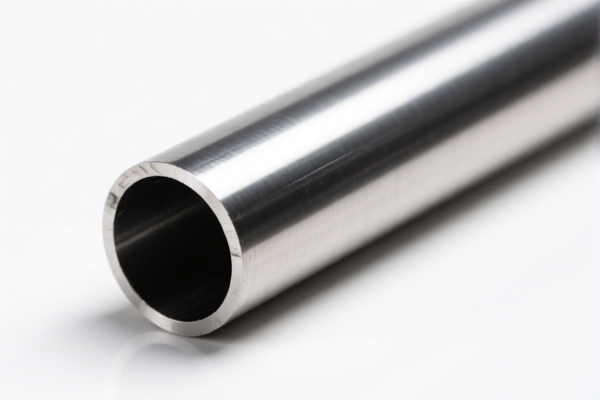
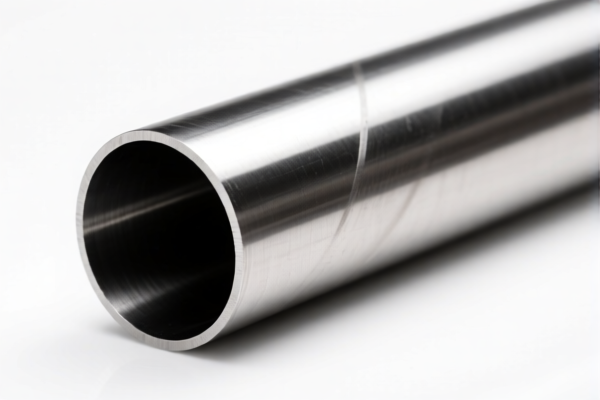
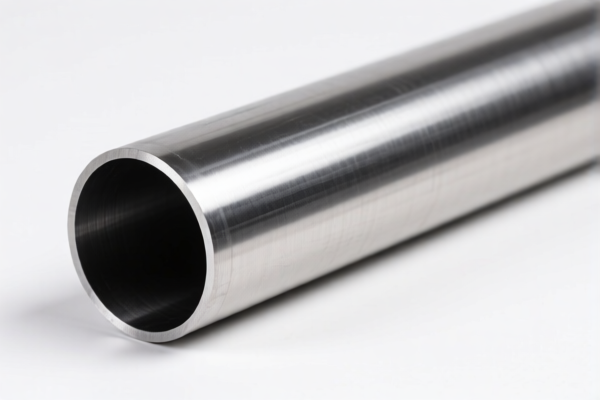
cold rolled alloy steel pipe for ball bearings
CN → US| HS Code | Tariff Rate | Origin | Destination | Doc |
|---|---|---|---|---|
| 7228501010 | 10.0% | CN | US | Official Doc |
| 7304591000 | 35.0% | CN | US | Official Doc |
| 8482992580 | 40.8% | CN | US | Official Doc |
| 7228601030 | 35.0% | CN | US | Official Doc |
| 8482990500 | 44.9% | CN | US | Official Doc |
Product Images

AI Analysis
🛠️ Cold Rolled Alloy Steel Pipe for Ball Bearings
🌐 HS Code Classification & Customs Clearance Guide | 2026 Latest Tariff Analysis | Expert Compliance Strategy
📌 One Product, Multiple HS Codes — Understand the Nuances to Avoid 40%+ Tariffs!
📌 一、Product Definition & Classification: What Exactly Is This Pipe?
A cold-rolled alloy steel pipe for ball bearings is a precision-engineered tubular component made from high-strength alloy steel, manufactured through cold rolling to achieve tight dimensional tolerances, smooth surface finish, and enhanced mechanical properties. It is used as a critical structural part in ball bearing inner/outer rings, bearing cages, or bearing shafts.
⚠️ Critical Distinction:
- If the pipe is used directly in bearing assembly (e.g., as a ring or housing), it’s treated as a bearing component — not just a general steel pipe.
- Even if it's "just a pipe," its intended use and material composition determine the HS code and tariff.
📦 二、HS Code Classification Breakdown (2026 Official Tariff Table)
| HS Code | Product Description | Tax Rate | Key Classification Logic |
|---|---|---|---|
7228.50.10.10 |
Cold-rolled steel pipe, steel material, tubular form, for bearings, matches alloy/non-alloy steel properties | 10.0% | Basic steel pipe, no special bearing classification |
7304.59.10.00 |
Cold-rolled steel pipe, steel material, circular cross-section, used in bearing manufacturing | 35.0% | Higher tariff due to bearing application + USITC + IEEPA |
8482.99.25.80 |
Cold-rolled steel pipe, bearing-related part, made of cold-rolled steel, matches metal bearing parts | 40.8% | Classified as bearing component — higher tariff |
7228.60.10.30 |
Cold-rolled steel pipe, made of bearing steel, shape: bar/rod/hollow drill rod, used in bearings | 35.0% | Material-specific: bearing steel triggers higher tariff |
8482.99.05.00 |
Cold-rolled steel pipe, bearing-related part, steel material, tubular form, used in ball bearing inner/outer rings | 44.9% | Highest tariff — full bearing component classification |
🔍 Why So Many Codes?
The same physical product can fall under different HS codes based on: - Material: Alloy steel vs. non-alloy steel - Shape: Circular tube vs. bar/rod - Intended Use: General pipe vs. bearing-specific part - Mention of "Bearing" in description
💰 三、2026 Tariff Breakdown (US Market | China Origin)
✅ Applicable Country: United States (US)
✅ Origin: China (CN)
✅ Effective Date: November 10, 2025 (inclusive)
✅ Legal Basis: IEEPA + USITC Section 301 + Footnote 9903.88.01
🎯 1. 7228.50.10.10 — Cold-Rolled Steel Pipe (General Use)
| Item | Detail |
|---|---|
| Base Duty | 0.0% |
| Additional Duty (USITC 301) | 0.0% |
| IEEPA Emergency Duty (122 Clause) | 10.0% |
| Total Tariff | 10.0% |
| Tax Calculation | CIF × 10% |
| De Minimis Relief | ✅ Yes (if value < $800) |
| Legal Path | IEEPA:9903.01.25 → IEEPA:9903.01.24 → 7228.50.10.10 |
📌 Explanation:
- This code applies when the pipe is not explicitly labeled for bearing use or lacks bearing-specific features.
- Only 10% IEEPA duty applies — lowest in the list.
🎯 2. 7304.59.10.00 — Cold-Rolled Steel Pipe (Bearing Application)
| Item | Detail |
|---|---|
| Base Duty | 0.0% |
| USITC 301 Duty | 25.0% |
| IEEPA 122 Clause Duty | 10.0% |
| Total Tariff | 35.0% |
| Tax Calculation | CIF × 35% |
| De Minimis Relief | ❌ No (denied under IEEPA) |
| Legal Path | IEEPA:9903.01.25 → USITC:7304.59.10.00 → FOOTNOTE:9903.88.01 |
📌 Why 35%?
- The "for bearing use" description triggers USITC 301 (25%) + IEEPA 122 Clause (10%)
- No de minimis relief — even small shipments face full duty
🎯 3. 8482.99.25.80 — Bearing-Related Part (Cold-Rolled Steel Pipe)
| Item | Detail |
|---|---|
| Base Duty | 5.8% |
| USITC 301 Duty | 25.0% |
| IEEPA 122 Clause Duty | 10.0% |
| Total Tariff | 40.8% |
| Tax Calculation | CIF × 40.8% |
| De Minimis Relief | ❌ No |
| Legal Path | IEEPA:9903.01.25 → USITC:8482.99.25.80 → FOOTNOTE:9903.88.01 |
📌 Why Higher?
- Classified as "bearing-related component" — more specific than general pipe
- 5.8% base duty + 25% + 10% = 40.8%
- Highest tariff for bearing-related parts
🎯 4. 7228.60.10.30 — Cold-Rolled Steel Pipe (Bearing Steel Material)
| Item | Detail |
|---|---|
| Base Duty | 0.0% |
| USITC 301 Duty | 25.0% |
| IEEPA 122 Clause Duty | 10.0% |
| Total Tariff | 35.0% |
| Tax Calculation | CIF × 35% |
| De Minimis Relief | ❌ No |
| Legal Path | IEEPA:9903.01.25 → USITC:7228.60.10.30 → FOOTNOTE:9903.88.01 |
📌 Key Trigger:
- "Bearing steel" material → automatically triggers USITC 301 duty
- Even if not explicitly for bearing use, material type matters
🎯 5. 8482.99.05.00 — Bearing Component (Inner/Outer Ring Use)
| Item | Detail |
|---|---|
| Base Duty | 9.9% |
| USITC 301 Duty | 25.0% |
| IEEPA 122 Clause Duty | 10.0% |
| Total Tariff | 44.9% |
| Tax Calculation | CIF × 44.9% |
| De Minimis Relief | ❌ No |
| Legal Path | IEEPA:9903.01.25 → USITC:8482.99.05.00 → FOOTNOTE:9903.88.01 |
📌 Why the Highest?
- Explicitly used in ball bearing inner/outer rings → full bearing component treatment
- 9.9% base duty + 25% + 10% = 44.9%
- Most punitive tariff — must avoid this code if possible
🛠️ 四、Customs Clearance Best Practices (Pro Tips)
✅ 1. Essential Documentation (Must-Have)
| Document | Required? | Purpose |
|---|---|---|
| ✅ Product Specification Sheet | ✔️ | Material type, hardness, dimensions, tolerance |
| ✅ Manufacturing Process Flow | ✔️ | Prove cold-rolled, not hot-rolled |
| ✅ Technical Drawings / CAD Files | ✔️ | Show shape, cross-section, intended use |
| ✅ Commercial Invoice | ✔️ | Must state "for ball bearing use" or "not for bearing use" clearly |
| ✅ Certificate of Origin (CO) | ✔️ | If origin is not China, may qualify for lower duty |
| ✅ Material Test Report (Chemical & Mechanical) | ✔️ | Prove "bearing steel" vs. "general alloy steel" |
| ✅ Packing List | ✔️ | Show no拆分 (no separation of parts) |
✅ 2.申报技巧(申报口诀)
🔥 "Use Case Rules, Material Matters, Name Matters, Avoid 45%!"
| Scenario | Correct HS Code | Wrong Code | Risk |
|---|---|---|---|
| Pipe used in bearing rings | 8482.99.05.00 |
7228.50.10.10 |
44.9% vs 10% → 34.9% difference! |
| Made of bearing steel | 7228.60.10.30 |
7228.50.10.10 |
35% vs 10% → 25% penalty |
| Not used in bearing | 7228.50.10.10 |
8482.99.05.00 |
10% vs 44.9% → 34.9% saved |
✅ Pro Tip:
- If the pipe is not actually used in a bearing, do NOT use "for ball bearings" in description.
- Use "structural pipe", "steel tubing", or "general industrial use" instead.
✅ 3. Special Cases & Mitigation
| Situation | Solution |
|---|---|
| OEM Custom Pipe | Provide customer order + design drawings to prove non-bearing use |
| Used in hybrid bearing systems | Declare as "component" — avoid "bearing" in description |
| Shipments under $800 | Can use de minimis only if code is 7228.50.10.10 — not valid for 35%+ codes |
| Transshipment via Vietnam/Mexico | Apply for IEEPA exemption — if origin is not China, tariff drops to 0–5% |
🌍 五、Global Market Comparison (2026)
| Country | Recommended HS Code | Tariff | Certification | Notes |
|---|---|---|---|---|
| 🇺🇸 USA | 7228.50.10.10 |
10% (if not bearing use) | None | 35%+ if bearing-related |
| 🇨🇳 China | 7228.50.10.10 |
5% | CCC | No extra duties |
| 🇪🇺 EU | 7304.59.10.00 |
0% (if CE) | CE | No IEEPA/USITC |
| 🇦🇺 Australia | 7304.59.10.00 |
5% | RCM | No extra duties |
| 🇯🇵 Japan | 7304.59.10.00 |
0% | PSE | No extra duties |
📌 Key Insight:
- Only the US imposes IEEPA + USITC duties on Chinese-origin steel pipes
- EU, Australia, Japan, China have no additional tariffs — ideal for export
📌 六、Common Mistakes & How to Avoid Them
❌ Mistake 1: Using “for ball bearings” in invoice even if not used in bearings
👉 Result: Triggered 8482.99.05.00 → 44.9% duty → huge overpayment
❌ Mistake 2: Not providing material test report
👉 Result: Customs may assume “bearing steel” → higher tariff
❌ Mistake 3: Splitting shipment into “pipe + bearing ring”
👉 Result: Each part taxed separately → up to 89.8% total
❌ Mistake 4: Using “steel pipe” without specifying shape or use
👉 Result: Customs may classify as bearing part → higher duty
✅ Correct Declaration Example:
"Cold-Rolled Alloy Steel Pipe, Circular Cross-Section, 20mm OD, 18mm ID, 1000mm Length, for Structural Use in Industrial Machinery, Not for Bearing Application, Material: AISI 4140, Not Bearing Steel"
🎯 七、Final Verdict: How to Minimize Tariffs
🔹 Goal: Avoid
8482.99.05.00and7304.59.10.00if possible
🔹 Best Strategy:
- Use7228.50.10.10if pipe is not used in bearings
- Avoid “bearing” in description
- Provide material test reports to prove non-bearing steel
- Consider re-export via third country (e.g., Vietnam) to avoid IEEPA
📣 Call to Action: Protect Your Profit Margin!
📞 Contact a US Customs Specialist + Request HS Code Pre-Ruling
🚀 Get a legal opinion on your product’s classification before shipment
💼 Save 30–40% in tariffs — it’s worth the $500–$1,500 fee
✨ Pro Tip:
If your pipe is not actually used in a bearing, never say so in the invoice.
"For industrial structural use" is safer than "for ball bearings".
🎯 Summary: The 5 Key Rules for Cold-Rolled Steel Pipe
- 📌 Use matters more than shape — even a pipe can be a bearing part
- 📌 Material matters — "bearing steel" = 35%+ tariff
- 📌 Don’t use "bearing" in description unless it’s truly used in bearings
- 📌 De minimis only applies to
7228.50.10.10— not to 35%+ codes - 📌 Pre-ruling is your best friend — avoid costly mistakes
💼 Your product’s HS code is not just a number — it’s your profit margin!
🛡️ Classify right, pay less, ship faster, stay compliant.
🌟 Professional Customs, Precision Classification, Zero Surprises!
Customer Reviews
About HS Code Classification
The Harmonized System (HS) is an internationally standardized nomenclature developed by the World Customs Organization (WCO) to classify traded products. Over 200 countries use the HS system as the basis for customs tariffs, trade statistics, and import/export regulations.
Each HS code follows a hierarchical structure:
- Chapter (2 digits) — Broad category of goods (e.g., Chapter 84: Machinery and Mechanical Appliances)
- Heading (4 digits) — More specific grouping within the chapter
- Subheading (6 digits) — Internationally standardized breakdown, used by all WCO member countries
- National subdivisions (8-10 digits) — Country-specific extensions for further classification, such as US HTSUS 10-digit codes
Correct HS code classification is essential for smooth customs clearance, accurate duty payment, and compliance with trade regulations. Misclassification can lead to customs delays, overpayment of duties, or penalties.
When importing from CN to US, the applicable tariff rates may include:
- Most-Favored-Nation (MFN) rate — The standard duty rate applied to WTO members
- General rate — Applied to countries without trade agreements
- Trade remedy duties — Additional tariffs such as Section 301 (anti-dumping), Section 232 (national security), or countervailing duties
The information provided on this page is for reference purposes only. For official classification, please consult with your local customs authority or a licensed customs broker.