color duplicating film positive film
CN → US| HS Code | Tariff Rate | Origin | Destination | Doc |
|---|---|---|---|---|
| 3701910030 | 38.7% | CN | US | Official Doc |
| 3701910060 | 38.7% | CN | US | Official Doc |
| 3705000000 | 35.0% | CN | US | Official Doc |
| 3702530030 | 38.7% | CN | US | Official Doc |
| 3702530060 | 38.7% | CN | US | Official Doc |
Product Images
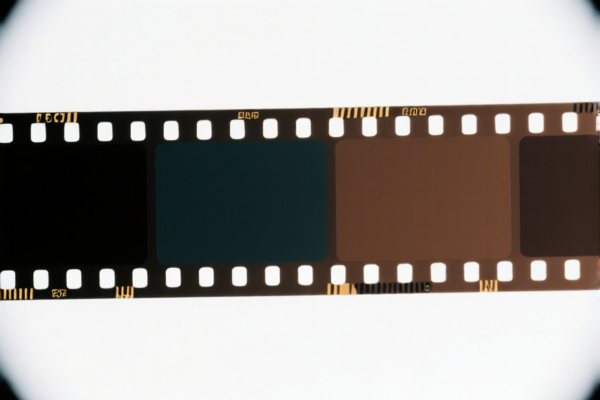
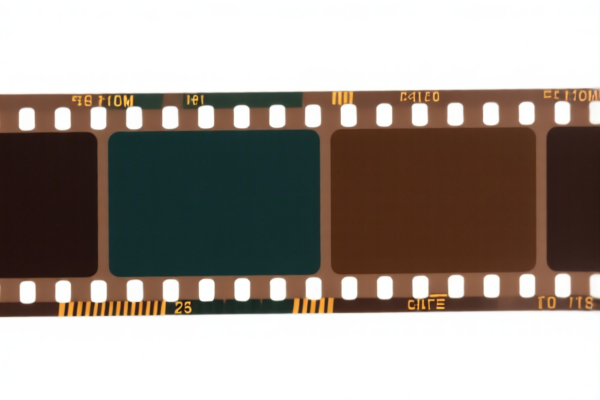
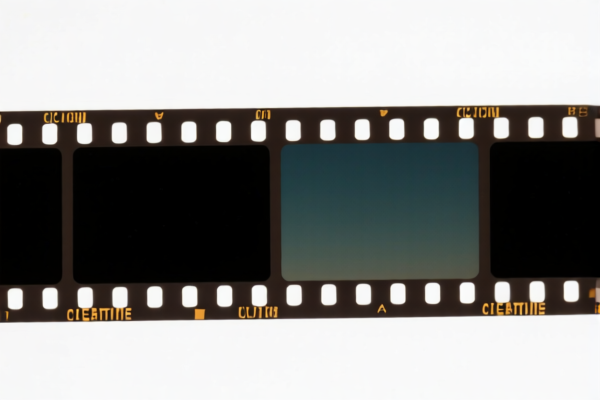

AI Analysis
🎞️ Color Duplicating Film / Positive Film (Photochromogenic Materials)
🌐 HS Code Reference & Clearance Guide | 2026 Latest Tariff Analysis | Professional Customs Strategy
📌 I. Product Definition & Classification: What Exactly Is "Color Duplicating Film"?
Color Duplicating Film (often referred to as Positive Film or Reversal Film in specific contexts) is a specialized photographic material. In international trade, its classification hinges on two critical factors: 1. State of Exposure: Is it unexposed (raw material) or exposed/developed (finished image)? 2. Physical Form: Is it in the form of a plate (sheet/film stock) or a roll (loaded cartridge/spool)?
⚠️ Key Distinction Point:
- Unexposed Raw Material (Sensitized, not yet used for photography) → Falls under Chapter 37 Subheadings 3701 (Plates/Films) or 3702 (Rolls/Sheets).
- Exposed & Developed Film (Contains final image, not for further exposure) → Falls under 3705.
- Not Movie Film: These are specifically for still photography or documentary purposes, not cinema projection (Chapter 3706).
📦 II. HS Code Classification Details (2026 Latest Tariff Authority Cross-Reference)
The following HS Codes are derived strictly from the provided data context. All apply to US Imports with China Origin (implied by the tax structure).
| HS Code | Product Description | Application Scenario | Status | Form Factor |
|---|---|---|---|---|
3701.91.00.30 |
Color duplicating film, positive | Color photography, sensitized, unexposed | ✅ Unexposed | Plates/Films (Sheet stock) |
3701.91.00.60 |
Color duplicating film, positive | Color photography, non-paper/non-textile sensitive material | ✅ Unexposed | Plates/Films (Sheet stock) |
3705.00.00.00 |
Color duplicating film, positive | Exposed & Developed photographic film, non-movie | ✅ Exposed/Developed | Any form (Finished product) |
3702.53.00.30 |
Color photographic film roll | Sensitized rolled or sheet form | ✅ Unexposed | Rolls (Ready for loading or loaded) |
3702.53.00.60 |
Color photographic film roll | Sensitized, unexposed, non-paper/non-textile material | ✅ Unexposed | Rolls (Ready for loading or loaded) |
🔍 Critical Note:
-3701vs3702:3701typically covers plates and films in sheet/plate form.3702covers film in rolls or sheaves.
-3705is Unique: This is the only code for developed film. If you ship a roll that has already been exposed and developed (e.g., test shots or archival positives), you MUST use3705.00.00.00. Using an unexposed code for developed film is a misdeclaration.
💰 III. 2026 Latest Tariff Rate Breakdown (Including Surcharges & Policy Add-ons)
✅ Applicable Country: United States (US)
✅ Origin: China (CN)
✅ Effective Date: Current rates applicable as per 2026 trade policy context.
🎯 1. Unexposed Color Duplicating Film (Codes: 3701.91.00.30, 3701.91.00.60, 3702.53.00.30, 3702.53.00.60)
| Item | Detail |
|---|---|
| Base Tariff | 3.7% |
| Section 301 Surcharge | +25.0% (USITC Footnote 9903.88.01 equivalent) |
| Section 122 Tariff | +10.0% (Specific policy surcharge cited in data) |
| Total Tariff Rate | 38.7% |
| Tax Calculation | CIF Value × 38.7% |
| De Minimis Exemption | ❌ Not Eligible (High tariff burden prevents low-value exemption) |
| Legal Basis Path | Base: 3.7% → Section 301: 25% → Section 122: 10% → Total: 38.7% |
📌 Explanation:
- The 3.7% is the standard Most Favored Nation (MFN) rate for photographic materials.
- The 25% is the standard retaliatory tariff under US Trade Law Section 301 for Chinese goods.
- The 10% is an additional specific surcharge (Section 122) applied to this category.
- Total Liability: 38.7%. This is a high-cost category. Margin erosion is significant.
🎯 2. Exposed & Developed Film (Code: 3705.00.00.00)
| Item | Detail |
|---|---|
| Base Tariff | 0.0% |
| Section 301 Surcharge | +25.0% |
| Section 122 Tariff | +10.0% |
| Total Tariff Rate | 35.0% |
| Tax Calculation | CIF Value × 35.0% |
| De Minimis Exemption | ❌ Not Eligible |
| Legal Basis Path | Base: 0.0% → Section 301: 25% → Section 122: 10% → Total: 35.0% |
📌 Key Advantage:
- Unlike unexposed film, exposed/developed film has a 0% base rate.
- Total Liability: 35.0%.
- Savings: 3.7% lower than unexposed film. While small, it is a distinct classification difference.
🛠️ IV. Customs Clearance Practical Advice (Risk Avoidance Guide)
✅ 1. Documentation Checklist (Non-negotiable)
| Document | Required? | Purpose |
|---|---|---|
| Product Specification Sheet | ✅ Yes | Must clearly state: "Sensitized," "Unexposed," or "Exposed & Developed." |
| Commercial Invoice | ✅ Yes | Must match HS Code description exactly (e.g., "Color Positive Film, Unexposed"). |
| Packing List | ✅ Yes | Itemize rolls vs. plates. Avoid mixing exposed and unexposed in one container without clear separation. |
| Certificate of Origin (CO) | ✅ Yes | Required to confirm China origin and apply surcharges correctly. |
| Photos of Product | ✅ Yes | Show packaging and label. If labeled "Kodak Ektachrome," it helps prove nature of goods. |
| HS Code Pre-Ruling | ✅ Recommended | Due to high tariffs (35-38.7%), a pre-ruling confirms classification and avoids audits. |
✅ 2. Declaration Strategy (Key Mantras)
🔥 "State the State: Unexposed vs. Exposed is King!"
| Scenario | Correct Declaration | Wrong Declaration | Consequence |
|---|---|---|---|
| Raw Roll/Sheet | 3701.91.00.30 or 3702.53.00.30 + "Unexposed, Sensitized" |
"Photographic Film" (Vague) | Customs may assume exposed → Higher scrutiny or delay. |
| Already Developed | 3705.00.00.00 + "Exposed, Developed, Positive" |
3702... (Unexposed codes) |
Misdeclaration Penalty. 35% vs 38.7% + potential fines. |
| Movie Film? | Not Applicable (Check Ch 3706) | Classifying as Still Film | Wrong HS Code → 100% Duty evasion charge. |
✅ 3. Special Handling Tips
| Situation | Recommendation |
|---|---|
| Mixing Rolls and Sheets | Do not mix 3701 (plates) and 3702 (rolls) in one line item unless invoiced separately. |
| Small Sample Shipments | Even for small samples, the 38.7% tariff applies. De Minimis ($800) does NOT apply due to the nature of the goods and country of origin restrictions in this tariff bracket. |
| Branded Film | Ensure the brand name (Kodak, Fujifilm, Ilford) is declared. Some brands may have specific import licenses or restrictions. |
| Shelf Life | Film expires. Customs may question "newness." Provide manufacturing date on invoice to prove it is current stock, not aged inventory causing quality disputes. |
🌍 V. Global Market Comparison (2026 Context)
| Country/Region | Recommended HS Code | Approx. Tariff (China Origin) | Remarks |
|---|---|---|---|
| 🇺🇸 USA | 3701.91.00.30 / 3705.00.00.00 |
35.0% - 38.7% | High Section 301 + Section 122 duties. |
| 🇨🇳 China | 3701.91 / 3705.00 |
~0-5% | Generally low base duty, no US surcharges. |
| 🇪🇺 EU | 3701.91 / 3705.00 |
0-6.5% | No Section 301 equivalent. Standard MFN applies. |
| 🇬🇧 UK | 3701.91 / 3705.00 |
0-6.5% | Post-Brexit tariffs similar to EU MFN. |
📌 Conclusion:
- USA is the most expensive market for Chinese-made photographic film due to layered tariffs (301 + 122).
- EU/UK are significantly more cost-effective (~6-7% lower total duty burden on base).
- Strategy: If shipping from China to the US, factor in the 35-39% duty in your pricing model. There is no workaround for these specific HS codes under current US policy.
📌 VI. Common Errors & Pitfalls (Lessons Learned)
❌ Error 1: Declaring "Photographic Film" generally without specifying "Color Duplicating" or "Positive".
👉 Consequence: Customs may classify it under a higher-duty general category or request excessive documentation.
❌ Error 2: Misclassifying Exposed/Developed film as Unexposed (3701/3702).
👉 Consequence: While the rate is slightly higher for unexposed (38.7% vs 35%), the act of misdeclaring the state of the goods is a false declaration. It can lead to seizures if the product is clearly processed.
❌ Error 3: Ignoring Section 122 Tariff.
👉 Consequence: Many brokers forget the additional 10% surcharge specific to this data set. Always budget for 38.7%, not just 28.7% (301).
❌ Error 4: Assuming "Negative Film" and "Positive Film" have different HS codes.
👉 Consequence: In this dataset, 3701.91 covers "Color" films broadly. Both positive and negative color films often fall under the same 4-digit heading, but the 8-digit subheading (.30 vs .60) depends on form (plate vs sheet). Ensure the form matches.
✅ Correct Practice:
"Color Duplicating Film, Positive, Unexposed, Roll Form, 35mm, Kodak Ektachrome E100" →
3702.53.00.30
"Color Duplicating Film, Positive, Exposed & Developed, Scanned" →3705.00.00.00
🎯 VII. Conclusion: Professional Declaration, Cost Control, Efficiency
🎯 Remember the Mantras:
🔹 "Unexposed = 38.7%, Exposed = 35.0%. State it clearly!"
🔹 "No De Minimis for Chinese Film to US. Budget for Tariffs!"
🔹 "HS Code 3701/3702 for Raw, 3705 for Finished. Don't Mix!"
📌 Pro Tip:
If your film is not from China (e.g., shipped from Japan or the Philippines), the 25% Section 301 and 10% Section 122 surcharges do not apply.
- Japan Origin: Likely 0-6% total duty.
- Strategy: Consider transshipment or final processing in a non-China country if volumes are large, to avoid the US punitive tariffs. However, ensure substantial transformation rules are met to change the Country of Origin legally.
📣 Immediate Action Required:
📞 Verify your HS Code with a licensed US customs broker.
📦 Label your packages clearly: "UNEXPOSED PHOTOGRAPHIC FILM" or "EXPOSED DEVELOPED FILM."
💰 Calculate landed cost: CIF + 38.7% (if unexposed) + Duty + Brokerage Fees.
✨ Precision in Classification is Profitability in Trade!
💼 Every percentage point of tariff is a point of margin loss. Know your code.
Customer Reviews
About HS Code Classification
The Harmonized System (HS) is an internationally standardized nomenclature developed by the World Customs Organization (WCO) to classify traded products. Over 200 countries use the HS system as the basis for customs tariffs, trade statistics, and import/export regulations.
Each HS code follows a hierarchical structure:
- Chapter (2 digits) — Broad category of goods (e.g., Chapter 84: Machinery and Mechanical Appliances)
- Heading (4 digits) — More specific grouping within the chapter
- Subheading (6 digits) — Internationally standardized breakdown, used by all WCO member countries
- National subdivisions (8-10 digits) — Country-specific extensions for further classification, such as US HTSUS 10-digit codes
Correct HS code classification is essential for smooth customs clearance, accurate duty payment, and compliance with trade regulations. Misclassification can lead to customs delays, overpayment of duties, or penalties.
When importing from CN to US, the applicable tariff rates may include:
- Most-Favored-Nation (MFN) rate — The standard duty rate applied to WTO members
- General rate — Applied to countries without trade agreements
- Trade remedy duties — Additional tariffs such as Section 301 (anti-dumping), Section 232 (national security), or countervailing duties
The information provided on this page is for reference purposes only. For official classification, please consult with your local customs authority or a licensed customs broker.