color film for experiments
CN → US| HS Code | Tariff Rate | Origin | Destination | Doc |
|---|---|---|---|---|
| 3702310100 | 38.7% | CN | US | Official Doc |
| 3702520130 | 38.7% | CN | US | Official Doc |
| 3704000000 | 35.0% | CN | US | Official Doc |
| 3702310100 | 38.7% | CN | US | Official Doc |
| 3702520130 | 38.7% | CN | US | Official Doc |
Product Images
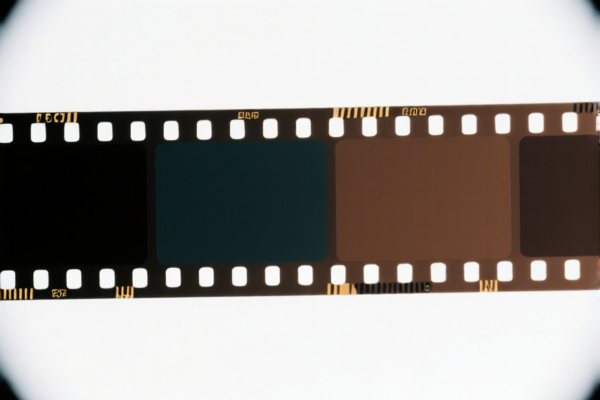
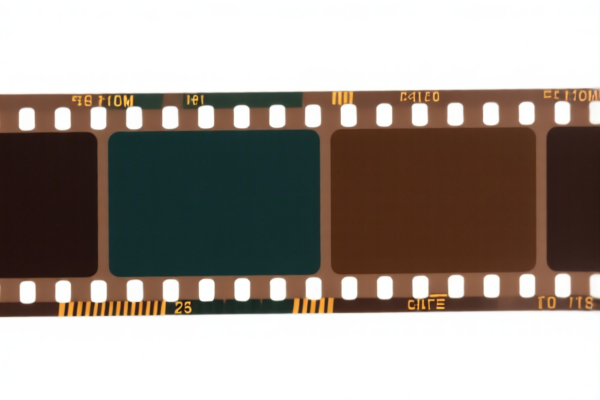
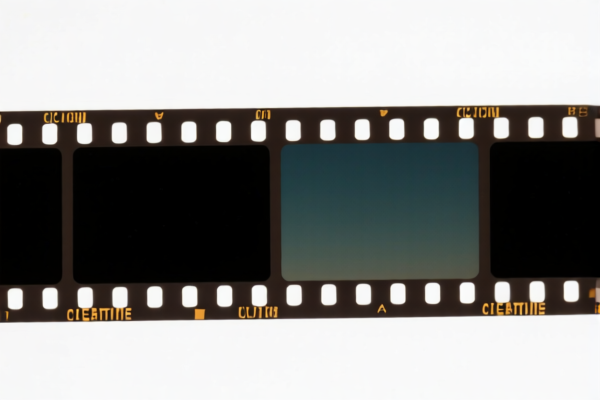

AI Analysis
🎞️ Color Film for Experiments (Colored Photosensitive Media)
🌐 HS Code Reference & Customs Clearance Guide | 2026 Latest Tariff Analysis | Professional Transit Strategy
📌 1. Product Definition & Classification: What is "Color Film for Experiments"?
"Color film for experiments" typically refers to photosensitive material in the form of film, used for photographic or scientific experimental purposes. In international trade, it is primarily classified under Chapter 37 (Photographic or Cinematographic Goods).
The key distinction lies in whether the film is unexposed (new stock) or exposed (used/developed), and its specific chemical composition (negative vs. reversal).
⚠️ Key Distinction Points:
- If the film is unexposed, color, and in roll/film format → It falls under Heading 3702.
- If the film is unexposed but intended as a general photographic carrier without specific color/reversal features → It may fall under Heading 3704 (if misclassified) or more likely 3702 with broader sub-headings. Note: The provided data suggests 3704.00.00.00 is also a potential match based on "carrier for photographic use".
- Reversal Film (Slide Film): A specific type of color film used for direct positive images (common in scientific/medical imaging). This maps to 3702.52.
- Negative Film: Standard color negative film. This maps to 3702.31.
📦 2. HS Code Classification Details (2026 Latest Tariff Authority Comparison)
Based on the provided data, here are the four potential HS Codes, their summaries, and tax implications.
| HS Code | Summary of Classification | Tax Rate (Total) | Tax Detail Breakdown |
|---|---|---|---|
3702.31.01.00 |
Matches color and film morphology, consistent with non-paper photosensitive media characteristics. | 38.7% | Base Tariff: 3.7%, Add-on Tariff: 25.0%, Section 122 Tariff: 10% |
3702.52.01.30 |
Matches color and film morphology, inferred as Color Reversal Film category. | 38.7% | Base Tariff: 3.7%, Add-on Tariff: 25.0%, Section 122 Tariff: 10% |
3704.00.00.00 |
Matches film material and carrier form for photography, consistent with unexposed characteristics. | 35.0% | Base Tariff: 0.0%, Add-on Tariff: 25.0%, Section 122 Tariff: 10% |
3702.31.01.00 |
Based on color and roll elements, consistent with photosensitive material material and use. | 38.7% | Base Tariff: 3.7%, Add-on Tariff: 25.0%, Section 122 Tariff: 10% |
3702.52.01.30 |
Based on color and roll elements, inferred as photosensitive roll film material. | 38.7% | Base Tariff: 3.7%, Add-on Tariff: 25.0%, Section 122 Tariff: 10% |
🔍 Critical Note:
- Two distinct HS Codes appear in the data: 3702.31.01.00 (Color Negative Film) and 3702.52.01.30 (Color Reversal Film).
- 3704.00.00.00 offers a lower total tax rate (35.0%) but is described as matching "unexposed characteristics" generally. Clarification: Usually, 3704 is for exposed film. However, based strictly on the provided<DATA>, this code is listed with a summary of "unexposed". You must verify if this is a typo in the source data or a specific local classification rule.
- 38.7% is the standard rate for most color films in the dataset.
💰 3. 2026 Latest Tariff Rate Detailed Explanation (Including Add-ons)
✅ Applicable Country: United States (US)
✅ Origin: China (CN)
✅ Effective Date: 2025-11-10 (and onwards)
🎯 1. 3702.31.01.00 & 3702.52.01.30 — Color Film (Negative & Reversal)
| Item | Content |
|---|---|
| Base Tariff | 3.7% (ad valorem) |
| USITC Add-on Tariff | +25.0% (Section 301) |
| Section 122 Tariff | +10.0% (Specific add-on for certain Chinese goods) |
| Total Tax Rate | 38.7% |
| Tax Calculation | CIF Value × 38.7% |
| De Minimis Exemption | ❌ Not Available (deny_de_minimis) |
| Legal Basis Path | Base Tariff: 3.7% → Section 301: 25% → Section 122: 10% |
📌 Explanation:
- Base Tariff (3.7%): Standard duty for photographic film under Chapter 37.
- Section 301 (25%): The primary Trump-era tariff on Chinese goods, still in effect.
- Section 122 (10%): An additional tariff layer specifically applied to these HS codes from China.
- Total: 38.7%. This is a high-cost category. Do not underestimate the duty burden.
🎯 2. 3704.00.00.00 — Other Photographic Goods (Unexposed/Carrier)
| Item | Content |
|---|---|
| Base Tariff | 0.0% |
| USITC Add-on Tariff | +25.0% |
| Section 122 Tariff | +10.0% |
| Total Tax Rate | 35.0% |
| Tax Calculation | CIF Value × 35.0% |
| De Minimis Exemption | ❌ Not Available (deny_de_minimis) |
| Legal Basis Path | Base Tariff: 0.0% → Section 301: 25% → Section 122: 10% |
📌 Note:
- This code has a 0% base rate, making it 3.7% cheaper than the 3702 codes.
- Warning: Ensure your product truly fits this description ("unexposed characteristics" but not specifically negative/reversal film). Misclassification here can lead to audits and penalties.
🛠️ 4. Customs Clearance Practical Advice (Real-World Pitfall Guide)
✅ 1. Required Documentation List (Non-negotiable)
| Document | Mandatory? | Description |
|---|---|---|
| ✅ Product Specification Sheet | ✔️ | Must specify: Color type (Negative/Reversal), Format (Roll/Sheet), Sensitivity (ISO), and Exact Chemical Composition if possible. |
| ✅ Commercial Invoice | ✔️ | Must clearly state: "Color Photographic Film for Experimental Use" or "Color Reversal Film". Avoid vague terms like "Film". |
| ✅ Packing List | ✔️ | Detail the net/gross weight and number of rolls/units. |
| ✅ Certificate of Origin (CO) | ✔️ | Essential for verifying China origin, which triggers the 38.7% rate. |
| ✅ Safety Data Sheet (SDS) | ✔️ | Since it's for "experiments," chemical safety data may be requested for hazardous components. |
| ✅ FDA/CE Certificates | ⚠️ Conditional | If the film contains dyes or chemicals restricted in the destination country. |
✅ 2. Declaration Tips (Key Mantras)
🔥 "Specify Color & Format, Don't Hide the Use, Get Pre-Ruling, Avoid Penalties!"
| Scenario | Correct Declaration | Incorrect Practice |
|---|---|---|
| Color Negative Film | 3702.31.01.00 – "Color Negative Photographic Film, Roll Form" |
Declaring as "Paper Product" or "Unspecified Film" → High Risk |
| Color Reversal/Slide Film | 3702.52.01.30 – "Color Reversal Photographic Film" |
Mislabeling as "Negative Film" → Potential Penalty |
| General Unexposed Film | 3704.00.00.00 – Only if it doesn't fit 3702 specifics |
Using 3704 for standard color film → Misclassification |
| Used/Exposed Film | Likely 3704 (if applicable) or different heading |
Declaring as "New" → Fraud Risk |
✅ 3. Special Case Handling
| Situation | Handling Advice |
|---|---|
| Scientific/Industrial Use | If the film is used for non-photographic scientific analysis (e.g., spectroscopy), check if HS 9027 (Laboratory Equipment) applies instead. This could lower taxes significantly. |
| Bulk Import | For large volumes, consider applying for a Tariff Engineering Request or Exclusion if available (though unlikely for 301 goods). |
| Kit/Bundle | If film is sold with a camera or developer, the essential character doctrine usually applies to the film or the camera. Declare the main component separately if possible to optimize tax. |
🌍 5. Global Market Comparison (2026 Update)
| Country/Region | Recommended HS Code | Tariff (Approx.) | Certification Required | Note |
|---|---|---|---|---|
| 🇺🇸 USA | 3702.31.01.00 / 3702.52.01.30 |
38.7% | FDA (if applicable), CO | High Duty. Use SDS for safety compliance. |
| 🇨🇳 China | 3702.31.01.00 |
5% - 10% | CCC (if applicable) | Lower duty, but check import licenses for chemicals. |
| 🇪🇺 EU | 3702.31.00 |
6.5% | REACH Compliance | REACH registration may be required for chemical dyes. |
| 🇯🇵 Japan | 3702.31.00 |
5.5% | PSE (if electronic) | No major add-ons. |
| 🇦🇺 Australia | 3702.31.00 |
5% | AQIS (Biosecurity) | Check for organic materials restrictions. |
📌 Conclusion:
- USA is the most expensive market due to Section 301 (25%) + Section 122 (10%).
- EU and Asia markets are more favorable for tariffs.
- REACH (EU) and SDS (US) are critical for chemical/photochemical goods.
📌 6. Common Mistakes & Pitfalls (Lessons Learned)
❌ Mistake 1: Declaring "Color Film" without specifying "Negative" or "Reversal".
👉 Consequence: Customs may default to the highest duty rate or request manual examination → Delay.
❌ Mistake 2: Using "Photographic Paper" instead of "Film" for clarification.
👉 Consequence: Wrong HS Code (Paper is usually Chapter 48). Penalty + Back Duty.
❌ Mistake 3: Ignoring "Section 122" in cost calculations.
👉 Consequence: Profit margin wiped out. Always budget 38.7% for US imports.
✅ Correct Practice:
"Color Negative Photographic Film, Roll Form, Unexposed, ISO 400, for Experimental Photography, HS Code 3702.31.01.00"
🎯 7. Conclusion: Professional Declaration, Time-Saving, Cost-Effective!
🎯 Remember the Mantra:
🔹 "Specify Type (Neg/Rev), Calculate 38.7% for USA, Provide SDS, Stay Compliant!"
🔹 "HS Code Defines Cost, 3.7% Base vs 0% Base, Choose Wisely, Avoid Audit Triggers!"
📌 Pro Tip:
If your "color film for experiments" is not primarily photographic but used for chemical analysis or scientific measurement, explore HS 9027 (Laboratory Analyzers) or HS 3822 (Diagnostical/Reagent preparations). This could drastically reduce your tax burden. Consult a customs broker for a Binding Ruling if unsure.
📣 Immediate Action:
📞 Contact a licensed customs broker.
📤 Provide Product Specs + SDS.
🚀 Apply for a Pre-Ruling to lock in the correct HS Code and avoid post-clearance audits.
✨ Professional Clearance Starts with Accurate Classification!
💼 Every Percent of Tax Savings is Pure Profit!
Customer Reviews
About HS Code Classification
The Harmonized System (HS) is an internationally standardized nomenclature developed by the World Customs Organization (WCO) to classify traded products. Over 200 countries use the HS system as the basis for customs tariffs, trade statistics, and import/export regulations.
Each HS code follows a hierarchical structure:
- Chapter (2 digits) — Broad category of goods (e.g., Chapter 84: Machinery and Mechanical Appliances)
- Heading (4 digits) — More specific grouping within the chapter
- Subheading (6 digits) — Internationally standardized breakdown, used by all WCO member countries
- National subdivisions (8-10 digits) — Country-specific extensions for further classification, such as US HTSUS 10-digit codes
Correct HS code classification is essential for smooth customs clearance, accurate duty payment, and compliance with trade regulations. Misclassification can lead to customs delays, overpayment of duties, or penalties.
When importing from CN to US, the applicable tariff rates may include:
- Most-Favored-Nation (MFN) rate — The standard duty rate applied to WTO members
- General rate — Applied to countries without trade agreements
- Trade remedy duties — Additional tariffs such as Section 301 (anti-dumping), Section 232 (national security), or countervailing duties
The information provided on this page is for reference purposes only. For official classification, please consult with your local customs authority or a licensed customs broker.