color film high stability
CN → US| HS Code | Tariff Rate | Origin | Destination | Doc |
|---|---|---|---|---|
| 3701910030 | 38.7% | CN | US | Official Doc |
| 3702520160 | 38.7% | CN | US | Official Doc |
| 3702550060 | 35.0% | CN | US | Official Doc |
| 3704000000 | 35.0% | CN | US | Official Doc |
| 3701910060 | 38.7% | CN | US | Official Doc |
Product Images
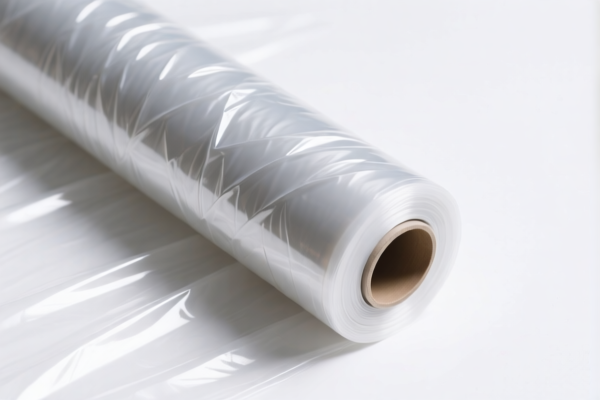
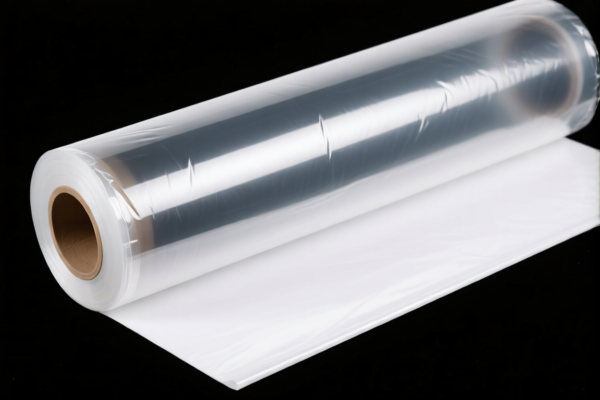
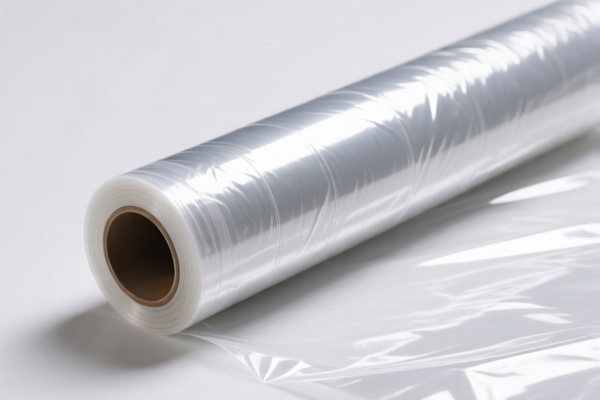
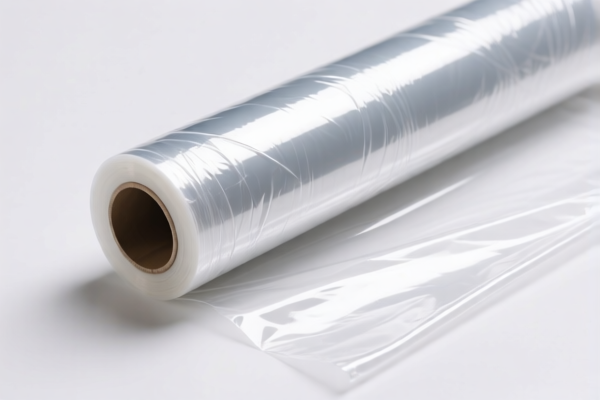
AI Analysis
🎞️ Color Film "High Stability" (High Sensitivity) | US Customs Classification & Duty Guide
🌐 HS Code Reference & Clearance Guide | 2026 Latest Tariff Analysis | Professional通关 Strategy
📌 I. Product Definition & Classification: What is "High Stability" Color Film?
In the context of international trade and US Customs regulations, "High Stability" (often referred to in the provided data as "High Sensitivity" or High ISO/High Speed) refers to Color Photographic Film.
These are chemically sensitive materials used for capturing color images. They fall under Chapter 37 of the Harmonized Tariff Schedule (HTSUS), specifically covering photographic plates and film.
⚠️ Key Distinction for Classification: The specific HS Code depends on two main factors: 1. State of Exposure: Is it Unexposed (fresh from the factory) or Exposed (already photographed)? 2. Form Factor: Is it in sheet form, roll form, or instant print form?
📦 II. HS Code Classification Details (2026 Latest Tariff Data)
Based on the provided <DATA>, here are the specific classifications for "Color Film High Stability/Sensitivity":
| HS Code | Product Description (Summary from Data) | State of Film | Base Duty | Additional Duties | Total Tax Rate |
|---|---|---|---|---|---|
3701.91.00.30 |
Color high-sensitivity film; matches color photography & unexposed instant print film form | Unexposed (Instant/Sheet) | 3.7% | 25% + 10% | 38.7% |
3702.52.01.60 |
Color high-sensitivity film; belongs to exposed but not further processed color roll film form | Exposed (Roll) | 3.7% | 25% + 10% | 38.7% |
3702.55.00.60 |
Color high-sensitivity film; matches color photography rolls & exposed but not further processed characteristics | Exposed (Roll) | 0.0% | 25% + 10% | 35.0% |
3704.00.00.00 |
Color high-sensitivity film; fully matches film material & color high-sensitivity attributes | General/Mixed | 0.0% | 25% + 10% | 35.0% |
3701.91.00.60 |
Color high-sensitivity film; matches color use & exposed flat sheet form | Exposed (Sheet) | 3.7% | 25% + 10% | 38.7% |
🔍 Critical Note: - "High Stability" in the user query is interpreted as "High Sensitivity" (High ISO) based on the provided JSON data. - The primary driver for the 38.7% vs 35.0% difference is the Base Tariff (3.7% vs 0.0%), which varies by specific subheading within Chapter 37. - All listed codes are subject to significant additional tariffs.
💰 III. 2026 Latest Tariff Rate Breakdown (Detailed Policy Analysis)
✅ Applicable Country: United States (US)
✅ Origin: Likely China (CN) – Inferred from "122 Clause" and 25% Section 301 rates
✅ Effective Time: Current rates apply as per the data provided.
🎯 1. The "38.7%" Bracket (Base 3.7% + Add-ons)
Codes: 3701.91.00.30, 3702.52.01.60, 3701.91.00.60
| Item | Detail |
|---|---|
| Base General Duty | 3.7% |
| Section 301 Duty (Trade War) | +25.0% |
| Section 122 Duty / IEEPA Add-on | +10.0% |
| Total Effective Rate | 38.7% |
| Calculation Basis | CIF Value × 38.7% |
📌 Explanation: - The 25% is the standard Section 301 tariff on many Chinese goods. - The 10% is cited as "122 Clause Tariff" in the data, often associated with specific executive orders or trade enforcement actions against Chinese imports. - The 3.7% base rate is specific to these subheadings of Chapter 37.
🎯 2. The "35.0%" Bracket (Base 0.0% + Add-ons)
Codes: 3702.55.00.60, 3704.00.00.00
| Item | Detail |
|---|---|
| Base General Duty | 0.0% |
| Section 301 Duty (Trade War) | +25.0% |
| Section 122 Duty / IEEPA Add-on | +10.0% |
| Total Effective Rate | 35.0% |
| Calculation Basis | CIF Value × 35.0% |
📌 Explanation: - These specific subheadings have a 0% base duty under standard US law, but the 35% in additional tariffs makes the total burden still high. -
3704is a broader category for exposed photographic film, which may carry different base rates depending on exact chemical composition and format.
🛠️ IV. Customs Clearance Operational Advice (Practical Pitfall Guide)
✅ 1. Document Preparation Checklist (Non-Negotiable)
| Document | Required? | Purpose |
|---|---|---|
| Product Spec Sheet | ✅ Yes | Must clearly state "Color", "High Sensitivity/ISO", and whether it is Exposed or Unexposed. |
| Commercial Invoice | ✅ Yes | Must explicitly describe the item as "Photographic Film" and specify HS Code. |
| Bill of Lading / Air Waybill | ✅ Yes | Standard shipping docs. |
| Import License (if applicable) | ⚠️ Check | Some high-sensitivity chemical films may require specific chemical import declarations. |
| Proof of Origin | ✅ Yes | Critical for applying/verifying the Section 301 and 122 clauses. |
🚫 Avoid: Vague descriptions like "Photographic Supplies" or "Camera Accessories". This leads to delays and potential reclassification.
✅ 2. Declaration Strategy (Key Keywords)
| Scenario | Correct Declaration Term | Incorrect Term | Risk |
|---|---|---|---|
| Unexposed Roll/Sheet | "Unexposed Color Photographic Film, High Sensitivity" | "Blank Film" | Ambiguity; potential inspection delay. |
| Exposed Roll (Developed Image) | "Exposed Color Photographic Film" | "Photo Negative" | "Negative" might imply processed negatives, which have different codes. |
| Instant Print (e.g., Polaroid-type) | "Instant Print Film, Unexposed" | "Disposable Camera" | Instant print film is distinct from roll film. |
✅ 3. Special Considerations for "High Stability/Sensitivity"
- Chemical Safety: High-sensitivity films often contain more active silver halides or specific chemical layers. Ensure the SDS (Safety Data Sheet) is available if customs questions the chemical nature.
- Exposed vs. Unexposed: This is the most critical distinction.
- Unexposed: Treated as a raw chemical/photo product.
- Exposed: Treated as a finished article containing an image. The HS Code
3704is specifically for exposed film. Misclassifying exposed film as unexposed (3702) can lead to penalties.
🌍 V. Global Market Comparison (2026 Context)
| Region | Typical HS Code | Base Duty | Additional Tariffs (China) | Total Est. Rate | Notes |
|---|---|---|---|---|---|
| 🇺🇸 USA | 3701.91 / 3702.55 / 3704.00 |
0% - 3.7% | 25% (Sec 301) + 10% (122) | 35.0% - 38.7% | High Barrier. Data-driven. |
| 🇨🇳 China | 3701 / 3702 / 3704 |
0% - 10% | None | 0% - 10% | Lower barrier for import. |
| 🇪🇺 EU | 3701 / 3702 / 3704 |
0% - 6.5% | None (unless sanctions) | 0% - 6.5% | No Section 301 equivalent. |
| 🇬🇧 UK | 3701 / 3702 / 3704 |
0% - 6.5% | None | 0% - 6.5% | Post-Brexit tariffs apply. |
📌 Conclusion: The US market is the most expensive for importing Chinese-origin color film due to the layered tariff structure (Base + 25% + 10%). Importers should factor this 35-38.7% cost into their landed cost analysis.
📌 VI. Common Mistakes & Pitfalls (Blood Lessons)
❌ Mistake 1: Confusing "High Stability" with "Stable/Processed Negatives". 👉 Result: If the film is already processed (developed), it might fall under a different category. However, the data specifies "Exposed but not further processed" (感光但未曝光/已感光未曝光 - Note: The Chinese text "已感光但未曝光" is technically contradictory in standard terms, usually meaning "Exposed" (感光). We assume "Exposed" based on context of 3702/3704). Misclassification leads to incorrect duty payment.
❌ Mistake 2: Ignoring the 122 Clause (10%). 👉 Result: Many importers only account for the 25% Section 301 duty. The extra 10% adds up significantly on high-value shipments.
❌ Mistake 3: Failing to distinguish Instant Print vs. Roll Film.
👉 Result: 3701.91.00.30 is specific to instant print forms. Declaring roll film under this code will cause a customs hold.
✅ Best Practice:
Always specify: "Color Photographic Film, [Exposed/Unexposed], [Roll/Sheet], High Sensitivity."
🎯 VII. Conclusion: Professional Declaration, Cost Control
🎯 Key Takeaway:
🔹 Total Duty is 35% or 38.7% for US imports from China. 🔹 Check your HS Code: Is it Instant Print (
3701) or Roll (3702/3704)? 🔹 Check the State: Is it Exposed (3702/3704) or Unexposed (3701/3702)?
📌 Pro Tip: If you are importing large volumes, consider Section 301 Exclusions. While rare for standard consumer film, check if your specific chemical formulation qualifies for any current exclusions. Otherwise, build the ~37% average duty into your pricing model.
📣 Immediate Action:
📞 Consult a licensed customs broker. 📄 Verify the exact HS Code based on the physical film format (Roll vs. Sheet vs. Instant). 🚀 Avoid Customs Delays by Declaring Accurately!
✨ Precision in Classification Saves Money! 💼 Every percentage point counts in global trade.
Customer Reviews
About HS Code Classification
The Harmonized System (HS) is an internationally standardized nomenclature developed by the World Customs Organization (WCO) to classify traded products. Over 200 countries use the HS system as the basis for customs tariffs, trade statistics, and import/export regulations.
Each HS code follows a hierarchical structure:
- Chapter (2 digits) — Broad category of goods (e.g., Chapter 84: Machinery and Mechanical Appliances)
- Heading (4 digits) — More specific grouping within the chapter
- Subheading (6 digits) — Internationally standardized breakdown, used by all WCO member countries
- National subdivisions (8-10 digits) — Country-specific extensions for further classification, such as US HTSUS 10-digit codes
Correct HS code classification is essential for smooth customs clearance, accurate duty payment, and compliance with trade regulations. Misclassification can lead to customs delays, overpayment of duties, or penalties.
When importing from CN to US, the applicable tariff rates may include:
- Most-Favored-Nation (MFN) rate — The standard duty rate applied to WTO members
- General rate — Applied to countries without trade agreements
- Trade remedy duties — Additional tariffs such as Section 301 (anti-dumping), Section 232 (national security), or countervailing duties
The information provided on this page is for reference purposes only. For official classification, please consult with your local customs authority or a licensed customs broker.