color film low noise
CN → US| HS Code | Tariff Rate | Origin | Destination | Doc |
|---|---|---|---|---|
| 3706106030 | 35.0% | CN | US | Official Doc |
| 3706900030 | 35.0% | CN | US | Official Doc |
| 4911914040 | 17.5% | CN | US | Official Doc |
| 4911911000 | 17.5% | CN | US | Official Doc |
| 3701996060 | 35.0% | CN | US | Official Doc |
Product Images
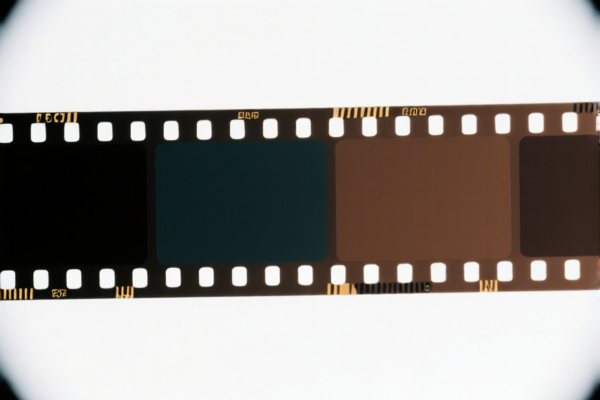
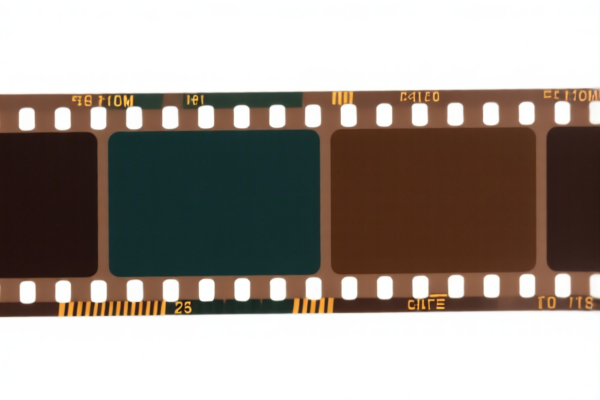
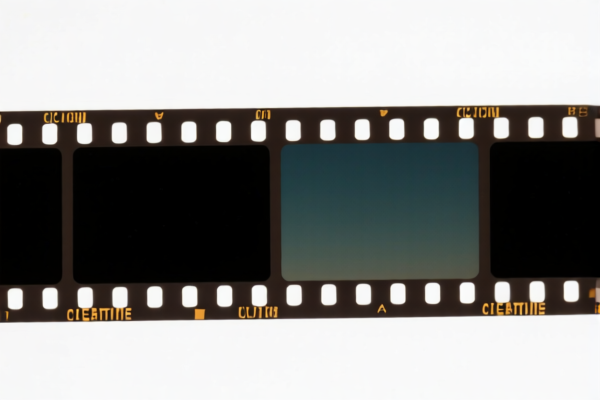

AI Analysis
🎞️ Color Film Low Noise (彩色正片低噪)
🌐 HS Code Reference & Customs Clearance Guide | 2026 Latest Tariff Analysis | Professional-Level Clearance Strategy
📌 I. Product Definition & Classification: Do You Really Understand "Color Film Low Noise"?
"Color Film Low Noise" refers to high-fidelity photographic or cinematic media. In international trade, the classification depends heavily on the physical state (exposed/developed vs. unexposed) and the end-use format (film strips for cameras vs. release prints for cinemas).
1. Exposed & Developed Film / Release Prints (For Projection or Archiving):
- If the film is already exposed and developed (images are fixed), it is often classified under Chapter 3706 (Exposure film, prepared for immediate use) or Chapter 4911 (Photographs, printed).
- Key Distinction: "Low noise" is a quality descriptor. If it is a cinema release print (positive copy for projectors), it falls under 3706. If it is a photographic print on paper or film base for sale, it may fall under 4911.
2. Unexposed Film Rolls (Raw Material):
- If the film is unexposed and comes in rolls (base material), it is classified under Chapter 3701 (Sensitized film).
- Key Distinction: "Color" and "Low noise" (high quality/low grain) describe the sensitivity and emulsion quality of the raw film.
⚠️ Critical Differentiator:
- If it is a finished image (exposed/developed) intended for viewing/projection → 3706 or 4911.
- If it is blank stock (unexposed) for future photography → 3701.
📦 II. HS Code Classification Details (Authoritative 2026 Tariff Concordance)
| HS Code | Product Description | Application Scenario | Physical State |
|---|---|---|---|
3706.10.60.30 |
Cinema film, exposed, for projection (Positive release prints) | Cinema release prints, exposed color film strips | ✅ Exposed & Developed |
3706.90.00.30 |
Other exposure film, prepared for immediate use (Positive release prints) | High-end positive films, exposed color film not specifically for cinema | ✅ Exposed & Developed |
4911.91.40.40 |
Other printed images, designs, and photographs | Photographs on film base, artistic prints, "low noise" photo samples | ✅ Exposed & Developed (Printed) |
4911.91.10.00 |
Other printed images, designs, and photographs (Image carriers) | General photographic prints, image carriers with "low noise" quality | ✅ Exposed & Developed (Printed) |
3701.99.60.60 |
Sensitized film in flat form, other (Unexposed film rolls) | Raw color film rolls, unexposed high-speed film | ❌ Unexposed |
🔍 Key Reminder:
-3706Codes: Apply to film that has already been exposed and developed. The term "Positive release prints" in the summary matches "Color Film" used for projection.
-4911Codes: Apply to photographic prints where the image is considered a "printed item." "Low noise" is treated as a quality attribute of the image.
-3701Code: Applies only if the film is unexposed. "Film roll" shape is key here.
💰 III. 2026 Latest Tariff Rate Details (Including Surtaxes, Policy Add-ons)
✅ Applicable Country: United States (US)
✅ Country of Origin: China (CN)
✅ Effective Date: From November 10, 2025 (including subsequent imports)
🎯 1. 3706.10.60.30 & 3706.90.00.30 —— Exposed Film / Release Prints
| Item | Content |
|---|---|
| Base Tariff | 0% (ad valorem) |
| Section 301 Surtax | +25% (USITC Footnote) |
| IEEPA Surtax | +10% (Against Chinese/HK products, effective Nov 10, 2025) |
| Total Tariff | 35.0% |
| Tax Calculation | CIF Value × 35% |
| De Minimis Eligible | ❌ No (deny_de_minimis) |
| Legal Path | IEEPA:9903.01.25 → USITC:3706.10.60.30 / 3706.90.00.30 |
📌 Explanation:
- These codes apply to already exposed/developed film.
- The 35% total rate is significant. Ensure the product is clearly described as "Exposed Color Film" or "Release Prints" to avoid being miscategorized as unexposed film (which might have different duty implications, though often similar surtaxes apply).
🎯 2. 4911.91.40.40 & 4911.91.10.00 —— Printed Images / Photographic Prints
| Item | Content |
|---|---|
| Base Tariff | 0% (ad valorem) |
| Section 301 Surtax | +7.5% (USITC Footnote for Chapter 49) |
| IEEPA Surtax | +10% (Against Chinese/HK products, effective Nov 10, 2025) |
| Total Tariff | 17.5% |
| Tax Calculation | CIF Value × 17.5% |
| De Minimis Eligible | ❌ No (deny_de_minimis) |
| Legal Path | IEEPA:9901.25 → USITC:4911.91.40.40 / 4911.91.10.00 |
📌 Note:
- These codes are for photographic prints or printed images on any support.
- "Low Noise" is interpreted here as an image quality feature.
- The 17.5% total rate is significantly lower than the 35% for Chapter 3706. If the product can be argued as a "photographic print" rather than "cinema film," this classification offers tax savings.
🎯 3. 3701.99.60.60 —— Unexposed Sensitized Film (Rolls)
| Item | Content |
|---|---|
| Base Tariff | 0% (ad valorem) |
| Section 301 Surtax | +25% (USITC Footnote) |
| IEEPA Surtax | +10% (Against Chinese/HK products, effective Nov 10, 2025) |
| Total Tariff | 35.0% |
| Tax Calculation | CIF Value × 35% |
| De Minimis Eligible | ❌ No (deny_de_minimis) |
| Legal Path | IEEPA:9903.01.25 → USITC:3701.99.60.60 |
📌 Explanation:
- Applies only if the film is unexposed.
- The description "Color Low Contrast Film Roll" in the source matches "Unexposed."
- If you import blank film for photographers, use this code. If you import developed negatives/positives, do NOT use this code.
🛠️ IV. Customs Clearance Practical Advice (Real-World Pitfall Guide)
✅ 1. Preparation Checklist (All documents required)
| Document | Mandatory | Description |
|---|---|---|
| ✅ Product Specifications | ✔️ | Must specify: Exposed vs. Unexposed, Format (Roll/Sheet), Chemical Type. |
| ✅ Product Photos | ✔️ | Clear images showing if images are visible (exposed) or blank (unexposed). |
| ✅ Commercial Invoice | ✔️ | Describe accurately: e.g., "Exposed Color Positive Film" or "Unexposed Color Film Roll." |
| ✅ Packing List | ✔️ | Indicate contents: Release prints, photo samples, or raw film rolls. |
| ✅ Certificate of Origin | ✔️ | Required for origin determination. |
✅ 2. Declaration Techniques (Key Mantras)
🔥 "Exposed vs. Unexposed defines the Code; 'Low Noise' is just quality."
| Scenario | Correct Declaration | Wrong Practice |
|---|---|---|
| Cinema Release Prints | 3706.10.60.30 / 3706.90.00.30 |
Mislabel as "Prints" (4911) to save tax → High Risk of Penalty |
| Photographic Prints | 4911.91.40.40 / 4911.91.10.00 |
Mislabel as "Film" (3706) → Pays 35% instead of 17.5% |
| Blank Film Rolls | 3701.99.60.60 |
Label as "Exposed Film" → Confusion & Delay |
| Mixed Shipment | Separate HS Codes | Mixed declaration → Customs Inspection |
✅ 3. Special Cases
| Scenario | Handling Advice |
|---|---|
| "Low Noise" as Marketing | Do not rely on "Low Noise" for classification. Focus on physical state (Exposed/Unexposed). |
| Sample Packs | If including both exposed samples and unexposed rolls, declare separately. |
| Digital Negatives | If "low noise" refers to digital files on film, clarify. Digital files are not film and may fall under 8523. |
🌍 V. Global Market Clearance Comparison (2026 Latest)
| Country/Region | Recommended HS Code | Tariff (China Origin) | Certification | Notes |
|---|---|---|---|---|
| 🇺🇸 USA | 3706... or 4911... |
17.5% - 35% | No specific cert | High surtaxes apply. |
| 🇨🇳 China | 3706... or 4911... |
0% - 6% | CCC (if applicable) | Lower duties. |
| 🇪🇺 EU | 3706... or 4911... |
0% - 4.5% | CE (if electronic) | Lower duties. |
| 🇬🇧 UK | 3706... or 4911... |
0% - 6.5% | UKCA | Post-Brexit rules apply. |
📌 Conclusion:
- USA imposes significant surtaxes (10-25%).
- Chapter 4911 (Prints) has a lower total tariff (17.5%) compared to Chapter 3706/3701 (Film) (35%).
- If the product can be legally classified as a "photographic print" (exposed, developed, for viewing), 4911 is more cost-effective than 3706.
📌 VI. Common Errors & Pitfalls (Lessons Learned)
❌ Error 1: Declaring exposed film as unexposed (3701)
👉 Consequence: Customs inspection required, potential penalty for misdeclaration.
❌ Error 2: Declaring cinema release prints (3706) as photographic prints (4911) to save tax
👉 Consequence: If the product is clearly for cinema projection, customs may reject 4911 and apply 3706 + penalties.
❌ Error 3: Ignoring the IEEPA 10% Surtax
👉 Consequence: Underpayment of duties, shipment delay at border.
✅ Correct Practice:
"Exposed Color Positive Release Prints, Low Noise, For Cinema Projection, Model XYZ, Country of Origin: China"
🎯 VII. Conclusion: Precise Classification, Cost Optimization!
🎯 Remember the Mantra:
🔹 "Exposed = Film/Print; Unexposed = Base Material."
🔹 "Prints (4911) = 17.5%; Cinema Film (3706) = 35%."
🔹 "Low Noise is Quality, Not Code!"
📌 Tips:
- If your product is digital data on a physical medium, do not use film codes.
- Always provide photos to prove if the film is exposed or unexposed.
- Consult a customs broker for Advance Ruling if the product is borderline.
📣 Immediate Action:
📞 Contact your customs broker + Provide Product Photos + Verify Exposed/Unexposed Status
🚀 Ensure smooth clearance, avoid high penalties, and optimize your tax burden!
✨ Professional clearance starts with accurate classification!
💼 Every cent of tax matters!
Customer Reviews
About HS Code Classification
The Harmonized System (HS) is an internationally standardized nomenclature developed by the World Customs Organization (WCO) to classify traded products. Over 200 countries use the HS system as the basis for customs tariffs, trade statistics, and import/export regulations.
Each HS code follows a hierarchical structure:
- Chapter (2 digits) — Broad category of goods (e.g., Chapter 84: Machinery and Mechanical Appliances)
- Heading (4 digits) — More specific grouping within the chapter
- Subheading (6 digits) — Internationally standardized breakdown, used by all WCO member countries
- National subdivisions (8-10 digits) — Country-specific extensions for further classification, such as US HTSUS 10-digit codes
Correct HS code classification is essential for smooth customs clearance, accurate duty payment, and compliance with trade regulations. Misclassification can lead to customs delays, overpayment of duties, or penalties.
When importing from CN to US, the applicable tariff rates may include:
- Most-Favored-Nation (MFN) rate — The standard duty rate applied to WTO members
- General rate — Applied to countries without trade agreements
- Trade remedy duties — Additional tariffs such as Section 301 (anti-dumping), Section 232 (national security), or countervailing duties
The information provided on this page is for reference purposes only. For official classification, please consult with your local customs authority or a licensed customs broker.