color film reversal film
CN → US| HS Code | Tariff Rate | Origin | Destination | Doc |
|---|---|---|---|---|
| 3702520130 | 38.7% | CN | US | Official Doc |
| 3702550030 | 35.0% | CN | US | Official Doc |
| 3704000000 | 35.0% | CN | US | Official Doc |
| 3706106090 | 35.0% | CN | US | Official Doc |
| 3705000000 | 35.0% | CN | US | Official Doc |
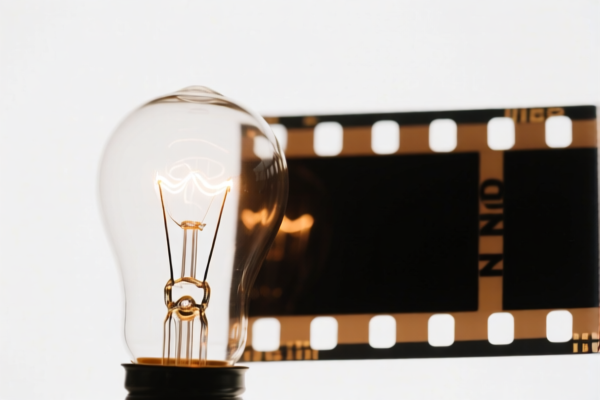
Product Images



AI Analysis
🎞️ Color Film Reversal Film (Color Slide Film)
🌐 HS Code Reference & Customs Clearance Guide | 2026 Latest Tariff Analysis | Professional Import Strategy
📌 One: Product Definition & Classification – What Exactly Is “Color Reversal Film”?
Color reversal film — also known as slide film or positive film — is a type of photographic film designed to produce a positive image directly after development, without requiring a negative intermediate. It is widely used in professional photography, fine art, advertising, and archival imaging due to its vibrant colors, high contrast, and sharp detail.
In international trade, this product is classified under specific HS Codes based on its chemical composition, physical form (roll or sheet), and intended use, particularly whether it is unexposed, exposed, or already developed.
⚠️ Key Distinction:
- Unexposed & Raw: Still in roll or sheet form, ready for photography → Reversal film for photography
- Exposed & Developed: Already used and processed → Color reversal photographic print/film
- Not for motion pictures → Must be excluded from film used in cinema or video
📦 Two: HS Code Classification Details (2026 Latest Tariff Authority Match)
| HS Code | Product Description | Applicable Use Case | Form Factor | Exposed? |
|---|---|---|---|---|
3702.52.01.30 |
Color reversal film, matching purpose and form for color reversal photography | Professional still photography, studio use, art projects | Roll format | ❌ Unexposed |
3702.55.00.30 |
Color reversal film, matching color & reversal characteristics and roll form | High-end photography, slide presentations, archival storage | Roll format | ❌ Unexposed |
3704.00.00.00 |
Color reversal film, matching film form and photosensitive material | General-purpose reversal film, industrial or scientific imaging | Sheet or roll | ❌ Unexposed |
3706.10.60.90 |
Color photographic reversal film, exposed and developed, silver-halide based | Already processed film, ready for viewing or projection | Sheet or roll | ✅ Exposed & Developed |
3705.00.00.00 |
Color photographic reversal film, within photographic film category, not for motion pictures | Still photography, non-cinematic use | Sheet or roll | ❌ Unexposed |
🔍 Critical Insight:
- All unexposed reversal films (raw, not yet shot) fall under 3702.52.01.30, 3702.55.00.30, or 3704.00.00.00
- Exposure status is the main differentiator — once exposed and developed, it moves to 3706.10.60.90 or 3705.00.00.00
- No motion picture use → Must avoid misclassification under film for cinema (e.g., 3702.59.00)
💰 Three: 2026 Latest Tariff Breakdown (With Detailed Duty Clauses)
✅ Applicable Country: United States (US)
✅ Origin: China (CN)
✅ Effective Date: November 10, 2025 (and ongoing)
🎯 1. 3702.52.01.30 — Color Reversal Film (Unexposed, Roll Form)
| Item | Details |
|---|---|
| Base Duty Rate | 3.7% (ad valorem) |
| Section 301 Additional Duty (USITC) | +25.0% |
| Section 122 Duty (IEEPA) | +10.0% |
| Total Effective Duty | 38.7% |
| Tax Calculation | CIF Value × 38.7% |
| De Minimis Exemption | ❌ Not available (denied under 19 CFR § 10.17) |
| Legal Basis Path | IEEPA:9903.01.25 → IEEPA:9903.01.24 → USITC:3702.52.01.30 → FOOTNOTE:9903.88.01 |
📌 Explanation:
- 3.7% base tariff applies to the product category under the Harmonized Tariff Schedule (HTS).
- +25% USITC Section 301 duty — imposed under Trade Act of 1974, Section 301, targeting unfair trade practices by China.
- +10% IEEPA Section 122 — under the International Emergency Economic Powers Act, used to enforce sanctions and tariffs on Chinese-origin goods.
- Total: 38.7% — one of the highest tariffs in the photographic film category.
🎯 2. 3702.55.00.30 — Color Reversal Film (Matching Color & Reversal Properties, Roll Form)
| Item | Details |
|---|---|
| Base Duty Rate | 0.0% |
| Section 301 Additional Duty (USITC) | +25.0% |
| Section 122 Duty (IEEPA) | +10.0% |
| Total Effective Duty | 35.0% |
| Tax Calculation | CIF Value × 35.0% |
| De Minimis Exemption | ❌ Not available |
| Legal Basis Path | IEEPA:9901.25 → IEEPA:9903.01.24 → USITC:3702.55.00.30 → FOOTNOTE:9903.88.01 |
📌 Note:
- Despite 0% base tariff, the 25% + 10% combination still results in 35% total duty — still extremely high.
- This code applies to films with specific color and reversal characteristics, often used in professional or specialty photography.
🎯 3. 3704.00.00.00 — Color Reversal Film (Matching Film Form & Photosensitive Material)
| Item | Details |
|---|---|
| Base Duty Rate | 0.0% |
| Section 301 Additional Duty (USITC) | +25.0% |
| Section 122 Duty (IEEPA) | +10.0% |
| Total Effective Duty | 35.0% |
| Tax Calculation | CIF Value × 35.0% |
| De Minimis Exemption | ❌ Not available |
| Legal Basis Path | IEEPA:9901.25 → IEEPA:9903.01.24 → USITC:3704.00.00.00 → FOOTNOTE:9903.88.01 |
📌 Important:
- This code covers general-purpose reversal film based on physical form and photosensitive material — not tied to specific color performance.
- Still subject to same 35% total tariff due to same附加 duties.
🎯 4. 3706.10.60.90 — Exposed & Developed Color Reversal Film (Silver-Halide Based)
| Item | Details |
|---|---|
| Base Duty Rate | 0.0% |
| Section 301 Additional Duty (USITC) | +25.0% |
| Section 122 Duty (IEEPA) | +10.0% |
| Total Effective Duty | 35.0% |
| Tax Calculation | CIF Value × 35.0% |
| De Minimis Exemption | ❌ Not available |
| Legal Basis Path | IEEPA:9901.25 → IEEPA:9903.01.24 → USITC:3706.10.60.90 → FOOTNOTE:9903.88.01 |
📌 Clarification:
- This applies to already exposed and developed reversal film — such as slides or transparencies.
- Even though it’s processed, it’s still subject to same high tariffs due to Chinese origin and USITC/IEEPA rules.
🎯 5. 3705.00.00.00 — Color Reversal Film (Photographic Film, Not for Motion Pictures)
| Item | Details |
|---|---|
| Base Duty Rate | 0.0% |
| Section 301 Additional Duty (USITC) | +25.0% |
| Section 122 Duty (IEEPA) | +10.0% |
| Total Effective Duty | 35.0% |
| Tax Calculation | CIF Value × 35.0% |
| De Minimis Exemption | ❌ Not available |
| Legal Basis Path | IEEPA:9901.25 → IEEPA:9903.01.24 → USITC:3705.00.00.00 → FOOTNOTE:9903.88.01 |
📌 Key Point:
- This code is for non-cinematic reversal film, including sheet film, cut rolls, or specialty formats.
- No distinction in tariff from other reversal film types — still 35% total duty.
🛠️ Four: Customs Clearance Best Practices (Real-World Tips)
✅ 1. Required Documentation (Must-Have Checklist)
| Document | Required? | Purpose |
|---|---|---|
| ✅ Product Specification Sheet | ✔️ | Includes film type, ISO speed, emulsion layer, roll size |
| ✅ Manufacturer’s Technical Data | ✔️ | Proves unexposed, reversal, non-cinematic use |
| ✅ Product Photos (with label) | ✔️ | Shows packaging, branding, format (roll/sheet) |
| ✅ Third-Party Lab Report | ✔️ | Confirms silver-halide composition, photosensitivity |
| ✅ Commercial Invoice | ✔️ | Clearly states: “Color Reversal Film, Unexposed, for Still Photography” |
| ✅ Certificate of Origin (CO) | ✔️ | Critical for duty calculation; origin affects IEEPA/USITC status |
| ✅ Packing List | ✔️ | Details roll count, length, packaging type |
✅ 2.申报技巧(Pro Tip: “Form & Function First”)
🔥 “Unexposed? → Use 3702/3704. → 301 + IEEPA = 35–38.7%”
🔥 “Exposed? → Use 3706.10.60.90 → Still 35%”
| Scenario | Correct HS Code | Wrong Code | Risk |
|---|---|---|---|
| Unexposed roll film, 35mm, ISO 100 | 3702.52.01.30 |
3704.00.00.00 |
Misclassification → higher risk of audit |
| Developed slide film (transparency) | 3706.10.60.90 |
3705.00.00.00 |
Same duty, but incorrect form → delay |
| Sheet film, 4x5", reversal | 3705.00.00.00 |
3702.55.00.30 |
May trigger customs scrutiny |
| Film used in movie camera | ❌ Not eligible | 3702.59.00 |
Risk of seizure or denial |
✅ 3. Special Cases Handling
| Situation | Recommended Action |
|---|---|
| OEM/White-label film | Provide customer contract + production proof → avoid “China origin” red flags |
| Film for archival or museum use | Apply for “non-commercial use” exemption (requires documentation) |
| Film shipped for lab processing | Declare as “unexposed, for development” → use 3702/3704 codes |
| Film returned after development | May qualify as “used material” — consult customs on re-import rules |
🌍 Five: Global Customs Comparison (2026 Update)
| Country/Region | Recommended HS Code | Duty Rate | Certification | Notes |
|---|---|---|---|---|
| 🇺🇸 United States | 3702.52.01.30 |
38.7% (China) | None (but must declare origin) | Highest tariff due to 301 + IEEPA |
| 🇨🇳 China | 3705.00.00.00 |
0% (domestic) | CCC | No extra duties |
| 🇪🇺 European Union | 3705.00.00.00 |
0% (if CE) | CE | No附加税 |
| 🇦🇺 Australia | 3705.00.00.00 |
0% | RCM | No extra duties |
| 🇯🇵 Japan | 3705.00.00.00 |
0% | PSE | No附加税 |
📌 Takeaway:
- Only the US imposes high附加 duties on Chinese-origin reversal film.
- China, EU, Japan, Australia have no additional tariffs — ideal for re-export or reprocessing.
📌 Six: Common Mistakes & How to Avoid Them (Real Cases)
❌ Mistake 1: Declaring “unexposed film” as “developed slides”
👉 Result: Higher risk of audit, possible seizure, 35% duty instead of 38.7% — but still high.
❌ Mistake 2: Using “photographic film” as generic term
👉 Result: Customs may default to higher-risk code → delays, penalties.
❌ Mistake 3: Not including “non-cinematic” in description
👉 Result: Could be misclassified under 3702.59.00 (film for motion pictures) → higher risk of rejection.
✅ Best Practice:
“Color Reversal Film, Unexposed, 35mm, ISO 100, Silver-Halide, Non-Cinematic, for Still Photography, Roll Form, Made in China”
🎯 Seven: Conclusion – Precision in Classification = Profit Protection!
🎯 Remember the Rule of Thumb:
🔹 “Unexposed = 3702/3704 → 35–38.7% duty”
🔹 “Exposed = 3706.10.60.90 → 35% duty”
🔹 “No de minimis in US — always calculate total duty!”
📌 Pro Tip:
If your film is originated in Vietnam, Mexico, Thailand, or Malaysia, you may qualify for IEEPA exemption — reducing duty to 0%–5%.
✅ Apply for Advance Ruling (Pre-Approval) before shipment to avoid customs delays.
📣 Act Now:
📞 Contact a licensed customs broker + provide product photos + request HS Code pre-ruling
🚀 Ensure your color reversal film clears customs fast, legally, and at the lowest possible cost!
✨ Smart Customs Starts with Smart Classification!
💼 Your next shipment could save you thousands — if you get the HS Code right!
Customer Reviews
About HS Code Classification
The Harmonized System (HS) is an internationally standardized nomenclature developed by the World Customs Organization (WCO) to classify traded products. Over 200 countries use the HS system as the basis for customs tariffs, trade statistics, and import/export regulations.
Each HS code follows a hierarchical structure:
- Chapter (2 digits) — Broad category of goods (e.g., Chapter 84: Machinery and Mechanical Appliances)
- Heading (4 digits) — More specific grouping within the chapter
- Subheading (6 digits) — Internationally standardized breakdown, used by all WCO member countries
- National subdivisions (8-10 digits) — Country-specific extensions for further classification, such as US HTSUS 10-digit codes
Correct HS code classification is essential for smooth customs clearance, accurate duty payment, and compliance with trade regulations. Misclassification can lead to customs delays, overpayment of duties, or penalties.
When importing from CN to US, the applicable tariff rates may include:
- Most-Favored-Nation (MFN) rate — The standard duty rate applied to WTO members
- General rate — Applied to countries without trade agreements
- Trade remedy duties — Additional tariffs such as Section 301 (anti-dumping), Section 232 (national security), or countervailing duties
The information provided on this page is for reference purposes only. For official classification, please consult with your local customs authority or a licensed customs broker.