color film wide dynamic range
CN → US| HS Code | Tariff Rate | Origin | Destination | Doc |
|---|---|---|---|---|
| 3702520130 | 38.7% | CN | US | Official Doc |
| 3702520160 | 38.7% | CN | US | Official Doc |
| 3704000000 | 35.0% | CN | US | Official Doc |
| 3705000000 | 35.0% | CN | US | Official Doc |
Product Images


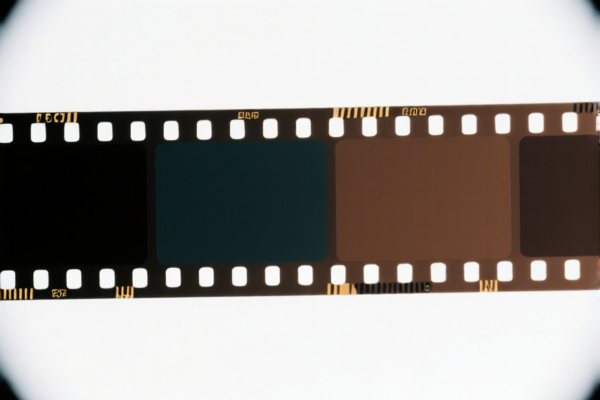
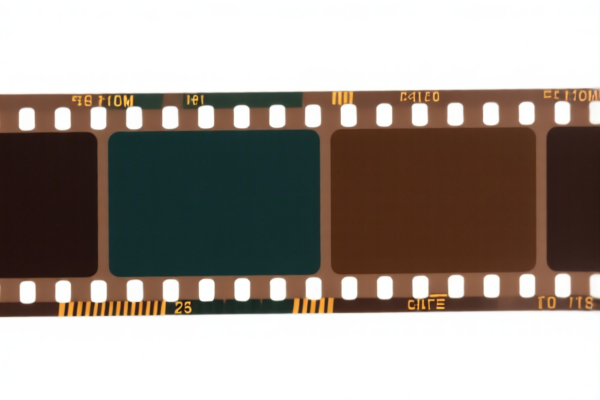
AI Analysis
🎞️ Color Film with Wide Dynamic Range: HS Code Classification & Customs Clearance Guide
🌐 HS Code Reference & Clearance Strategy | 2026 Latest Tariff Analysis | Professional-Level Customs Compliance
📌 I. Product Definition & Classification: Do You Truly Understand "Color Film"?
"Color film with wide dynamic range" refers to photographic film designed to capture a broad spectrum of light intensities, preserving details in both shadows and highlights. In international trade, the classification depends strictly on its physical state (exposed vs. unexposed) and specific attributes, not just marketing terms like "wide dynamic range."
Unexposed Color Film (Negative/Slice):
- Raw material for photography; chemically sensitive to light.
- Classified under Chapter 37 as unfinished photographic goods.
Exposed Color Film:
- Has been light-sensitive processed or is in the state of having been exposed but not yet developed.
- Classified based on whether it has undergone chemical development.
⚠️ Key Distinction Point:
- If the film is unexposed (raw stock), it falls under specific subheadings for negative/slice film.
- If the film is exposed but undeveloped, it falls under a different category than developed film.
- "Wide Dynamic Range" is a functional feature, not a standalone HS Code determinant. It is covered under the general "Color Film" umbrella unless specified otherwise in national notes.
📦 II. HS Code Classification Details (2026 Latest Tariff Authoritative Reference)
Based on the provided data, here is the breakdown for color film products:
| HS Code | Product Description | Application Scenario | Tax Status |
|---|---|---|---|
3702.52.01.30 |
Color film, width dynamic range is a functional feature, matching color and film attributes, used for photography. | Standard color negative film, wide dynamic range. | ✅ Unexposed Color Film |
3702.52.01.60 |
Color film, width not specified, defaults to color film category except reversal film. | General color film (non-reversal), width variations. | ✅ Unexposed Color Film |
3704.00.00.00 |
Film belongs to film form, color conforms to photographic use, matches features of exposed but undeveloped. | Exposed color film that has NOT been chemically developed. | ⚠️ Exposed, Undeveloped |
3705.00.00.00 |
Film belongs to film form, color is an attribute description, does not conflict with developed category. | Color film that HAS BEEN developed/processed. | ❌ Developed Film |
🔍 Key Reminder:
- Unexposed film (3702.52.01.30/3702.52.01.60) incurs a total tax of 38.7%.
- Exposed/Developed film (3704.00.00.00/3705.00.00.00) incurs a total tax of 35.0%.
- The difference lies in the Base Tariff: Unexposed film has a 3.7% base tariff, while exposed/developed film has a 0.0% base tariff. Both have the same additional tariffs.
💰 III. 2026 Latest Tariff Rate Breakdown (Including Surcharges & Policy Additions)
✅ Applicable Country: United States (US)
✅ Origin: China (CN)
✅ Effective Time: From November 10, 2025 (including subsequent imports)
🎯 1. 3702.52.01.30 & 3702.52.01.60 — Unexposed Color Film
| Item | Content |
|---|---|
| Base Tariff Rate | 3.7% (ad valorem) |
| USITC Surtax (Section 301) | +25.0% |
| IEEPA Surtax (Section 122) | +10.0% |
| Total Tariff Rate | 38.7% |
| Tax Calculation | CIF Value × 38.7% |
| De Minimis Eligibility | ❌ Not Eligible (deny_de_minimis) |
| Legal Basis Path | IEEPA:122 → USITC:3702.52.01.30 → FOOTNOTE:301_25 |
📌 Explanation:
- "Base Tariff 3.7%": Standard Most Favored Nation (MFN) rate for color photographic film.
- "USITC Surtax 25%": Additional tariff imposed under Section 301 of the Trade Act of 1974 against Chinese goods.
- "IEEPA Surtax 10%": Additional tariff under the International Emergency Economic Powers Act (Section 122 provisions for specific Chinese imports).
- Total 38.7%: High tariff burden. Must be factored into cost structures.
🎯 2. 3704.00.00.00 & 3705.00.00.00 — Exposed/Developed Color Film
| Item | Content |
|---|---|
| Base Tariff Rate | 0.0% (ad valorem) |
| USITC Surtax (Section 301) | +25.0% |
| IEEPA Surtax (Section 122) | +10.0% |
| Total Tariff Rate | 35.0% |
| Tax Calculation | CIF Value × 35.0% |
| De Minimis Eligibility | ❌ Not Eligible (deny_de_minimis) |
| Legal Basis Path | IEEPA:122 → USITC:3704.00.00.00 → FOOTNOTE:301_25 |
📌 Note:
- Lower Base Rate: Exposed or developed film has a 0% base tariff, making the total tax 3.7% lower than unexposed film.
- Same Surcharges: The 25% + 10% additional tariffs still apply.
- Classification Risk: Misclassifying exposed film as unexposed (3702) leads to overpayment. Misclassifying unexposed as developed (3704) leads to underpayment and penalties.
🛠️ IV. Customs Clearance Practical Advice (Real-World Pitfall Guide)
✅ 1. Required Documentation Checklist (All Mandatory)
| Document | Must Provide | Description |
|---|---|---|
| ✅ Product Spec Sheet | ✔️ | Include film type (negative/reversal), sensitivity (ISO), width (mm), and coating details. |
| ✅ State of Goods Declaration | ✔️ | Explicitly state: "Unexposed," "Exposed but Undeveloped," or "Fully Developed." |
| ✅ Product Photos | ✔️ | Clear images of packaging, label, and film canister/roll. |
| ✅ Commercial Invoice | ✔️ | Must clearly describe as "Color Photographic Film" and specify HS Code. |
| ✅ Certificate of Origin (CO) | ✔️ | Required for determining surtax applicability (China origin = high tariff). |
| ✅ Packing List | ✔️ | Detail number of rolls/canisters, net/gross weight. |
✅ 2. Declaration Techniques (Key Mnemonics)
🔥 "Unexposed: 3.7% Base | Exposed: 0% Base | Surcharges: 35% Fixed!"
| Scenario | Correct Declaration | Incorrect Practice |
|---|---|---|
| Raw Film Rolls | 3702.52.01.30 or .60 |
Misdeclare as 3704 → Underpayment Penalty |
| Exposed, Undeveloped | 3704.00.00.00 |
Misdeclare as 3705 → Overpayment |
| Fully Developed Prints/Negatives | 3705.00.00.00 |
Misdeclare as 3702 → Overpayment |
| "Wide Dynamic Range" Marketing | Ignore in HS Code | Do not create new HS codes; it falls under standard color film. |
✅ 3. Special Case Handling
| Situation | Handling Advice |
|---|---|
| Sample Sent by Film Company | Declare as "Commercial Sample" but still subject to tariffs. No duty-free exemption for commercial samples from China. |
| Film with Special Emulsion | If "Wide Dynamic Range" implies a unique chemical composition not covered by 3702/3704, consult with customs broker. However, standard "wide DR" is still 3702. |
| Mixed Shipments (Film + Camera) | Declare Separately! Camera goes to 8525/8528. Do not bundle film into camera HS code. |
| Reversal Film (Slide Film) | Ensure it is NOT misclassified as .60 (which excludes reversal). Reversal film has its own specific subheadings in 3702. |
🌍 V. Global Market Clearance Comparison (2026 Latest)
| Country/Region | Recommended HS Code | Tariff (China Origin) | Certification Requirements | Notes |
|---|---|---|---|---|
| 🇺🇸 USA | 3702.52.01.30 |
38.7% (Unexposed) | None specific for film | High tariff due to 301 & 122 clauses. |
| 🇨🇳 China | 3702.52.01.30 |
3.7% | None | No additional surtaxes for exports. |
| 🇪🇺 EU | 3702.52.01.30 |
0% | REACH (Chemical compliance) | Low base tariff, but strict chemical regulations. |
| 🇬🇧 UK | 3702.52.01.30 |
0% | UKCA (if applicable) | Post-Brexit rules may vary slightly. |
| 🇯🇵 Japan | 3702.52.01.30 |
3.5% | FSCA | Generally low tariffs, no US-style surtaxes. |
📌 Conclusion:
- USA is the most expensive market for Chinese color film due to 38.7% total tariff.
- EU and Japan offer significantly lower base tariffs but require strict chemical safety documentation (REACH/FSCA).
- Strategic Tip: For US imports, consider if the cost of 38.7% tariff outweighs profit margins, or explore third-party manufacturing in non-China countries for tariff optimization.
📌 VI. Common Mistakes & Pitfall Guide (Lessons Learned)
❌ Mistake 1: Classifying "Wide Dynamic Range" film as a separate HS Code.
👉 Consequence: Customs rejection or delay. "Wide DR" is a feature, not a classification criteria. Use standard 3702.52.01.30.
❌ Mistake 2: Declaring "Exposure" status incorrectly.
👉 Consequence: If you declare unexposed but it's exposed, you underpay tax (35% vs 38.7%). This leads to penalties and back-taxes.
❌ Mistake 3: Ignoring the 10% IEEPA surtax.
👉 Consequence: Unexpected high costs at border. The 10% is non-negotiable for Chinese-origin film.
❌ Mistake 4: Bundling film with cameras or scanners.
👉 Consequence: Misclassification of the entire shipment. Film must be declared separately with its own HS Code.
✅ Correct Approach:
"Color Negative Film, 35mm, 400ISO, Unexposed, Wide Dynamic Range Feature, Model XYZ, HS Code 3702.52.01.30"
🎯 VII. Conclusion: Precise Classification, Cost Control, Smooth Clearance!
🎯 Remember the Mnemonic:
🔹 "Unexposed: 38.7% | Exposed: 35.0% | Surcharges: 35% Total | Base Rate Diff: 3.7%"
🔹 "HS Code Determines Tax, Misclassification Costs Thousands!"
📌 Pro Tip:
If your film is originating from Vietnam, Thailand, or Malaysia, you may apply for IEEPA Exemption or lower tariff rates under FTAs.
Recommend pre-ruling (Advance Ruling) from US Customs to confirm the "Exposure Status" and HS Code before shipping.
📣 Immediate Action:
📞 Contact a professional customs broker + Provide Product Specs + Apply for HS Code Pre-ruling
🚀 Ensure your film clears customs smoothly, efficiently, and profitably!
✨ Professional Customs Clearance Starts with Accurate Classification!
💼 Every Penny of Your Cost Deserves Precise Calculation!
Customer Reviews
About HS Code Classification
The Harmonized System (HS) is an internationally standardized nomenclature developed by the World Customs Organization (WCO) to classify traded products. Over 200 countries use the HS system as the basis for customs tariffs, trade statistics, and import/export regulations.
Each HS code follows a hierarchical structure:
- Chapter (2 digits) — Broad category of goods (e.g., Chapter 84: Machinery and Mechanical Appliances)
- Heading (4 digits) — More specific grouping within the chapter
- Subheading (6 digits) — Internationally standardized breakdown, used by all WCO member countries
- National subdivisions (8-10 digits) — Country-specific extensions for further classification, such as US HTSUS 10-digit codes
Correct HS code classification is essential for smooth customs clearance, accurate duty payment, and compliance with trade regulations. Misclassification can lead to customs delays, overpayment of duties, or penalties.
When importing from CN to US, the applicable tariff rates may include:
- Most-Favored-Nation (MFN) rate — The standard duty rate applied to WTO members
- General rate — Applied to countries without trade agreements
- Trade remedy duties — Additional tariffs such as Section 301 (anti-dumping), Section 232 (national security), or countervailing duties
The information provided on this page is for reference purposes only. For official classification, please consult with your local customs authority or a licensed customs broker.