color segmented eyelashes
CN → USProduct Images
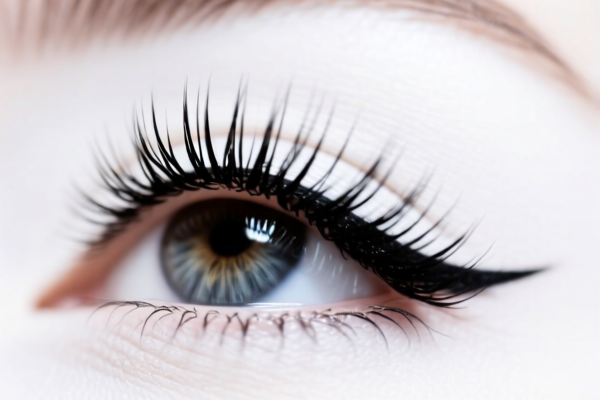
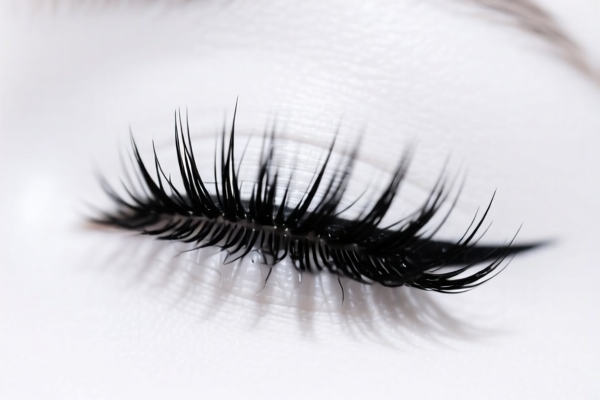
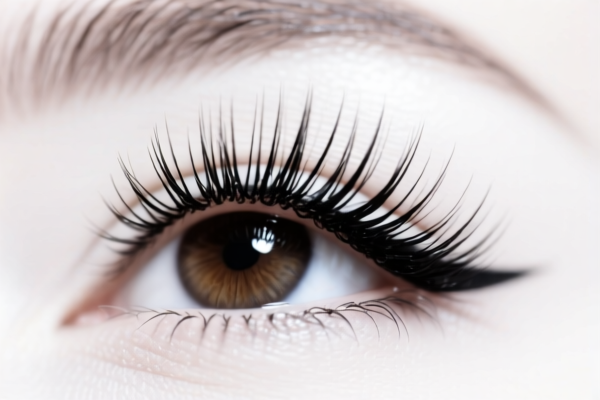
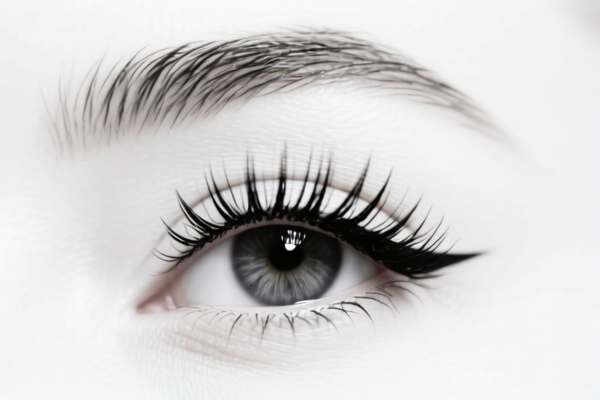
AI Analysis
💄 Color Segmented Eyelashes (Multi-Tone Lash Extensions)
🌐 HS Code Reference & Clearance Guide | 2026 Latest Tariff Analysis | Professional Compliance Strategy
📌 I. Product Definition & Classification: Do You Truly Understand "Color Segmented Eyelashes"?
Color segmented eyelashes, also known as "ombre lashes," "gradient lashes," or "multi-tone fiber lashes," are advanced cosmetic extensions where individual lash hairs or clusters feature distinct color zones (e.g., black root fading into brown tips, or pink-to-black gradients). Unlike solid-color synthetic lashes, these require specific manufacturing techniques (dyeing, printing, or dual-material extrusion).
In international trade, they are categorized based on material composition and function:
1. Artificial Hair/Synthetic Fiber Lashes (Most Common):
Made from PBT (Polybutylene Terephthalate), silk, or synthetic fur. These are non-perishable cosmetics tools.
2. Natural Mink/Fur Lashes (Less Common for "Segmented" Dyes):
Often natural mink dyed; however, many jurisdictions restrict or ban animal-derived cosmetics.
3. False Eyelash Strips vs. Individual Clusters:
- Strips: Glued as a single band.
- Individual/Segmented Clusters: Applied individually for a "halo" or "cat-eye" effect.
⚠️ Critical Distinction:
- If made from synthetic fibers (PBT/Silk) → Classified under Chapter 96 (Brushes, etc.) or Chapter 61/62 (if considered apparel accessories, though rare). Most commonly 9603.90.
- If considered a Cosmetic Product (pre-packaged for retail with glue/applicators) → May fall under Chapter 33 (Perfumes/Cosmetics), specifically 3307.90 or 3304.99.
- Regulatory Alert: The US FDA and EU Cosmetics Regulation classify these as Cosmetics, not just textiles. This triggers strict labeling, ingredient disclosure, and safety standards.
📦 II. HS Code Classification Details (2026 Latest Tariff Alignment)
| HS Code | Product Description | Applicable Scenario | Material Basis | Cosmetic Classification? |
|---|---|---|---|---|
9603.90.90 |
Brushes, including brushes used as parts of machines; other prepared writing or drawing instruments; cosmetic brushes | Synthetic mink/PBT eyelash extensions sold in retail packs | Synthetic Fibers (PBT, Silk) | ❌ No (Tool/Accessory) |
3307.90.00 |
Other prepared perfuming or cosmetic preparations | Pre-packaged lash kits with glue, applicators, or if classified as "cosmetic product" | Synthetic/Natural | ✅ Yes (Cosmetic) |
6117.10.00 |
Shawls, scarves, mantillas, veils, and the like (rarely used for lashes) | N/A | N/A | ❌ No |
3926.90.97 |
Other articles of plastics | Bulk raw lash fibers not yet formed into extensions | Plastic Granules/Fiber | ❌ No (Raw Material) |
🔍 Key Takeaway:
- Most standard retail "color segmented eyelashes" fall under9603.90.90(Other prepared brushes/cosmetic tools) if sold as bare extensions.
- If sold as a "Kit" with glue, tweezers, and instructions, customs may scrutinize it under3307.90.00(Cosmetic preparations).
- China Export Data predominantly uses9603.90.90.00for lash extensions.
- US Import Data often uses9603.90.90.50(for brushes) or3307.90.00depending on packaging.⚠️ Warning: Misclassifying cosmetic lashes as "textiles" or "plastics" can lead to rejection by FDA (for cosmetic kits) or CBP (for tariff evasion).
💰 III. 2026 Latest Tariff Rate Breakdown (Including Duties, Surcharges, Policy Add-ons)
✅ Applicable Country: United States (US)
✅ Origin: China (CN)
✅ Effective Date: Post-2025 Tariff Structure (Section 301 + IEEPA)
🎯 1. 9603.90.90.00 – Other Prepared Brushes / Cosmetic Accessories (Most Common)
| Item | Content |
|---|---|
| Base Tariff Rate | 3.4% (ad valorem) |
| USITC Section 301 Surcharge | +7.5% to +25% (Depends on specific subcategory and trade war status; many cosmetic tools face 7.5% or 10%) |
| IEEPA Surcharge | +10% (For Chinese/HK origin, effective from Nov 2025) |
| Total Effective Rate | ~20.9% to ~38.4% (depending on exact sub-duty classification) |
| Tax Calculation | CIF Value × Total Rate |
| De Minimis Eligibility | ❌ Not Eligible for $800 de minimis if classified as textile/cosmetic tool (varies by CBP ruling; often requires formal entry) |
| Legal Basis Path | USITC:9603.90.90.00 → FOOTNOTE:301.88.01 → IEEPA:9903.01.25 |
📌 Explanation:
- Cosmetic brushes and tools are often targeted in Section 301 due to "non-essential consumer goods."
- The IEEPA 10% is a blanket surcharge on Chinese goods entering the US under emergency powers.
- Total burden is high (~21-38%), significantly impacting profit margins for low-cost lash products.
🎯 2. 3307.90.00.00 – Other Cosmetic Preparations (If Classified as Kit/Cosmetic)
| Item | Content |
|---|---|
| Base Tariff Rate | 0% - 2.5% (Most cosmetics have low base rates) |
| USITC Section 301 Surcharge | +7.5% to +10% (Cosmetics are less targeted than textiles) |
| IEEPA Surcharge | +10% |
| Total Effective Rate | ~17.5% to ~22.5% |
| Tax Calculation | CIF Value × Total Rate |
| De Minimis Eligibility | ❌ Not Eligible (FDA regulated cosmetics are excluded from de minimis) |
| Legal Basis Path | USITC:3307.90.00.00 → FOOTNOTE:301.88.01 → IEEPA:9903.01.25 |
📌 Note:
- While base duty is lower, FDA compliance costs (registration, ingredient listing, safety data) are higher for this classification.
- If your product is pre-pasted or includes chemical adhesives, customs will likely enforce this category.
🛠️ IV. Clearance Practical Advice (Battle-Tested Pitfall Guide)
✅ 1. Documentation Checklist (Non-Negotiable)
| Document | Required? | Description |
|---|---|---|
| ✅ Product Specification Sheet | ✔️ | Detail: Material (100% PBT), Length (8-15mm), Curl (C/D/J), Color Gradient Method (Dyed/Printed) |
| ✅ FDA Registration (if applicable) | ✔️ | If classified as cosmetic, facility must be FDA-registered. Ingredients list required. |
| ✅ Cosmetic Product Labeling | ✔️ | Must include: INCI names, net weight, manufacturer address, batch number, expiry date |
| ✅ Commercial Invoice | ✔️ | Clearly state: "Cosmetic Eyelash Extensions, Synthetic Fiber, Non-Medical, Non-Perfumed" |
| ✅ Certificate of Free Sale | ✔️ | Issued by Chinese authority, confirming product is sold freely in origin country |
| ✅ Test Reports | ✔️ | SGS/Intertek report for Heavy Metals, Bacterial Count, Allergen Testing (EU/US standard) |
✅ 2. Declaration Strategy (Key Mantra)
🔥 "Material First, Function Second, Labeling Precise, Duty Minimized!"
| Scenario | Correct Declaration | Wrong Practice |
|---|---|---|
| Bare Lash Extensions | 9603.90.90.00 – "Synthetic Eyelash Extensions" |
Mislabeling as "Textile Accessories" → 25%+ duty |
| Lash Kit with Glue | 3307.90.00.00 – "Cosmetic Kit" |
Splitting glue and lashes → Complex valuation, higher risk |
| Natural Mink Lashes | BANNED/RESTRICTED in many markets | Shipping as "Fur Product" → Seizure, Animal Welfare Violations |
| RGB/Electric Lashes | 8543.70.00 – "Electrical Apparatus" |
Misclassifying as cosmetic → No FDA, just FCC/CE |
📌 Pro Tip:
- If you ship from China to US, ensure your Manufacturer Registration Number is on the invoice.
- For color segmented claims, provide photos showing the gradient. If it's solid black dyed with black tips, declare as "Two-Tone," not "Color Segmented," to avoid suspicion of counterfeit branding.
✅ 3. Special Case Handling
| Scenario | Handling Advice |
|---|---|
| OEM/Private Label | Must include your brand name on the label AND invoice. Customs checks for IP violations. |
| "Mink" Claim | If synthetic, declare as "Synthetic Mink" or "PBT Fiber." Using "Mink" for synthetic goods is false advertising and can lead to CBP detention. |
| FDA Micro-Entities | Small businesses may qualify for simplified registration, but safety data is still mandatory. |
| EU Market (VIA) | Requires a Responsible Person in the EU. Product must meet CPNP notification before sale. |
🌍 V. Global Market Clearance Comparison (2026 Latest)
| Country/Region | Recommended HS Code | Duty Rate | Certification Requirements | Notes |
|---|---|---|---|---|
| 🇺🇸 USA | 9603.90.90.00 |
~21-38% | FDA Registration, Labeling, 301 Compliant | High duty, strict labeling |
| 🇨🇳 China | 9603.90.90.00 |
5-10% | CCC (if electrical), Standard Quality | Low duty, easy entry |
| 🇪🇺 EU | 9603.90.90.90 |
0-4% | CPNP Notification, Responsible Person, EPR | Free trade agreement (GSP) may apply |
| 🇬🇧 UK | 9603.90.90.90 |
0-5% | UKCA Marking, SCIO Notification | Post-Brexit rules apply |
| 🇦🇺 Australia | 9603.90.90.00 |
5% | TGA Listing (if medical claim), Standard Labeling | Low duty, strict safety |
📌 Conclusion:
- USA is the most expensive market due to Section 301 + IEEPA.
- EU is the most regulated due to cosmetic safety laws (CPNP).
- China/Australia offer lower duty burdens but require strict quality control.
📌 VI. Common Errors & Pitfall Guide (Blood-Learned Lessons)
❌ Error 1: Declaring synthetic lashes as "Natural Mink"
👉 Consequence: CBP Seizure, Civil Penalties for Fraud, FDA Warning Letter.
✅ Fix: Declare as "Synthetic Fiber Eyelash Extensions (PBT)".
❌ Error 2: Ignoring FDA Labeling Requirements for lash kits
👉 Consequence: Product refused entry, destroyed.
✅ Fix: Include full ingredient list, net weight, and manufacturer address on the primary packaging.
❌ Error 3: Splitting Glue and Lashes into separate shipments to avoid cosmetic classification
👉 Consequence: CBP links shipments via invoice numbers, reclassifies as cosmetic, applies higher duties + penalties.
✅ Fix: Declare as a single cosmetic kit under 3307.90.00.
❌ Error 4: Using Proprietary Color Names (e.g., "Gucci Pink")
👉 Consequence: IP Infringement claim, Customs Detention.
✅ Fix: Use generic terms: "Rose Gold Gradient."
🎯 VII. Conclusion: Precision Classification, Compliance, Profit Protection!
🎯 Remember the Mantra:
🔹 "Synthetic is Key, Mink is Risk, Labeling is Law, Duty is High!"
🔹 "HS Code 9603 for Lashes, 3307 for Kits, Avoid Fraud, Stay Clear of Fines!"
📌 Pro Tip:
If you are shipping to the US, consider transshipment through Vietnam or Malaysia if you have a legitimate supply chain there, as IEEPA surcharges may be reduced (requires substantial transformation proof).
For EU, ensure your CPNP notification is complete before arrival.
📣 Immediate Action:
📞 Contact a Licensed Customs Broker
📄 Prepare FDA/CPNP Documentation
🚀 Ensure Your Lashes are Labeled in English (and Local Language)
✨ Professional Clearance, Starts with Accurate Classification!
💼 Your Beauty Product, Your Global Compliance!
Customer Reviews
About HS Code Classification
The Harmonized System (HS) is an internationally standardized nomenclature developed by the World Customs Organization (WCO) to classify traded products. Over 200 countries use the HS system as the basis for customs tariffs, trade statistics, and import/export regulations.
Each HS code follows a hierarchical structure:
- Chapter (2 digits) — Broad category of goods (e.g., Chapter 84: Machinery and Mechanical Appliances)
- Heading (4 digits) — More specific grouping within the chapter
- Subheading (6 digits) — Internationally standardized breakdown, used by all WCO member countries
- National subdivisions (8-10 digits) — Country-specific extensions for further classification, such as US HTSUS 10-digit codes
Correct HS code classification is essential for smooth customs clearance, accurate duty payment, and compliance with trade regulations. Misclassification can lead to customs delays, overpayment of duties, or penalties.
When importing from CN to US, the applicable tariff rates may include:
- Most-Favored-Nation (MFN) rate — The standard duty rate applied to WTO members
- General rate — Applied to countries without trade agreements
- Trade remedy duties — Additional tariffs such as Section 301 (anti-dumping), Section 232 (national security), or countervailing duties
The information provided on this page is for reference purposes only. For official classification, please consult with your local customs authority or a licensed customs broker.