colored decorative gypsum molding
CN → US| HS Code | Tariff Rate | Origin | Destination | Doc |
|---|---|---|---|---|
| 6809900000 | 35.0% | CN | US | Official Doc |
| 6809190000 | 38.0% | CN | US | Official Doc |
| 6809900000 | 35.0% | CN | US | Official Doc |
| 6809190000 | 38.0% | CN | US | Official Doc |
| 6809900000 | 35.0% | CN | US | Official Doc |
Product Images
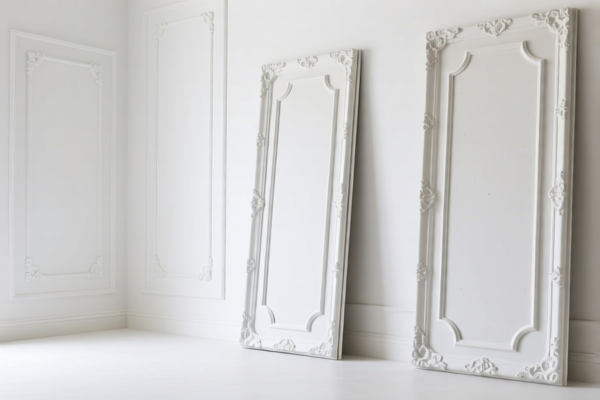

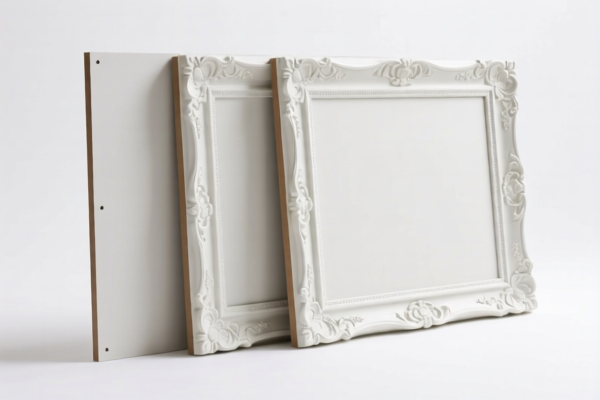
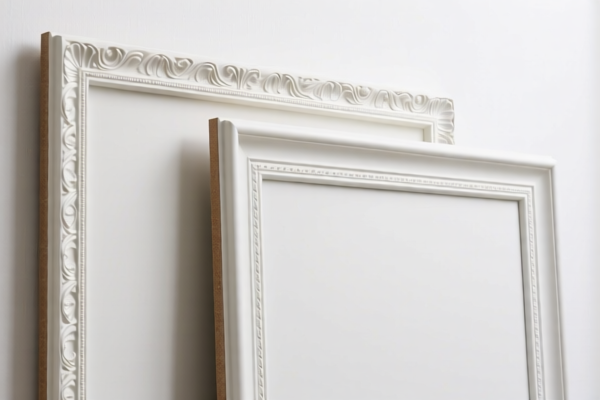
AI Analysis
🎨 Colored Decorative Gypsum Molding (装饰石膏线条)
🌐 HS Code Reference & Customs Clearance Guide | 2026 Latest Tariff Analysis | Professional通关 Strategy
📌 I. Product Definition & Classification: Do You Really Understand "Gypsum Molding"?
Colored decorative gypsum molding (often referred to as cove molding, crown molding, or baseboard) is a critical architectural trim used for interior decoration. In international trade, its classification is not simply "gypsum product" but depends strictly on its form and application:
1. Molded/Decorative Articles (Items 6809.90):
Gypsum products specifically shaped for decoration (like curved corners, intricate patterns, or specific molding profiles) that do not fall under the definition of "plates, sheets, or tiles." These are considered "Other articles."
2. Plates/Sheets/Similar Forms (Items 6809.19):
If the product is essentially a flat board or sheet with a decorative surface, even if intended for molding, it may fall under the "other plates/sheets" category.
⚠️ Critical Distinction Point:
- If the product is curved, molded, or specifically shaped as a corner/cove → It falls under "Other Articles" (6809.90).
- If the product is a flat board/panel used for wall covering or backing → It falls under "Plates/Sheets" (6809.19).
- Color does NOT change the HS Code classification in this context; the physical shape determines the heading.
📦 II. HS Code Classification Details (2026 Latest Tariff Alignment)
Based on the provided data, here are the two primary classifications for Colored Decorative Gypsum Molding:
| HS Code | Product Description (Summary) | Classification Logic | Tax Rate Category |
|---|---|---|---|
6809.90.00.00 |
Decorative Gypsum Corner/Line: Shaped as decorative artifacts (lines, corners), falling under "Other Articles." | ✅ Molded/Special Shape: Recognized as a finished decorative item, not a raw material or simple board. | 35.0% |
6809.19.00.00 |
Decorative Gypsum Corner/Line: Classified as "Other plates, sheets, or similar forms." | ⚠️ Board-like Form: Treated as a generic gypsum board/panel, even if intended for corner use. | 38.0% |
🔍 Key Insight:
-6809.90.00.00is generally preferred for true molding (crown, baseboard, cove) because it is explicitly "decorative" and shaped.
-6809.19.00.00is a catch-all for boards. If you declare a molded corner as a "sheet," you risk a higher tax rate (38% vs 35%) and potential customs scrutiny for misclassification.
- Color is irrelevant to the HS Code structure here; both entries apply regardless of the gypsum being white or colored.
💰 III. 2026 Latest Tariff Rate Breakdown (US Imports from China)
✅ Applicable Country: United States (US)
✅ Origin: China (CN)
✅ Effective Date: Current trade policies (Section 301 & IEEPA)
🎯 1. 6809.90.00.00 —— Decorative Gypsum Molding (Other Articles)
| Item | Content |
|---|---|
| Base Tariff | 0.0% (General Rate for Gypsum Articles) |
| Section 301 Additional Duty | +25.0% (Trade Act of 1974, Section 301) |
| Section 122 Tariff | +10.0% (Specific additional duty under IEEPA/Executive Orders) |
| Total Tax Rate | 35.0% |
| Tax Calculation | CIF Value × 35% |
| De Minimis Exemption | ❌ NOT Eligible (Deny de minimis for China-origin goods under current enforcement) |
| Legal Basis | USITC:6809.90.00.00 → FOOTNOTE:301 → IEEPA:122 |
📌 Explanation:
- The 0% base rate reflects the general tariff for gypsum products.
- The 25% Section 301 duty is the standard penalty for Chinese manufacturing.
- The 10% Section 122 duty is an additional layer often applied to specific import categories under recent executive actions.
- Total: 35%. This is a high-cost item for US importers.
🎯 2. 6809.19.00.00 —— Gypsum Plates/Sheets (Other)
| Item | Content |
|---|---|
| Base Tariff | 3.0% (General Rate for Gypsum Boards) |
| Section 301 Additional Duty | +25.0% (Trade Act of 1974, Section 301) |
| Section 122 Tariff | +10.0% (Specific additional duty under IEEPA/Executive Orders) |
| Total Tax Rate | 38.0% |
| Tax Calculation | CIF Value × 38% |
| De Minimis Exemption | ❌ NOT Eligible |
| Legal Basis | USITC:6809.19.00.00 → FOOTNOTE:301 → IEEPA:122 |
📌 Explanation:
- The 3% base rate is slightly higher than 0% for molded items.
- When combined with 25% + 10%, the total hits 38%.
- Misclassification Risk: If you are a molded corner but declare it as a "sheet," you pay 3% more than necessary, AND you risk customs rejection for inconsistent product description.
🛠️ IV. Customs Clearance Practical Advice (Battle-Tested Pitfall Avoidance)
✅ 1. Required Documentation Checklist (Non-Negotiable)
| Document | Required? | Purpose |
|---|---|---|
| ✅ Product Specification Sheet | ✔️ | Must state: Material (Gypsum), Shape (Molded/Corner/Line), Usage (Interior Decoration) |
| ✅ Product Photos | ✔️ | CRITICAL: Must clearly show the cross-section profile (curved/molded) to prove it’s NOT a flat sheet. |
| ✅ Commercial Invoice | ✔️ | Describe as "Colored Decorative Gypsum Crown Molding, Molded Profile" — Do NOT use vague terms like "Gypsum Board." |
| ✅ Packing List | ✔️ | Weight and dimensions per carton. |
| ✅ Certificate of Origin | ✔️ | To confirm China origin (triggering tariffs). |
| ✅ Labeling Compliance | ✔️ | Ensure labels meet US safety standards (if applicable for indoor air quality/VOCs). |
✅ 2. Declaration Strategy (Key Mantra)
🔥 “Shape Determines Code! Molded = 6809.90, Flat = 6809.19. Don’t Guess, Show the Profile!”
| Scenario | Correct Declaration | Wrong Declaration | Consequence |
|---|---|---|---|
| Curved Crown/Corner Molding | 6809.90.00.00 |
6809.19.00.00 |
Overpaid 3% tax + Potential penalty for misdescription |
| Flat Gypsum Board | 6809.19.00.00 |
6809.90.00.00 |
Underpaid 3% tax + Heavy Penalty for tax evasion |
| Mixed Shipment (Molding + Boards) | Separate Lines | One Line | Customs Seizure for inaccurate valuation/classification |
✅ 3. Special Handling Tips
| Situation | Advice |
|---|---|
| Colored vs. White | No difference in HS Code. Emphasize "Decorative" and "Molded Profile." |
| Sample Imports | Even for samples, if over $800, de minimis does NOT apply for China. Declare correctly. |
| OEM Custom Shapes | Provide CAD drawings or cross-section sketches to customs broker to prove it’s a "molded article" (6809.90). |
| Kit Sets (Molding + Adhesive) | Declare molding as primary item. Adhesive may be classified separately (often higher tariff). |
🌍 V. Global Market Comparison (2026 Overview)
| Market | Recommended HS Code | Tariff (China Origin) | Key Certification | Note |
|---|---|---|---|---|
| 🇺🇸 USA | 6809.90.00.00 |
35% | No specific certification, but ensure VOC compliance | Highest Tariff Burden |
| 🇨🇳 China | 6809.90.00.00 |
0% (Domestic) | CCC (if applicable) | No import duty |
| 🇪🇺 EU | 6809.90.00.00 |
0% | CE Marking (if applicable) | Favorable for gypsum |
| 🇦🇺 Australia | 6809.90.00.00 |
5% | GSB Compliance | Moderate tariff |
| 🇯🇵 Japan | 6809.90.00.00 |
0-5% | JIS Standard | Low tariff |
📌 Conclusion:
- USA is the most expensive market due to the 35% combined tariff.
- EU and Japan are far more competitive.
- Cost Impact: For a $10,000 shipment, US importers pay $3,500 in tariffs, while EU importers pay $0.
📌 VI. Common Mistakes & Pitfalls (Lessons Learned)
❌ Mistake 1: Declaring Molded Corners as "Gypsum Boards"
👉 Result: You pay 38% instead of 35%. Worse, customs may reject it for inconsistent product description.
👉 Fix: Always highlight "Molded" or "Shaped Profile" in the description.
❌ Mistake 2: Ignoring Section 122 Tariff
👉 Result: Budgeting for 25% only, but facing 35% at the port.
👉 Fix: Always add 10% Section 122 to your cost model for China-origin gypsum.
❌ Mistake 3: Using "Gypsum Decor" as a Generic Description
👉 Result: Customs delays for clarification.
👉 Fix: Be specific: "White Colored Gypsum Crown Molding, 4-inch Width, Molded Profile, Model XYZ."
🎯 VII. Conclusion: Precision Classification Saves Money!
🎯 Remember the Mantra:
🔹 “Molded Corners = 6809.90 (35%)” vs. “Flat Boards = 6809.19 (38%)”
🔹 “3% Difference is Free Money” – But Misclassification Costs 10x More in Penalties!
🔹 “Show the Cross-Section to Avoid the 38% Trap!”
📌 Pro Tip:
If your gypsum molding is originally from Vietnam, Mexico, or Thailand, you may qualify for IEEPA Exemptions, reducing the total tariff to 0%~5%.
✅ Action Step:
📞 Engage a Licensed Customs Broker
📄 Submit HS Code Advance Ruling Request
🚀 Optimize Your Supply Chain to Avoid the 35% US Tariff!
📣 Immediate Action:
Review your product profiles!
If they are curved or shaped, declare 6809.90.00.00.
If they are flat panels, declare 6809.19.00.00.
Do not guess!
✨ Professional Customs Clearance Starts with Accurate Classification!
💼 Every Percent of Tariff Counts – Protect Your Profit Margin!
Customer Reviews
About HS Code Classification
The Harmonized System (HS) is an internationally standardized nomenclature developed by the World Customs Organization (WCO) to classify traded products. Over 200 countries use the HS system as the basis for customs tariffs, trade statistics, and import/export regulations.
Each HS code follows a hierarchical structure:
- Chapter (2 digits) — Broad category of goods (e.g., Chapter 84: Machinery and Mechanical Appliances)
- Heading (4 digits) — More specific grouping within the chapter
- Subheading (6 digits) — Internationally standardized breakdown, used by all WCO member countries
- National subdivisions (8-10 digits) — Country-specific extensions for further classification, such as US HTSUS 10-digit codes
Correct HS code classification is essential for smooth customs clearance, accurate duty payment, and compliance with trade regulations. Misclassification can lead to customs delays, overpayment of duties, or penalties.
When importing from CN to US, the applicable tariff rates may include:
- Most-Favored-Nation (MFN) rate — The standard duty rate applied to WTO members
- General rate — Applied to countries without trade agreements
- Trade remedy duties — Additional tariffs such as Section 301 (anti-dumping), Section 232 (national security), or countervailing duties
The information provided on this page is for reference purposes only. For official classification, please consult with your local customs authority or a licensed customs broker.