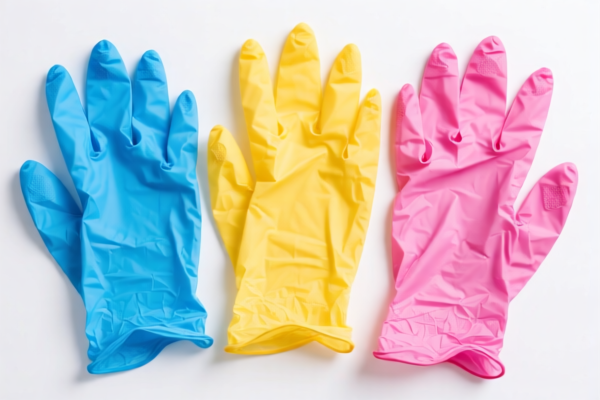
colored disposable plastic gloves
CN → US| HS Code | Tariff Rate | Origin | Destination | Doc |
|---|---|---|---|---|
| 3926204010 | 16.5% | CN | US | Official Doc |
| 3926201020 | 10.0% | CN | US | Official Doc |
| 3926204050 | 16.5% | CN | US | Official Doc |
| 6116104400 | 27.4% | CN | US | Official Doc |
| 6116101300 | 30.0% | CN | US | Official Doc |
Product Images



AI Analysis
🧤 Colored Disposable Plastic Gloves: HS Code Classification & U.S. Customs Strategy (2026 Update)
🌐 HS Code Reference & Clearance Guide | Latest 2026 Tariff Analysis | Professional-Level Entry Strategy
📌 I. Product Definition & Classification: Do You Really Understand "Colored Disposable Plastic Gloves"?
Colored disposable plastic gloves are essential personal protective equipment (PPE) used in healthcare, food processing, cleaning, and industrial settings. In international trade, they are generally classified under Chapter 39 (Plastics and articles thereof) or Chapter 61 (Articles of apparel and clothing accessories, knitted or crocheted), depending heavily on the manufacturing process (coated vs. immersed) and material composition.
Key Distinction:
- Chapter 39 (3926.20): Typically refers to gloves made of plastic materials (like PVC, PE, or PP) where the plastic itself forms the glove structure, or heavily coated plastic sheets.
- Chapter 61 (6116.10): Typically refers to gloves where a textile base (knitted/crocheted fabric) is impregnated, coated, covered, or laminated with plastic or rubber.
⚠️ Critical Differentiator:
- If the glove is solid plastic (e.g., vinyl, polyethylene) without a fabric base → Chapter 39.
- If the glove has a fabric lining coated with plastic → Chapter 61.
- Color does not change the HS code; it is considered a finishing process.
📦 II. HS Code Classification Details (2026 Latest Tariff Authority Cross-Reference)
Based on the provided data, here are the five possible HS codes for "Colored Disposable Plastic Gloves":
| HS Code | Product Description | Application Scenario | Material/Process Characteristic | Total Tax Rate |
|---|---|---|---|---|
3926.20.40.10 |
Disposable Plastic Gloves | General purpose, hygiene, light industrial use | Plastic material, shaped as gloves; fits Chapter 39 plastic articles | 16.5% |
3926.20.10.20 |
Disposable Plastic Gloves | Basic plastic gloves, likely low-cost PVC/PE | Plastic material, form and use match plastic requirements | 10.0% |
3926.20.40.50 |
Plastic-Coated Gloves | Gloves with plastic coating, classified as clothing accessories | Plastic material, form/match clothing accessory category | 16.5% |
6116.10.44.00 |
Plastic-Coated Gloves | Textile base with plastic coating, high protection needs | Textile base impregnated/coated with plastic; meets material requirements | 27.4% |
6116.10.13.00 |
Plastic-Coated Gloves | High-end plastic-coated gloves, detailed plastic immersion | Key material feature: plastic immersion/coating on textile | 30.0% |
🔍 Key Reminder:
- Chapter 39 (3926.20) codes generally apply to gloves made entirely of plastic or where plastic is the dominant structural material.
- Chapter 61 (6116.10) codes apply if the glove has a knitted/crocheted fabric base that is then coated with plastic.
- Misclassification Risk: Declaring a fabric-lined coated glove as3926(pure plastic) will trigger customs audits, leading to back taxes, penalties, and delays.
💰 III. 2026 Latest Tariff Rate Breakdown (Including Additional Taxes, Policy Surcharges)
✅ Applicable Country: United States (US)
✅ Country of Origin: China (CN)
✅ Effective Date: Current trade war tariffs (Section 301 & IEEPA) apply.
🎯 1. 3926.20.40.10 —— Disposable Plastic Gloves (Plastic Category)
| Item | Content |
|---|---|
| Base Duty Rate | 6.5% (ad valorem) |
| Section 301 Surcharge | 0.0% (Note: Data shows 0%, but verify latest USITC footnotes) |
| Section 122 Surcharge | 10.0% (Special surcharge for Chinese goods) |
| Total Tax Rate | 16.5% |
| Tax Calculation | CIF Value × 16.5% |
| De Minimis Eligibility | ❌ Not Eligible (Section 122 goods generally excluded from $800 de minimis) |
| Legal Basis Path | USITC:3926.20.40.10 → Section 122: 10% |
📌 Explanation:
- Base 6.5%: Standard Most Favored Nation (MFN) rate for plastic articles.
- Section 122 10%: This is a specific surcharge applied to certain Chinese imports. Crucially, goods subject to Section 122 are not eligible for the $800 de minimis exemption (Section 321). This means small shipments still pay tax.
- Total 16.5%: Significant cost impact for bulk imports.
🎯 2. 3926.20.10.20 —— Disposable Plastic Gloves (Basic Plastic Category)
| Item | Content |
|---|---|
| Base Duty Rate | 0.0% |
| Section 301 Surcharge | 0.0% |
| Section 122 Surcharge | 10.0% |
| Total Tax Rate | 10.0% |
| Tax Calculation | CIF Value × 10.0% |
| De Minimis Eligibility | ❌ Not Eligible (Section 122 goods excluded from $800 de minimis) |
| Legal Basis Path | USITC:3926.20.10.20 → Section 122: 10% |
📌 Note:
- This is the most cost-effective option among the Chapter 39 codes.
- However, eligibility depends on the specific plastic type and manufacturing method. If customs determines the glove is not "basic" plastic, they may reclassify it to a higher-tariff code.
- Still subject to Section 122, so no de minimis exemption.
🎯 3. 3926.20.40.50 —— Plastic-Coated Gloves (Clothing Accessory Category)
| Item | Content |
|---|---|
| Base Duty Rate | 6.5% |
| Section 301 Surcharge | 0.0% |
| Section 122 Surcharge | 10.0% |
| Total Tax Rate | 16.5% |
| Tax Calculation | CIF Value × 16.5% |
| De Minimis Eligibility | ❌ Not Eligible |
| Legal Basis Path | USITC:3926.20.40.50 → Section 122: 10% |
📌 Explanation:
- Similar to3926.20.40.10, but classified under a different subheading for "plastic-coated" items.
- Same tariff structure: 6.5% base + 10% Section 122 = 16.5%.
- No de minimis exemption.
🎯 4. 6116.10.44.00 —— Plastic-Coated Gloves (Textile Base, High Protection)
| Item | Content |
|---|---|
| Base Duty Rate | 9.9% |
| Section 301 Surcharge | 7.5% |
| Section 122 Surcharge | 10.0% |
| Total Tax Rate | 27.4% |
| Tax Calculation | CIF Value × 27.4% |
| De Minimis Eligibility | ❌ Not Eligible (Chapter 61 items often excluded or higher risk) |
| Legal Basis Path | USITC:6116.10.44.00 → Section 301: 7.5% → Section 122: 10% |
📌 Important:
- This code implies a textile base coated with plastic.
- Higher Base Rate (9.9%) reflects the more complex manufacturing (textile + plastic).
- Section 301 (7.5%) is applied here, unlike in some Chapter 39 codes (which show 0% in the data). This suggests different tariff treatment for Chapter 61 items under current trade policies.
- Total 27.4%: Very high cost. Must ensure the glove truly has a textile base.
🎯 5. 6116.10.13.00 —— Plastic-Coated Gloves (Premium Textile Base)
| Item | Content |
|---|---|
| Base Duty Rate | 12.5% |
| Section 301 Surcharge | 7.5% |
| Section 122 Surcharge | 10.0% |
| Total Tax Rate | 30.0% |
| Tax Calculation | CIF Value × 30.0% |
| De Minimis Eligibility | ❌ Not Eligible |
| Legal Basis Path | USITC:6116.10.13.00 → Section 301: 7.5% → Section 122: 10% |
📌 Note:
- The highest tariff in this dataset.
- Applies to gloves with specific plastic immersion/coating characteristics on textile bases.
- Only choose this if the glove is explicitly manufactured with a knitted/crocheted fabric base and high-grade plastic coating.
- No de minimis exemption.
🛠️ IV. Customs Clearance Practical Advice (Combat Avoidance Guide)
✅ 1. Documentation Checklist (Non-Negotiable)
| Document | Mandatory | Description |
|---|---|---|
| ✅ Product Specifications | ✔️ | Material composition (100% plastic vs. fabric + plastic), thickness, color, size. |
| ✅ Manufacturing Process Diagram | ✔️ | Crucial to distinguish between Chapter 39 (plastic mold/extrusion) and Chapter 61 (textile knitting + coating). |
| ✅ Product Photos (Including Label) | ✔️ | Clear view of texture, lining, and any markings indicating "Vinyl," "Nitrile," or "Fabric-Lined." |
| ✅ Commercial Invoice | ✔️ | Must specify "Disposable Plastic Gloves" or "Plastic-Coated Fabric Gloves." Avoid vague terms like "Protective Gear." |
| ✅ Packing List | ✔️ | Detail units, weight, and dimensions. Ensure consistency with invoice. |
| ✅ Origin Certificate (if applicable) | ✔️ | For countries other than China, to claim preferential rates. |
✅ 2. Declaration Strategy (Key Mantra)
🔥 "Material Determines Code, Base Determines Chapter, Section 122 Kills De Minimis!"
| Scenario | Correct Declaration | Incorrect Practice |
|---|---|---|
| 100% Plastic Glove (Vinyl/PE/PP) | 3926.20.10.20 or 3926.20.40.10 |
Declare as 6116.10 → Audit Risk |
| Fabric-Lined Coated Glove | 6116.10.13.00 or 6116.10.44.00 |
Declare as 3926.20 → Misclassification Penalty |
| Small Shipment (<$800) | Still Pay Tax (Section 122 applies) | Assume $800 de minimis applies → Seizure Risk |
| OEM Custom Gloves | Provide client specs + material test report | Vague description "Gloves" → Delay |
✅ 3. Special Handling Scenarios
| Situation | Handling Advice |
|---|---|
| Mixed Materials (e.g., cotton palm + plastic back) | Do NOT split declaration. Declare as one item under the most specific code (likely 6116). Splitting may lead to higher combined duties. |
| Colored vs. Uncolored | Color is a finishing process. It does not change the HS code. Ensure the description includes color if relevant to the buyer, but don’t rely on it for classification. |
| Section 122 Impact | Remember: Section 122 removes the $800 de minimis exemption. Even small B2C or DTC shipments from China must pay 10%+10% (or base) tax. Plan for this in pricing. |
| Pre-Ruling Recommendation | For large volumes, apply for a U.S. Customs and Border Protection (CBP) Pre-Ruling. This provides legal certainty and prevents costly reclassification disputes. |
🌍 V. Global Market Comparison (2026 Latest)
| Country/Region | Recommended HS Code | Tariff (China Origin) | Certification | Notes |
|---|---|---|---|---|
| 🇺🇸 United States | 3926.20.10.20 (Lowest) |
10.0% - 30.0% | FDA (if medical), CPSIA (if toys) | Section 122 applies. No de minimis. |
| 🇨🇳 China | 3926.20.20.00 (General) |
0% - 6.5% | CCC (if applicable) | Lower base rates, no Section 301/122. |
| 🇪🇺 European Union | 3926.20.90 |
0% - 4.5% | CE, REACH, LFGB (food contact) | No Section 122. De minimis applies (€150). |
| 🇬🇧 United Kingdom | 3926.20.90 |
0% - 4.5% | UKCA, REACH | Post-Brexit rules apply. |
| 🇦🇺 Australia | 3926.20.90 |
5% | ACCC, Therapeutic Goods | No Section 122. |
📌 Conclusion:
- The U.S. market is the most challenging due to Section 122 and Section 301 tariffs.
- Cost Optimization: For the U.S., strive to classify under3926.20.10.20(10% total) if possible, avoiding Chapter 61 (27-30%) unless the product is genuinely textile-based.
- De Minimis Loss: Businesses relying on small-package DTC models must adjust pricing or shift supply chains to non-China origins to avoid Section 122 taxes.
📌 VI. Common Mistakes & Pitfalls (Lessons Learned)
❌ Mistake 1: Assuming all small plastic glove shipments under $800 are tax-free.
👉 Consequence: Section 122 removes de minimis for these goods. 10% tax still applies. Shipment held or taxed upon entry.
❌ Mistake 2: Declaring fabric-lined gloves as "Plastic Gloves" to save 10%+ duty.
👉 Consequence: Customs inspection reveals textile base. Back taxes + 10% penalty + legal fees.
❌ Mistake 3: Ignoring Section 301 differences between Chapter 39 and 61.
👉 Consequence: Some Chapter 61 items have 7.5% Section 301 surcharge, while some Chapter 39 items show 0%. Misunderstanding leads to budget errors.
❌ Mistake 4: Vague product description ("Gloves").
👉 Consequence: Customs officer has discretion to assign the highest possible tariff code. Avoid this!
✅ Correct Approach:
"Disposable Vinyl Gloves, Color: Blue, Size: M, 100% PVC, Non-Sterile, Not for Medical Use, HS Code: 3926.20.10.20"
🎯 VII. Conclusion: Precision Classification, Cost Control, Smooth Clearance!
🎯 Remember the Mantra:
🔹 "Plastic Base = Ch.39, Fabric Base = Ch.61"
🔹 "Section 122 = No De Minimis, Even for $1"
🔹 "Lowest Rate is 10%, But Only if Classified Correctly"
📌 Pro Tip:
If your gloves are colored, ensure the colorants are FDA-compliant (if food/medical contact) or RoHS/REACH-compliant (if general use). This doesn’t change the HS code but is critical for market access in the U.S., EU, and Japan.
📣 Immediate Action:
📞 Consult a Customs Broker to verify material composition against HS codes.
📄 Request a CBP Pre-Ruling for high-volume shipments.
🚀 Optimize Supply Chain to avoid Section 122 by sourcing from Vietnam/Mexico if possible (though verify origin rules).
✨ Professional Clearance Starts with Accurate Classification!
💼 Every Percent of Tariff Counts in Your Profit Margin!
Customer Reviews
About HS Code Classification
The Harmonized System (HS) is an internationally standardized nomenclature developed by the World Customs Organization (WCO) to classify traded products. Over 200 countries use the HS system as the basis for customs tariffs, trade statistics, and import/export regulations.
Each HS code follows a hierarchical structure:
- Chapter (2 digits) — Broad category of goods (e.g., Chapter 84: Machinery and Mechanical Appliances)
- Heading (4 digits) — More specific grouping within the chapter
- Subheading (6 digits) — Internationally standardized breakdown, used by all WCO member countries
- National subdivisions (8-10 digits) — Country-specific extensions for further classification, such as US HTSUS 10-digit codes
Correct HS code classification is essential for smooth customs clearance, accurate duty payment, and compliance with trade regulations. Misclassification can lead to customs delays, overpayment of duties, or penalties.
When importing from CN to US, the applicable tariff rates may include:
- Most-Favored-Nation (MFN) rate — The standard duty rate applied to WTO members
- General rate — Applied to countries without trade agreements
- Trade remedy duties — Additional tariffs such as Section 301 (anti-dumping), Section 232 (national security), or countervailing duties
The information provided on this page is for reference purposes only. For official classification, please consult with your local customs authority or a licensed customs broker.