colored film customizable substrate thickness
CN → US| HS Code | Tariff Rate | Origin | Destination | Doc |
|---|---|---|---|---|
| 3921904090 | 39.2% | CN | US | Official Doc |
| 3921905050 | 39.8% | CN | US | Official Doc |
| 3920591000 | 41.0% | CN | US | Official Doc |
| 3920992000 | 39.2% | CN | US | Official Doc |
Product Images
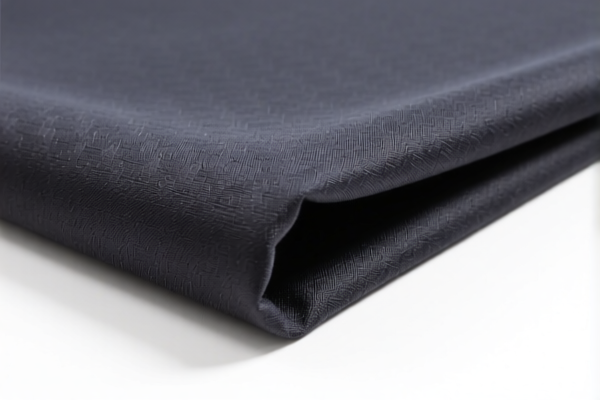
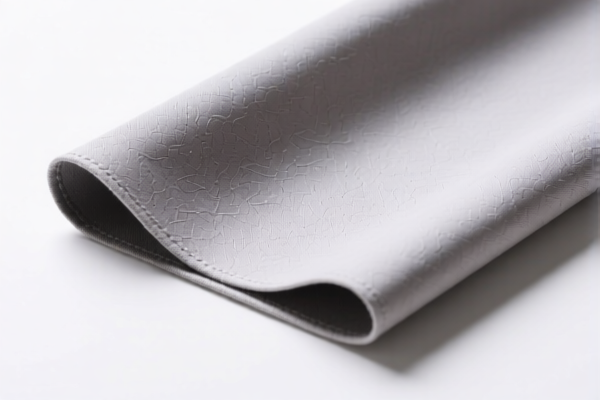
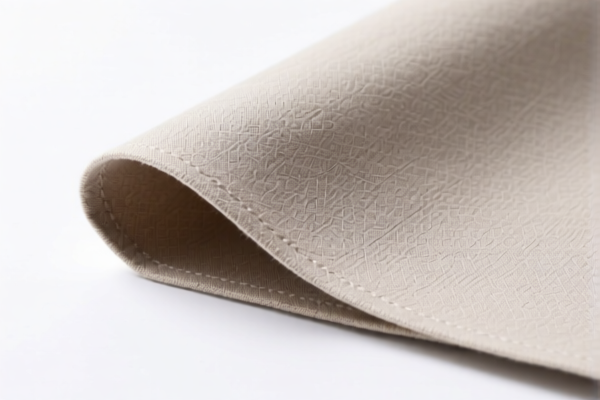
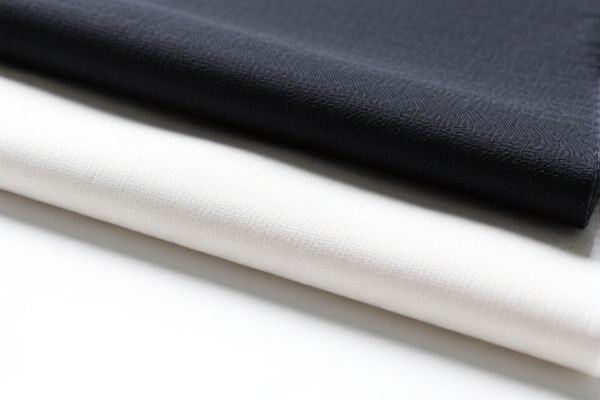
AI Analysis
🎨 Customizable Colored Printing Film (Substrate Thickness Variants)
🌐 HS Code Reference & Customs Clearance Guide | 2026 Latest Tariff Analysis | Professional Compliance Strategy
📌 I. Product Definition & Classification: What is "Colored Printing Film"?
Colored printing film refers to thin plastic sheets used primarily for packaging, labeling, graphic arts, and industrial printing applications. These films are characterized by their flexibility, printability, and customizable substrate thickness. In international trade, they are classified based on their material composition (plastic type) and functional use (printing substrate).
⚠️ Key Distinction:
- If the film is primarily for general printing purposes (e.g., labels, packaging wraps) → It falls under Chapter 39 (Plastics and Articles Thereof).
- If it has special functions (e.g., optical filters, medical films, self-adhesive tapes), it may fall under different chapters.
- Substrate Thickness: While thickness can be customized, HS Codes in Chapter 39 generally do not differentiate by thickness unless specified in national subheadings. The key determinant is the material polymer and form (film/sheet).
📦 II. HS Code Classification Details (2026 Latest Tariff Authority)
Based on the provided data, the following HS Codes apply to colored printing films made of various plastic materials:
| HS Code | Product Description | Material Composition | Total Tax Rate (US Import from China) |
|---|---|---|---|
3921.90.40.90 |
Plastic films, other than those of heading 3920 or 3919 | Plastic (General) | 39.2% |
3921.90.50.50 |
Plastic films, other than those of heading 3920 or 3919 | Plastic (General) | 39.8% |
3920.59.10.00 |
Plates, sheets, film, etc., of acrylic or related polymers | Acrylic or Related Polymers | 41.0% |
3921.90.40.90 |
Plastic films, other than those of heading 3920 or 3919 | Plastic (General) | 39.2% (Duplicate entry) |
3920.99.20.00 |
Plates, sheets, film, etc., of other plastics | Other Plastics | 39.2% |
🔍 Critical Note:
-3920covers non-self-adhesive plastic plates, sheets, film, etc.
-3921covers other plastic plates, sheets, film, etc.
- The distinction between3920and3921often depends on whether the film is flexible and its specific chemical composition.
- Acrylic-based films (3920.59.10.00) carry a higher base tariff (6.0%) compared to general plastics (4.2–4.8%).
💰 III. 2026 Latest Tariff Rate Breakdown (Including Surcharges & Policy Add-ons)
✅ Applicable Country: United States (US)
✅ Origin: China (CN)
✅ Effective Date: Ongoing (as of 2026)
🎯 1. HS Code 3921.90.40.90 —— Plastic Films (General)
| Item | Content |
|---|---|
| Base Tariff | 4.2% (ad valorem) |
| Section 301 Surcharge | +25.0% (USITC Footnote 9903.88.01) |
| Section 122 Surcharge | +10.0% (Trade Act of 1974, Section 122) |
| Total Tax Rate | 39.2% |
| Tax Calculation | CIF Value × 39.2% |
| De Minimis Exemption | ❌ Not Applicable |
| Legal Basis Path | USITC:3921.90.40.90 → FOOTNOTE:9903.88.01 → Section 122 |
📌 Explanation:
- The 4.2% base tariff applies to general plastic films.
- The 25% Section 301 surcharge is the primary trade barrier.
- The 10% Section 122 surcharge is an additional penalty tariff on certain Chinese goods.
- Total: 39.2% is a significant cost burden, requiring careful margin planning.
🎯 2. HS Code 3921.90.50.50 —— Plastic Films (Alternative Subheading)
| Item | Content |
|---|---|
| Base Tariff | 4.8% (ad valorem) |
| Section 301 Surcharge | +25.0% |
| Section 122 Surcharge | +10.0% |
| Total Tax Rate | 39.8% |
| Tax Calculation | CIF Value × 39.8% |
| De Minimis Exemption | ❌ Not Applicable |
| Legal Basis Path | USITC:3921.90.50.50 → FOOTNOTE:9903.88.01 → Section 122 |
📌 Note:
- Slightly higher base tariff (4.8% vs. 4.2%) leads to a 0.6% higher total rate.
- Choose the correct subheading based on precise material specifications to avoid misclassification penalties.
🎯 3. HS Code 3920.59.10.00 —— Acrylic or Related Polymer Films
| Item | Content |
|---|---|
| Base Tariff | 6.0% (ad valorem) |
| Section 301 Surcharge | +25.0% |
| Section 122 Surcharge | +10.0% |
| Total Tax Rate | 41.0% |
| Tax Calculation | CIF Value × 41.0% |
| De Minimis Exemption | ❌ Not Applicable |
| Legal Basis Path | USITC:3920.59.10.00 → FOOTNOTE:9903.88.01 → Section 122 |
📌 Caution:
- Acrylic films are more expensive to import due to the higher base tariff (6.0%).
- Ensure your product is not misclassified as general plastic if it contains acrylic components.
🎯 4. HS Code 3920.99.20.00 —— Other Plastic Films
| Item | Content |
|---|---|
| Base Tariff | 4.2% (ad valorem) |
| Section 301 Surcharge | +25.0% |
| Section 122 Surcharge | +10.0% |
| Total Tax Rate | 39.2% |
| Tax Calculation | CIF Value × 39.2% |
| De Minimis Exemption | ❌ Not Applicable |
| Legal Basis Path | USITC:3920.99.20.00 → FOOTNOTE:9903.88.01 → Section 122 |
📌 Note:
- Applies to plastics not otherwise specified (e.g., PET, PE, PP if not covered elsewhere).
- Same total rate as3921.90.40.90, but different HS chapter context.
🛠️ IV. Customs Clearance Practical Advice (Pitfall Avoidance Guide)
✅ 1. Documentation Checklist (Mandatory)
| Document | Required | Description |
|---|---|---|
| ✅ Product Specification Sheet | ✔️ | Must include material type (e.g., acrylic, PE, PP), thickness range, color, and intended use (printing). |
| ✅ Material Safety Data Sheet (MSDS) | ✔️ | For chemical composition verification. |
| ✅ Commercial Invoice | ✔️ | Clearly state "Colored Printing Film, Plastic, Customizable Thickness." |
| ✅ Packing List | ✔️ | Detail roll/dimension weights to verify CIF value accuracy. |
| ✅ Certificate of Origin (CO) | ✔️ | If claimed for any potential future exemptions (though currently none apply). |
| ✅ Third-Party Test Report | ✔️ | Confirm material composition (e.g., ASTM D792 for plastic density) to support HS classification. |
✅ 2. Declaration Tips (Key Mantras)
🔥 “Material Defines Code, Thickness is Secondary, Be Specific to Avoid Audit!”
| Scenario | Correct Declaration | Wrong Practice |
|---|---|---|
| Film is Acrylic-based | 3920.59.10.00 |
Misclassify as "General Plastic" → 3921.90.40.90 → Overpay by 1.8% |
| Film is General Plastic | 3921.90.40.90 or 3920.99.20.00 |
Vague description "Plastic Film" → Audit Risk |
| Custom Thickness | Do not specify thickness in HS Code search | Thickness does not change HS Code; it affects price, not tariff rate |
| Multi-layer Film | Specify primary layer material | If unclear, may be classified under "Other" → Higher scrutiny |
✅ 3. Special Cases Handling
| Scenario | Recommendation |
|---|---|
| OEM Custom Film | Provide customer design specs + material data sheet to prove intended use. |
| Self-Adhesive Film | ❗ NOT Covered in Data → May fall under 3919 (Self-adhesive) or 3920 if non-adhesive side. Verify adhesive type. |
| Metalized Film | If surface is metallized for barrier properties, still 3920/3921 unless it has additional functional layers. |
| Biodegradable Plastic | Still classified under 3920/3921 unless specifically exempted. No tariff reduction currently. |
🌍 V. Global Market Clearance Comparison (2026 Latest)
| Country/Region | Recommended HS Code | Tariff (China Origin) | Certification Requirements | Notes |
|---|---|---|---|---|
| 🇺🇸 USA | 3920.99.20.00 / 3921.90.40.90 |
39.2%–41.0% | None (General) | High surcharges due to Section 301 & 122. |
| 🇨🇳 China | 3920.99.20.00 |
6.5% | None | Low base tariff; no surcharges. |
| 🇪🇺 EU | 3920.99.10 / 3921.90.98 |
6.5% | REACH Compliance | No Section 301/122 equivalents. |
| 🇬🇧 UK | 3920.99.10 |
6.5% | UKCA Marking | Post-Brexit rules apply; similar to EU. |
| 🇦🇺 Australia | 3920.99.10 |
5.0% | ACCC Compliance | Lower tariff; good alternative market. |
📌 Conclusion:
- USA is the most expensive market for these films due to 39.2%–41.0% total tariffs.
- EU, UK, and Australia offer significantly lower tariffs (~5–6.5%).
- Consider supply chain diversification if targeting the US market long-term.
📌 VI. Common Errors & Pitfall Guide (Lessons Learned)
❌ Error 1: Misclassifying acrylic film as general plastic
👉 Consequence: Underpaying tariff by 1.8% → Back taxes + penalties upon audit!
❌ Error 2: Ignoring Section 122 Surcharge
👉 Consequence: Underestimating total cost by 10% → Profit margin erosion!
❌ Error 3: Vague Description "Plastic Film"
👉 Consequence: Customs holds shipment for material verification → Delay of 2–4 weeks!
❌ Error 4: Assuming thickness affects HS Code
👉 Consequence: Wasted time searching for thickness-based codes → None exist in Chapter 39!
✅ Correct Practice:
“Colored Printing Film, 0.1mm Thickness, Acrylic Base, Roll Packaging, for Label Printing, Model XYZ, Non-Adhesive”
🎯 VII. Conclusion: Precision Classification for Cost Optimization!
🎯 Remember the Mantras:
🔹 “Material First, Thickness Second, Acrylic Costs More!”
🔹 “39.2% to 41% is the US Reality, Plan Your Margin!”
🔹 “Clear Descriptions Prevent Delays, Vague Ones Cause Audits!”
📌 Pro Tip:
If your film is non-china origin (e.g., Vietnam, Thailand, Mexico), you may avoid Section 301/122 surcharges, reducing total tariff to 4.2%–6.0%.
Consider pre-ruling requests from US Customs and Border Protection (CBP) for complex multi-layer films to ensure correct classification.
📣 Immediate Action:
📞 Contact a licensed customs broker + Provide Material Safety Data Sheet (MSDS) + Apply for HS Code Pre-Ruling
🚀 Ensure smooth clearance, accurate taxation, and maximum profitability!
✨ Professional Clearance Starts with Accurate Classification!
💼 Every Percentage Point of Tax Affects Your Bottom Line!
Customer Reviews
About HS Code Classification
The Harmonized System (HS) is an internationally standardized nomenclature developed by the World Customs Organization (WCO) to classify traded products. Over 200 countries use the HS system as the basis for customs tariffs, trade statistics, and import/export regulations.
Each HS code follows a hierarchical structure:
- Chapter (2 digits) — Broad category of goods (e.g., Chapter 84: Machinery and Mechanical Appliances)
- Heading (4 digits) — More specific grouping within the chapter
- Subheading (6 digits) — Internationally standardized breakdown, used by all WCO member countries
- National subdivisions (8-10 digits) — Country-specific extensions for further classification, such as US HTSUS 10-digit codes
Correct HS code classification is essential for smooth customs clearance, accurate duty payment, and compliance with trade regulations. Misclassification can lead to customs delays, overpayment of duties, or penalties.
When importing from CN to US, the applicable tariff rates may include:
- Most-Favored-Nation (MFN) rate — The standard duty rate applied to WTO members
- General rate — Applied to countries without trade agreements
- Trade remedy duties — Additional tariffs such as Section 301 (anti-dumping), Section 232 (national security), or countervailing duties
The information provided on this page is for reference purposes only. For official classification, please consult with your local customs authority or a licensed customs broker.