colored folder
CN → US| HS Code | Tariff Rate | Origin | Destination | Doc |
|---|---|---|---|---|
| 4820300040 | 35.0% | CN | US | Official Doc |
| 4820300020 | 35.0% | CN | US | Official Doc |
| 3926100000 | 15.3% | CN | US | Official Doc |
| 3926908700 | 40.3% | CN | US | Official Doc |
Product Images
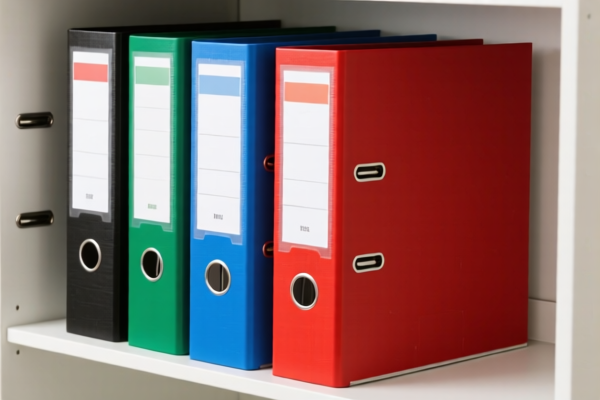
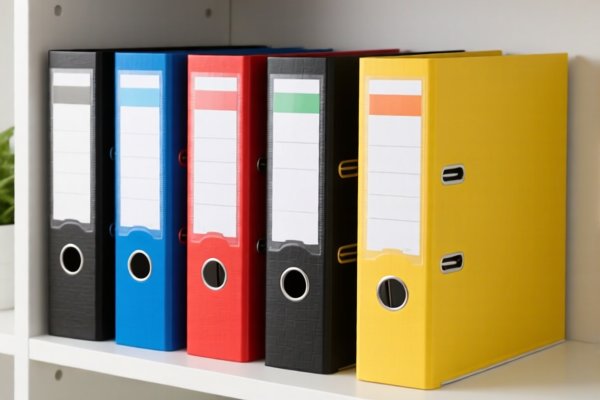
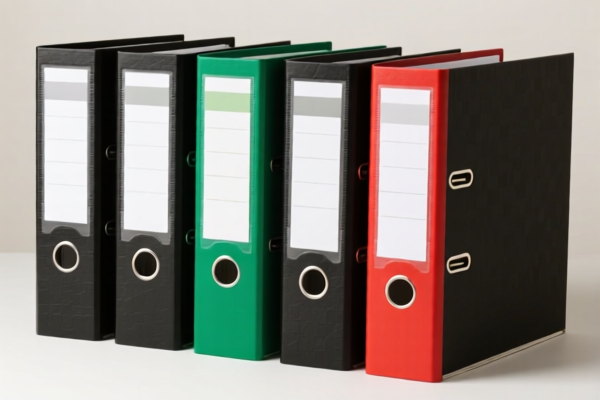
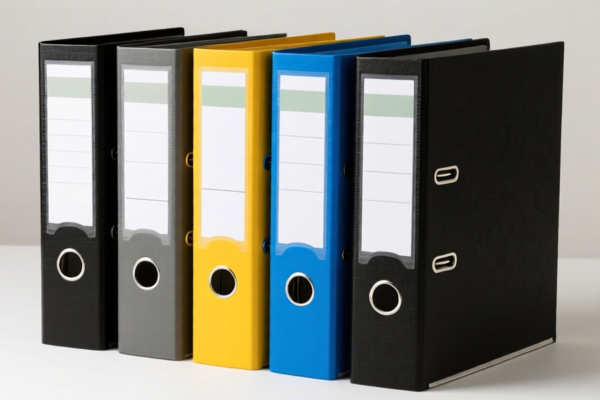
AI Analysis
📂 Colored Folders (Paper & Plastic Organizers)
🌐 HS Code Reference & Customs Clearance Guide | 2026 Latest Tariff Analysis | Professional Clearance Strategy
📌 I. Product Definition & Classification: Do You Really Understand “Colored Folders”?
Colored folders are essential office and school supplies used for document organization. In international trade, the classification depends strictly on material composition and structural features. They are primarily divided into two main categories:
1. Paper-Based Folders (Paper/Cardboard): Including colored file folders, pocket folders, and standard paper binders. 2. Plastic-Based Folders: Including vinyl binders, flexible plastic ring binders, and rigid plastic document covers.
⚠️ Key Distinction Point:
- If made of Paper/Cardboard: Check if it fits specific sub-features like "loose-leaf binders". If not, it falls under "other". → HS Code 4820 series
- If made of Plastic: Check if it’s a rigid item or a flexible binding mechanism (e.g., rings/plastic sheets). Rigid/Specific = 3926.10; Flexible/General = 3926.90.
📦 II. HS Code Classification Details (2026 Latest Tariff Authority Comparison)
| HS Code | Product Description | Application Scenario | Material | Binding Feature |
|---|---|---|---|---|
4820.30.00.40 |
Paper/Cardboard Colored Folders (Other) | General office filing, loose-leaf not included | Paper/Cardboard | ❌ Not Loose-Leaf Specific |
4820.30.00.20 |
Paper/Cardboard Colored Folders | Loose-leaf binders/folders | Paper/Cardboard | ✅ Loose-Leaf Feature |
3926.10.00.00 |
Plastic Office/School Supplies | Rigid plastic folders, standard binders | Plastic | ❌ General Office Use |
3926.90.87.00 |
Plastic Flexible Binding Folders | Flexible plastic document binding (rings/sheets) | Plastic | ✅ Flexible Binding Feature |
🔍 Key Reminder:
- Paper Folders: The main difference between4820.30.00.20and4820.30.00.40is whether it meets the classification characteristics of loose-leaf binders. If yes, use.20; if general colored folders, use.40. - Plastic Folders:3926.10.00.00is for general plastic office items.3926.90.87.00is specifically for flexible plastic file binding mechanisms. Misclassification here leads to huge tariff jumps.
💰 III. 2026 Latest Tariff Rate Breakdown (Including Surcharges & Policy Add-ons)
✅ Applicable Country: United States (US)
✅ Origin: China (CN)
✅ Effective Date: From Nov 10, 2025 (and subsequent imports)
🎯 1. 4820.30.00.40 & 4820.30.00.20 —— Paper/Cardboard Folders
| Item | Content |
|---|---|
| Base Tariff | 0% (ad valorem) |
| USITC Surtax (Section 301) | +25% |
| IEEPA Surtax (Section 122) | +10% |
| Total Rate | 35.0% |
| Tax Calculation | CIF Value × 35% |
| De Minimis Exemption? | ❌ No (deny_de_minimis) |
| Legal Basis Path | USITC:4820.30.00.20 → FOOTNOTE:9903.88.01 → IEEPA:9903.01.25 |
📌 Explanation:
- Base 0%: Paper products often have low base tariffs. - Section 301 (25%): The major "Additional Tariff" for Chinese goods. - Section 122 (10%): The additional tariff imposed under the International Emergency Economic Powers Act (IEEPA) for specific categories from China. - Total 35%: This is a high tariff for simple paper goods. Cost must be factored in immediately.
🎯 2. 3926.10.00.00 —— Plastic Office/School Supplies (General)
| Item | Content |
|---|---|
| Base Tariff | 5.3% |
| USITC Surtax (Section 301) | 0% |
| IEEPA Surtax (Section 122) | +10% |
| Total Rate | 15.3% |
| Tax Calculation | CIF Value × 15.3% |
| De Minimis Exemption? | ❌ No (deny_de_minimis) |
| Legal Basis Path | USITC:3926.10.00.00 → IEEPA:9903.01.24 |
📌 Note:
- This is the most cost-effective option if the product is classified correctly as a general plastic office supply. - Critical Condition: Must NOT be classified as "flexible plastic binding" (which triggers the higher surtax).
🎯 3. 3926.90.87.00 —— Plastic Flexible Binding Folders
| Item | Content |
|---|---|
| Base Tariff | 5.3% |
| USITC Surtax (Section 301) | +25% |
| IEEPA Surtax (Section 122) | +10% |
| Total Rate | 40.3% |
| Tax Calculation | CIF Value × 40.3% |
| De Minimis Exemption? | ❌ No (deny_de_minimis) |
| Legal Basis Path | USITC:3926.90.87.00 → FOOTNOTE:9903.88.01 → IEEPA:9903.01.25 |
📌 Warning:
- This is the highest tariff category (40.3%). - It applies specifically to flexible plastic file binding mechanisms. - Many "plastic folders" that look simple are classified here, leading to unexpected costs.
🛠️ IV. Customs Clearance Practical Advice (Real-World Pitfall Avoidance)
✅ 1. Required Documentation Checklist (Mandatory)
| Document | Required | Description |
|---|---|---|
| ✅ Product Spec Sheet | ✔️ | Material (Paper vs. Plastic), Dimensions, Binding Type |
| ✅ Product Photos | ✔️ | Clear images of the folder, including spine and binding mechanism |
| ✅ Commercial Invoice | ✔️ | Must specify "Colored Folder" and material precisely |
| ✅ Packing List | ✔️ | Weight and quantity details |
| ✅ Material Certificate | ✔️ | If plastic, specify type (e.g., PVC, PE) if requested |
✅ 2. Declaration Tips (Key Mantra)
🔥 “Material First, Binding Second, Avoid ‘Flexible’ Trap, Save 25% Instantly!”
| Scenario | Correct Declaration | Wrong Practice |
|---|---|---|
| Paper Folder | 4820.30.00.20 or 4820.30.00.40 |
❌ Misdeclare as plastic → Higher tariff risk |
| Plastic Folder (Rigid/General) | 3926.10.00.00 |
❌ Declare as "Flexible Binding" → 40.3% |
| Plastic Folder (Flexible Rings) | 3926.90.87.00 |
❌ Try to hide binding type → Audit risk |
| Mixed Packaging | Whole Item Declaration | ❌ Split parts → Higher complexity |
Pro Tip: For plastic folders, if they are rigid or standard book-style, strongly consider arguing for
3926.10.00.00(15.3%) instead of3926.90.87.00(40.3%). Provide photos showing the rigid structure or non-flexible binding.
✅ 3. Special Cases Handling
| Scenario | Handling Suggestion |
|---|---|
| Custom Printed Folders | Ensure design doesn't violate trademark laws; still classified by material/function |
| Plastic Folders with Metal Rings | Still likely 3926.10.00.00 or 3926.90.87.00. Metal rings don't change the plastic classification |
| Paper Folders with Plastic Covers | Critical! If >50% plastic or plastic is the essential character, it may fall under Plastic HS Codes. Get a pre-ruling! |
| Bundles/Sets | Declare as a set if sold together. If components are separable, declare separately |
🌍 V. Global Market Comparison (2026 Latest)
| Country/Region | Recommended HS Code | Tariff (China Origin) | Certification | Notes |
|---|---|---|---|---|
| 🇺🇸 USA | 3926.10.00.00 |
15.3% | None specific | Lowest Tax Option for Plastic |
| 🇺🇸 USA | 3926.90.87.00 |
40.3% | None specific | Highest Tax Option for Plastic |
| 🇺🇸 USA | 4820.30.00.40 |
35.0% | None specific | Standard Paper Folder |
| 🇨🇳 China | 4820.30.00.00 |
~10-13% | GB Standards | Import Duty |
| 🇪🇺 EU | 4820.10.00 |
4% | CE (if plastic) | Lower base tax |
| 🇬🇧 UK | 4820.10.00 |
4% | UKCA | Post-Brexit rules |
📌 Conclusion:
- USA is the most expensive market for these goods due to Section 301 (25%) and Section 122 (10%) surcharges. - Plastic folders have a massive tariff gap: 15.3% vs 40.3%. Classification accuracy is money! - Paper folders are uniformly taxed at 35% in the US. No optimization possible within paper category.
📌 VI. Common Mistakes & Pitfall Guide (Blood & Tears Lessons)
❌ Mistake 1: Calling all plastic folders "Flexible Binding"
👉 Result: 40.3% tariff instead of 15.3%. Loss of 25% margin!
❌ Mistake 2: Declaring Paper Folders as Plastic to avoid 35%
👉 Result: Customs audit → Fine + Back Tax + Delay. Do not lie about material.
❌ Mistake 3: Ignoring Section 122 (10%)
👉 Result: Budgeting only for 25% Section 301 → Profit wiped out.
❌ Mistake 4: Mixed Material Products (Paper + Plastic)
👉 Result: Incorrect classification. If plastic cover is substantial, it may be plastic. Get a pre-ruling.
✅ Correct Approach:
"Plastic Folder, Rigid, Office Use, Model XYZ, No Metal Rings" → Target
3926.10.00.00(15.3%)
"Paper Folder, Colored, Standard Size" → Use4820.30.00.40(35.0%)
🎯 VII. Conclusion: Professional Declaration Saves Money!
🎯 Remember the Mantra:
🔹 “Plastic? Check if Flexible. Flexible = 40%. Rigid = 15%. Save 25%!”
🔹 “Paper is 35%. No Escape. Add to Cost.”
🔹 “Section 122 is the Hidden Killer. Always include +10%.”
📌 Tips:
- For plastic folders, if you can modify the design to be rigid or non-flexible-binding, you can save 25% in tariffs.
- Consult a customs broker for Advance Ruling (Pre-classification) if your product has mixed materials.
- Always declare material composition accurately. Misclassification leads to penalties, not savings.
📣 Immediate Action:
📞 Contact a professional customs broker.
📸 Send clear photos of your folder's binding mechanism and material.
🚀 Optimize your HS Code to save 25% on plastic folders!
✨ Professional Clearance Starts with Accurate Classification!
💼 Your Cost Efficiency Depends on the Right HS Code!
Customer Reviews
About HS Code Classification
The Harmonized System (HS) is an internationally standardized nomenclature developed by the World Customs Organization (WCO) to classify traded products. Over 200 countries use the HS system as the basis for customs tariffs, trade statistics, and import/export regulations.
Each HS code follows a hierarchical structure:
- Chapter (2 digits) — Broad category of goods (e.g., Chapter 84: Machinery and Mechanical Appliances)
- Heading (4 digits) — More specific grouping within the chapter
- Subheading (6 digits) — Internationally standardized breakdown, used by all WCO member countries
- National subdivisions (8-10 digits) — Country-specific extensions for further classification, such as US HTSUS 10-digit codes
Correct HS code classification is essential for smooth customs clearance, accurate duty payment, and compliance with trade regulations. Misclassification can lead to customs delays, overpayment of duties, or penalties.
When importing from CN to US, the applicable tariff rates may include:
- Most-Favored-Nation (MFN) rate — The standard duty rate applied to WTO members
- General rate — Applied to countries without trade agreements
- Trade remedy duties — Additional tariffs such as Section 301 (anti-dumping), Section 232 (national security), or countervailing duties
The information provided on this page is for reference purposes only. For official classification, please consult with your local customs authority or a licensed customs broker.