combed cotton multi ply yarn 301
CN → US| HS Code | Tariff Rate | Origin | Destination | Doc |
|---|---|---|---|---|
| 5205410020 | 40.0% | CN | US | Official Doc |
| 5205410090 | 40.0% | CN | US | Official Doc |
Product Images
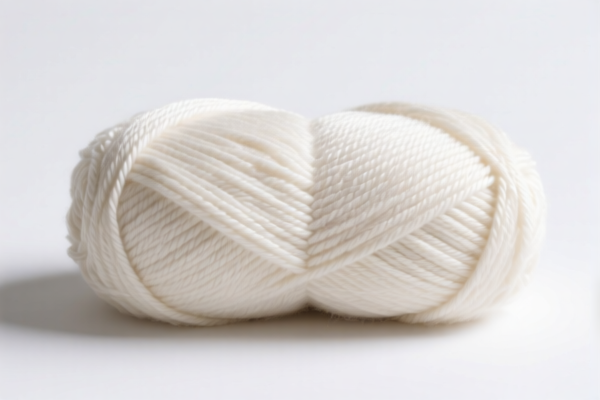
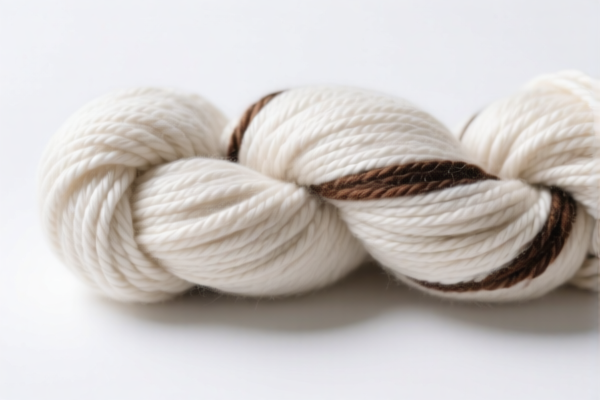
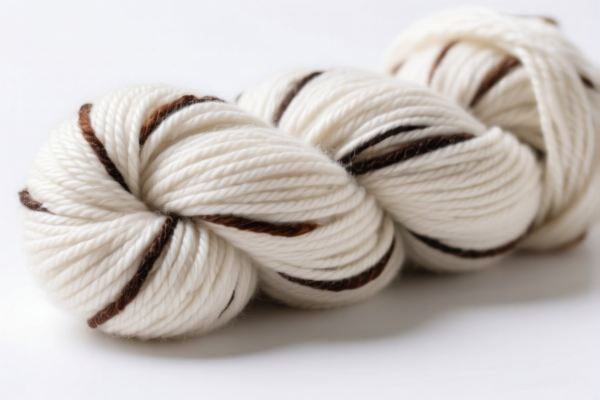
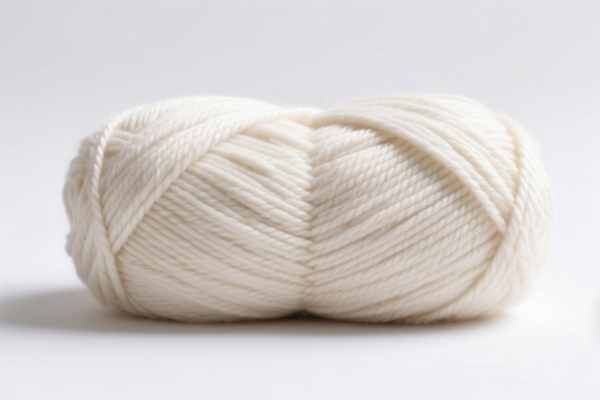
AI Analysis
🧵 Combed Cotton Multi-ply Yarn 301 (Ring Spun, ≤14 nm)
🌐 HS Code Reference & Customs Clearance Guide | 2026 Latest Tariff Analysis | Professional Clearance Strategy
📌 I. Product Definition & Classification: Do You Really Understand "Cotton Yarn"?
Combed Cotton Multi-ply Yarn refers to textile yarns made from combed cotton fibers (higher quality, fewer impurities), twisted together in two or more strands (multi-folded/cabled), and processed using the Ring Spinning method. The specification "301" typically refers to a specific industry-grade classification or internal code often associated with fine-count ring-spun yarns, where the fineness is not exceeding 14 ne (neometric) per single yarn.
In international trade, this product is strictly categorized under Chapter 52 (Cotton), specifically as yarn containing 85% or more cotton by weight, not put up for retail sale, and multiple (folded) or cabled.
⚠️ Key Distinction Points:
- Fiber Processing: Must be Combed (smooth, strong, premium) vs. Carded (rougher, lower count). Misclassification here leads to wrong HS codes.
- Spinning Method: Ring Spun vs. Open End (OE). This product is explicitly Ring Spun (301 series).
- Fineness Limit: The single yarn count must be ≤ 14 ne. If it exceeds 14 ne, it falls under different subheadings (e.g., 5205.42 or 5205.43).
- Retail Packaging: Must be NOT put up for retail sale (e.g., large cones/bobbins). If sold in small retail packs, it may fall under Chapter 55 or 60 depending on end-use, but typically remains under 52 if still yarn.
📦 II. HS Code Classification Details (2026 Latest Tariff Authority Comparison)
| HS Code | Product Description | Applicability | Key Attributes |
|---|---|---|---|
5205.41.00.20 |
Cotton yarn (≥85% cotton), not for retail sale; Multiple/cabled, combed fibers; ≤14 ne per single yarn; Ring Spun | Premium industrial knitting, weaving, sock yarns; High-quality apparel manufacturing | ✅ Ring Spun, Combed, ≤14 ne |
5205.41.00.90 |
Cotton yarn (≥85% cotton), not for retail sale; Multiple/cabled, combed fibers; ≤14 ne per single yarn; Other | Yarns that are multiple/cabled, combed, ≤14 ne but NOT ring spun (e.g., Open End, Air-jet) | ❌ Not Ring Spun (Other methods) |
🔍 Critical Reminder:
-5205.41.00.20is for Ring Spun yarn. This is the most common specification for "301" grade yarns in premium markets.
-5205.41.00.90covers "Other" spinning methods. If your yarn is Ring Spun, do not use this code.
- Verification: Ensure the single yarn count is truly ≤14 ne. If the combined multiple yarn count is used mistakenly, customs may reject the declaration.
💰 III. 2026 Latest Tariff Rate Details (Including Additional Taxes & Policy Surcharges)
✅ Applicable Country: United States (US)
✅ Origin: China (CN)
✅ Effective Date: 2025-11-10 onwards (including subsequent imports)
🎯 1. 5205.41.00.20 —— Cotton Yarn, Combed, Ring Spun, ≤14 ne
| Item | Content |
|---|---|
| Base Tariff Rate | 0.0% (ad valorem) |
| Section 301 Additional Tariff | 0.0% |
| IEEPA Additional Tariff | 0.0% |
| Total Tariff Rate | 0.0% |
| Tax Calculation | CIF Value × 0.0% = $0 |
| De Minimis Eligibility | ❌ Not Applicable (This is bulk yarn, not small parcels; however, even if applicable, the rate is 0%) |
| Legal Basis Path | HTSUS:5205.41.00.20 → USITC:5205.41 → No 301 Footnote Applied for This Subheading |
📌 Explanation:
- Why 0%? Unlike many finished textile products or electronics, cotton yarn (especially combed, multi-ply) often enjoys lower or zero additional tariffs under Section 301 to support US textile manufacturing supply chains.
- No 301 Surcharge: For HS Code5205.41.00.20, there is no 25% Section 301 tariff or 10% IEEPA surcharge currently applied in 2026.
- Cost Advantage: This is a significant advantage over other cotton products (like towels or shirts), which may face 10-25% tariffs.
🎯 2. 5205.41.00.90 —— Cotton Yarn, Combed, Other Spinning, ≤14 ne
| Item | Content |
|---|---|
| Base Tariff Rate | 0.0% (ad valorem) |
| Section 301 Additional Tariff | 0.0% |
| IEEPA Additional Tariff | 0.0% |
| Total Tariff Rate | 0.0% |
| Tax Calculation | CIF Value × 0.0% = $0 |
| De Minimis Eligibility | ❌ Not Applicable |
| Legal Basis Path | HTSUS:5205.41.00.90 → USITC:5205.41 → No 301 Footnote Applied |
📌 Note:
- Same tariff treatment as Ring Spun.
- Even if classified as "Other" (non-ring spun), the tariff remains 0.0%.
🛠️ IV. Customs Clearance Practical Advice (Real-World Pitfall Avoidance Guide)
✅ 1. Required Documentation Checklist (Non-negotiable)
| Document | Must Provide | Explanation |
|---|---|---|
| ✅ Product Specification Sheet | ✔️ | Must clearly state: 100% Cotton (or ≥85%), Combed, Multi-folded, Ring Spun, Single Yarn Count ≤14 ne. |
| ✅ Labeling/Marking | ✔️ | Each cone/bobbin must show fiber content, count, and manufacturer. |
| ✅ Commercial Invoice | ✔️ | Must match HS Code 5205.41.00.20 or 90. Avoid vague terms like "Cotton Thread." |
| ✅ Packing List | ✔️ | Detail weight, quantity, and packaging type (e.g., polybag on wooden pallet). |
| ✅ Certificate of Origin (CO) | ✔️ | Confirm origin as China to apply correct tariff (though 0%, proof is needed for audits). |
| ✅ Spinning Method Confirmation | ✔️ | If disputed, provide mill certificate proving Ring Spun process for 5205.41.00.20. |
✅ 2. Declaration Tips (Key Mnemonics)
🔥 “Combed ≤14, Ring Spun 20, Other 90, Tariff Zero, No Surcharge!”
| Scenario | Correct Declaration | Incorrect Action |
|---|---|---|
| Ring Spun, Combed, ≤14 ne | 5205.41.00.20 |
Using 5205.41.00.90 → Minor risk, but auditors may flag for misclassification. |
| Open End Spun, Combed, ≤14 ne | 5205.41.00.90 |
Using 5205.41.00.20 → High Risk of misdeclaration. |
| Single Yarn Count >14 ne | 5205.42 or 5205.43 |
Using 5205.41 → Major Error, leads to duty underpayment penalty. |
| Retail Packaged Yarn | Different Chapter (e.g., 60/55) | Declaring as bulk yarn → Seizure Risk. |
✅ 3. Special Situation Handling
| Situation | Handling Advice |
|---|---|
| Mixed Spinning Methods in One Shipment | Split shipment or declare separately. Do not mix 20 and 90 in one line item unless customs allows. |
| Yarn Count Ambiguity | Provide lab test results confirming single yarn count ≤14 ne. If it’s 15 ne, you must use 5205.42 codes. |
| Non-100% Cotton (e.g., 85% Cotton, 15% Polyester) | Still qualifies for Chapter 52 if ≥85% cotton by weight. Ensure composition is clear. |
| Small Sample Parcels | Even if small, if it’s bulk yarn not for retail, use same HS. If it’s a small retail pack, re-evaluate. |
🌍 V. Global Major Market Clearance Comparison (2026 Latest)
| Country/Region | Recommended HS Code | Tariff | Certification | Remarks |
|---|---|---|---|---|
| 🇺🇸 USA | 5205.41.00.20 / 90 |
0.0% | No special certs | Zero tariff advantage |
| 🇨🇳 China | 5205.41.00.20 |
~7-10% | N/A | Import duty applies |
| 🇪🇺 EU | 5205.41.00 |
~6.5% | No special certs | Standard MFN rate |
| 🇬🇧 UK | 5205.41.00 |
~6.5% | No special certs | Post-Brexit rules |
| 🇦🇪 UAE | 5205.41.00 |
5% | CE/GSO | Low tariff |
📌 Conclusion:
- USA offers a significant tariff advantage (0%) for combed cotton multi-ply yarn ≤14 ne compared to EU/China imports.
- This makes US-bound cotton yarn highly competitive in cost structure.
📌 VI. Common Mistakes & Pitfall Guide (Lessons from Blood & Tears)
❌ Mistake 1: Declaring Single Yarn Count as Total Plied Count
👉 Consequence: If single yarn is 16 ne but total plying is 8 ne, you cannot use 5205.41 (≤14 ne). Must use 5205.42 or higher, which may have different tariff rates (though still often 0%, misclassification is risky).
❌ Mistake 2: Confusing Ring Spun with Open End
👉 Consequence: Using 5205.41.00.20 for Open End yarn → Penalty for false declaration. Ring spun is more expensive but higher quality; open end is cheaper. Customs may request mill certificates.
❌ Mistake 3: Ignoring Retail Packaging
👉 Consequence: If sold in small balls for home knitting, it may fall under 5605 or 5509, not 5205. Misdeclaration can lead to seizure or duty adjustment.
❌ Mistake 4: Assuming All Cotton Yarn is 0% Tariff
👉 Consequence: While 5205.41 is 0%, other cotton yarns (e.g., carded, single strand) may have different tariffs or footnote restrictions. Always verify the full 10-digit code.
✅ Correct Approach:
“100% Combed Cotton, Ring Spun, Multi-folded, Single Yarn Count 13 ne, Not for Retail Sale, HS Code 5205.41.00.20”
🎯 VII. Conclusion: Professional Declaration, Save Time, Reduce Costs!
🎯 Remember the Mnemonic:
🔹 “Combed ≤14, Ring Spun 20, Tariff Zero, No Surcharge!”
🔹 “HS Code Determines Duty, 0% is Gold, Misclassify Costs You!”
📌 Tips:
- If your yarn is not ring spun, use 5205.41.00.90 (still 0%).
- Always provide mill certificates to prove Ring Spun and Count if customs audits.
- Pre-ruling: Consider applying for an Advance Ruling from US Customs if you have a large, recurring shipment to lock in the 0% tariff rate.
📣 Take Action Now:
📞 Consult your freight forwarder + Provide product specs + Apply for HS Code confirmation
🚀 Let your cotton yarn clear smoothly, affordably, and efficiently!
✨ Professional clearance starts with precise classification!
💼 Every cent saved is profit earned!
Customer Reviews
About HS Code Classification
The Harmonized System (HS) is an internationally standardized nomenclature developed by the World Customs Organization (WCO) to classify traded products. Over 200 countries use the HS system as the basis for customs tariffs, trade statistics, and import/export regulations.
Each HS code follows a hierarchical structure:
- Chapter (2 digits) — Broad category of goods (e.g., Chapter 84: Machinery and Mechanical Appliances)
- Heading (4 digits) — More specific grouping within the chapter
- Subheading (6 digits) — Internationally standardized breakdown, used by all WCO member countries
- National subdivisions (8-10 digits) — Country-specific extensions for further classification, such as US HTSUS 10-digit codes
Correct HS code classification is essential for smooth customs clearance, accurate duty payment, and compliance with trade regulations. Misclassification can lead to customs delays, overpayment of duties, or penalties.
When importing from CN to US, the applicable tariff rates may include:
- Most-Favored-Nation (MFN) rate — The standard duty rate applied to WTO members
- General rate — Applied to countries without trade agreements
- Trade remedy duties — Additional tariffs such as Section 301 (anti-dumping), Section 232 (national security), or countervailing duties
The information provided on this page is for reference purposes only. For official classification, please consult with your local customs authority or a licensed customs broker.