combination padlocks
CN → US| HS Code | Tariff Rate | Origin | Destination | Doc |
|---|---|---|---|---|
| 8302419045 | 38.5% | CN | US | Official Doc |
| 8301406030 | 23.2% | CN | US | Official Doc |
| 7326908688 | 87.9% | CN | US | Official Doc |
| 7326908676 | 87.9% | CN | US | Official Doc |
| 8301300090 | 23.2% | CN | US | Official Doc |
Product Images
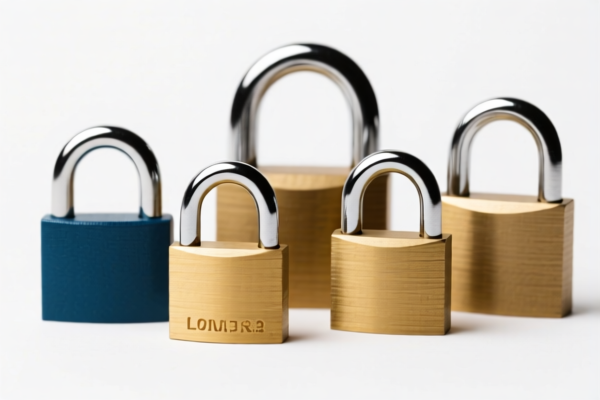
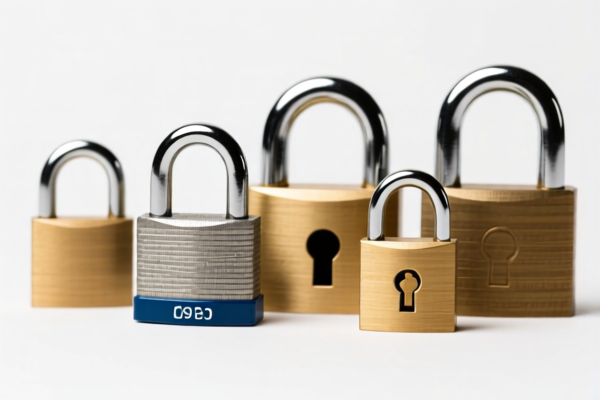
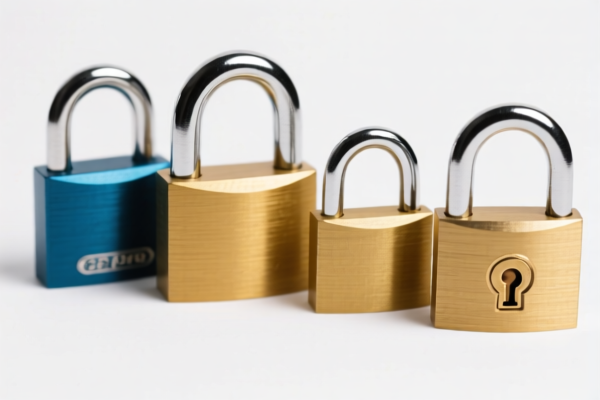
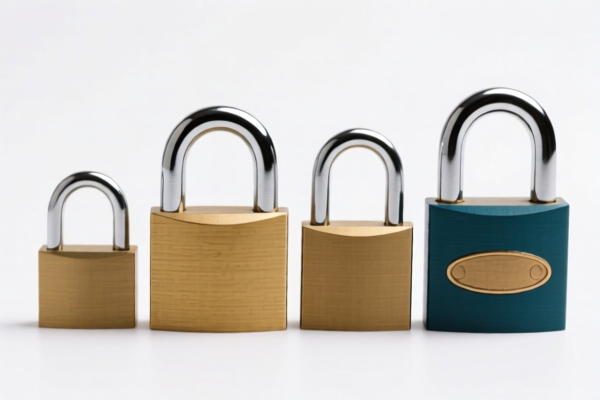
AI Analysis
🔐 Combination Padlocks (Combination Locks)
🌐 HS Code Reference & Customs Clearance Guide | 2026 Latest Tariff Analysis | Professional Clearance Strategy
📌 1. Product Definition & Classification: Do You Really Understand "Combination Padlocks"?
Combination padlocks are security devices that open only when a specific sequence of numbers or symbols is entered. Unlike key-operated locks, they rely on internal mechanical or electronic mechanisms to verify the code. In international trade, their classification depends heavily on material composition and specific application (e.g., building hardware vs. furniture hardware).
Key Distinctions: - Building/Door Locks: Designed for permanent installation on doors, gates, or cabinets as part of building fixtures. These fall under Chapter 83 (Miscellaneous Articles of Base Metal). - General Metal Articles: If the lock is considered a general metal product rather than a dedicated "lock" or "furniture hardware," it might fall under Chapter 73 (Articles of Iron or Steel).
⚠️ Critical Classification Point:
- If the product is explicitly a lock (mechanical or electronic) made of base metal, it generally falls under 8301 or 8302.
- If classified broadly as a metal article due to lack of specific lock features or dual-use, it may fall under 7326.
- Misclassification Risk: Declaring a building padlock as "furniture hardware" or a general metal part can lead to significant tariff discrepancies.
📦 2. HS Code Classification Details (2026 Latest Tariff Reference)
Based on the provided data, here are the relevant HS Codes for combination padlocks, categorized by their functional and material characteristics:
| HS Code | Product Description | Application/Feature | Base Metal Lock/Accessory? |
|---|---|---|---|
8302.41.90.45 |
Locks suitable for building use (e.g., doors, gates) | Building accessories, made of base metal | ✅ Yes (Building Accessory) |
8301.40.60.30 |
Padlocks, including combination locks | General padlocks, base metal | ✅ Yes (Dedicated Lock) |
8301.30.00.90 |
Locks for furniture or other applications | Furniture locks, base metal | ✅ Yes (Furniture Lock) |
7326.90.86.88 |
Other articles of iron or steel | General metal parts, not specifically classified as locks | ❌ No (General Metal Article) |
7326.90.86.76 |
Other articles of iron or steel | Metal parts/accessories, general classification | ❌ No (General Metal Article) |
8302.41.60.45 |
Fittings for building use | Building hardware, metal fittings | ✅ Yes (Building Accessory) |
🔍 Key Insight:
- 8301 codes are for locks (padlocks, cylinder locks, etc.).
- 8302 codes are for fittings/hardware (hinges, brackets, etc.) that may include locks as accessories.
- 7326 codes are a "catch-all" for metal articles not specified elsewhere. Avoid this classification if the item is clearly a lock, as tariffs are significantly higher.
💰 3. 2026 Latest Tariff Rate Breakdown (Including Additional Duties & Policies)
✅ Applicable Country: United States (US)
✅ Origin: China (CN)
✅ Effective Date: 2025/2026 (Current Trade Policies)
🎯 1. 8301.40.60.30 & 8301.30.00.90 — Dedicated Locks (Padlocks)
| Item | Detail |
|---|---|
| Base Duty Rate | 5.7% (Ad valorem) |
| Section 301 Additional Duty | +7.5% |
| 122 Section Duty | +10% |
| Total Duty Rate | 23.2% |
| Tax Calculation | CIF Value × 23.2% |
| De Minimis Eligibility | ❌ Not Eligible (Subject to Section 301) |
| Legal Reference | Section 301 (3190.02.11/12), IEEPA 122 Section |
📌 Explanation:
- 5.7% is the standard MFN (Most Favored Nation) duty for locks.
- 7.5% is the Section 301 additional duty for Chinese-made locks.
- 10% is the additional duty under Section 122 (often applied to strategic goods or as a countermeasure).
- Total: 23.2%. This is the recommended classification for dedicated combination padlocks if they are clearly identified as locks.
🎯 2. 8302.41.90.45 — Building Hardware Accessories (Including Locks)
| Item | Detail |
|---|---|
| Base Duty Rate | 3.5% (Ad valorem) |
| Section 301 Additional Duty | +25.0% |
| 122 Section Duty | +10% |
| Total Duty Rate | 38.5% |
| Tax Calculation | CIF Value × 38.5% |
| De Minimis Eligibility | ❌ Not Eligible |
| Legal Reference | Section 301 (8302.41.90.45), IEEPA 122 Section |
📌 Explanation:
- Although the base rate is lower (3.5%), the Section 301 duty jumps to 25% for building fittings.
- Total: 38.5%. This is 15.3% higher than the dedicated lock classification.
- Strategy: If the product is a standalone padlock, argue for 8301 instead of 8302 to save ~15%.
🎯 3. 8302.41.60.45 — Building Fittings (High-Tariff Metal Category)
| Item | Detail |
|---|---|
| Base Duty Rate | 3.9% (Ad valorem) |
| Section 301 Additional Duty | +25.0% |
| 122 Section Duty | +10% |
| Steel/Aluminum/Copper Additional Duty | +50% (Specific Clause) |
| Total Duty Rate | 88.9% |
| Tax Calculation | CIF Value × 88.9% |
| De Minimis Eligibility | ❌ Not Eligible |
📌 Explanation:
- This code includes specific additional duties for steel, aluminum, or copper articles.
- Total: 88.9%. This is extremely high.
- Warning: Avoid this classification for combination padlocks unless they are purely structural metal fittings and not functional locks.
🎯 4. 7326.90.86.88 & 7326.90.86.76 — Other Iron/Steel Articles
| Item | Detail |
|---|---|
| Base Duty Rate | 2.9% (Ad valorem) |
| Section 301 Additional Duty | +25.0% |
| 122 Section Duty | +10% |
| Steel/Aluminum/Copper Additional Duty | +50% (Specific Clause) |
| Total Duty Rate | 87.9% |
| Tax Calculation | CIF Value × 87.9% |
| De Minimis Eligibility | ❌ Not Eligible |
📌 Explanation:
- Similar to the previous code, this includes a 50% surcharge for steel articles.
- Total: 87.9%.
- Risk: Classifying a padlock as "other iron/steel article" is incorrect if it has a locking mechanism. Customs may reclassify it, leading to penalties.
🛠️ 4. Customs Clearance Practical Advice (Avoiding Pitfalls)
✅ 1. Documentation Checklist (Must-Haves)
| Document | Required | Notes |
|---|---|---|
| ✅ Product Specifications | ✔️ | Must clearly state "Combination Padlock," mechanism type (disc, dial), and material. |
| ✅ Product Photos | ✔️ | Show the shackle, body, and combination dial/keyboard. |
| ✅ Commercial Invoice | ✔️ | Describe as "Combination Padlock, Metal, for Building/Furniture Use." Avoid vague terms like "Metal Tool." |
| ✅ Structure Diagram | ✔️ | Helpful if customs questions whether it's a "lock" or a "metal part." |
| ✅ Origin Certificate | ✔️ | If applicable for preferential rates (not applicable for China-US currently). |
✅ 2. Classification Strategy (Key Tips)
🔥 "Lock First, Hardware Second, Metal Last!"
| Scenario | Recommended HS Code | Duty Rate | Reason |
|---|---|---|---|
| Standalone Combination Padlock | 8301.40.60.30 |
23.2% | Clearly a lock. Lowest risk, moderate duty. |
| Padlock as Part of a Door Set | 8302.41.90.45 |
38.5% | Classified as building accessory. |
| Generic Metal Shackle/Brace | 7326.90.86.88 |
87.9% | AVOID. High duty, high risk of misclassification. |
| Furniture Lock (Cabinet) | 8301.30.00.90 |
23.2% | Similar to padlocks, low duty. |
📌 Strategy:
- Always prioritize Chapter 83 (Locks/Hardware) over Chapter 73 (General Metal).
- If the product is a standalone padlock, use8301.40.60.30(23.2%) instead of8302(38.5%+) or7326(87.9%).
- Justification: The primary function is security/locking, not structural support.
✅ 3. Special Cases
| Case | Handling Advice |
|---|---|
| Electronic Combination Locks | Still falls under 8301 if mechanical/electronic hybrid. Do not classify as electronics (Chapter 85) unless it's a smart lock with Wi-Fi/Bluetooth. |
| OEM/White Label Products | Ensure the invoice description matches the physical product. "Padlock" is clearer than "Locking Device." |
| Bulk Imports for Parts | If importing parts to assemble locks, declare as "Lock Parts" under 8301.90 if possible, but verify duties. |
🌍 5. Global Market Comparison (2026)
| Country/Region | Recommended HS Code | Duty Rate (China Origin) | Notes |
|---|---|---|---|
| 🇺🇸 USA | 8301.40.60.30 |
23.2% | Includes 7.5% Sec 301 + 10% Sec 122. |
| 🇪🇺 EU | 8301.40 |
~2.7% | No Section 301. Standard MFN duty. |
| 🇨🇳 China | 8301.40 |
~6-10% | Import duty for Chinese products into China (if re-import). |
| 🇯🇵 Japan | 8301.40 |
~2.5% | Low duty, no additional tariffs. |
📌 Conclusion:
- The US market is the most challenging due to additional tariffs.
- China-Origin combination padlocks face a 23.2% total duty if correctly classified as locks.
- Misclassification as building hardware (8302) or general metal (7326) can increase costs by 15-65%.
📌 6. Common Mistakes & Pitfalls (Lessons Learned)
❌ Mistake 1: Classifying padlocks as "General Metal Articles" (7326)
👉 Result: 87.9% duty + potential penalty for misdeclaration.
👉 Fix: Always check if the item has a locking mechanism. If yes, use 8301.
❌ Mistake 2: Using vague terms like "Metal Security Device"
👉 Result: Customs may classify under the highest applicable tariff (7326 or 8302.41.60.45).
👉 Fix: Use precise terms: "Combination Padlock, Base Metal."
❌ Mistake 3: Ignoring Section 122 Duties
👉 Result: Underpayment by 10%.
👉 Fix: Ensure all declarations include the 122 Section duty calculation.
🎯 7. Conclusion: Precision Classification for Cost Savings
🎯 Remember:
🔹 "Padlock = Lock (8301) = 23.2%"
🔹 "Building Fitting = 38.5%"
🔹 "General Metal = 87.9%"
🔹 "Don't let your padlock cost you $65 extra per unit!"
📌 Pro Tip:
If you are importing large volumes, consider Advance Rulings from US Customs and Border Protection (CBP) to confirm the 8301.40.60.30 classification. This provides legal certainty and prevents future audits.
📣 Action Item:
📞 Contact a licensed customs broker to verify the material composition (base metal vs. steel) and function (lock vs. fitting).
🚀 Clearance Tip: Always declare "Combination Padlock" explicitly on the invoice. Avoid vague terms.
✨ Professional Customs Clearance Starts with Accurate HS Codes!
💼 Every Percentage Point Matters in International Trade!
Customer Reviews
About HS Code Classification
The Harmonized System (HS) is an internationally standardized nomenclature developed by the World Customs Organization (WCO) to classify traded products. Over 200 countries use the HS system as the basis for customs tariffs, trade statistics, and import/export regulations.
Each HS code follows a hierarchical structure:
- Chapter (2 digits) — Broad category of goods (e.g., Chapter 84: Machinery and Mechanical Appliances)
- Heading (4 digits) — More specific grouping within the chapter
- Subheading (6 digits) — Internationally standardized breakdown, used by all WCO member countries
- National subdivisions (8-10 digits) — Country-specific extensions for further classification, such as US HTSUS 10-digit codes
Correct HS code classification is essential for smooth customs clearance, accurate duty payment, and compliance with trade regulations. Misclassification can lead to customs delays, overpayment of duties, or penalties.
When importing from CN to US, the applicable tariff rates may include:
- Most-Favored-Nation (MFN) rate — The standard duty rate applied to WTO members
- General rate — Applied to countries without trade agreements
- Trade remedy duties — Additional tariffs such as Section 301 (anti-dumping), Section 232 (national security), or countervailing duties
The information provided on this page is for reference purposes only. For official classification, please consult with your local customs authority or a licensed customs broker.