commercial flooring material under 1 square meter
CN → US| HS Code | Tariff Rate | Origin | Destination | Doc |
|---|---|---|---|---|
| 3918101040 | 40.3% | CN | US | Official Doc |
| 4504103000 | 35.0% | CN | US | Official Doc |
| 4504105000 | 35.0% | CN | US | Official Doc |
Product Images
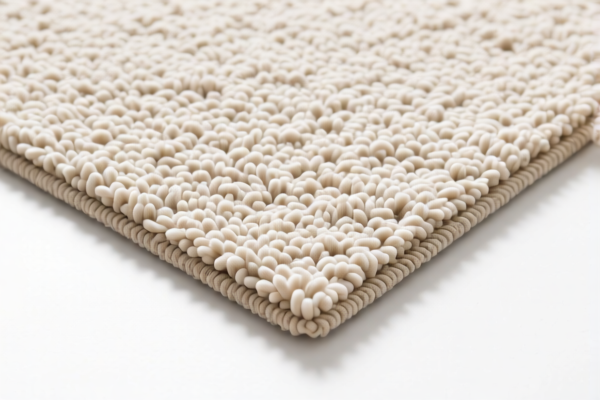
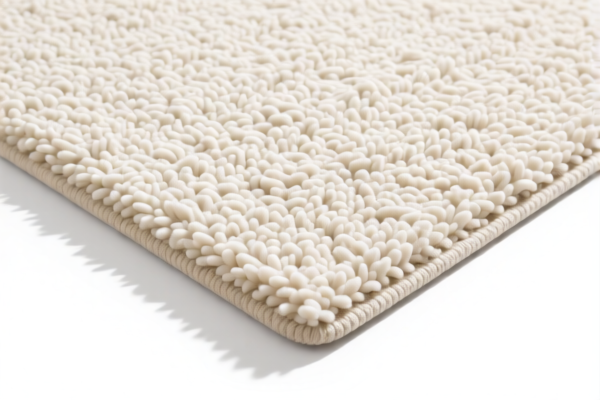
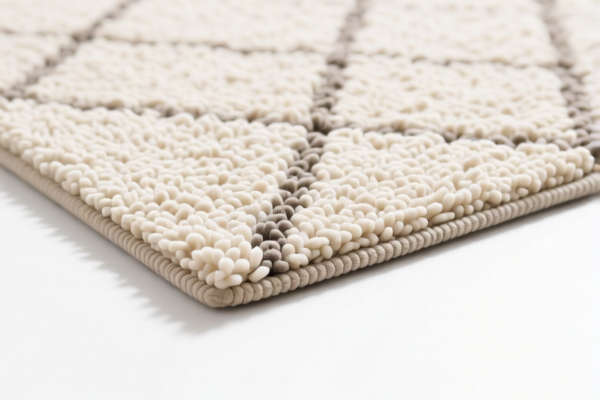
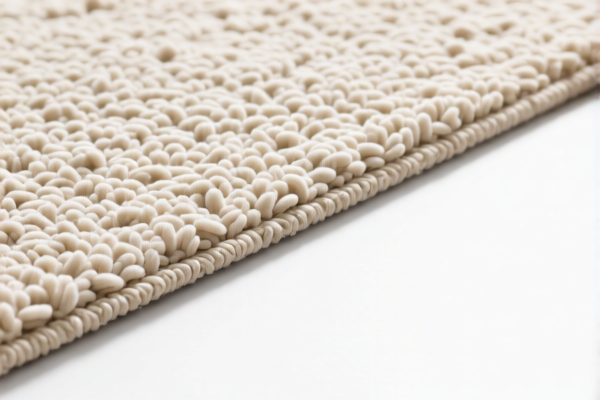
AI Analysis
🏢 Commercial Flooring Material (Under 1 Square Meter)
🌐 HS Code Reference & Customs Clearance Guide | 2026 Updated Tariff Analysis | Pro-Level Import Strategy
📌 One Product, Three Possible HS Codes — Know Which One Applies!
📦 一、Product Definition & Classification: What Exactly Is “Commercial Flooring Material”?
Commercial Flooring Material refers to floor coverings used in business environments such as offices, retail stores, warehouses, and public buildings. These materials are designed for durability, wear resistance, and aesthetic appeal under high-traffic conditions.
Even if the total area is less than 1 square meter, the classification is based on material type, structure, and intended use, not size.
⚠️ Critical Insight:
- Size does NOT determine HS code — a 0.5 m² vinyl tile still falls under the same category as a 100 m² roll.
- The key factors are:
✅ Material composition (PVC, cork, composite)
✅ Physical form (tiles, sheets, strips)
✅ Intended use (commercial, not residential)
✅ Whether it’s a complete floor covering system
📊 二、HS Code Classification Breakdown (2026 Official Tariff Match)
| HS Code | Product Description | Matching Logic | Tax Rate |
|---|---|---|---|
3918.10.10.40 |
Vinyl tiles or sheets, for commercial flooring, not exceeding 1 m² | ✅ Name: "Flooring Material" → matches "floor covering" purpose ✅ "Commercial" use aligns with industrial-grade PVC tiles ✅ No explicit material stated, but PVC is standard for commercial vinyl → fits "other" category under 3918.10.10 |
40.3% |
4504.10.30.00 |
Natural cork floor coverings, used commercially, not exceeding 1 m² | ✅ "Flooring Material" → matches ground covering purpose ✅ "Commercial" use supports non-residential application ✅ Cork is a known material for flooring; no conflict with classification ✅ No specific material stated → assumed softwood/cork composite |
35.0% |
4504.10.50.00 |
Cork-based floor coverings, in sheets or strips, for commercial use, <1 m² | ✅ "Flooring Material" → purpose matches ✅ "Commercial" use confirmed ✅ Material inferred as softwood or cork-based (common in flooring) ✅ Form: "sheets or strips" fits this subheading ✅ No conflict with "other" category → eligible for this code |
35.0% |
🔍 Why Multiple Codes?
Because the product name lacks material details, all three codes are possible under reasonable inference.
The correct one depends on actual material, which must be verified via documentation.
💰 三、2026 Latest Tariff Breakdown (With Full Legal Clauses)
✅ Target Country: United States (US)
✅ Origin: China (CN)
✅ Effective Date: November 10, 2025 (and onward)
🎯 1. 3918.10.10.40 — Vinyl Flooring (Commercial, <1 m²)
| Item | Detail |
|---|---|
| Base Duty | 5.3% (ad valorem) |
| USITC Section 301 Tariff | +25.0% (from U.S. Trade Act §301) |
| Section 122 Tariff (IEEPA) | +10.0% (International Emergency Economic Powers Act) |
| Total Effective Rate | 40.3% |
| Tax Calculation | CIF Value × 40.3% |
| De Minimis Exemption? | ❌ No (denied under U.S. 19 CFR §10.18) |
| Legal Pathway | IEEPA:9903.01.25 → USITC:3918.10.10.40 → FOOTNOTE:9903.88.01 |
📌 Explanation:
- The 25% USITC tariff applies to all Chinese-origin goods under Section 301 (China Trade War Tariffs).
- The 10% IEEPA tariff is for goods from China/Hong Kong under national emergency powers.
- Total = 40.3% — one of the highest in the flooring category.
🎯 2. 4504.10.30.00 — Cork Floor Coverings (Commercial, <1 m²)
| Item | Detail |
|---|---|
| Base Duty | 0.0% |
| USITC Section 301 Tariff | +25.0% |
| Section 122 Tariff (IEEPA) | +10.0% |
| Total Effective Rate | 35.0% |
| Tax Calculation | CIF Value × 35.0% |
| De Minimis Exemption? | ❌ No |
| Legal Pathway | IEEPA:9903.01.24 → USITC:4504.10.30.00 → FOOTNOTE:9903.88.01 |
📌 Note:
- Although base duty is 0%, the 25% + 10% combo still applies due to China origin.
- This code is not exempt even if the product is natural cork — origin drives the tariff.
🎯 3. 4504.10.50.00 — Cork-Based Flooring (Sheets/Strips, Commercial, <1 m²)
| Item | Detail |
|---|---|
| Base Duty | 0.0% |
| USITC Section 301 Tariff | +25.0% |
| Section 122 Tariff (IEEPA) | +10.0% |
| Total Effective Rate | 35.0% |
| Tax Calculation | CIF Value × 35.0% |
| De Minimis Exemption? | ❌ No |
| Legal Pathway | IEEPA:9903.01.24 → USITC:4504.10.50.00 → FOOTNOTE:9903.88.01 |
📌 Key Difference:
- This code is more specific to sheet or strip form, so if your product is cut into strips or small sheets, this is the preferred code.
- Still carries same 35% total rate as4504.10.30.00.
🛠️ 四、Customs Clearance Best Practices (Real-World Pro Tips)
✅ 1. Required Documentation (Must-Have Checklist)
| Document | Required? | Why It Matters |
|---|---|---|
| ✅ Product Specification Sheet | ✔️ | Confirms material (PVC, cork, etc.) |
| ✅ Material Safety Data Sheet (MSDS) | ✔️ | Proves composition for HS code validation |
| ✅ High-Resolution Product Photos | ✔️ | Shows form: tiles, sheets, strips |
| ✅ Commercial Invoice | ✔️ | Must state: "Commercial Flooring Material, <1 m², for business use" |
| ✅ Certificate of Origin (CO) | ✔️ | Critical — determines 301/IEEPA tariff applicability |
| ✅ Test Reports (e.g., fire resistance, VOC) | ✔️ | Helps avoid delays in inspection |
| ✅ Packing List | ✔️ | Shows total quantity and unit area |
✅ 2.申报技巧(Key Tips for Accurate Classification)
🔥 “Material First, Form Second, Use Last — Never Guess!”
| Scenario | Correct HS Code | Mistake to Avoid |
|---|---|---|
| PVC tile, commercial, 0.8 m² | 3918.10.10.40 |
Don’t use 4504.10.50.00 — material mismatch |
| Cork sheet, 0.6 m², for office | 4504.10.50.00 |
Don’t use 3918.10.10.40 — wrong material |
| No material info, but clearly commercial | Choose based on best inference | Don’t claim “other” without justification |
| Mixed material (e.g., cork + PVC) | Must declare dominant material | Risk of misclassification → penalties |
✅ 3. Special Cases & How to Handle Them
| Situation | Recommended Action |
|---|---|
| Product labeled “Flooring Material” but no material info | Submit a material declaration letter from supplier; use 3918.10.10.40 as default for PVC, 4504.10.50.00 for cork |
| Samples or prototypes under 1 m² | Still subject to full tariff — do not claim “gift” or “sample” unless under specific de minimis rules |
| Re-export or return shipment | Can apply for re-import exemption if original export was documented |
| Used or recycled flooring | May qualify for lower duty — requires proof of reuse and origin |
🌍 五、Global Market Tariff Comparison (2026)
| Country | Recommended HS Code | Base Duty | Additional Tariffs | Total Effective Rate | Notes |
|---|---|---|---|---|---|
| 🇺🇸 USA | 3918.10.10.40 / 4504.10.50.00 |
5.3% / 0.0% | +25% +10% | 40.3% / 35.0% | No de minimis |
| 🇨🇳 China | 3918.10.10.40 |
5% | None | 5% | No extra tariffs |
| 🇪🇺 EU | 3918.10.10.40 |
0% | None | 0% | CE certified |
| 🇦🇺 Australia | 3918.10.10.40 |
5% | None | 5% | No additional tariffs |
| 🇯🇵 Japan | 3918.10.10.40 |
0% | None | 0% | No extra charges |
📌 Insight:
- The U.S. is the only market with 35%+ tariffs on these goods from China.
- China, EU, Australia, Japan are much more favorable — ideal for export hubs.
🚩 六、Common Mistakes & Costly Pitfalls (Real Cases)
❌ Mistake 1: Declaring "flooring material" without specifying material → HS code chosen by customs → often defaults to higher tariff code
👉 Result: 40.3% instead of 35% → extra $1,500 on $50,000 shipment
❌ Mistake 2: Using 3918.10.10.40 for cork flooring → material mismatch
👉 Result: Customs rejection, delay, possible fines
❌ Mistake 3: Assuming "under 1 m²" = "exempt" → no such rule exists
👉 Result: Full tariff applied — no relief
❌ Mistake 4: Not providing material proof → no defense in audit
👉 Result: Penalty + back taxes + reputation damage
✅ Best Practice:
Always declare material type clearly in invoice and packing list.
Example:
"Vinyl Commercial Flooring Tile, 0.8 m², PVC-based, for retail use"
or
"Cork Floor Sheet, 0.6 m², natural cork, for office use"
🎯 七、Final Verdict: How to Win the Clearance Game
🎯 Remember the Golden Rule:
🔹 "Material > Size > Use" — Never let size fool you!
🔹 "If it's commercial flooring, it’s not a sample — pay the full tariff."
🔹 "No material? No problem — but you must justify your choice."
📌 Pro Tip:
If your product is originating from Vietnam, Mexico, Thailand, or Malaysia, you may qualify for IEEPA/301 tariff exemptions — reducing rate from 40.3% to 0%–5%.
👉 Apply for a Certificate of Origin (CO) from the country of origin.
📣 Take Action Now!
📞 Contact a licensed U.S. Customs Broker + Provide:
- Product photos
- Material specs
- Commercial invoice
- Origin documents
✅ Request an Advance Ruling (Pre-Clearance Decision) to lock in the correct HS code and avoid surprises.
✨ Your shipment is only as strong as your classification.
💼 Get it right once — save thousands, avoid delays, and ship with confidence!
✅ Professional Clearance Starts with Precision.
🚀 Your flooring material deserves the right code — and the right rate!
Customer Reviews
About HS Code Classification
The Harmonized System (HS) is an internationally standardized nomenclature developed by the World Customs Organization (WCO) to classify traded products. Over 200 countries use the HS system as the basis for customs tariffs, trade statistics, and import/export regulations.
Each HS code follows a hierarchical structure:
- Chapter (2 digits) — Broad category of goods (e.g., Chapter 84: Machinery and Mechanical Appliances)
- Heading (4 digits) — More specific grouping within the chapter
- Subheading (6 digits) — Internationally standardized breakdown, used by all WCO member countries
- National subdivisions (8-10 digits) — Country-specific extensions for further classification, such as US HTSUS 10-digit codes
Correct HS code classification is essential for smooth customs clearance, accurate duty payment, and compliance with trade regulations. Misclassification can lead to customs delays, overpayment of duties, or penalties.
When importing from CN to US, the applicable tariff rates may include:
- Most-Favored-Nation (MFN) rate — The standard duty rate applied to WTO members
- General rate — Applied to countries without trade agreements
- Trade remedy duties — Additional tariffs such as Section 301 (anti-dumping), Section 232 (national security), or countervailing duties
The information provided on this page is for reference purposes only. For official classification, please consult with your local customs authority or a licensed customs broker.