composite board under 1 sqm
CN → US| HS Code | Tariff Rate | Origin | Destination | Doc |
|---|---|---|---|---|
| 3921905050 | 39.8% | CN | US | Official Doc |
| 6815994170 | 35.0% | CN | US | Official Doc |
| 6815190000 | 35.0% | CN | US | Official Doc |
| 4412333265 | 18.0% | CN | US | Official Doc |
Product Images
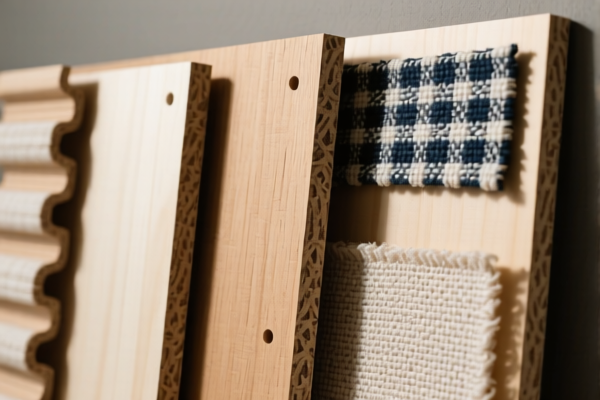
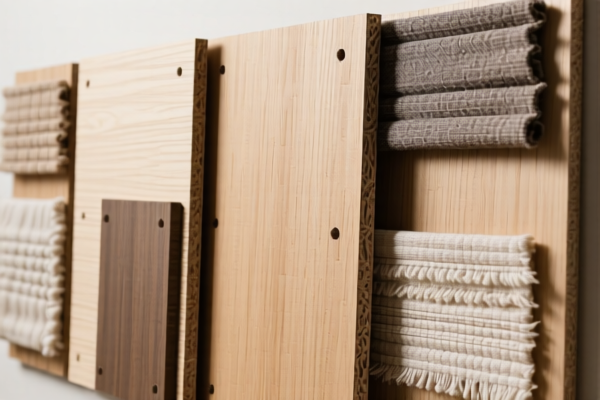
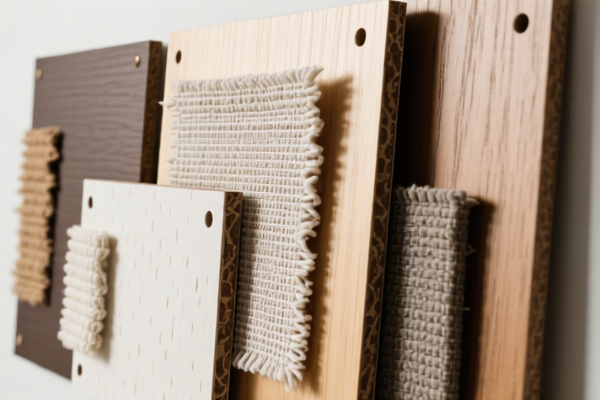
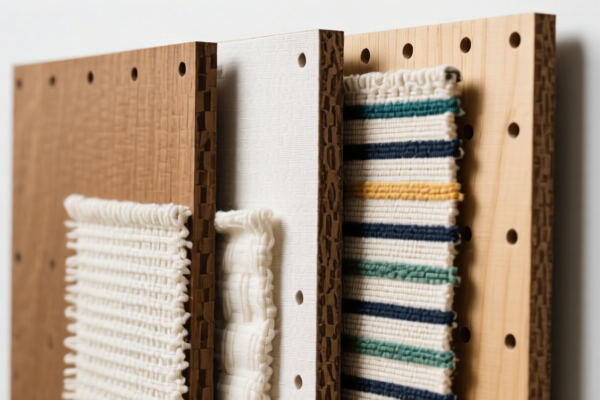
AI Analysis
🌐 Composite Board (Under 1 sqm) – HS Code Classification & Customs Clearance Guide | 2026 Latest Tariff Breakdown | Expert-Level Import Strategy
📌 I. Product Definition & Classification: What Exactly Is a "Composite Board Under 1 sqm"?
A Composite Board (Under 1 sqm) refers to a flat, rigid panel made from multiple materials (e.g., wood fibers, plastic, resin, mineral fillers, carbon fiber) bonded together. Despite the term “composite,” the actual composition can vary widely — it may be plastic-based, wood-based, mineral-based, or hybrid.
⚠️ Key Clue: The size restriction — “under 1 sqm” — is a critical factor in determining the correct HS Code, especially when distinguishing between different product categories like plastics, wood, or mineral-based panels.
This classification is not about material alone — it’s about form, function, size, and common usage in global trade.
📦 II. HS Code Classification Breakdown (2026 Official Tariff Matrix)
| HS Code | Product Description | Applicable Use Case | Size Constraint | Material Inference |
|---|---|---|---|---|
3921.90.50.50 |
Other plastic plates, sheets, film, foil, and strip (not otherwise specified), including composite boards | Industrial panels, insulation, construction, furniture, packaging | ✅ Under 1 sqm | Plastic-based composite (e.g., PVC, ABS, HDPE, or resin-impregnated layers) |
6815.99.41.70 |
Other plates, sheets, and strips of mineral or stone materials (not elsewhere specified), including composite types | Flooring, wall cladding, decorative panels, architectural finishes | ✅ Under 1 sqm | Mineral/resin composite (e.g., gypsum, cement, silica, or carbon fiber-reinforced) |
6815.19.00.00 |
Other plates, sheets, and strips of stone, ceramic, or other mineral materials (not elsewhere specified) | High-performance panels, lab surfaces, industrial substrates | ✅ Under 1 sqm | Carbon fiber, graphite, or mineral-reinforced composite |
4412.33.32.65 |
Other wood-based panels, including laminated or composite wood boards (e.g., particleboard, MDF, plywood), under 1 sqm | Furniture, interior design, prototyping, small-scale construction | ✅ Under 1 sqm | Wood-based composite (e.g., wood particles + resin) |
🔍 Critical Insight:
- "Composite" is a descriptive term, not a material specification — so context and size matter more than name. - The “under 1 sqm” criterion excludes standard-sized industrial panels and triggers small-format classification rules. - No single material dominates — the correct HS Code depends on most likely composition and common trade usage.
💰 III. 2026 Latest Tariff & Duty Breakdown (U.S. Focus – China-Origin)
✅ Applicable Country: United States (US)
✅ Origin: China (CN)
✅ Effective Date: November 10, 2025 (including all subsequent imports)
🎯 1. HS Code: 3921.90.50.50 — Plastic-Based Composite Board
| Item | Detail |
|---|---|
| Base Duty Rate | 4.8% (ad valorem) |
| USITC Section 301 Tariff | +25.0% (from U.S. Trade Act 301) |
| Section 122 (IEEPA) Tariff | +10.0% (International Emergency Economic Powers Act) |
| Total Effective Duty | 39.8% |
| Tax Calculation | CIF Value × 39.8% |
| De Minimis Threshold | ❌ Not applicable (denied) |
| Legal Basis Path | IEEPA:9903.01.25 → IEEPA:9903.01.24 → USITC:3921.90.50.50 → FOOTNOTE:9903.88.01 |
📌 Explanation:
- This code applies when the composite board is primarily plastic-based, even if reinforced with fibers or fillers. - The +25% USITC and +10% IEEPA tariffs are mandatory for Chinese-origin goods. - No exemptions — even small quantities are subject to full 39.8% duty.
🎯 2. HS Code: 6815.99.41.70 — Mineral/Stone Composite Board (General Case)
| Item | Detail |
|---|---|
| Base Duty Rate | 0.0% |
| USITC Section 301 Tariff | +25.0% |
| Section 122 (IEEPA) Tariff | +10.0% |
| Total Effective Duty | 35.0% |
| Tax Calculation | CIF Value × 35.0% |
| De Minimis Threshold | ❌ Not applicable |
| Legal Basis Path | IEEPA:9901.25 → IEEPA:9903.01.24 → USITC:6815.99.41.70 → FOOTNOTE:9903.88.01 |
📌 Explanation:
- This code covers non-metallic, non-wood composites with mineral or stone content (e.g., cement-based, gypsum, silica, or carbon fiber-reinforced panels). - No base tariff, but 25% + 10% = 35% still applies due to U.S. trade sanctions. - Common in architectural, industrial, and lab-use panels.
🎯 3. HS Code: 6815.19.00.00 — Other Stone or Mineral-Based Composite Panels
| Item | Detail |
|---|---|
| Base Duty Rate | 0.0% |
| USITC Section 301 Tariff | +25.0% |
| Section 122 (IEEPA) Tariff | +10.0% |
| Total Effective Duty | 35.0% |
| Tax Calculation | CIF Value × 35.0% |
| De Minimis Threshold | ❌ Not applicable |
| Legal Basis Path | IEEPA:9901.25 → IEEPA:9903.01.24 → USITC:6815.19.00.00 → FOOTNOTE:9903.88.01 |
📌 Explanation:
- Applies to high-performance, non-electrical mineral-based composites (e.g., carbon fiber, graphite, ceramic-reinforced boards). - Often used in industrial, aerospace, or R&D applications. - Same 35% total duty as6815.99.41.70, but different material basis.
🎯 4. HS Code: 4412.33.32.65 — Wood-Based Composite Board (Under 1 sqm)
| Item | Detail |
|---|---|
| Base Duty Rate | 8.0% |
| USITC Section 301 Tariff | 0.0% (not applicable — wood products are exempt from 301 tariffs) |
| Section 122 (IEEPA) Tariff | +10.0% |
| Total Effective Duty | 18.0% |
| Tax Calculation | CIF Value × 18.0% |
| De Minimis Threshold | ✅ Applicable (if value < $800, may be exempt) |
| Legal Basis Path | IEEPA:9903.01.24 → FOOTNOTE:9903.88.01 → 4412.33.32.65 |
📌 Explanation:
- Only applies if the board is wood-based (e.g., particleboard, MDF, laminated wood). - No 25% USITC tariff — wood products are exempt from Section 301. - IEEPA 10% still applies, but base duty is only 8% → total 18%. - De Minimis applies — if value ≤ $800, no duty at all!✅ Golden Tip:
- If your composite board is wood-based and under $800, you may pay $0 duty — huge savings!
🛠️ IV. Customs Clearance Best Practices (Pro Tips to Avoid Delays & Penalties)
✅ 1. Essential Documentation Checklist
| Document | Required? | Why It Matters |
|---|---|---|
| ✅ Commercial Invoice | ✔️ | Must clearly state: “Composite Board, Under 1 sqm, [Material Type]” |
| ✅ Product Specifications | ✔️ | Include thickness, dimensions, material composition (e.g., “PVC + fiberglass”) |
| ✅ Material Safety Data Sheet (MSDS) | ✔️ | Proves material origin (plastic, wood, mineral) |
| ✅ Third-Party Test Report | ✔️ | Certifies compliance with RoHS, REACH, UL, or ASTM standards |
| ✅ Packing List | ✔️ | Shows total area per shipment (must confirm under 1 sqm per piece) |
| ✅ Certificate of Origin (CO) | ✔️ | Critical for tariff eligibility (China vs. Vietnam/Malaysia) |
| ✅ Photos of Product & Packaging | ✔️ | Helps Customs verify size and composition |
✅ 2.申报技巧 (申报口诀) – "Size, Material, Name, Tax"
🔥 “Under 1 sqm? Check the material. Plastic? 39.8%. Wood? 18%. Mineral? 35%. Name matters. Tax changes!”
| Scenario | Correct HS Code | Wrong Code | Risk |
|---|---|---|---|
| Plastic composite, 0.8 sqm | 3921.90.50.50 |
4412.33.32.65 |
39.8% vs 18% → +21.8% tax |
| Wood-based, 0.9 sqm | 4412.33.32.65 |
6815.19.00.00 |
18% vs 35% → +17% tax |
| Mineral-based (carbon fiber), 0.7 sqm | 6815.19.00.00 |
3921.90.50.50 |
35% vs 39.8% → +4.8% tax |
| No material proof | 6815.99.41.70 (default) |
❌ Unknown | Detention + penalty |
✅ 3. Special Cases & Solutions
| Situation | Recommended Action |
|---|---|
| Mixed-material board (plastic + wood) | Declare based on dominant material — use material test report |
| Shipment contains multiple boards | Declare per piece — each must be under 1 sqm to qualify |
| Importing from Vietnam/Malaysia | ✅ Apply for CO → may qualify for IEEPA exemption → 0% tariff |
| Value under $800 | ✅ Claim de minimis → $0 duty if wood-based |
| Customs questions about composition | ✅ Provide lab test report — prevents delays |
🌍 V. Global Market Tariff Comparison (2026 Update)
| Country/Region | Recommended HS Code | Base Duty | Additional Taxes | De Minimis? | Notes |
|---|---|---|---|---|---|
| 🇺🇸 United States | 3921.90.50.50 |
4.8% | +25% +10% = 39.8% | ❌ No | High cost for plastic |
| 🇨🇳 China | 3921.90.50.50 |
5% | 0% | ✅ Yes | No extra tariffs |
| 🇪🇺 European Union | 3921.90.50.50 |
0% | 0% | ✅ Yes (€150) | No IEEPA/301 |
| 🇦🇺 Australia | 3921.90.50.50 |
5% | 0% | ✅ Yes (AUD $1,000) | No extra tariffs |
| 🇯🇵 Japan | 3921.90.50.50 |
0% | 0% | ✅ Yes (¥10,000) | No additional taxes |
📌 Insight:
- U.S. is the only market with 39.8% duty on plastic composites. - China, EU, Australia, Japan are much more favorable — ideal for export destinations.
📌 VI. Common Mistakes & How to Avoid Them (Avoid Costly Errors!)
❌ Mistake 1: Calling a plastic composite a “wood board” to get lower duty
👉 Result: 39.8% vs 18% → +21.8% tax + penalties
✅ Fix: Declare truthfully — use lab report to justify material.
❌ Mistake 2: Assuming “composite” = “wood”
👉 Result: Misclassified → duty overpayment or audit risk
✅ Fix: Check composition, not just name.
❌ Mistake 3: Not verifying per-piece size
👉 Result: One board >1 sqm → entire shipment disallowed
✅ Fix: Measure each piece — must be under 1 sqm.
❌ Mistake 4: Not claiming de minimis for wood-based boards under $800
👉 Result: Pay $14.40+ on $100 item — wasted money!
✅ Fix: Claim de minimis — $0 duty.
🎯 VII. Final Verdict: Strategic Recommendations
✅ If your board is plastic-based → Avoid U.S. import unless you can absorb 39.8% duty.
✅ If wood-based → Great for U.S. market — only 18% duty, and de minimis applies!
✅ If mineral/carbon-based → 35% duty — evaluate cost vs. value.
✅ Source from Vietnam/Malaysia → May avoid IEEPA/301 tariffs → 0% duty!
📣 Immediate Action Steps
📞 Contact a licensed customs broker + provide product photos + test report
📄 Request an HS Code Pre-Ruling (Advance Ruling) — avoid disputes
🌐 Consider shifting origin to Vietnam/Malaysia for tariff-free access to U.S.
✨ Pro Tip:
"Under 1 sqm" is not just a size — it’s a tax trigger.
Material determines duty. Name doesn’t. Truth wins.
📌 Remember:
🔹 Plastic = 39.8%
🔹 Wood = 18% (or $0 if under $800)
🔹 Mineral = 35%
🔹 De Minimis = Your Friend (if wood-based)
🚀 Your Composite Board Can Cross Borders — But Only If You Classify It Right!
💼 Precision in HS Code = Profit in Pocket
🛃 Smart Classification = Smooth Clearance = Faster Cash Flow
📣 Ready to Export?
📩 Get your HS Code pre-approved today — avoid $10,000+ in unexpected duties!
✨ Customs Excellence Starts With Accurate Classification!
💼 Your Export Success Depends on One Line: The HS Code.
Customer Reviews
About HS Code Classification
The Harmonized System (HS) is an internationally standardized nomenclature developed by the World Customs Organization (WCO) to classify traded products. Over 200 countries use the HS system as the basis for customs tariffs, trade statistics, and import/export regulations.
Each HS code follows a hierarchical structure:
- Chapter (2 digits) — Broad category of goods (e.g., Chapter 84: Machinery and Mechanical Appliances)
- Heading (4 digits) — More specific grouping within the chapter
- Subheading (6 digits) — Internationally standardized breakdown, used by all WCO member countries
- National subdivisions (8-10 digits) — Country-specific extensions for further classification, such as US HTSUS 10-digit codes
Correct HS code classification is essential for smooth customs clearance, accurate duty payment, and compliance with trade regulations. Misclassification can lead to customs delays, overpayment of duties, or penalties.
When importing from CN to US, the applicable tariff rates may include:
- Most-Favored-Nation (MFN) rate — The standard duty rate applied to WTO members
- General rate — Applied to countries without trade agreements
- Trade remedy duties — Additional tariffs such as Section 301 (anti-dumping), Section 232 (national security), or countervailing duties
The information provided on this page is for reference purposes only. For official classification, please consult with your local customs authority or a licensed customs broker.