composition leather placemats
CN → US| HS Code | Tariff Rate | Origin | Destination | Doc |
|---|---|---|---|---|
| 3926909989 | 22.8% | CN | US | Official Doc |
| 3926305000 | 22.8% | CN | US | Official Doc |
| 6302593020 | 26.3% | CN | US | Official Doc |
| 6302593010 | 26.3% | CN | US | Official Doc |
| 4205008000 | 35.0% | CN | US | Official Doc |
| 4205006000 | 39.9% | CN | US | Official Doc |
Product Images
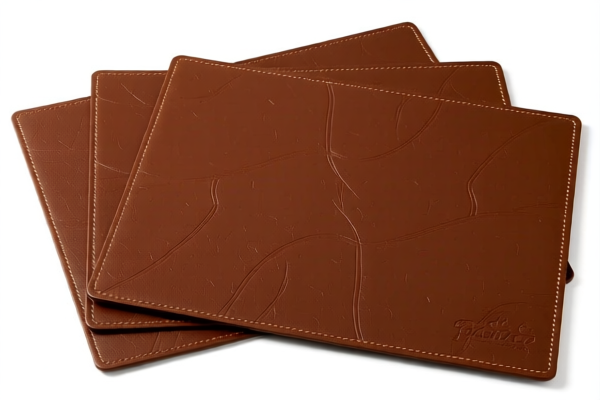
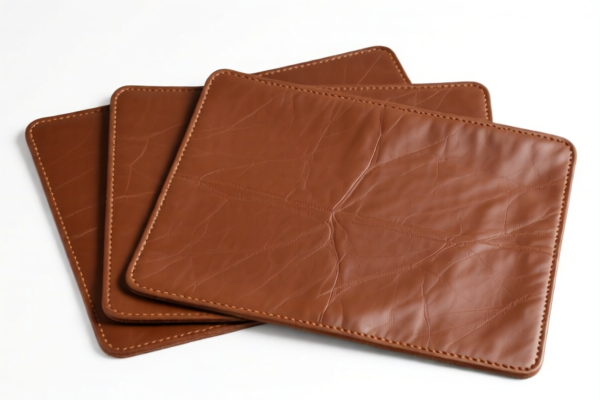


AI Analysis
Here is the Comprehensive HS Code Classification & Customs Clearance Guide for Composition Leather Placemats, styled in a vibrant, wiki-format as requested.
🧵 Composition Leather Placemats (人造革餐垫)
🌐 HS Code Reference & Customs Clearance Guide | 2026 Tax Rule Analysis | Strategic Clearance Strategy
📌 I. Product Definition & Classification: Do You Truly Know "Composition Leather"?
Composition Leather Placemats are dining accessories designed to protect table surfaces and enhance aesthetics. In international trade, the core challenge lies in determining whether they are classified as "Plastic Products" or "Textile Products" based on their material composition and manufacturing process.
Key Material Characteristics: * Material: "Composition Leather" (人造革) typically refers to a synthetic base coated with polymer (PVC/PU) or bonded textile fibers, lacking natural leather grain. * Structure: Often a fabric backing with a plastic/polymer surface layer. * Function: Tableware accessory (Placemat).
⚠️ Critical Distinction:
- If the product is predominantly plastic/polymer based (harder, distinct plastic feel) → Classified under Chapter 39 (Plastics).
- If the product is predominantly textile based (soft, fabric-like, woven base) → Classified under Chapter 63 (Textiles).
📦 II. HS Code Classification Details (2026 Latest Tariff Reference)
Based on the provided data, here are the 5 potential HS Codes for Composition Leather Placemats, ranging from Plastic to Textile classifications, with corresponding tax rates.
| HS Code | Product Description | Category Logic | Tax Rate (Total) |
|---|---|---|---|
| 3924.90.10.50 | Plastic Tableware: Classified as "Plastic Products" for table use (Placemats). | Chapter 39: Fits plastic material characteristics perfectly. | 13.3% |
| 3924.10.40.00 | Plastic Tableware: Specifically "Tableware & Kitchen Utensils" (Dishware category). | Chapter 39: Fits the "Tableware" fallback category for plastics. | 13.4% |
| 6302.53.00.30 | Table Textiles: "Other Table Linens" made of Artificial Fibers. | Chapter 63: Fits the logic of man-made fiber table accessories. | 28.8% |
| 6302.59.30.20 | Table Textiles: "Other Table Linens" (Tablecloths) made of Other Textile Materials. | Chapter 63: Fits the "Kitchen Textiles" scope for non-natural materials. | 26.3% |
| 3926.90.99.89 | Other Plastic Articles: "Unspecified Plastic Articles" (General fallback). | Chapter 39: Fits the generic description for unlisted plastic goods. | 22.8% |
🔍 Key Insight:
- Plastic Path (3924/3926): Lower tax burden (13.3% ~ 22.8%). Best for products with a hard or semi-hard plastic surface. - Textile Path (6302): High tax burden (26.3% ~ 28.8%). Applies if customs deem the textile backing the "essential character" of the product. - Decision Factor: The determinant for the lowest tax rate is proving the product is primarily a Plastic Product (Chapter 39) rather than a Textile Product (Chapter 63).
💰 III. 2026 Tax Rate Breakdown (Detailed Tax Clauses)
✅ Applicable Markets: US / China Export Context
✅ Base Tariff: Includes Most-Favored-Nation (MFN) rates
✅ Additional Taxes: Includes Section 301/Trade Remedies & Section 122
🎯 1. Plastic Path: 3924.90.10.50 (Recommended for Lowest Tax)
- Base Tariff: 3.3% (MFN)
- Section 301 (Add-on): 0.0% (No specific 301 penalty for this subheading in this dataset)
- Section 122 (Trade Remedy): 10.0% (Critical! Applied to many Chinese plastic tableware)
- 🔥 TOTAL TAX RATE: 13.3%
- 📌 Legal Basis: Section 122 applies to specific plastic tableware items from China.
🎯 2. Plastic Path: 3924.10.40.00 (Alternative Plastic)
- Base Tariff: 3.4%
- Section 301 (Add-on): 0.0%
- Section 122 (Trade Remedy): 10.0%
- 🔥 TOTAL TAX RATE: 13.4%
- 📌 Legal Basis: Similar to above, applies to "Tableware" specific sub-headings.
🎯 3. Textile Path: 6302.53.00.30 (Artificial Fiber)
- Base Tariff: 11.3% (Higher base for textiles)
- Section 301 (Add-on): 7.5% (Heavy penalty for textile table linens)
- Section 122 (Trade Remedy): 10.0%
- 🔥 TOTAL TAX RATE: 28.8%
- 📌 Warning: This is the highest tax scenario. Avoid unless the product is purely textile-based without plastic coating dominance.
🎯 4. Textile Path: 6302.59.30.20 (Other Textile)
- Base Tariff: 8.8%
- Section 301 (Add-on): 7.5%
- Section 122 (Trade Remedy): 10.0%
- 🔥 TOTAL TAX RATE: 26.3%
- 📌 Warning: Still significantly higher than the plastic path.
🎯 5. General Plastic: 3926.90.99.89 (Unspecified)
- Base Tariff: 5.3%
- Section 301 (Add-on): 7.5%
- Section 122 (Trade Remedy): 10.0%
- 🔥 TOTAL TAX RATE: 22.8%
- 📌 Note: This is a "catch-all" category; use only if specific tableware codes (3924) are inapplicable.
🛠️ IV. Customs Clearance Practical Advice (Action Plan)
✅ 1. Preparation Checklist (Must-Have Documents)
| Document | Requirement | Why it Matters |
|---|---|---|
| Product Sample | Physical placemat | To prove if it's "Plastic-dominant" or "Textile-dominant" |
| Material Composition Sheet | % of PVC/PU vs. Fabric | Crucial: Proves "Composition Leather" is primarily a plastic product |
| Manufacturing Process | Description of lamination/coating | Shows if the plastic layer gives the "essential character" |
| Commercial Invoice | Clear description: "PVC/PU Placemat" | Avoid vague terms like "Leather Placemat" |
| Packaging Photos | Show product shape and texture | Visual proof of rigidity/flexibility |
✅ 2. Declaration Strategy (The "Golden Rule")
🔥 "Plastic First, Textile Never!"
To achieve the 13.3% ~ 13.4% tax rate: 1. Declare as Plastic: Use keywords like "Synthetic Leather", "PVC Placemat", "Vinyl Tableware". 2. Avoid "Textile" Keywords: Do NOT use words like "Fabric", "Woven", "Cotton" (even if there is a backing) unless the backing is >90% of the value. 3. HS Code Selection: Prioritize 3924.90.10.50 or 3924.10.40.00 over 6302 codes.
✅ 3. Handling Section 122 & 301 Taxes
- Section 122 (10%): This is a mandatory surcharge for most Chinese-origin plastic tableware. It applies to 3924 and 3926.
- Strategy: Ensure the HS Code is correct to avoid paying this on textiles (where the rate might be higher due to Section 301).
- Section 301 (7.5%): Applies heavily to textiles (6302).
- Strategy: Do not classify as Textile (6302). If you classify as Textile, you pay 11.3% + 7.5% + 10% = 28.8%. If you classify as Plastic, you pay only 3.3% + 0% + 10% = 13.3%. Savings: ~15.5%!
✅ 4. Special Case Handling
| Scenario | Suggested Action |
|---|---|
| Product is Soft & Fabric-like | Provide evidence that the plastic coating provides the waterproof/durable function. Argue for 3924. |
| Product is Hard & Rigid | Clearly declare as 3924.90.10.50. No risk. |
| Mixed Material (50% Fabric) | Customs may challenge. Provide a "Essential Character" test report showing the plastic layer defines the use. |
| Duty Drawback/Exemption | Check if any specific trade agreements apply to "Plastic Tableware" (rare, but worth checking). |
🌍 V. Global Market Comparison (2026)
| Market | Recommended HS Code | Estimated Tax (China Origin) | Risk Level |
|---|---|---|---|
| 🇺🇸 USA | 3924.90.10.50 | 13.3% (10% Section 122) | 🟢 Low (if Plastic) |
| 🇺🇸 USA (Textile) | 6302.53.00.30 | 28.8% (High Risk) | 🔴 High (Section 301) |
| 🇪🇺 EU | 3924.90.10.50 | ~3.5% (No 122/301) | 🟢 Low |
| 🇨🇳 Domestic | 3924.90.10.50 | ~3.3% | 🟢 Low |
📌 Conclusion:
USA is the most critical market. The difference between classifying as Plastic (3924) vs. Textile (6302) results in a 15.5% tax difference.
Always fight for the Plastic Classification (3924) for "Composition Leather" placemats.
📌 VI. Common Pitfalls & Avoidance (Lessons Learned)
❌ Pitfall 1: Calling it "Leather Placemat"
👉 Result: Customs may assume "Textile/Leather" → Classify as 6302 → Pay 28.8%.
✅ Fix: Call it "Synthetic Leather Placemat (PVC)".
❌ Pitfall 2: Declaring as "Textile Tablecloth"
👉 Result: Automatic application of Section 301 (7.5%) + Base Tax + Section 122.
✅ Fix: Declare as "Plastic Tableware" (Chapter 39).
❌ Pitfall 3: Ignoring Section 122
👉 Result: Even in the low-tax plastic category, Section 122 adds 10%.
✅ Fix: Calculate cost including the 10% surcharge. Do not assume 3.3% is the total.
🎯 VII. Conclusion: Strategic Tax Savings!
🎯 The Bottom Line:
"Composition Leather Placemats" = Plastic Products (3924) in 90% of cases.
By choosing 3924.90.10.50, you pay 13.3%.
By mistakenly choosing 6302.53.00.30, you pay 28.8%.
Your Savings: 15.5% of CIF Value!🔹 "Plastic First, Textile Last, Section 122 is the 10% Killer!"
🔹 "HS Code defines the wallet, 3924 is the golden ticket!"
📌 Pro Tip:
If your placemats have a very soft, fabric-like feel, prepare a Material Composition Report proving the plastic layer provides the primary function (waterproofing, durability, shape retention). This is your strongest defense against customs downgrading you to the Textile category.
📣 Action Now:
📞 Contact your Broker: "Classify as 3924.90.10.50 (Plastic Tableware), not 6302."
📄 Attach Material Spec: "PVC/PU Coated, Waterproof."
🚀 Save 15.5% on Taxes & Clear Customs Smoothly!
✨ Smart Customs, Lower Cost, Higher Profit!
💼 Every percentage point counts in the global trade game!
Customer Reviews
About HS Code Classification
The Harmonized System (HS) is an internationally standardized nomenclature developed by the World Customs Organization (WCO) to classify traded products. Over 200 countries use the HS system as the basis for customs tariffs, trade statistics, and import/export regulations.
Each HS code follows a hierarchical structure:
- Chapter (2 digits) — Broad category of goods (e.g., Chapter 84: Machinery and Mechanical Appliances)
- Heading (4 digits) — More specific grouping within the chapter
- Subheading (6 digits) — Internationally standardized breakdown, used by all WCO member countries
- National subdivisions (8-10 digits) — Country-specific extensions for further classification, such as US HTSUS 10-digit codes
Correct HS code classification is essential for smooth customs clearance, accurate duty payment, and compliance with trade regulations. Misclassification can lead to customs delays, overpayment of duties, or penalties.
When importing from CN to US, the applicable tariff rates may include:
- Most-Favored-Nation (MFN) rate — The standard duty rate applied to WTO members
- General rate — Applied to countries without trade agreements
- Trade remedy duties — Additional tariffs such as Section 301 (anti-dumping), Section 232 (national security), or countervailing duties
The information provided on this page is for reference purposes only. For official classification, please consult with your local customs authority or a licensed customs broker.