compressed cork material
CN → US| HS Code | Tariff Rate | Origin | Destination | Doc |
|---|---|---|---|---|
| 4504102000 | 35.0% | CN | US | Official Doc |
| 4504101000 | 35.0% | CN | US | Official Doc |
| 4502000000 | 35.0% | CN | US | Official Doc |
| 4503906000 | 49.0% | CN | US | Official Doc |
| 4503902000 | 35.0% | CN | US | Official Doc |
Product Images
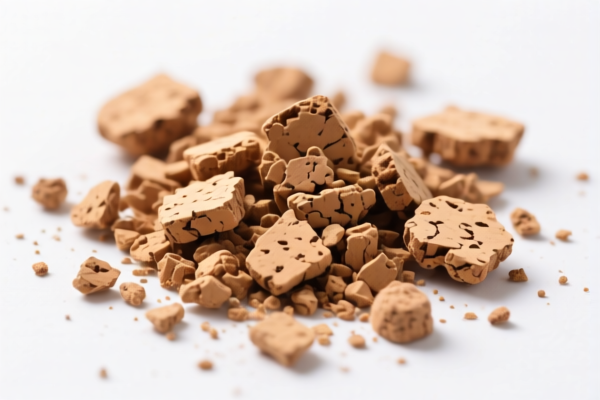
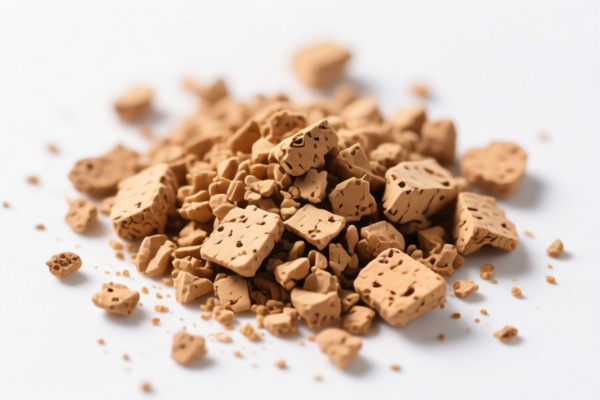
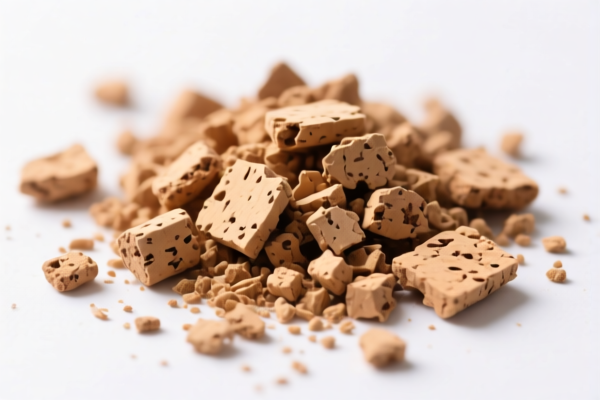
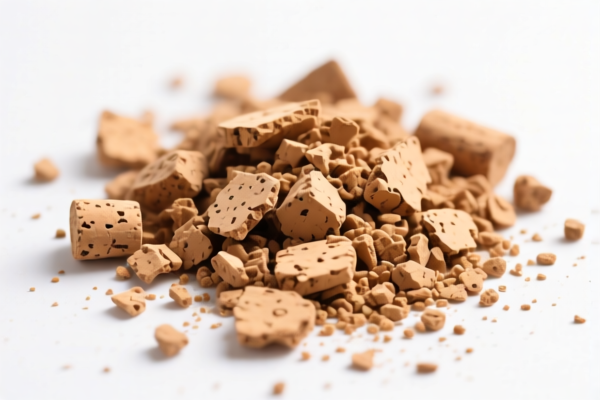
AI Analysis
🌳 Compressed Cork Material (Natural Cork Products)
🌐 HS Code Reference & Customs Clearance Guide | 2026 Latest Tariff Analysis | Professional Clearance Strategy
📌 I. Product Definition & Classification: Do You Really Understand "Compressed Cork"?
Compressed cork is a versatile, sustainable material derived from the bark of the cork oak tree (Quercus suber). In international trade, it is classified based on its processing level and form:
1. Natural/Primary Cork (Semi-finished):
Raw cork blocks or sheets that have been boiled, washed, and dried but not yet bonded with adhesives or mechanically compressed into dense sheets. These are considered "primary" or "semi-finished" natural products.
2. Compressed Cork (Processed):
Cork particles or crumbs bonded together under high pressure and temperature (with or without additives). This includes cork sheets, tiles, and rolls used for flooring, insulation, or industrial gaskets. These are considered "manufactured" or "processed" goods.
⚠️ Key Distinction Point:
- If the material is loose granules, crumbs, or raw blocks without binding → Falls under Natural Cork (4502 / 4503).
- If the material is bonded, solid sheets, or dense pellets created by compression → Falls under Compressed Cork (4504) or Other Natural Cork Articles (4503).
📦 II. HS Code Classification Details (2026 Latest Tariff Authority Comparison)
| HS Code | Product Description | Application Scenario | Processing Level |
|---|---|---|---|
4502.00.00.00 |
Cork, raw or simply prepared; crushed, granulated, or ground cork | Raw cork blocks, washed cork sheets, cork granules (unbonded) | ✅ Natural/Semi-finished |
4503.90.20.00 |
Other articles of natural cork | Compressed cork sheets/blocks used as semi-finished goods for further manufacturing | ✅ Natural-derived/Processed |
4503.90.60.00 |
Other natural cork articles (catch-all) | Compressed cork materials not specified elsewhere, often used as raw semi-finished inputs | ✅ Natural-derived/Processed |
4504.10.10.00 |
Agglomerated cork, whether or not with a binding substance | Compressed cork particles bonded together (e.g., for flooring underlayment) | ✅ Fully Processed/Agglomerated |
4504.10.20.00 |
Agglomerated cork, whether or not with a binding substance | High-density compressed cork, matching "compressed cork" description precisely | ✅ Fully Processed/Agglomerated |
🔍 Critical Reminder:
- "Compressed Cork Material" typically refers to agglomerated or bonded cork. Therefore,4504.10is the most accurate classification for finished compressed sheets.
- If the "compressed material" is actually just raw cork blocks that haven't been agglomerated (just pressed for shape), it may fall under4502or4503.
- Misclassification Risk: Declaring agglomerated cork as raw cork (4502) to avoid duties is illegal and heavily scrutinized.
💰 III. 2026 Latest Tariff Rate Breakdown (Including Additional Taxes & Policy Add-ons)
✅ Applicable Country: United States (US)
✅ Country of Origin: China (CN)
✅ Effective Date: From November 10, 2025 (and subsequent imports)
🎯 1. 4504.10.20.00 & 4504.10.10.00 —— Agglomerated/Compressed Cork (High Match)
| Item | Content |
|---|---|
| Base Tariff | 0% (Ad Valorem) |
| USITC Additional Tariff | +25% (Under Section 301, USITC Footnote 9903.88.01) |
| IEEPA Additional Tariff | +10% (Against China/HK products, effective Nov 10, 2025) |
| Total Tariff Rate | 35.0% |
| Tax Calculation | CIF Value × 35% |
| De Minimis Exemption | ❌ Not Eligible (Deny De Minimis) |
| Legal Basis Path | IEEPA:9903.01.25 → IEEPA:9903.01.24 → USITC:4504.10.10.00/4504.10.20.00 → FOOTNOTE:9903.88.01 |
📌 Explanation:
- 0% Base Rate: Natural cork products often have low base tariffs.
- +25% Section 301: Standard punitive tariff on many Chinese manufactured goods.
- +10% IEEPA: Specific emergency power tariff targeting Chinese imports.
- Total 35%: This is a significant cost factor. Must be factored into pricing strategies.
🎯 2. 4502.00.00.00 —— Raw/Simply Prepared Natural Cork
| Item | Content |
|---|---|
| Base Tariff | 0% (Ad Valorem) |
| USITC Additional Tariff | +25% |
| IEEPA Additional Tariff | +10% |
| Total Tariff Rate | 35.0% |
| Tax Calculation | CIF Value × 35% |
| De Minimis Exemption | ❌ Not Eligible |
| Legal Basis Path | IEEPA:9903.01.25 → IEEPA:9903.01.24 → USITC:4502.00.00.00 → FOOTNOTE:9903.88.01 |
📌 Note:
- Even if classified as "raw" cork, the 35% total rate applies because the additional tariffs cover Section 4502.
- Risk: If customs determines the "raw" cork is actually agglomerated/compressed, they may reclassify to4504but the tax rate remains the same in this specific data set. However, the legal description must match.
🎯 3. 4503.90.20.00 —— Other Natural Cork Articles
| Item | Content |
|---|---|
| Base Tariff | 0% (Ad Valorem) |
| USITC Additional Tariff | +25% |
| IEEPA Additional Tariff | +10% |
| Total Tariff Rate | 35.0% |
| Tax Calculation | CIF Value × 35% |
| De Minimis Exemption | ❌ Not Eligible |
| Legal Basis Path | IEEPA:9903.01.25 → IEEPA:9903.01.24 → USITC:4503.90.20.00 → FOOTNOTE:9903.88.01 |
📌 Note:
- This code is a "residual" category for natural cork items not specified elsewhere.
- Use only if the product is clearly a "natural cork article" but not agglomerated cork (4504).
🎯 4. 4503.90.60.00 —— Other Natural Cork Articles (Catch-All)
| Item | Content |
|---|---|
| Base Tariff | 14% (Ad Valorem) |
| USITC Additional Tariff | +25% |
| IEEPA Additional Tariff | +10% |
| Total Tariff Rate | 49.0% |
| Tax Calculation | CIF Value × 49% |
| De Minimis Exemption | ❌ Not Eligible |
| Legal Basis Path | IEEPA:9903.01.25 → IEEPA:9903.01.24 → USITC:4503.90.60.00 |
📌 Warning:
- This is the highest tariff rate (49%).
- It applies if the product is classified as a "natural cork article" but fails to meet the specific definitions of4504(agglomerated) or4503.20/4503.90.20.
- Avoid this classification for compressed cork if4504or4503.90.20is applicable, as it adds an extra 14% base tariff.
🛠️ IV. Customs Clearance Practical Advice (Battle-Tested Pitfall Avoidance)
✅ 1. Documentation Checklist (Mandatory)
| Document | Required | Notes |
|---|---|---|
| ✅ Product Specification Sheet | ✔️ | Must state: "Agglomerated Cork," "Compressed Cork Particles," or "Raw Cork Blocks." |
| ✅ Material Composition Statement | ✔️ | % of natural cork vs. binding agents (if any). |
| ✅ Product Photos | ✔️ | Clear shots of texture, edges, and packaging. Show if it's granular or solid sheet. |
| ✅ Commercial Invoice | ✔️ | Describe as "Compressed Cork Material for Flooring/Insulation." Avoid vague terms like "Cork Product." |
| ✅ Packing List | ✔️ | Detail weight, dimensions, and units (e.g., rolls, sheets, bulk bags). |
✅ 2. Declaration Tips (Key Mantras)
🔥 "Agglomerated vs. Raw: Be Specific! Wrong Code = High Duty!"
| Scenario | Correct Declaration | Wrong Declaration | Consequence |
|---|---|---|---|
| Bonded Cork Sheets | 4504.10.20.00 (35%) |
4502.00.00.00 |
Customs reclassification → Potential penalties, though tax may be similar. |
| Raw Cork Blocks | 4502.00.00.00 (35%) |
4503.90.60.00 |
Overpaying 14% base tariff. |
| Bulk Cork Granules | 4503.90.20.00 (35%) |
4504.10.10.00 |
Minor administrative discrepancy, but ensure "unbonded" status is clear. |
| Composite Cork (Cork+Rubber) | Not in scope | N/A | Would require different classification (e.g., Rubber or Plastic). |
✅ 3. Special Situation Handling
| Situation | Handling Advice |
|---|---|
| Cork with Adhesive Backing | If the adhesive is structural, it may shift classification to Chapter 39 (Plastics) or 40 (Rubber). Consult HS rules. |
| Cork Flooring Tiles | Usually 4504.10.20.00 (Agglomerated Cork). Declare as "Finished Cork Tiles" if ready-to-use. |
| Cork Insulation Rolls | 4504.10.10.00 or 4504.10.20.00. Ensure "thickness" and "density" specs are provided. |
| Sample Shipment | Even for samples, 35% duty applies. Do not use De Minimis (Section 321) to avoid it; it is explicitly denied. |
🌍 V. Global Customs Clearance Comparison (2026 Latest)
| Country/Region | Recommended HS Code | Tariff Rate (China Origin) | Certification/Notes |
|---|---|---|---|
| 🇺🇸 USA | 4504.10.20.00 |
35% (0% + 25% + 10%) | Strict Section 301 enforcement. |
| 🇨🇳 China | 4504.10.20.00 |
~5-10% | Import duty varies; check latest PRC tariff schedule. |
| 🇪🇺 EU | 4504.10.20.00 |
0% (if EORI valid) | No additional punitive tariffs. |
| 🇨🇦 Canada | 4504.10.20.00 |
5-15% | CUSMA benefits may apply if originating in US/Mexico. |
| 🇦🇺 Australia | 4504.10.20.00 |
5% | AUSFTA benefits may apply if originating in US. |
📌 Conclusion:
- The USA is the most challenging market for cork imports from China due to the 35% blended tariff.
- EU, Australia, and Canada are more favorable, with significantly lower or zero tariffs.
- Strategy: If shipping to the US, consider value-added processing outside China or HS Code pre-rulings to ensure compliance and avoid unexpected 49% penalties.
📌 VI. Common Errors & Pitfall Guide (Lessons Learned)
❌ Mistake 1: Declaring "Compressed Cork" as "Raw Cork" (4502) to simplify description.
👉 Result: Customs may reject or request more info. While the rate is similar (35%), the legal mismatch can delay clearance.
❌ Mistake 2: Using 4503.90.60.00 for agglomerated cork.
👉 Result: Paying 49% instead of 35%. This is a 14% unnecessary loss due to using a catch-all code with a higher base rate.
❌ Mistake 3: Assuming De Minimis (Section 321) applies to cork.
👉 Result: Package seized. The data explicitly states deny_de_minimis for these HS codes. All shipments, regardless of value, are subject to full duties.
❌ Mistake 4: Ignoring the "Binding Substance" aspect.
👉 Result: If cork is glued with synthetic adhesives, it might be reclassified as a plastic/rubber composite. Always disclose binding agents.
✅ Correct Practice:
"Agglomerated Cork Sheets, Compressed from Natural Cork Particles, with Polyurethane Binding, for Flooring Underlayment, Model CORK-100"
🎯 VII. Conclusion: Precise Declaration, Save Costs, Ensure Smooth Clearance!
🎯 Remember the Mantra:
🔹 "Agglomerated is 4504, Raw is 4502, Catch-All is 4503.90.60 (Expensive!)"
🔹 "No De Minimis for Cork from China. 35% is the baseline, 49% is the penalty."
📌 Pro Tip:
If your cork products are originating from Portugal, Spain, or Morocco, you may qualify for tariff exemptions or lower rates under various trade agreements. For Chinese-origin cork, 35% is standard.
Recommend applying for an Advance Ruling if you are shipping large volumes or new product types.
📣 Immediate Action:
📞 Contact a licensed customs broker + Provide product samples/photos + Apply for HS Code Pre-ruling
🚀 Let your cork products clear smoothly, stay profitable, and reach global markets!
✨ Professional Clearance Starts with Accurate Classification!
💼 Every dollar of duty saved is pure profit earned!
Customer Reviews
About HS Code Classification
The Harmonized System (HS) is an internationally standardized nomenclature developed by the World Customs Organization (WCO) to classify traded products. Over 200 countries use the HS system as the basis for customs tariffs, trade statistics, and import/export regulations.
Each HS code follows a hierarchical structure:
- Chapter (2 digits) — Broad category of goods (e.g., Chapter 84: Machinery and Mechanical Appliances)
- Heading (4 digits) — More specific grouping within the chapter
- Subheading (6 digits) — Internationally standardized breakdown, used by all WCO member countries
- National subdivisions (8-10 digits) — Country-specific extensions for further classification, such as US HTSUS 10-digit codes
Correct HS code classification is essential for smooth customs clearance, accurate duty payment, and compliance with trade regulations. Misclassification can lead to customs delays, overpayment of duties, or penalties.
When importing from CN to US, the applicable tariff rates may include:
- Most-Favored-Nation (MFN) rate — The standard duty rate applied to WTO members
- General rate — Applied to countries without trade agreements
- Trade remedy duties — Additional tariffs such as Section 301 (anti-dumping), Section 232 (national security), or countervailing duties
The information provided on this page is for reference purposes only. For official classification, please consult with your local customs authority or a licensed customs broker.