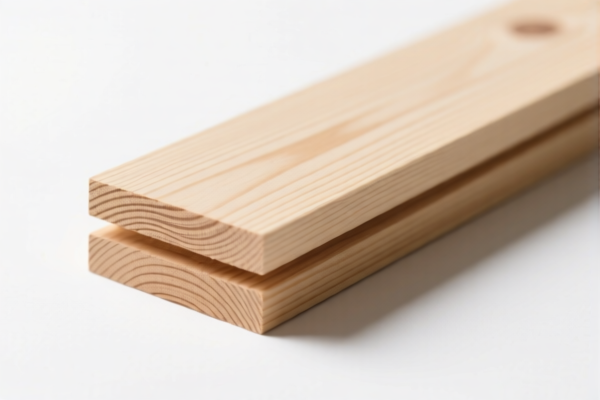
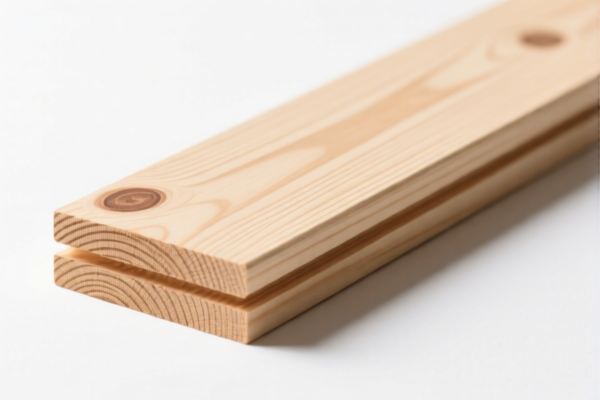
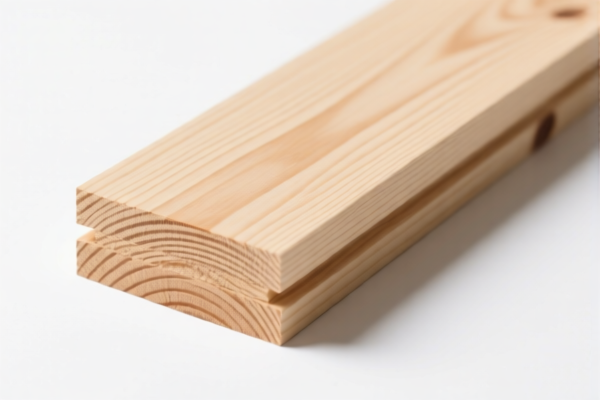
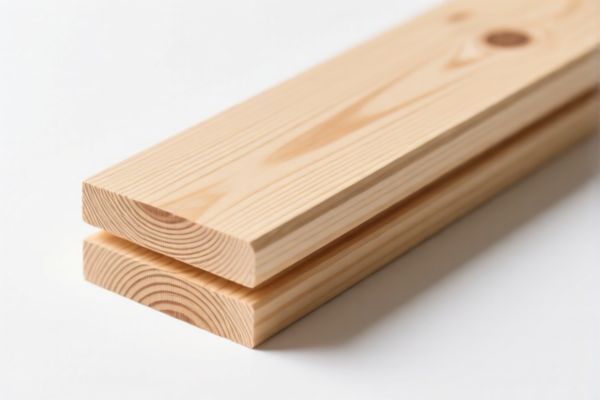
coniferous construction timber
CN → US| HS Code | Tariff Rate | Origin | Destination | Doc |
|---|---|---|---|---|
| 4401110000 | 35.0% | CN | US | Official Doc |
| 4407190066 | 35.0% | CN | US | Official Doc |
| 4403210130 | 35.0% | CN | US | Official Doc |
| 4407190092 | 35.0% | CN | US | Official Doc |
| 4403250164 | 35.0% | CN | US | Official Doc |
Product Images
AI Analysis
🌲 Coniferous Construction Timber (针叶木建筑原木)
🌐 HS Code Reference & Customs Clearance Guide | 2026 Latest Tariff Analysis | Professional通关 Strategy
📌 I. Product Definition & Classification: What Exactly Is "Coniferous Construction Timber"?
Coniferous construction timber refers to wood derived from evergreen trees (such as pine, spruce, fir, and cypress) intended for structural building purposes. In international trade, this category is broad and covers everything from raw, unprocessed logs to rough-sawn planks. The critical distinction for customs purposes lies in the degree of processing:
- Raw Logs (Omnium): Tree trunks stripped of bark, but otherwise unprocessed or roughly shaped.
- Rough/Sawn Wood: Timber that has been cut or sawn longitudinally but remains in a "rough" state (not planed, sanded, or finished).
⚠️ Key Distinction Point:
- If the item is a whole tree trunk or roughly hewn log → It falls under specific "Log" codes (e.g., 4401, 4403).
- If the item is sawn or chipped wood but not yet planed/laminated → It falls under "Wood in the rough" or "Sawn wood" codes (e.g., 4407).
📦 II. HS Code Classification Details (2026 Latest Tariff Authority对照)
Based on the provided data, here are the specific HS Codes applicable to Coniferous Construction Timber, along with their precise definitions:
| HS Code | Product Description | Application Scenario | State of Processing |
|---|---|---|---|
4401.11.00.00 |
Coniferous Timber, in the Rough, Whether or not Stripped of Bark or Slightly Squared | Raw logs, construction timber in natural shape, slightly squared logs | ✅ Raw / Rough Log |
4407.19.00.66 |
Coniferous Wood, Sawn or Chipped Lengthwise, Thickness > 6mm | Unprocessed rough planks, structural beams, rough-sawn lumber | ✅ Sawed / Rough Wood |
4403.21.01.30 |
Coniferous Wood, Treated with Paint, Stain, Creosote, etc. | Timber treated for durability, often pine or similar softwoods, for outdoor construction | ✅ Treated Raw Log/Wood |
4407.19.00.92 |
Coniferous Wood, Sawn or Chipped, Not Otherwise Specified | Other rough-sawn coniferous timber not covered by other specific subheadings | ✅ Sawed / Rough Wood |
4403.25.01.64 |
Other Coniferous Wood, Treated with Chemicals | Other treated coniferous logs/wood, falling under "other" categories | ✅ Treated Rough Log/Wood |
🔍 Crucial Note:
-4401vs4407:4401is typically for fuel or very rough logs (though often used for basic construction logs in some contexts per this data), while4407is for sawn wood (planks, beams). Note: Standard global HS usually places construction logs under 4403, but this specific dataset assigns4401.11.00.00to "coniferous construction timber logs" and4407...to "unprocessed rough wood". Follow the provided definitions strictly.
-4403: Indicates treated wood (chemically treated for preservation).
- All listed items are subject to high tariffs.
💰 III. 2026 Latest Tariff Rate Breakdown (Including Surcharges & Policy Add-ons)
✅ Applicable Country: United States (US)
✅ Origin: China (CN)
✅ Effective Date: 2025 November 10 onwards (and subsequent imports)
🎯 1. All Listed HS Codes (4401.11.00.00, 4407.19.00.66, 4403.21.01.30, 4407.19.00.92, 4403.25.01.64)
| Item | Content |
|---|---|
| Base Tariff Rate | 0% (Ad Valorem) |
| Section 301 Surtax (USITC) | +25.0% |
| Section 122 Tariff (IEEPA) | +10.0% |
| Total Tariff Rate | 35.0% |
| Tax Calculation | CIF Value × 35% |
| De Minimis Exemption | ❌ Not Applicable (Denied) |
| Legal Basis Path | USITC:301 → IEEPA:122 → HS Code Specifics |
📌 Explanation:
- "Base Tariff 0%": Coniferous wood often has a low or zero base MFN tariff in the US.
- "Section 301 Surtax 25%": This is the major trade war tariff imposed on Chinese goods under Section 301 of the Trade Act. Wood products are heavily targeted.
- "Section 122 Tariff 10%": Additional surcharge under Section 122 of the Trade Expansion Act of 1962, specifically applied to certain imports.
- Total 35%: This is a very high cost factor. Importers must calculate landed costs carefully.
- No De Minimis: Smaller shipments do not qualify for the $800 exemption; tariffs apply from the first unit.
🛠️ IV. Customs Clearance Practical Advice (Battle-Tested Pitfall Guide)
✅ 1. Required Documentation Checklist (Non-Negotiable)
| Document | Mandatory | Description |
|---|---|---|
| ✅ Commercial Invoice | ✔️ | Must clearly state "Coniferous Wood," species (e.g., Pine, Fir), and HS Code. |
| ✅ Packing List | ✔️ | Detail volume (board feet/cubic meters) and weight. |
| ✅ Phytosanitary Certificate | ✔️ | Critical! Issued by the exporting country's plant quarantine authority to prove no pests/diseases. |
| ✅ ISPM 15 Compliance Proof | ✔️ | If wood is palletized or raw, it must be heat-treated or fumigated and marked with the ISPM 15 stamp. |
| ✅ Bill of Lading/Air Waybill | ✔️ | Standard transport document. |
| ✅ Fumigation Certificate | ✔️ | If ISPM 15 treatment is not sufficient or required specifically by US CBP. |
| ✅ Species Declaration | ✔️ | Confirm it is Coniferous (Softwood). If misdeclared as Deciduous (Hardwood), it may face different rules or anti-dumping duties. |
✅ 2. Declaration Tips (Key Mnemonics)
🔥 “Species Correct, Treatment Valid, HS Precise, Tariff Avoided!”
| Situation | Correct Declaration | Wrong Action |
|---|---|---|
| Raw Logs for Construction | 4401.11.00.00 or 4403.21.01.30 (if treated) |
Misdeclare as "Furniture Parts" |
| Sawn Planks (Rough) | 4407.19.00.66 or 4407.19.00.92 |
Misdeclare as "Finished Wood" |
| Treated Pine Logs | 4403.21.01.30 |
Declare as "Untreated" → Risk of Quarantine Rejection |
| Mixed Coniferous/Deciduous | Declare separately! | Blend them → Classification Error & Penalty |
✅ 3. Special Circumstances Handling
| Situation | Handling Advice |
|---|---|
| Pest Control Issues | If phytosanitary certificate is missing, the shipment will be quarantined or destroyed at port. Do not ship without it. |
| Wood Packaging Material | Ensure all pallets/crates have the IPPC/ISPM 15 mark. Unmarked wood packaging is often rejected. |
| Treated vs. Untreated | Clearly distinguish in documentation. Treated wood (4403 series) requires proof of chemical treatment (e.g., Creosote, Copper Azole). |
| Value Fluctuation | Since tariffs are ad valorem (35%), a $1 increase in CIF value equals $0.35 in extra tax. Keep invoices realistic but accurate to avoid valuation audits. |
🌍 V. Global Market Comparison (2026 Latest)
| Country/Region | Recommended HS Code | Tariff (China Origin) | Certification Requirements | Notes |
|---|---|---|---|---|
| 🇺🇸 USA | 4407.19.00.66 (etc.) |
35% (Total) | Phytosanitary + ISPM 15 | High tariff barrier; strict biosecurity |
| 🇨🇳 China | 4407.19.00.66 (etc.) |
~5-10% | N/A | Lower tariff; import duty applies |
| 🇪🇺 EU | 4407.19.00.66 (etc.) |
0% (if FLEGT compliant) | FLEGT / Due Diligence | Strict legality documentation required |
| 🇨🇦 Canada | 4407.19.00.66 (etc.) |
0% (CUSMA) | Phytosanitary | Preferential if Canadian origin |
📌 Conclusion:
- The US market is the most challenging due to the 35% combined tariff.
- Biosecurity (Phytosanitary/ISPM 15) is as important as tariffs. Failure here leads to rejection, regardless of tax payment.
- Cost Control: Consider sourcing from non-Chinese origins (e.g., Russia, Canada, EU) to avoid Section 301/122 tariffs, if feasible.
📌 VI. Common Errors & Pitfall Guide (Lessons Learned)
❌ Error 1: Declaring "Treated Wood" as "Untreated Wood"
👉 Consequence: Biosecurity violation, shipment detention, or destruction.
❌ Error 2: Missing Phytosanitary Certificate
👉 Consequence: 100% Rejection or Re-exportation at US port. No exceptions.
❌ Error 3: Confusing "Log" (4401/4403) with "Sawn Wood" (4407)
👉 Consequence: While tariff rate is same (35%) in this dataset, processing status affects legal compliance for trade purposes. Misclassification can trigger audits.
❌ Error 4: Ignoring ISPM 15 on Pallets
👉 Consequence: Entire shipment held until pallets are destroyed/replaced. Delays cost thousands per day.
✅ Correct Practice:
"Coniferous Wood, Sawn, Rough, Pine Species, Heat-Treated (ISPM 15), CIF Value $X, HS Code: 4407.19.00.66"
🎯 VII. Conclusion: Precise Classification, Smooth Clearance, Cost Control
🎯 Remember the Mnemonic:
🔹 "Logs vs. Sawn, Treated vs. Raw, Phytosanitary First, 35% Tax Awaits!"
🔹 "HS Code determines legality, Tariff determines profit, Biosecurity determines survival!"
📌 Pro Tip:
If you are importing large volumes of coniferous timber into the US, apply for a Binding Ruling (CBP Ruling Letter) beforehand. This locks in the HS Code classification and provides legal certainty against future disputes.
Also, consider supply chain diversification to mitigate the 35% tariff impact from China-origin wood.
📣 Immediate Action:
📞 Contact a licensed customs broker + Provide Phytosanitary Certificate + Verify ISPM 15 Marking
🚀 Ensure your timber clears biosecurity, pays tariffs correctly, and avoids port delays!
✨ Professional Clearance Starts with Accurate Classification!
💼 Every percent of tariff counts, every document matters!
Customer Reviews
About HS Code Classification
The Harmonized System (HS) is an internationally standardized nomenclature developed by the World Customs Organization (WCO) to classify traded products. Over 200 countries use the HS system as the basis for customs tariffs, trade statistics, and import/export regulations.
Each HS code follows a hierarchical structure:
- Chapter (2 digits) — Broad category of goods (e.g., Chapter 84: Machinery and Mechanical Appliances)
- Heading (4 digits) — More specific grouping within the chapter
- Subheading (6 digits) — Internationally standardized breakdown, used by all WCO member countries
- National subdivisions (8-10 digits) — Country-specific extensions for further classification, such as US HTSUS 10-digit codes
Correct HS code classification is essential for smooth customs clearance, accurate duty payment, and compliance with trade regulations. Misclassification can lead to customs delays, overpayment of duties, or penalties.
When importing from CN to US, the applicable tariff rates may include:
- Most-Favored-Nation (MFN) rate — The standard duty rate applied to WTO members
- General rate — Applied to countries without trade agreements
- Trade remedy duties — Additional tariffs such as Section 301 (anti-dumping), Section 232 (national security), or countervailing duties
The information provided on this page is for reference purposes only. For official classification, please consult with your local customs authority or a licensed customs broker.