coniferous wood sawdust
CN → US| HS Code | Tariff Rate | Origin | Destination | Doc |
|---|---|---|---|---|
| 4401410000 | 35.0% | CN | US | Official Doc |
| 4401210000 | 35.0% | CN | US | Official Doc |
Product Images
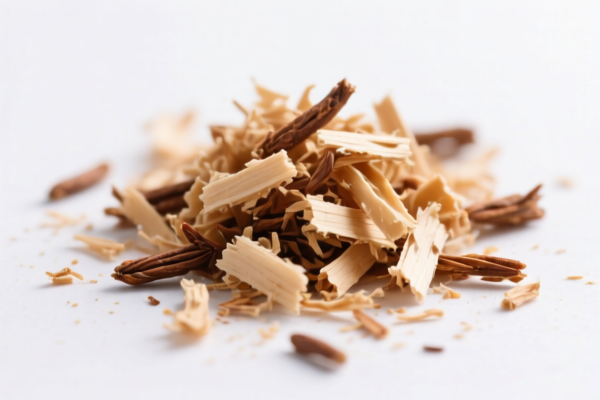
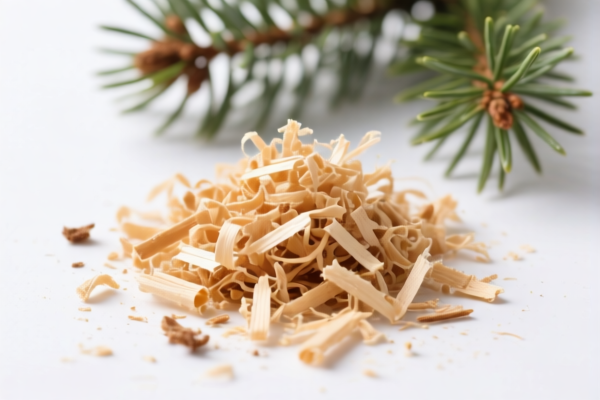
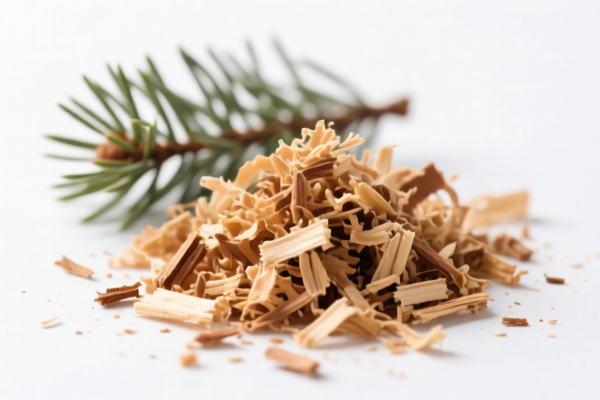
AI Analysis
🪵 Coniferous Wood Sawdust (Fuel Wood, Chips, Particles, Waste, and Scrap)
🌐 HS Code Reference & Customs Clearance Guide | 2026 Latest Tariff Analysis | Professional Strategy
📌 I. Product Definition & Classification: What is "Coniferous Wood Sawdust"?
In international trade, "Coniferous Wood Sawdust" refers to wood products derived from coniferous trees (such as pine, spruce, fir). It is strictly divided into two main categories based on its physical form and agglomeration status:
1. Wood in Chips or Particles (Coniferous):
- Defined as wood broken down into small pieces, chips, or particles, typically used for pulp, paper, or biomass fuel.
- HS Code: 4401.21.00.00
2. Sawdust and Wood Waste/Scrap (Not Agglomerated):
- Defined as fine powder-like wood dust or waste/scrap that has not been pressed into briquettes, pellets, or logs.
- HS Code: 4401.41.00.00
⚠️ Key Distinction:
- If the material is loose sawdust or unagglomerated waste → Use4401.41.00.00
- If the material is chips, granules, or particles (coarser than dust) → Use4401.21.00.00
- If the sawdust is compressed into pellets/briquettes → It is NOT covered in this specific dataset (usually falls under4401.31or4401.32), but based on the provided data, we focus on the non-agglomerated and chip/particle forms.
📦 II. HS Code Classification Details (2026 Latest Tariff Authority Comparison)
| HS Code | Product Description | Applicable Scenario | Agglomerated? |
|---|---|---|---|
4401.21.00.00 |
Fuel wood: Wood in chips or particles; Coniferous | Wood chips for pulp, biomass fuel pellets (if not agglomerated into briquettes), particle board raw material | ✅ Yes (Chips/Particles) |
4401.41.00.00 |
Fuel wood: Sawdust and wood waste/scrap, not agglomerated; Sawdust | Loose sawdust from woodworking, untreated wood waste, wood dust | ❌ No (Loose/Unagglomerated) |
🔍 Important Reminder:
-4401.21.00.00covers Coniferous wood in chip/particle form. Non-coniferous (e.g., oak, maple) would fall under4401.22.
-4401.41.00.00covers Sawdust regardless of tree species, as long as it is not agglomerated. If it is agglomerated (pellets), it belongs to a different subheading (4401.31/4401.32), which is not included in the provided<DATA>.
- Do not confuse "Sawdust" with "Wood Waste": Both non-agglomerated forms are grouped under4401.41.00.00.
💰 III. 2026 Latest Tariff Rate Details (Including Additional Taxes)
✅ Applicable Country: United States (US)
✅ Origin: China (CN) (Assumed based on typical trade context, but rates apply to applicable origin)
✅ Effective Time: Current rates apply (2025-2026)
🎯 1. 4401.21.00.00 —— Wood in Chips or Particles (Coniferous)
| Item | Content |
|---|---|
| Base Tariff | 0.0% |
| Additional Tariff | 25.0% |
| Total Tax Rate | 25.0% |
| Tax Calculation | CIF Value × 25% |
| Legal Basis | Section 301 Tariffs |
📌 Explanation:
- The Base Tariff is 0%, meaning the fundamental import duty is waived.
- However, an Additional Tariff of 25% applies (likely under Section 301 trade remedies).
- Total Tax = 25%. This is a significant cost factor for exporters.
🎯 2. 4401.41.00.00 —— Sawdust and Wood Waste/Scrap (Not Agglomerated)
| Item | Content |
|---|---|
| Base Tariff | 0.0% |
| Additional Tariff | 25.0% |
| Total Tax Rate | 25.0% |
| Tax Calculation | CIF Value × 25% |
| Legal Basis | Section 301 Tariffs |
📌 Explanation:
- Like the previous code, the Base Tariff is 0%.
- An Additional Tariff of 25% applies.
- Total Tax = 25%.
- Note: Whether it is "Sawdust" or "Wood Chips/Particles," if they are classified under these specific non-agglomerated/coniferous codes, the total tax burden is identical (25%).
🛠️ IV. Customs Clearance Practical Advice (Battle-Tested Pitfall Avoidance Guide)
✅ 1. Required Document Checklist (All Mandatory)
| Document | Must Provide | Description |
|---|---|---|
| ✅ Product Specification Sheet | ✔️ | Details particle size, moisture content, type of coniferous wood (e.g., Pine, Spruce). |
| ✅ Material Safety Data Sheet (MSDS) | ✔️ | Important if the sawdust has any chemical treatment (e.g., preservatives, glues). |
| ✅ Phytosanitary Certificate | ✔️ | Critical: Proves the wood is free from pests and diseases. Required by many countries. |
| ✅ Commercial Invoice | ✔️ | Must clearly state "Coniferous Wood Chips" or "Unagglomerated Sawdust" and HS Code. |
| ✅ Packing List | ✔️ | Weight and volume details. |
| ✅ Bill of Lading (B/L) | ✔️ | Clean on board. |
✅ 2. Declaration Tips (Key Mantra)
🔥 "Form Defines Code: Chips vs. Dust, Agglomerated or Loose!"
| Scenario | Correct Declaration | Incorrect Practice |
|---|---|---|
| Loose Sawdust | 4401.41.00.00 |
Misdeclare as "Wood Chips" → Potential audit for misclassification |
| Wood Chips (Coniferous) | 4401.21.00.00 |
Misdeclare as "Sawdust" → May trigger unnecessary phytosanitary scrutiny |
| Wood Pellets | Not in Dataset | Do NOT use 4401.21 or 4401.41. Use 4401.31/4401.32. |
| Treated Sawdust | Declare Treatment | If treated, must declare type of treatment to avoid rejection. |
✅ 3. Special Situation Handling
| Situation | Handling Advice |
|---|---|
| High Moisture Content | Ensure moisture content is declared. Excess moisture may lead to penalties or rejection for biosecurity reasons. |
| Mixed Species | If wood waste contains both coniferous and non-coniferous, declare the majority species. If mixed, it may be classified under non-coniferous (4401.22) or waste (4401.40), changing the code. |
| Agglomerated Forms | If sawdust is pressed into pellets, it is NOT 4401.41. It is 4401.31 (Coniferous) or 4401.32 (Non-Coniferous). Do not misclassify! |
| Dust Explosion Hazard | For transport, declare as Dangerous Goods (UN 1362) if packaging requires special handling. Ensure B/L reflects this if necessary. |
🌍 V. Global Main Market Clearance Comparison (2026 Latest)
| Country/Region | Recommended HS Code | Tariff Rate | Certification Requirement | Notes |
|---|---|---|---|---|
| 🇺🇸 USA | 4401.21.00.00 or 4401.41.00.00 |
25% (Total) | Phytosanitary Certificate | 0% Base + 25% Additional |
| 🇨🇳 China | 4401.21.00.00 or 4401.41.00.00 |
5% - 10%* | Phytosanitary Certificate | *Varies by specific policy |
| 🇪🇺 EU | 4401.21 or 4401.41 |
0% - 2.4% | FLEGT / Timber Regulation | Strict against illegal logging |
| 🇯🇵 Japan | 4401.21 or 4401.41 |
3.2% - 6% | Phytosanitary Certificate | Strict pest control |
📌 Conclusion:
- The USA imposes a 25% total tariff on these specific HS codes.
- Other markets generally have lower base tariffs but may have stricter phytosanitary requirements.
- Agglomerated products (pellets) may have different tariff rates in different countries, so verify if your product is actually "sawdust/chips" or "pellets."
📌 VI. Common Mistakes & Pitfall Guide (Lessons Learned)
❌ Mistake 1: Declaring Wood Pellets as Sawdust (4401.41)
👉 Consequence: Misclassification penalty. Pellets have different HS codes (4401.31).
❌ Mistake 2: Not providing a Phytosanitary Certificate
👉 Consequence: Shipment held at customs, incurs storage fees, or is returned.
❌ Mistake 3: Confusing Coniferous (4401.21) with Non-Coniferous (4401.22)
👉 Consequence: If you declare "Coniferous" but the wood is Oak/Maple, it is a false declaration.
❌ Mistake 4: Ignoring Moisture Content
👉 Consequence: High moisture can lead to rejection for biosecurity reasons.
✅ Correct Approach:
"Coniferous Wood Chips, Untreated, Moisture Content <20%, UN1362 (if applicable), Phytosanitary Certificate Attached"
🎯 VII. Conclusion: Professional Declaration for Cost Savings
🎯 Remember the Mantra:
🔹 "Chips vs. Dust: 21 vs. 41."
🔹 "Loose vs. Agglomerated: Don't mix them up!"
🔹 "25% Tax in the USA, Plan Ahead!"
📌 Pro Tip:
If your product is agglomerated (pellets), do NOT use the codes above. Check 4401.31 or 4401.32.
If you are shipping to the USA, factor in the 25% total tax in your pricing strategy.
Always ensure Phytosanitary Certification is in place to avoid biosecurity delays.
📣 Take Action Now:
📞 Contact a licensed customs broker + Provide product photos + Verify wood species
🚀 Ensure smooth clearance, avoid delays, and maximize your profit margins!
✨ Professional clearance starts with accurate classification!
💼 Every percentage point of tax counts!
Customer Reviews
About HS Code Classification
The Harmonized System (HS) is an internationally standardized nomenclature developed by the World Customs Organization (WCO) to classify traded products. Over 200 countries use the HS system as the basis for customs tariffs, trade statistics, and import/export regulations.
Each HS code follows a hierarchical structure:
- Chapter (2 digits) — Broad category of goods (e.g., Chapter 84: Machinery and Mechanical Appliances)
- Heading (4 digits) — More specific grouping within the chapter
- Subheading (6 digits) — Internationally standardized breakdown, used by all WCO member countries
- National subdivisions (8-10 digits) — Country-specific extensions for further classification, such as US HTSUS 10-digit codes
Correct HS code classification is essential for smooth customs clearance, accurate duty payment, and compliance with trade regulations. Misclassification can lead to customs delays, overpayment of duties, or penalties.
When importing from CN to US, the applicable tariff rates may include:
- Most-Favored-Nation (MFN) rate — The standard duty rate applied to WTO members
- General rate — Applied to countries without trade agreements
- Trade remedy duties — Additional tariffs such as Section 301 (anti-dumping), Section 232 (national security), or countervailing duties
The information provided on this page is for reference purposes only. For official classification, please consult with your local customs authority or a licensed customs broker.