connectors
CN → US| HS Code | Tariff Rate | Origin | Destination | Doc |
|---|---|---|---|---|
| 9001100070 | 41.7% | CN | US | Official Doc |
| 9001100085 | 41.7% | CN | US | Official Doc |
| 8544429090 | 87.6% | CN | US | Official Doc |
| 8536700000 | 35.0% | CN | US | Official Doc |
| 8536694010 | 35.0% | CN | US | Official Doc |
Product Images
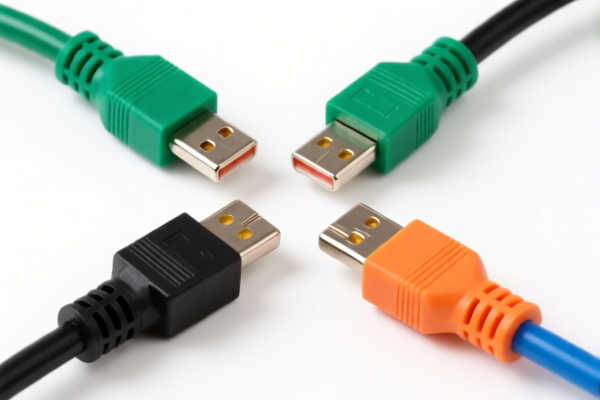
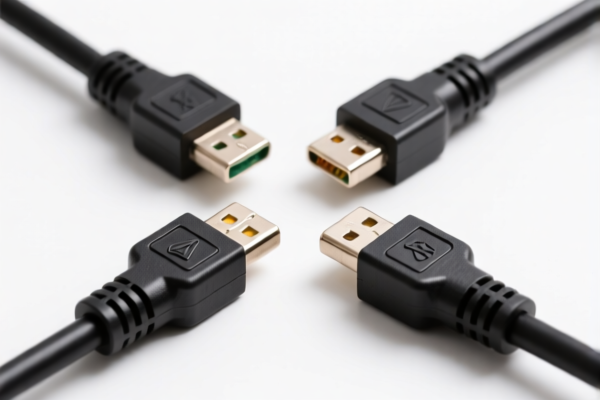
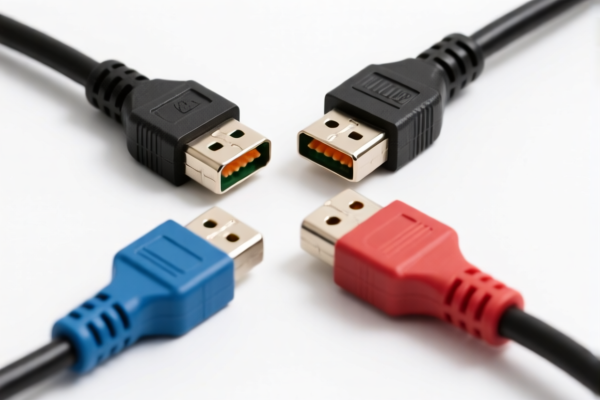
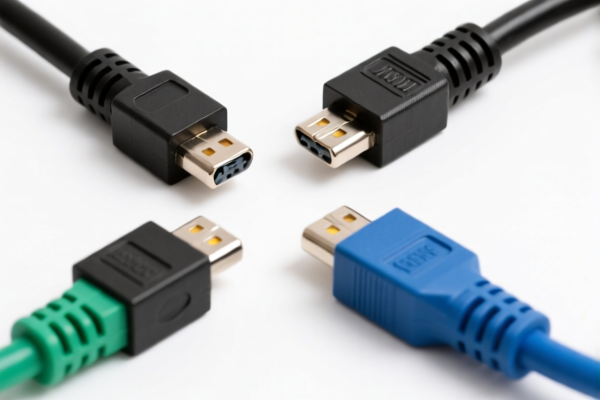
AI Analysis
🔌 Fiber & Cable Connectors (Optical & Electrical)
🌐 HS Code Reference & Customs Clearance Guide | 2026 Latest Tariff Analysis | Professional Transit Strategy
📌 Part 1: Product Definition & Classification: Do You Really Understand "Connectors"?
Connectors are the critical "bridges" of communication and power transmission. In international trade, the term "connector" is broad and highly sensitive to material, function, and physical structure. A slight difference in classification can lead to a 35% to 87.6% difference in duty rates!
The Two Main Categories:
- Optical Fiber Connectors (光纤连接器): Used for data transmission via light. Classified under Chapter 90 (Optical Instruments) or Chapter 85 (Electrical Machinery) depending on structure.
- Electrical/Cable Connectors (电缆/电气连接器): Used for power or electrical signal transmission. Classified under Chapter 85 (Insulated Wires/Cables) or Chapter 85/86 (Parts of Machinery).
⚠️ Key Distinction Point:
- If it connects Fiber Optic Cables (light transmission) → Look at 9001 or 8536/8544.
- If it connects Copper/Electrical Wires (electrical signal) → Look at 8536 or 8538.
- Structure Matters: Is it just a plug? Is it part of a switch? Is it an insulated conductor?
📦 Part 2: HS Code Classification Details (2026 Latest Tariff Authority Comparison)
| HS Code | Product Description | Applicable Scenario | Material/Type |
|---|---|---|---|
9001.10.00.70 |
Fiber Optic Connector, belongs to fiber-related accessories, classified under other categories. | General optical fiber patch cords, adapter panels. | Optical Fiber |
9001.10.00.85 |
Fiber Optic Connector, belongs to fiber bundle & cable components, fits "other" category attributes. | Multi-fiber connectors, complex optical assemblies. | Optical Fiber Bundle |
8544.42.90.90 |
Fiber Optic Connector, morphology is a connector, fits insulated electrical conductor category use. | High-Risk Classification: Treats fiber as insulated conductor. | Insulated Conductor (Fiber) |
8536.70.00.00 |
Fiber Optic Connector, fully matches connector usage and fiber material/form requirements. | Standard optical plug/receptacle for data. | Optical / Electrical Hybrid |
8536.69.40.10 |
Cable Connector, function is coaxial connector, classified under connector category. | Electrical Only: Coaxial cables (RF, Video, RF). | Copper/Coaxial |
8538.90.81.60 |
Cable Connector, as a component of switchgear and control panels, classified as other parts. | Electrical Only: Parts for industrial switchboards. | Electrical Component |
🔍 Crucial Reminder:
- Do not blindly choose "Fiber Optic" HS Codes (9001). Customs may reclassify them as electrical components if they resemble insulated conductors, leading to 87.6% duty. - Electrical Connectors (8536/8538) are generally cheaper (35-38.5%) than misclassified optical ones. - Coaxial vs. Fiber: Coaxial (8536.69.40.10) is strictly for copper/RF signals, not fiber optics.
💰 Part 3: 2026 Latest Tariff Rate Breakdown (Including Surcharges & Policy Add-ons)
✅ Applicable Country: United States (US)
✅ Origin: China (CN)
✅ Effective Time: Current rates apply (Section 301 & IEEPA)
🎯 1. 9001.10.00.70 & 9001.10.00.85 —— Fiber Optic Connectors (Fiber Accessories)
| Item | Content |
|---|---|
| Base Tariff | 6.7% |
| Section 301 Surcharge | +25.0% |
| 122 Clause Tariff | +10.0% |
| Total Tariff | 41.7% |
| Calculation | CIF Value × 41.7% |
| De Minimis Exemption | ❌ Not Applicable |
📌 Explanation:
- These codes classify fiber connectors as "accessories" or "components" under Chapter 90. - The 41.7% rate is a middle-ground option: higher than pure electrical parts but lower than the "insulated conductor" trap. - Legal Path: Base (6.7%) + Sec 301 (25%) + IEEPA/122 (10%).
🎯 2. 8544.42.90.90 —— Fiber Optic Connector (Treated as Insulated Conductor)
| Item | Content |
|---|---|
| Base Tariff | 2.6% |
| Section 301 Surcharge | +25.0% |
| 122 Clause Tariff | +10.0% |
| Steel/Aluminum/Copper Surcharge | +50.0% |
| Total Tariff | 87.6% |
| Calculation | CIF Value × 87.6% |
| De Minimis Exemption | ❌ Not Applicable |
📌 Warning:
- HIGHEST RISK CODE. If Customs determines the connector has metal plugs (metalized fiber connectors) or is structured like an insulated cable, they may apply the 50% additional tariff for steel/aluminum/copper products. - Total 87.6% is catastrophic for profitability. Avoid this classification unless specifically advised by a customs broker for a very specific non-metallic fiber case.
🎯 3. 8536.70.00.00 —— Fiber Optic Connector (Fully Matching Connector Usage)
| Item | Content |
|---|---|
| Base Tariff | 0.0% |
| Section 301 Surcharge | +25.0% |
| 122 Clause Tariff | +10.0% |
| Total Tariff | 35.0% |
| Calculation | CIF Value × 35.0% |
| De Minimis Exemption | ❌ Not Applicable |
📌 Recommendation:
- This is often the most favorable valid code for high-end fiber connectors if they can be justified as standard electrical-style connectors handling optical data. - 0% Base + 35% Total is significantly better than 41.7% or 87.6%.
🎯 4. 8536.69.40.10 —— Cable Connector (Coaxial)
| Item | Content |
|---|---|
| Base Tariff | 0.0% |
| Section 301 Surcharge | +25.0% |
| 122 Clause Tariff | +10.0% |
| Total Tariff | 35.0% |
| Calculation | CIF Value × 35.0% |
| De Minimis Exemption | ❌ Not Applicable |
📌 Note:
- Strictly for Coaxial (Copper) connectors. Do NOT use for fiber optics unless misclassified (which risks penalties). - Useful for RF, Video, or Test Equipment connectors.
🎯 5. 8538.90.81.60 —— Cable Connector (Parts of Switchgear)
| Item | Content |
|---|---|
| Base Tariff | 3.5% |
| Section 301 Surcharge | +25.0% |
| 122 Clause Tariff | +10.0% |
| Total Tariff | 38.5% |
| Calculation | CIF Value × 38.5% |
| De Minimis Exemption | ❌ Not Applicable |
📌 Usage:
- For industrial-grade connectors that are integral parts of control panels or switchgear. - Slightly higher base (3.5%) but still competitive at 38.5%.
🛠️ Part 4: Customs Clearance Practical Advice (Real-World Pitfall Guide)
✅ 1. Preparation Checklist (缺一不可)
| Document | Required | Description |
|---|---|---|
| ✅ Product Spec Sheet | ✔️ | Must detail: Material (Plastic/Metal), Interface Type (LC/SC/Coaxial), Transmission Type (Light/Electric). |
| ✅ Photos (Clear & Labeled) | ✔️ | Show the connector plug, pin configuration, and any labels indicating "Fiber" or "Coaxial". |
| ✅ Commercial Invoice | ✔️ | Describe accurately: "Fiber Optic Connector, Model XYZ" or "Coaxial RF Connector". Do not just write "Connector". |
| ✅ HS Code Justification Letter | ✔️ | Explain why it fits 8536.70.00.00 vs 9001.10.00.70 (e.g., "It functions as a data connector analogous to electrical connectors"). |
| ✅ Packaging List | ✔️ | Ensure no loose metal parts that trigger the "Steel/Aluminum" 50% surcharge if claiming 8544 is risky. |
✅ 2. Declaration Strategy (Key Mnemonic)
🔥 "Optical vs. Electrical, Metal Traps Avoid, Base Zero is King!"
| Scenario | Recommended HS Code | Risk Level | Duty |
|---|---|---|---|
| Standard Fiber Connector (LC/SC) | 8536.70.00.00 |
🟢 Low Risk | 35.0% (Best Option) |
| Fiber Accessory/Adapter | 9001.10.00.70 |
🟡 Medium Risk | 41.7% |
| Connector with Metal Housing/Plugs | 8544.42.90.90 |
🔴 HIGH RISK | 87.6% (Avoid!) |
| Coaxial (RF/Video) | 8536.69.40.10 |
🟢 Low Risk | 35.0% |
| Industrial Switchgear Part | 8538.90.81.60 |
🟡 Medium Risk | 38.5% |
⚠️ Critical Warning on
8544.42.90.90:
If your fiber connector has metal ferrules (common in precision optics), Customs may classify it as having "steel/copper/aluminum" content. Under the new 122/Section 301 rules, this triggers a 50% additional tariff, pushing the total to 87.6%.
Strategy: If possible, justify classification under8536.70.00.00by emphasizing its function as a "data communication connector" similar to electrical plugs, not as an "insulated conductor."
✅ 3. Special Cases
| Situation | Handling Advice |
|---|---|
| Multi-fiber Connectors (e.g., MPO) | Often fall under 9001.10.00.85. Ensure documentation highlights "fiber bundle" aspect. |
| Mixed Shipments (Fiber + Coaxial) | Separate invoices or clear line items. Do not lump them together under one HS code. |
| OEM/White Label | Provide end-user specs. Customs looks at function, not brand. |
| Samples | Still subject to duty. No de minimis exemption for China origin under current rules. |
🌍 Part 5: Global Market Comparison (2026 Latest)
| Country/Region | Recommended HS Code | Estimated Duty (China Origin) | Key Certifications | Notes |
|---|---|---|---|---|
| 🇺🇸 USA | 8536.70.00.00 |
35.0% | FCC (if applicable) | Avoid 8544 due to 87.6% rate. |
| 🇨🇳 China | 8536.70.00.00 |
~5-10% | CCC | No Section 301/122. |
| 🇪🇺 EU | 8536.70.00.00 |
0-4% | CE, RoHS | No major surcharges. |
| 🇬🇧 UK | 8536.70.00.00 |
0-5% | UKCA, RoHS | Post-Brexit tariff reviews. |
| 🇯🇵 Japan | 8536.70.00.00 |
0-5% | PSE | No surcharges. |
📌 Conclusion:
- The USA is the only market with punitive tariffs.
- For US imports,8536.70.00.00(35%) is the strategic sweet spot for fiber connectors, balancing accuracy and cost.
- Never assume8544.42.90.90is safe without legal review; the 50% metal surcharge is a "killer" clause.
📌 Part 6: Common Errors & Pitfalls (Lessons from Blood & Tears)
❌ Error 1: Classifying all fiber connectors as 9001 without checking for metal components.
👉 Consequence: If metal is detected, Customs may revert to 8544 or apply anti-dumping duties → 87.6% Tax!
❌ Error 2: Describing only as "Connector" on the invoice.
👉 Consequence: Customs will inspect, delay shipment, and likely assign a higher, error-prone code → Demurrage Fees + Delays.
❌ Error 3: Using 8536.69.40.10 (Coaxial) for Fiber Optic connectors.
👉 Consequence: Smuggling/Misdeclaration. Coaxial implies copper/Radio Frequency. Fiber is dielectric. Risk of seizure or fines.
❌ Error 4: Ignoring the "122 Clause" and "Section 301" on 9001 codes.
👉 Consequence: Budgeting for 6.7% base, but paying 41.7% total → Profit Margin Erased.
✅ Correct Practice:
"Fiber Optic Connector, Plastic/Ceramic Ferrule, LC Type, for Data Transmission, Model ABC, US Tariff Code 8536.70.00.00"
🎯 Part 7: Conclusion: Precision Classification Saves Money!
🎯 Remember the Mnemonic:
🔹 "Fiber isn't always 9001, Metal triggers 87%!"
🔹 "8536 is the Hero (35%), 8544 is the Villain (87%)."
🔹 "Describe the Function, Not Just the Name."
📌 Pro Tip:
If your connectors have metal housings, consult a customs attorney to see if 8536.70.00.00 (35%) can be argued based on "electrical connector analogy" for data lines, rather than 8544 (87.6%).
Apply for an Advance Ruling if importing high volumes!
📣 Take Action Now:
📞 Contact your customs broker with Photos + Spec Sheets.
🚀 Choose8536.70.00.00for Fiber or8536.69.40.10for Coaxial.
💸 Save up to 52% in tariffs by avoiding the wrong HS Code!
✨ Professional Customs Clearance Starts with Precise Classification!
💼 Your Profit Margin Depends on the First Digit of the HS Code!
Customer Reviews
About HS Code Classification
The Harmonized System (HS) is an internationally standardized nomenclature developed by the World Customs Organization (WCO) to classify traded products. Over 200 countries use the HS system as the basis for customs tariffs, trade statistics, and import/export regulations.
Each HS code follows a hierarchical structure:
- Chapter (2 digits) — Broad category of goods (e.g., Chapter 84: Machinery and Mechanical Appliances)
- Heading (4 digits) — More specific grouping within the chapter
- Subheading (6 digits) — Internationally standardized breakdown, used by all WCO member countries
- National subdivisions (8-10 digits) — Country-specific extensions for further classification, such as US HTSUS 10-digit codes
Correct HS code classification is essential for smooth customs clearance, accurate duty payment, and compliance with trade regulations. Misclassification can lead to customs delays, overpayment of duties, or penalties.
When importing from CN to US, the applicable tariff rates may include:
- Most-Favored-Nation (MFN) rate — The standard duty rate applied to WTO members
- General rate — Applied to countries without trade agreements
- Trade remedy duties — Additional tariffs such as Section 301 (anti-dumping), Section 232 (national security), or countervailing duties
The information provided on this page is for reference purposes only. For official classification, please consult with your local customs authority or a licensed customs broker.