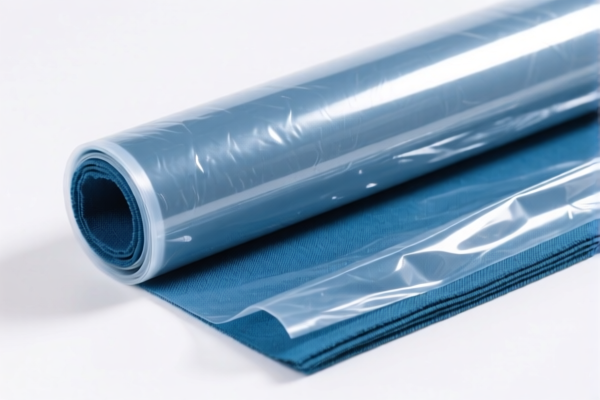
construction textile plastic tarpaulin
CN → US| HS Code | Tariff Rate | Origin | Destination | Doc |
|---|---|---|---|---|
| 5911900080 | 38.8% | CN | US | Official Doc |
| 5911900040 | 38.8% | CN | US | Official Doc |
| 3926206000 | 35.0% | CN | US | Official Doc |
| 3926909989 | 22.8% | CN | US | Official Doc |
Product Images


AI Analysis
🏗️ Construction Textile Plastic Tarpaulin
🌐 HS Code Reference & Clearance Guide | 2026 Tariff Analysis | Professional Clearance Strategy
📌 Part 1: Product Definition & Classification: What Exactly is a "Construction Textile Plastic Tarpaulin"?
A Construction Textile Plastic Tarpaulin is a versatile, heavy-duty protective sheeting used in construction sites, logistics, and outdoor storage. It is primarily designed to protect materials (cement, steel, tools) from weather elements like rain, dust, and UV radiation.
In international trade, the classification depends on the dominant material and structural composition:
1. Textile-Based Tarps (Fabric Core):
If the tarpaulin has a woven fabric base (polyester, nylon, or cotton) coated with plastic (PVC, PE) for waterproofing, it is classified as a technical textile product. The textile structure defines its nature.
2. Plastic-Based Tarps (Solid Sheet):
If the tarpaulin is made entirely of plastic materials (such as high-density polyethylene - HDPE, or laminated PE without a distinct woven fabric base), or if the plastic layer is the primary structural component, it is classified as a plastic article.
⚠️ Key Distinction Point:
- If it is a woven fabric coated with plastic →归类 to Textile Chapters (59)
- If it is a solid plastic sheet or laminated plastic without dominant textile structure →归类 to Plastic Chapters (39)
📦 Part 2: HS Code Classification Details (2026 Latest Tariff Concordance)
| HS Code | Product Description | Applicable Scenario | Material Basis |
|---|---|---|---|
5911.90.00.80 |
Technical textile products, not specified elsewhere | Heavy-duty construction tarps with woven fabric base + plastic coating | ✅ Textile-Based (Fabric core) |
5911.90.00.40 |
Industrial plastic-coated canvas/tarpaulin | Matches plastic-coated tarpaulin form, industrial use | ✅ Textile-Based (Canvas/Industrial) |
3926.20.60.00 |
Plastic articles, specifically tarpaulins | Matches plastic material and tarpaulin form | ✅ Plastic-Based (Pure Plastic) |
3926.90.99.89 |
Other plastic articles, not specified elsewhere | Generic plastic tarps, low-grade plastic sheets | ✅ Plastic-Based (Generic) |
🔍 Key Reminder:
- Woven Fabric + Plastic Coating = Chapter 59 (Textiles). This is the most common classification for high-quality construction tarps.
- Pure Plastic/PE Sheet = Chapter 39 (Plastics). This applies to cheaper, single-layer PE tarps.
- Classification Error Risk: Misdeclaring a textile-based tarp as plastic (or vice versa) can lead to customs audits, penalties, and delayed clearance.
💰 Part 3: 2026 Latest Tariff Rate Breakdown (Including Surcharges)
✅ Applicable Country: United States (US)
✅ Country of Origin: China (CN)
✅ Effective Date: From November 10, 2025 (including subsequent imports)
🎯 1. 5911.90.00.80 —— Technical Textile Product (Textile-Based)
| Item | Content |
|---|---|
| Base Tariff | 3.8% (ad valorem) |
| USITC Surcharge | +25.0% (Under Section 301) |
| IEEPA Surcharge | +10.0% (China-specific, under Section 122) |
| Total Tariff | 38.8% |
| Tax Calculation | CIF Value × 38.8% |
| De Minimis Exemption Eligible? | ❌ No (deny_de_minimis) |
| Legal Basis Path | IEEPA:122 → USITC:5911.90.00.80 → SECTION:301 |
📌 Explanation:
- "Base Tariff 3.8%" is the standard Most Favored Nation (MFN) rate for technical textiles;
- "USITC Surcharge 25%" is under the "Section 301" trade remedy measures;
- "IEEPA 10%" is an additional surcharge under the International Emergency Economic Powers Act;
- Total 38.8% is a high tariff, requiring advance cost planning.
🎯 2. 5911.90.00.40 —— Industrial Plastic-Coated Canvas (Textile-Based)
| Item | Content |
|---|---|
| Base Tariff | 3.8% |
| USITC Surcharge | +25.0% |
| IEEPA Surcharge | +10.0% |
| Total Tariff | 38.8% |
| Tax Calculation | CIF × 38.8% |
| De Minimis Exemption Eligible? | ❌ No |
| Legal Basis Path | IEEPA:122 → USITC:5911.90.00.40 → SECTION:301 |
📌 Note:
- Identical tariff structure to5911.90.00.80;
- Applies to industrial-grade canvas tarps commonly used in construction;
- Even if labeled as "plastic-coated," if the base is textile, this tariff applies.
🎯 3. 3926.20.60.00 —— Plastic Tarpaulins (Plastic-Based)
| Item | Content |
|---|---|
| Base Tariff | 0.0% |
| USITC Surcharge | +25.0% |
| IEEPA Surcharge | +10.0% |
| Total Tariff | 35.0% |
| Tax Calculation | CIF × 35.0% |
| De Minimis Exemption Eligible? | ❌ No |
| Legal Basis Path | IEEPA:122 → USITC:3926.20.60.00 → SECTION:301 |
📌 Advantage:
- The base tariff is 0%, making the total effective rate (35.0%) 3.8% lower than textile-based classifications;
- Suitable for pure PE/HDPE plastic tarps without woven fabric;
- Caution: Must ensure no textile component dominates the structure.
🎯 4. 3926.90.99.89 —— Other Plastic Articles (Plastic-Based)
| Item | Content |
|---|---|
| Base Tariff | 5.3% |
| USITC Surcharge | +7.5% (Reduced/Alternative Rate) |
| IEEPA Surcharge | +10.0% |
| Total Tariff | 22.8% |
| Tax Calculation | CIF × 22.8% |
| De Minimis Exemption Eligible? | ❌ No |
| Legal Basis Path | IEEPA:122 → USITC:3926.90.99.89 → SECTION:301 |
📌 Best Rate Option:
- This is the lowest total tariff (22.8%) among the four options;
- However, it is a "catch-all" category for generic plastic items;
- Only applicable if the product does not fit specifically into "Plastic Tarpaulins" (3926.20.60.00);
- Risk: Customs may challenge this classification if the item clearly matches3926.20.60.00.
🛠️ Part 4: Practical Clearance Advice (Avoid Pitfalls)
✅ 1. Required Documentation Checklist (Mandatory)
| Document | Required | Description |
|---|---|---|
| ✅ Product Specification Sheet | ✔️ | Must detail material composition (e.g., "100% HDPE" or "Polyester woven, PVC coated") |
| ✅ Material Composition Proof | ✔️ | Lab test report or supplier declaration confirming % of textile vs. plastic |
| ✅ Product Photos | ✔️ | Clear images showing texture, weave (if any), and thickness |
| ✅ Commercial Invoice | ✔️ | Must clearly state "Construction Tarpaulin" and material type |
| ✅ Packing List | ✔️ | Weight and dimensions per roll/pack |
| ✅ CE/UL Certification | ✔️ | If applicable for fire resistance or safety standards |
✅ 2. Declaration Tips (Key Mantras)
🔥 "Material Dictates Code, Don't Guess!"
| Scenario | Correct Declaration | Wrong Action |
|---|---|---|
| Woven Fabric + PVC Coating | 5911.90.00.80 or 5911.90.00.40 |
Declare as Plastic → 35% or 22.8% (Audit Risk) |
| Pure PE Plastic Sheet | 3926.20.60.00 |
Declare as Textile → 38.8% (Overpaid) |
| Generic Plastic Sheet | 3926.90.99.89 |
Declare as Specific Tarpaulin → Misclassification |
| Mixed Material (Ambiguous) | Provide Lab Test Report | Ambiguous Description → Delayed Clearance |
✅ 3. Special Case Handling
| Case | Handling Advice |
|---|---|
| Laminated Tarps (Textile + Plastic Layers) | If textile provides structural strength, classify under Chapter 59. Provide evidence of tensile strength. |
| Recycled Plastic Tarps | Still classified under Chapter 39. No special tariff benefit unless certified otherwise. |
| Fire-Retardant Tarps | Does not change HS Code. Ensure safety certs are included to avoid rejection. |
| Small Samples (De Minimis) | ❌ Not Eligible. Even under $800, these items are subject to full duties due to Section 301 and IEEPA restrictions. |
🌍 Part 5: Global Market Comparison (2026 Latest)
| Country/Region | Recommended HS Code | Tariff Rate | Certification | Remarks |
|---|---|---|---|---|
| 🇺🇸 USA | 5911.90.00.80 |
38.8% | No special | High tariff due to Section 301 |
| 🇨🇳 China | 5911.90.00.80 |
3.8% | CCC (if applicable) | Low duty, no surcharges |
| 🇪🇺 EU | 5911.90.00.80 |
0-4% | CE (if required) | No surcharges |
| 🇻🇳 Vietnam | 5911.90.00.80 |
0-5% | V-TPP | Potential for lower duties via EAF |
📌 Conclusion:
- USA imposes the highest costs due to combined Base + Section 301 + IEEPA tariffs;
- Plastic-based tariffs (3926) offer slightly lower rates (35.0% or 22.8%) but require strict material justification;
- Textile-based tariffs (5911) are standard for high-quality construction tarps but cost more.
📌 Part 6: Common Mistakes & Pitfalls (Lessons Learned)
❌ Mistake 1: Declaring a woven PVC tarp as "Plastic Tarp" to save tax
👉 Consequence: Customs may reclassify to Chapter 59, apply 38.8% + penalties for undervaluation/misdeclaration.
❌ Mistake 2: Assuming "Plastic" means 0% base tariff
👉 Consequence: Still subject to 25% (Section 301) + 10% (IEEPA) = 35%. Don't ignore surcharges.
❌ Mistake 3: Using generic terms like "Cover" or "Sheeting"
👉 Consequence: Customs may detain goods for clarification, causing delays.
❌ Mistake 4: Ignoring IEEPA 10% surcharge
👉 Consequence: Underpaying duties, leading to debt collection actions upon audit.
✅ Correct Approach:
"Polyester Woven Fabric, PVC Coated, Fire Retardant, Construction Grade, 10x20 ft, Model ABC"
🎯 Part 7: Conclusion: Professional Declaration, Save Time & Money!
🎯 Remember These Mantras:
🔹 "Textile Base? Chapter 59. Pure Plastic? Chapter 39."
🔹 "Tariff is 38.8% for Textiles, 35% for Plastic Tarps, 22.8% for Generic Plastics."
🔹 "No De Minimis Exemption! Plan for Full Duties."
📌 Pro Tip:
If your tarpaulin is produced in Vietnam, Thailand, or Malaysia, you may qualify for preferential tariffs under trade agreements (e.g., ASEAN-US, CPTPP).
Recommend Advance Ruling from US Customs (CBP) to confirm HS Code before shipment.
📣 Take Action Now:
📞 Contact Professional Freight Forwarders + Provide Material Specs + Apply for CBP Advance Ruling
🚀 Ensure your construction tarpaulins clear customs smoothly, avoid delays, and maximize profit margins!
✨ Professional Clearance Starts with Accurate Classification!
💼 Every Dollar of Tariff is Worth Precise Calculation!
Customer Reviews
About HS Code Classification
The Harmonized System (HS) is an internationally standardized nomenclature developed by the World Customs Organization (WCO) to classify traded products. Over 200 countries use the HS system as the basis for customs tariffs, trade statistics, and import/export regulations.
Each HS code follows a hierarchical structure:
- Chapter (2 digits) — Broad category of goods (e.g., Chapter 84: Machinery and Mechanical Appliances)
- Heading (4 digits) — More specific grouping within the chapter
- Subheading (6 digits) — Internationally standardized breakdown, used by all WCO member countries
- National subdivisions (8-10 digits) — Country-specific extensions for further classification, such as US HTSUS 10-digit codes
Correct HS code classification is essential for smooth customs clearance, accurate duty payment, and compliance with trade regulations. Misclassification can lead to customs delays, overpayment of duties, or penalties.
When importing from CN to US, the applicable tariff rates may include:
- Most-Favored-Nation (MFN) rate — The standard duty rate applied to WTO members
- General rate — Applied to countries without trade agreements
- Trade remedy duties — Additional tariffs such as Section 301 (anti-dumping), Section 232 (national security), or countervailing duties
The information provided on this page is for reference purposes only. For official classification, please consult with your local customs authority or a licensed customs broker.